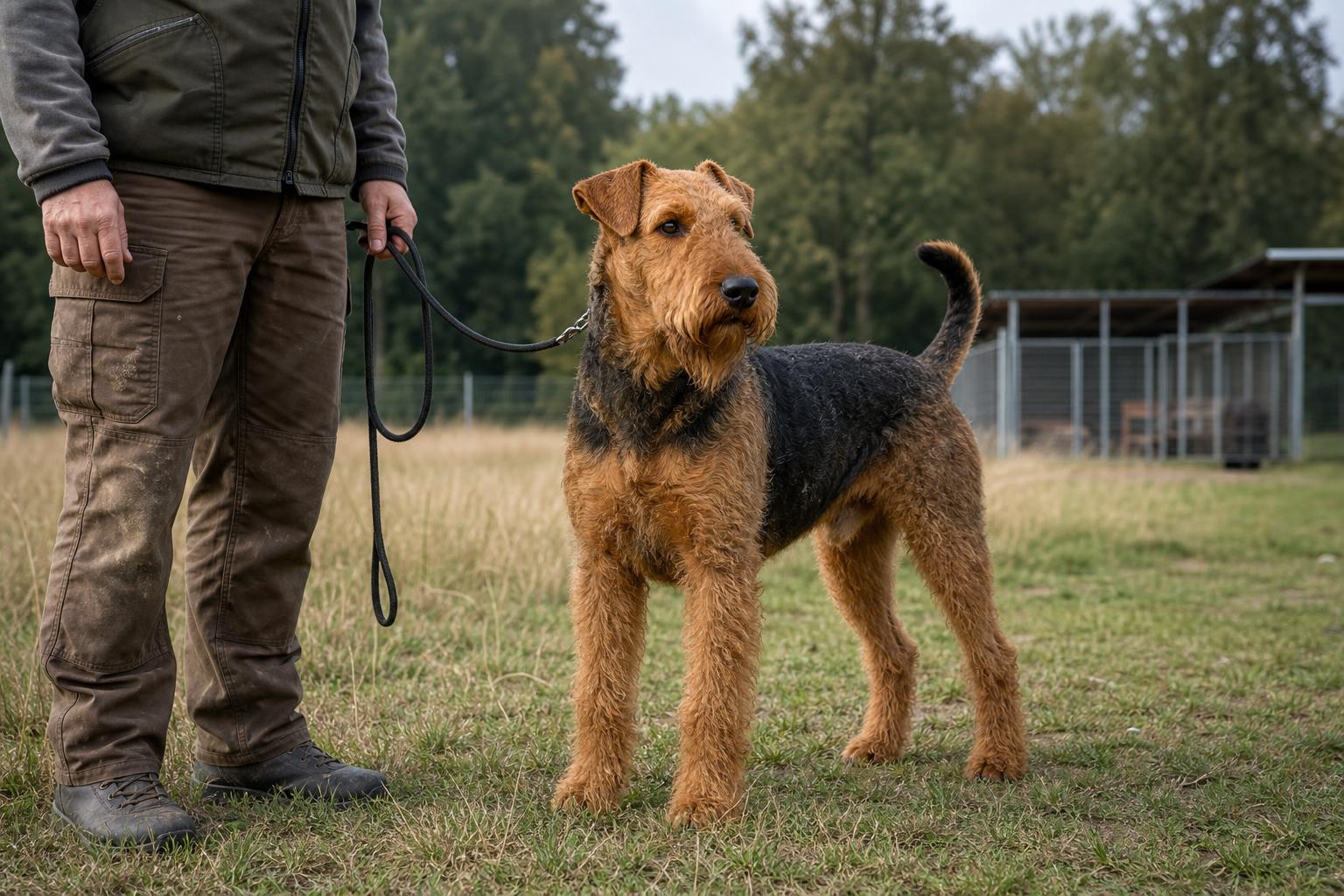
An Airedale started dog is not simply an older Airedale with a price tag. For a practical buyer, “started” should mean the dog has moved beyond the blank-slate puppy stage and has received meaningful handling, socialization, and training foundations. With Airedales, that matters because this breed is intelligent, energetic, confident, and famously independent. A good started Airedale should show promise as a working companion or active family dog, while still being honest about the training that remains ahead.
The Airedale Terrier developed as a versatile working terrier in Yorkshire’s Aire Valley. Breed descriptions commonly emphasize courage, athleticism, scenting ability, a wiry coat, and a strong problem-solving nature. Those traits can be useful in a sporting or working home, but they also mean buyers should look carefully at obedience, steadiness, prey interest, and responsiveness to the handler. The right started dog can save time compared with raising a puppy, but only if the training matches your goals.
What Qualifies as a Started Airedale
The word “started” has no single universal standard, so ask the seller to define it in plain language. At minimum, a started Airedale should have a consistent daily routine, basic manners, leash exposure, crate or kennel familiarity where relevant, and some foundation training that can be demonstrated. The dog should be old enough for its temperament and habits to be visible, but not represented as finished if it still needs substantial work.
- Ask what commands the dog understands and whether they work away from the training yard.
- Ask how often the dog has been handled by different people and in different places.
- Ask whether the dog has been exposed to livestock, other dogs, cats, children, vehicles, and household activity.
- Ask what the dog does when excited, frustrated, tired, or corrected fairly.
For Airedales especially, look for a dog that can think without becoming unruly. A flashy dog that ignores the handler may be exciting for a minute but frustrating to live with. A steady, curious dog that recovers quickly from distractions is often the better prospect.
Birds and Breed-Appropriate Game Exposure
Airedales have a history as hunting and general-purpose working dogs, including work around vermin and larger quarry. In a modern buyer guide, the key is not to assume every started Airedale has formal bird-dog training. Instead, ask what kind of game or field exposure the dog has actually had. Has the dog been introduced to birds, scent trails, furred game, water, brush, or farm environments? Was the exposure controlled and positive, or was the dog simply allowed to chase?
If the seller describes bird exposure, ask for details: the species used, the dog’s response, whether the dog remained mentally engaged with the handler, and whether retrieving or tracking behavior was encouraged. If the dog was exposed to breed-appropriate quarry or scent work rather than birds, ask how the dog searches, whether it uses its nose naturally, and how easily it can be called off. With a terrier, drive is useful only when paired with enough control to keep the dog safe and manageable.
Gun Introduction and Field Noise
Gun introduction should be handled carefully and never reduced to “the dog heard a gun once.” If the Airedale is being sold for hunting or field work where gunfire may be present, ask whether noise exposure was gradual and associated with something positive. A responsible description should include distance, progression, the dog’s body language, and whether the dog remained confident afterward.
- Look for relaxed recovery after noise, not frozen tolerance.
- Ask whether the dog has heard starter pistols, shotguns, or only general loud sounds.
- Ask if the dog has ever shown avoidance, trembling, bolting, or refusal to work after noise.
- Request a calm demonstration only if it is safe, appropriate, and not stressful for the dog.
If gun work is not part of your plan, this still matters because Airedales can live active lives around traffic, equipment, and busy households. A dog that handles noise thoughtfully and recovers well is easier to place into real-world routines.
Obedience Level to Expect
A started Airedale should usually have more than casual name recognition. Reasonable foundations may include coming when called in controlled settings, walking on leash, sitting or waiting briefly, accepting handling, loading into a vehicle or crate, and settling after activity. Because Airedales can become bored with repetitive drills, the best training programs often use short, clear, varied sessions rather than long obedience marathons.
Do not confuse obedience in one familiar yard with reliability everywhere. Ask to see the dog work in a mildly distracting environment. Watch whether the handler has to repeat every cue, whether the dog checks in voluntarily, and whether rewards or corrections are being used fairly. A dog that understands expectations and enjoys working with people is more valuable than one that performs only when tightly managed.
Evaluating Temperament and Trainability
Temperament should be evaluated with the breed’s character in mind. Airedales are commonly described as outgoing, confident, courageous, and alert without being needlessly aggressive. Many are playful and social, but they may also test boundaries if the rules are unclear. When evaluating a started dog, look for confidence without pushiness, curiosity without chaos, and independence that still leaves room for partnership.
- Watch greetings with people: friendly, manageable interest is better than frantic jumping or suspicious avoidance.
- Watch dog-to-dog behavior: ask for history, not just a quick introduction.
- Check handling tolerance, especially feet, ears, mouth, collar, and grooming areas.
- Ask about chase behavior around cats, poultry, wildlife, and small animals.
The Airedale’s wiry coat also creates a practical handling question. A started dog should already be learning to accept brushing, grooming-table manners, nail trims, and routine care. Coat maintenance is part of ownership, not an afterthought.
Questions to Ask Before Buying
Good sellers can describe the dog clearly, including strengths and rough edges. Ask about daily schedule, food, crate habits, exercise needs, previous training methods, health history known to the seller, and why the dog is available. If the dog comes from a breeder, ask what health screening is performed in the family and what issues have appeared in close relatives. If the dog is from a rescue or rehome situation, ask what evaluations have been completed and what behavior has been observed in foster or kennel care.
Be cautious of vague claims such as “fully trained,” “perfect hunter,” or “ready for anything” without demonstration. Started dogs are still developing. The most trustworthy answer is often specific: what the dog has done, where it has done it, how often, and what still needs work.
Best Homes for Airedale Started Dogs
An Airedale started dog is usually best suited to an owner who wants an active, thinking partner. This breed often thrives with daily exercise, enrichment, training games, scent work, and consistent rules. Families may do well with the right individual, especially when children are respectful and adults supervise boundaries. Multi-pet homes should move carefully, particularly around cats or small animals, because terrier chase instincts can be strong.
The best match is not always the most highly driven dog. For many buyers, the ideal started Airedale is confident, social, biddable enough to train, and honest about its instincts. Take your time, watch the dog work, ask direct questions, and choose the individual whose training foundation fits the life you can actually provide.
Explore Airedale Terrier on Working Dog Central
View the Airedale Terrier breed profile or browse Airedale Terrier listings.


