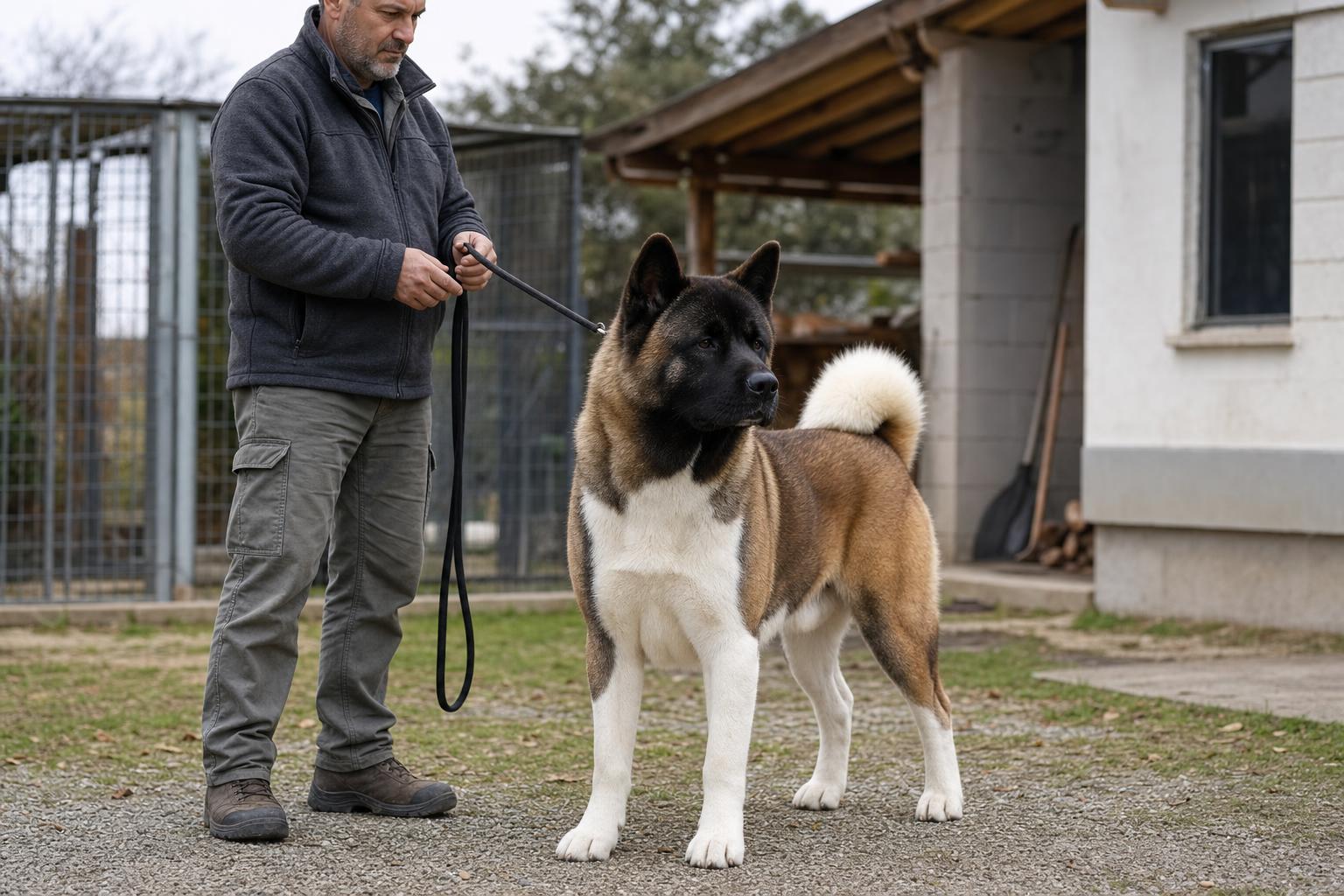
An Akita finished dog can be an appealing choice for an experienced owner who wants a mature, powerful, steady companion rather than starting with a young puppy. The Akita is a large spitz-type breed from northern Japan, historically associated with guarding and hunting large game such as bear, boar, and deer. Modern Akitas are most often valued as loyal family guardians, composed companions, and impressive working-type dogs when matched with the right home.
Because the Akita is independent, strong, protective, and often reserved with strangers, the word finished deserves careful attention. A finished Akita should not simply be an adult dog with basic obedience. Buyers should look for a dog whose training, temperament, handling skills, household manners, and public behavior have been developed and proven in real situations. The right dog can be a serious asset. The wrong match can be difficult for a family that is not prepared for the breed's size, strength, coat care, and guardian instincts.
What makes a finished dog
For an Akita, a finished dog is best understood as a mature dog with reliable behavior in the role being advertised. That role may be family companion, estate guardian, trained personal dog, show prospect, or outdoor partner. Unlike many pointing or retrieving breeds, the Akita is not usually marketed as a conventional upland gundog in North America, so buyers should avoid assuming that finished means the same thing it would mean for a Labrador, pointer, setter, or spaniel.
A finished Akita should demonstrate practical skills without constant correction. Look for calm leash walking, controlled greetings, reliable crate or kennel manners, cooperative handling, comfort with grooming, response to name, recall in appropriate settings, and the ability to settle indoors. Because Akitas can be territorial or selective with other animals, a finished dog should also have a clear, honest description of dog tolerance, prey drive, fence behavior, and household management needs.
- Ask the seller to define exactly what finished means for this individual dog.
- Watch the dog work or behave in person when possible, not only in edited videos.
- Request demonstrations in normal environments: yard, vehicle, doorway, leash walk, grooming table, and around unfamiliar people.
- Confirm what commands, equipment, and routines the dog already understands.
- Ask what behaviors still require management, because every honest finished-dog sale should include limits.
Hunt tests
Hunt tests are an important credential for many sporting breeds, but buyers should verify whether they are relevant to a particular Akita. The breed's history includes large-game hunting in Japan, yet modern hunt-test programs are generally designed around retrievers, pointing breeds, flushing breeds, hounds, or versatile hunting dogs. An Akita advertised with hunt-test language should come with specific proof: the organization, event, date, title or score, and what the dog was required to do.
Do not treat vague statements like hunt trained, field tested, or proven hunter as formal credentials. They may describe real experience, but they are not the same as documented participation in a recognized program. If the dog has been used around game, ask what kind of game, whether exposure was controlled, whether the dog works safely around people and other dogs, and how the seller manages prey drive. For many Akita buyers, stable temperament and reliable control will matter more than any hunting claim.
Verify working records and breed eligibility
Verify reported working titles and test results with the issuing organisation. Confirm that the programme applies to the breed and ask what the result demonstrates about the individual dog.
Verify reported working titles and test results with the issuing organisation. Confirm that the programme applies to the breed and ask what the result demonstrates about the individual dog.
Trial records
Trial records can be useful when they are real, relevant, and verifiable. With Akitas, trial records may be more likely to involve conformation, obedience, rally, temperament evaluations, working-dog events, or other breed-appropriate activities rather than traditional bird-dog field trials. A record only helps you if you understand what it measures. A show win, for example, may say something about structure and breed type, while an obedience title may tell you more about trainability and handler focus.
Ask for copies of certificates, title records, registered names, registry numbers, and event details. Then compare those records with the seller's claims. Be wary of broad language that sounds impressive but does not name an organization or title. Also remember that records do not replace a current evaluation. A dog may have earned a title years ago and still need a careful temperament review today, especially if it has changed homes, lived in a kennel, or had limited recent public exposure.
Age expectations
Age matters when buying a finished Akita. This is a large, powerful breed that can take time to mature mentally. A very young dog may have training started, but it may not yet have the adult steadiness buyers expect from a finished dog. Many buyers will find that an adult Akita, often somewhere beyond the adolescent stage, gives a clearer picture of temperament, size, coat, confidence, animal tolerance, and guarding instincts.
That does not mean older is automatically better. A mature dog should come with a known routine, veterinary history, clear behavior notes, and enough adaptability to transition into a new home. Ask how the dog handles travel, crates, grooming, nail trims, visitors, children, other dogs, livestock, and busy environments. For senior dogs, discuss mobility, weight, dental condition, coat care, and any ongoing veterinary needs. A fair seller will help you understand both the dog's strengths and the support it will need after placement.
Investment value
A finished Akita may cost more than a puppy because time, training, care, and evaluation have already gone into the dog. The value is not just the purchase price; it is the reduction of uncertainty. You can see adult size, observe temperament, review known habits, and judge whether the dog fits your household before committing. For the right buyer, that can be worth a great deal.
Still, avoid paying a premium for vague training claims. Investment value should be tied to evidence. Ask for health information, vaccination and veterinary records, feeding routine, grooming expectations, training history, and a written agreement that describes the dog accurately. Health clearances such as OFA evaluations or DNA tests may or may not be available depending on the breeder, registry, and individual dog, so verify rather than assume. If records are mentioned, ask to see them before money changes hands.
Also consider transition costs. A finished Akita may need professional guidance during the move, secure fencing, sturdy equipment, quality food, grooming tools, and time to bond with the new household. Because the breed is often loyal and discerning, a rushed handoff can create stress. A thoughtful transition plan adds real value.
Buyer-focused conclusion
The best Akita finished dog is not simply the most impressive dog on paper. It is the dog whose training, temperament, age, health history, and management needs match your life. Take the time to verify every claim, watch the dog in realistic situations, and ask direct questions about limitations. For experienced owners who respect the breed's independence and guardian nature, a well-finished Akita can be a dignified, loyal, and deeply rewarding companion.


