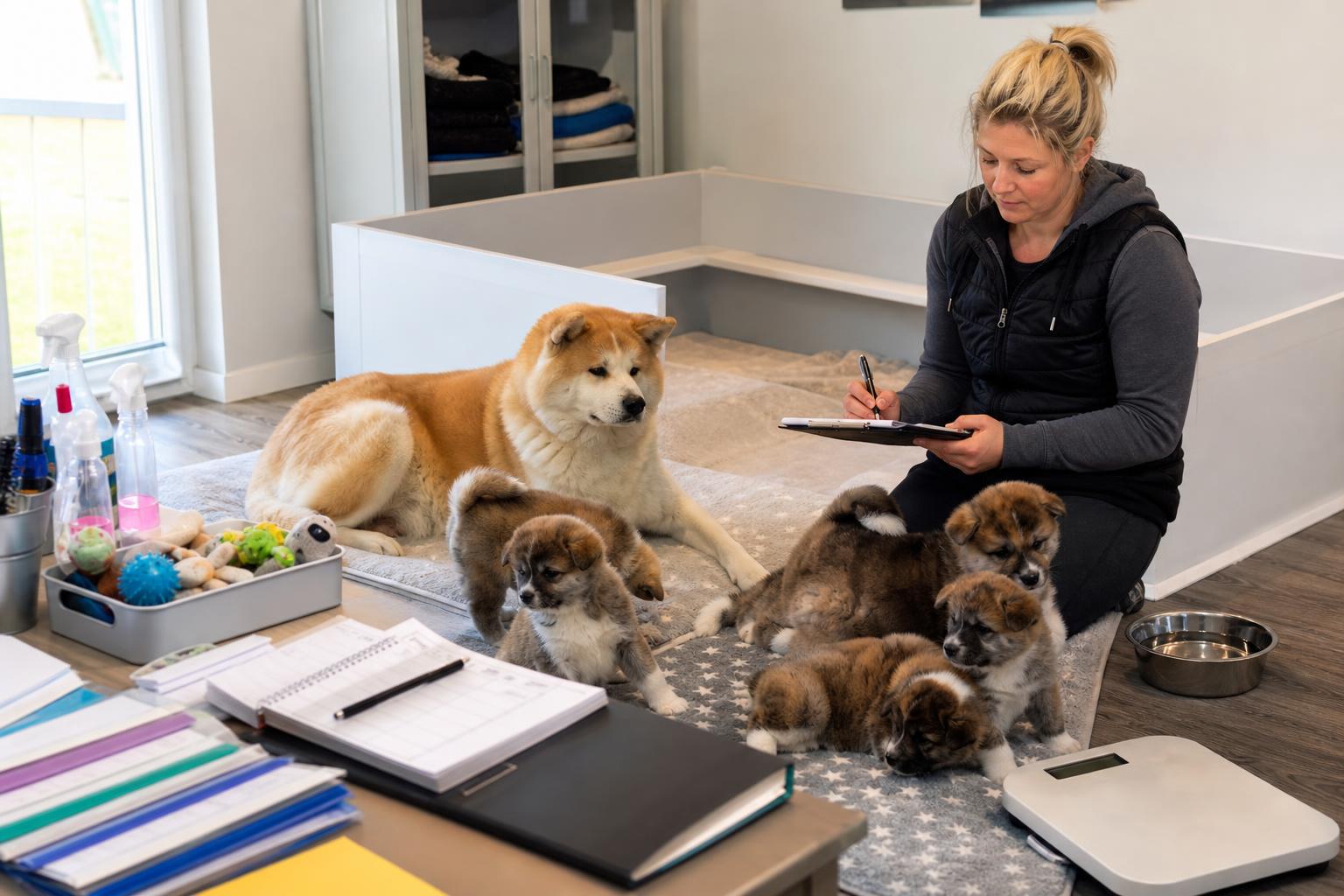
An Akita litter announcement should do more than say that puppies are expected. For a breed as powerful, loyal, and independent as the Akita, the best announcements help buyers understand the parents, the purpose of the breeding, the expected temperament, and the level of support behind the litter. Akitas can be devoted family guardians and impressive companions, but they are not a casual choice for every household. A clear announcement should make it easier to decide whether the breeder, the breeding, and the timing are a fit before you send a deposit.
Use the announcement as your first screening tool, not your final proof. Good breeders are usually willing to explain what they know, what they have tested, and what they expect from a particular pairing. Weak announcements often lean on vague claims such as “rare,” “champion blood,” or “perfect family dogs” without giving buyers enough detail to verify anything. Your goal is to slow the process down, ask practical questions, and choose an Akita puppy from a source that understands the breed’s size, protective nature, coat, socialization needs, and long-term responsibility.
What a Strong Akita Litter Announcement Should Include
A useful Akita litter announcement should identify the sire and dam, provide the expected or actual whelping date, describe the breeder’s goals, and explain how puppies will be raised before placement. It should also outline what comes with the puppy, such as veterinary care already completed, registration information if applicable, contract terms, and breeder support. Because Akitas mature into large, strong dogs with a dignified but often reserved temperament, early handling and social exposure matter. The announcement should not promise a finished personality, but it should show that the breeder is thinking beyond color and availability.
- Names and basic information for the sire and dam.
- Expected birth date, go-home window, or current age of the litter.
- Clear explanation of the breeder’s purpose for the pairing.
- Temperament notes on both parents, including how they handle strangers and daily life.
- Health testing or veterinary information the breeder can document.
- Contract basics, deposit policy, and buyer expectations.
Evaluating Sire and Dam Information
The sire and dam are the heart of any Akita litter announcement. Look for more than attractive photos. The breeder should be able to talk about structure, temperament, health history, and why these two dogs were paired. Akitas are often calm and deeply bonded to their people, but they may be reserved with strangers, strong-willed, and selective around other animals. That does not make them bad dogs; it means the adults behind the litter should be stable, manageable, and appropriate examples of the breed.
Ask whether you can meet the dam, or at least see current photos and videos of her in normal situations. If the sire lives elsewhere, the breeder should still be able to explain his background and provide contactable information or documentation. Be cautious if the announcement only says “big parents,” “protective lines,” or “bear hunters” without practical detail. The Akita’s history as a large-game hunting and guardian breed is real, but modern buyers need honest information about household fit, trainability, and management.
Questions to Ask About the Parents
- What are the sire and dam like with family, visitors, and routine handling?
- Have either parent shown serious dog aggression, fearfulness, or uncontrolled reactivity?
- What strengths and weaknesses does each parent bring to the breeding?
- Are the parents American Akita, Japanese Akita Inu, or from lines the breeder can clearly explain?
- What health issues have appeared in close relatives?
Pedigree, Type, and Breed Purpose
Pedigree can be useful, but it should not be used as decoration. An Akita litter announcement may mention registered names, notable ancestors, show results, working background, or imported lines. Those details can help, but they should be verifiable and relevant. Registry recognition, titles, and pedigree claims vary by country and organization, so buyers should ask to see documentation rather than relying on wording in an advertisement.
Because the Akita is a Japanese spitz-type breed with a long history as a hunter, guardian, and companion, type matters. A responsible breeder should care about balance, soundness, coat, head, tail, movement, and stable temperament. At the same time, buyers should avoid being pulled in by exaggerated language. “Huge,” “rare,” or “extra protective” are not automatically advantages. A correct Akita should be substantial and confident, not unstable, oversized for marketing, or bred only for dramatic appearance.
Health Clearances and Veterinary Transparency
Health information is one of the most important parts of an Akita litter announcement. The breed is generally considered hardy, but large breeds can have orthopedic concerns, and Akitas may have issues in some lines involving skin, immune, thyroid, or other inherited conditions. A breeder does not need to guarantee that a puppy will never have a health problem, but they should be open about what they screen for and what is known in the family.
If an announcement mentions OFA, DNA tests, thyroid panels, eye exams, or other clearances, ask for the exact results and where they can be verified. Not every test applies equally to every breed, registry, or line, so the key is relevance and proof. A careful breeder can explain why they chose specific screenings and what the results mean. Avoid announcements that make broad medical claims, dismiss all breed health concerns, or refuse to discuss relatives with problems.
Health Questions for an Akita Litter
- What health testing has been completed on the sire and dam?
- Can results be verified through the testing organization, veterinarian, or registry?
- Have hip, elbow, thyroid, eye, skin, immune, or other concerns appeared in close relatives?
- What veterinary care will puppies receive before going home?
- What does the contract say about health concerns after placement?
Expected Temperament and Working Traits
Akitas are known for loyalty, courage, and a calm, dignified presence. Many are affectionate with their family while remaining reserved with strangers. They can also be independent and strong, which means training and socialization should begin early. A good litter announcement should not describe every puppy as automatically perfect with children, dogs, cats, livestock, or public settings. Instead, it should give a realistic picture of the parents and explain how puppies are being raised to prepare them for life in suitable homes.
For buyers coming from the gun dog or working dog world, it is important to understand that an Akita is not a typical pointing, flushing, or retrieving breed. Its historical hunting role involved large game, and modern Akitas are more commonly placed as companions and guardians. If a breeder makes claims about hunting ability, protection work, or working titles, ask how those claims are proven and whether they are relevant to your intended use. Responsible breeders will be candid about what an Akita is and is not likely to be.
Deposits, Timing, and Communication
Deposit policies should be clear before money changes hands. The announcement should explain whether deposits are refundable, how picks are made, when puppies are matched, and what happens if the litter size, sex, coat color, or temperament mix does not fit your request. With Akitas, temperament matching is often more important than choosing by photo. A breeder who waits to evaluate personalities before final placement may be doing buyers a favor.
Timing matters too. Puppies should not be rushed out the door just because buyers are eager. Ask when the breeder expects puppies to leave, what milestones they complete before placement, and how they communicate updates. Photos are nice, but thoughtful progress notes about growth, handling, veterinary visits, and early behavior are more useful. A breeder who communicates clearly during the waiting period is more likely to provide support after the puppy goes home.
Red Flags in Akita Litter Announcements
Some warnings are obvious: no parent information, no real location, pressure to pay immediately, or refusal to answer basic questions. Other red flags are more subtle. Be careful with announcements that market Akitas mainly as status symbols, security equipment, or unusually rare colors. Also be cautious when the breeder downplays the breed’s independence, strength, prey drive, same-sex dog concerns, or need for early socialization. A trustworthy announcement respects the breed enough to describe both the appealing traits and the responsibilities.
- Vague claims with no proof of pedigree, health testing, or parent identity.
- Promises of exact adult size, temperament, protection ability, or medical outcomes.
- Pressure to send a deposit before a conversation or contract review.
- No discussion of socialization, handling, or buyer screening.
- Unwillingness to explain whether registry, titles, or tests are relevant and verifiable.
- Photos that appear reused, inconsistent, or unrelated to the described litter.
Matching an Akita Puppy to the Right Home
A litter announcement is only useful if it helps you decide whether the puppy will fit your life. Akitas often do best with owners who value routine, structure, and calm leadership. Secure fencing, leash skills, grooming during seasonal shedding, and careful introductions to other animals should be part of the plan. If your household has small pets, multiple dogs, frequent visitors, or very young children, discuss those details honestly with the breeder.
The right breeder will not try to place every puppy in every home. They may ask about your experience, housing, schedule, training plans, and expectations. That is not gatekeeping for its own sake; it is part of protecting the puppies and the buyers. A strong Akita litter announcement should invite a serious conversation, not a quick transaction.
Conclusion: Choose Clarity Over Hype
The best Akita litter announcements are specific, transparent, and realistic. They identify the sire and dam, explain the breeding goal, discuss health and temperament, clarify deposits and timing, and help buyers understand whether this powerful, loyal breed is a wise match. Before committing, verify claims, read the contract, ask direct questions, and choose a breeder who treats Akitas as long-term companions rather than short-term inventory. A careful start gives both you and your future Akita the best chance at a stable, successful life together.


