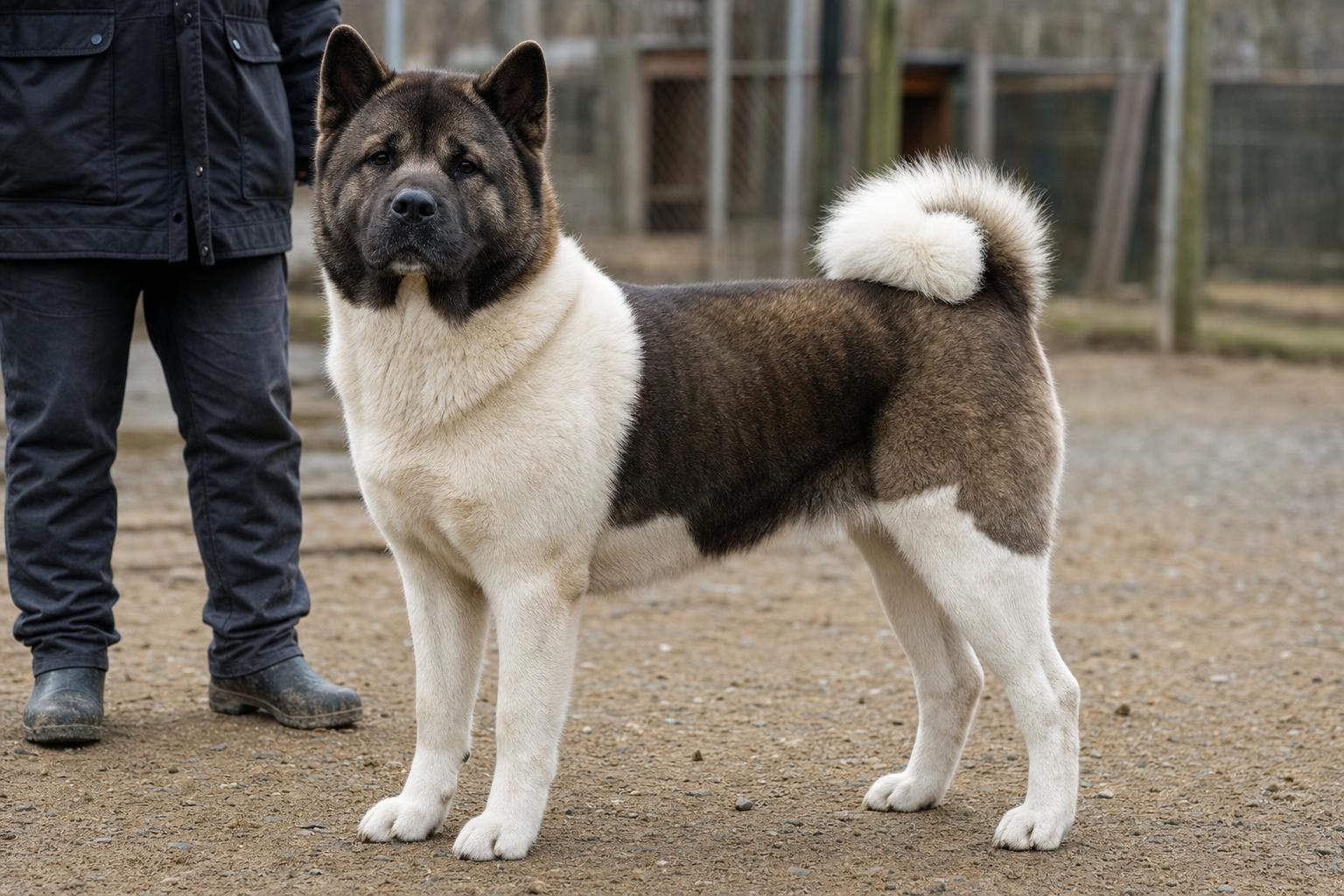
An Akita proven female can be an appealing choice for a serious breeder or an experienced owner who wants a mature, established dog with known qualities. Unlike a puppy, she already has a visible temperament, adult structure, coat, movement, and often a record of previous litters. That history can be valuable, but it should also be reviewed carefully. A proven female is not automatically a better purchase simply because she has produced puppies before.
The Akita is a large, powerful spitz-type breed with roots in Japan, where it was traditionally valued as a hunting companion and guardian. Modern Akitas are often loyal, composed, protective, and strongly attached to their household. They can also be independent, reserved with strangers, and selective around other animals. Those traits make evaluation especially important when considering an adult female for breeding, companionship, or a dual-purpose home.
This guide focuses on practical questions to ask before buying an Akita proven female: what she has produced, how she mothers, what health information is available, how old she is, how she fits into a household, and whether the asking price makes sense for the risk and responsibility involved.
Understanding what “proven female” means for an Akita
In dog breeding, a proven female usually means a female that has already whelped at least one litter. That definition is simple, but the quality behind it varies widely. A responsible seller should be able to explain when she was bred, how many puppies she produced, how the litter was raised, whether there were complications, and what is known about the resulting offspring.
For Akitas, the phrase should never be treated as a shortcut around due diligence. The breed’s size, protective nature, and strong personality mean that stable temperament and responsible management matter as much as reproductive history. A female that produces large litters but has difficult temperament, poor health documentation, or stressful household behavior may not be a wise investment.
- Ask how many litters she has had and at what ages.
- Request details about litter size, survival, and whelping support.
- Find out whether puppies from prior litters have matured well in temperament and structure.
- Ask why the female is being sold now.
Production record and prior litters
The production record is one of the most important pieces of information when evaluating an Akita proven female. You are not only buying the dog in front of you; you are also weighing what she has demonstrated as a producer. A useful production record should go beyond a puppy count. It should include the sire used, dates bred and whelped, number of puppies born, number raised, any veterinary intervention, and notes on how the puppies developed.
Because Akitas can vary in size, type, coat, temperament, and guardian instinct, ask what traits appeared consistently in her offspring. Did puppies show steady confidence? Were they manageable in family homes? Did they inherit correct breed type, sound structure, and appropriate coats? Were any puppies returned for behavior or health reasons? A seller who tracks puppy outcomes and stays in contact with buyers is usually more informative than one who only mentions that she “throws nice pups.”
Questions to ask about previous Akita litters
- How many puppies were born and how many were successfully raised?
- Were any puppies stillborn, lost, bottle-fed, or treated for early health concerns?
- What is known about the adult temperament of older offspring?
- Were any puppies placed in show, working, sport, guardian, or companion homes?
- Can the seller provide references from prior puppy buyers?
Maternal ability in an Akita proven female
Maternal ability matters because it affects both puppy welfare and the workload placed on the breeder. A good Akita mother should be attentive, clean, tolerant of normal puppy activity, and manageable around trusted handlers. However, protective instincts can be strong in the breed, so buyers should ask how she behaves when people assist with whelping, cleaning, weighing puppies, and veterinary checks.
Some females are excellent mothers but need calm, consistent handling and a quiet whelping area. Others may be nervous, overly defensive, disinterested, or difficult to manage. Do not assume that all issues are solved by experience. If a female required heavy human intervention with prior litters, that may be acceptable for a prepared breeder, but it should be disclosed and factored into the purchase decision.
Age and breeding history
Age is a major part of fair evaluation. A mature Akita female may bring stability and known production, but she may also have fewer safe breeding years ahead. Ask for her date of birth, dates of each heat cycle if available, breeding dates, whelping dates, recovery notes, and any veterinary comments after previous litters. The goal is to understand whether her reproductive history appears measured and responsible rather than rushed.
A buyer should be cautious with a female that has been bred too frequently, recently had a difficult litter, or is being sold without clear records. Also consider her future role if she is not bred again. Akitas are loyal, household-oriented dogs; a proven female still deserves a stable home, appropriate exercise, coat care, training, and thoughtful social management whether or not she produces another litter.
Health clearances and veterinary records
Health documentation should be specific. The selector facts for the Akita note that the breed is generally hardy but that orthopedic concerns such as hip issues, along with immune, skin, or thyroid-related problems, can occur in some lines. A seller should be willing to provide veterinary records, discuss known conditions in relatives, and explain what screening has been completed.
Do not accept vague statements like “vet checked” as a substitute for records. A routine exam is useful, but it is not the same as breed-relevant health testing or a transparent medical history. If OFA, DNA screening, thyroid evaluation, eye exams, or other tests are mentioned, verify what was actually done, when it was done, and whether results are publicly searchable or documented. Not every test applies equally to every dog or registry situation, so ask your veterinarian or a breed-experienced mentor which checks are relevant before purchase.
Health records worth reviewing
- Current veterinary exam and vaccination history.
- Reproductive history, including any C-section, infection, or fertility treatment.
- Orthopedic screening results if available and relevant.
- Thyroid, skin, immune, or other history disclosed by the seller.
- Medication history, allergies, and diet notes.
- Any health information known about parents, siblings, and prior offspring.
Temperament and household fit
Temperament is critical with an adult Akita. The breed is often described as composed, faithful, dignified, and watchful. Many are affectionate with family while reserved with strangers. That can be a strength in the right home, but it requires honest evaluation. A proven female should be observed in normal situations: meeting a calm stranger, walking on leash, being handled, entering and leaving a crate or vehicle, and settling indoors.
Ask how she behaves with children, visitors, grooming, nail trims, veterinary handling, and other dogs. Akitas may not always be easy in multi-dog homes, especially with same-sex dogs or small animals, so management expectations should be clear. If the seller avoids temperament questions or insists that any problem is simply “protectiveness,” slow down. A buyer needs the truth, not a sales pitch.
Pedigree strength and working proof
Verify reported working titles and test results with the issuing organisation. Confirm that the programme applies to the breed and ask what the result demonstrates about the individual dog.
If a seller mentions titles, trial records, working achievements, or registry recognition, verify them directly with the issuing organization or through official records. For this breed, meaningful proof may include stable adult behavior, responsible guardian temperament, show or performance achievements where applicable, sound movement, and offspring that have succeeded in appropriate homes. The key is to match the evidence to the breed’s real purpose and the buyer’s goals.
Fertility considerations
A proven female has demonstrated fertility at least once, but that does not guarantee future success. Fertility can change with age, health, timing, stress, the selected male, and veterinary management. Ask whether prior breedings were natural, assisted, or required timing support. If artificial insemination, chilled semen, or frozen semen was used, verify the records and understand what that says about the female, the male, and the logistics involved.
Buyers should also ask when her last heat occurred, whether cycles are regular, and whether a veterinarian has recently evaluated her reproductive health. Avoid making breeding plans based only on the seller’s optimism. A pre-purchase veterinary exam, ideally with reproductive experience, is a sensible step before paying a premium for breeding potential.
Fair purchase evaluation
The fair value of an Akita proven female depends on the whole picture: age, health records, temperament, pedigree, production history, maternal ability, current condition, and the rights included in the sale. Exact prices vary by region, breeder reputation, documentation, registration status, and agreement terms, so buyers should avoid assuming there is one standard price.
Clarify whether the sale includes registration paperwork, breeding rights, co-ownership requirements, return clauses, health disclosures, or restrictions on future litters. If registration is mentioned, verify the registry and the dog’s status directly rather than assuming AKC or another registry automatically applies. A clear written contract protects both sides and is especially important when buying a mature female with possible breeding value.
Red flags before buying
- No written records for previous litters.
- Unclear reason for sale or pressure to buy quickly.
- Refusal to provide veterinary or health-testing documentation.
- Claims of guaranteed fertility or guaranteed puppy quality.
- Poor temperament explanations that rely only on excuses.
- No contract, no disclosure, or vague ownership terms.
Conclusion: choosing an Akita proven female wisely
An Akita proven female can be a valuable, rewarding dog when her history is transparent and her temperament fits the buyer’s home. The best purchase decisions are based on records, observation, veterinary input, and honest conversation about the breed’s strengths and responsibilities. Look for a female with stable behavior, appropriate health documentation, thoughtful breeding history, and offspring that reflect the qualities you hope to preserve.
Take your time, verify claims, and remember that a proven female is still an individual dog first. Whether she becomes part of a breeding program or retires into a family home, she deserves careful placement and committed ownership.


