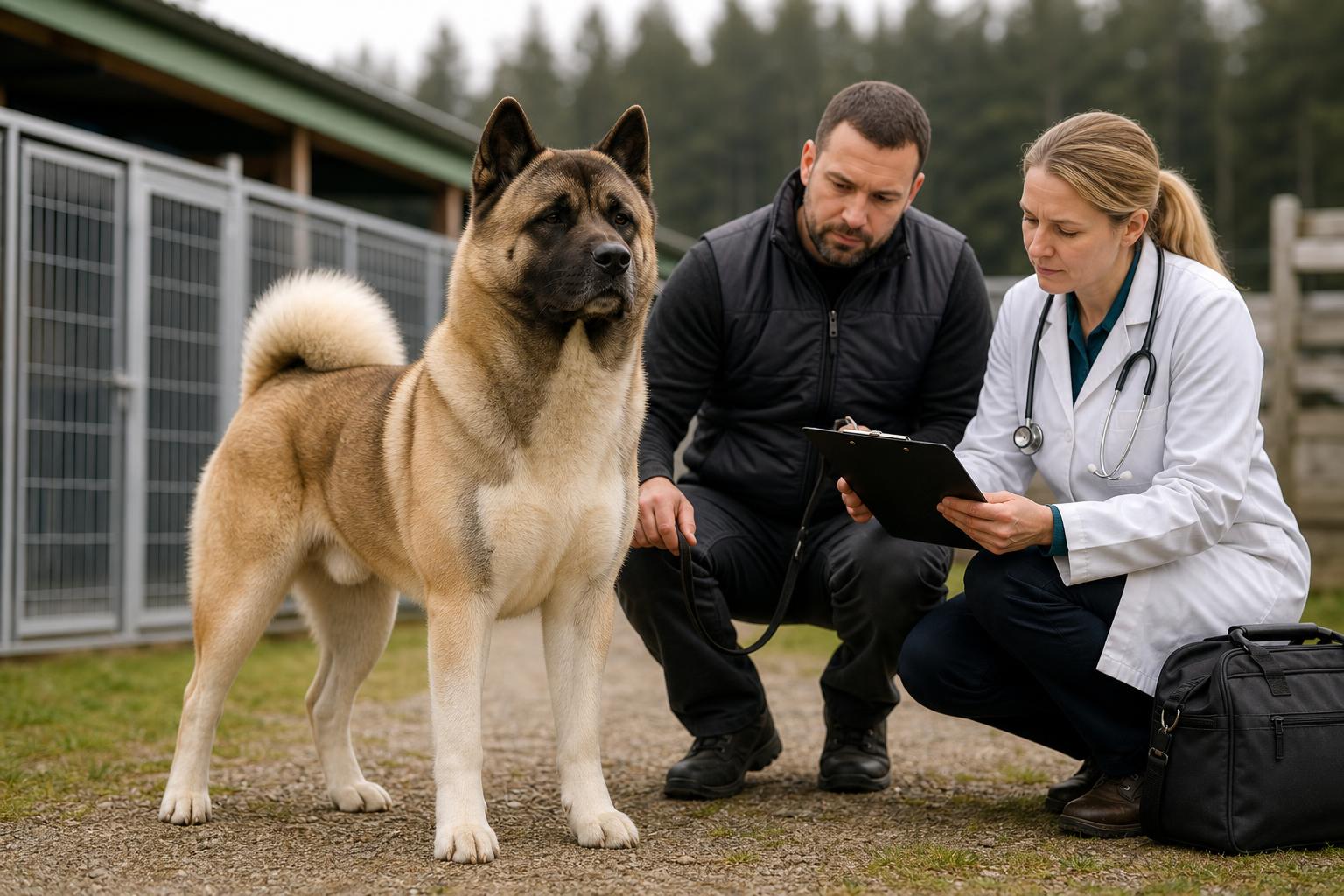
Choosing an Akita stud dog is a breeding decision that deserves more than a handsome photo, a famous name, or a convenient location. The Akita is a large, powerful spitz-type breed with deep roots in Japan as a guardian and hunter of large game. Modern Akitas are often valued for loyalty, courage, dignity, and a calm but watchful presence. Those qualities can be wonderful when they are paired with stable temperament, sound structure, and responsible placement, but they also mean that breeders should be deliberate about every mating.
This guide is written for buyers, breeders, and owners evaluating Akita stud dogs through Working Dog Central. It uses the breed information available here as the starting point: Akitas are substantial dogs with a double coat, curled tail, broad head, independent mind, strong family loyalty, and a need for early socialization and consistent training. When you evaluate a stud, look for proof that the dog is not only impressive on paper, but also suitable for the female, the breeder's goals, and the homes where future puppies may live.
Health clearances for Akita stud dogs
Health clearances are one of the first things to request before discussing a breeding. They do not guarantee perfect puppies, and they should never be presented as medical promises, but they help responsible breeders make better decisions. For Akitas, ask the stud owner what screening has been completed, when it was completed, and whether documentation can be reviewed directly rather than summarized in a casual message.
The breed information notes that Akitas can have orthopedic concerns such as hip issues, and that immune, skin, or thyroid-related problems may occur in some lines. That makes transparency important. A stud owner should be willing to talk candidly about the dog, his relatives, and any known problems in the family. If a clearance, registry listing, or veterinary result is unfamiliar, verify it with the issuing organization or with your veterinarian before treating it as meaningful.
- Ask for copies or registry links for relevant screenings.
- Confirm the dog's registered name, date of birth, and identification match the paperwork.
- Discuss health history in close relatives, not just the stud himself.
- Remember that clearances reduce uncertainty; they do not remove all risk.
OFA and orthopedic verification
OFA results may be useful when evaluating an Akita stud dog, especially for orthopedic screening, but buyers should verify what tests are actually relevant and available for the individual dog. Do not assume a stud has OFA results simply because an advertisement uses polished language. Ask for the exact test names, results, dates, and identifying information. Then confirm the information through the appropriate public database when possible.
Because Akitas are large, powerful dogs, structure matters. Watch how the stud moves if video or an in-person visit is available. Look for balance, confidence, and efficient movement rather than exaggeration. A dog can be attractive and still be a poor match for a female if both share similar structural weaknesses. The goal is not to chase a single certificate; it is to combine health information, pedigree knowledge, physical evaluation, and practical honesty.
DNA testing for Akita breeding decisions
DNA testing can be helpful, but it needs to be interpreted carefully. Different breeds and lines have different relevant tests, and not every advertised DNA panel answers the same question. For an Akita stud dog, ask what DNA testing was performed, which laboratory completed it, and whether the results apply to conditions known to matter in the breed or in that family. If a stud owner cannot explain what the results mean, ask your veterinarian, a breed mentor, or the testing laboratory for clarification.
A broad genetic panel may provide useful information, but it should not replace old-fashioned breeder knowledge. Temperament, maternal lines, longevity, immune history, skin problems, thyroid issues, orthopedic background, and the quality of previous offspring all matter. DNA results are one piece of the larger breeding picture.
- Verify the laboratory report and the dog's identity.
- Ask whether results are clear, carrier, affected, or otherwise categorized.
- Confirm whether a result changes breeding recommendations for your female.
- Avoid treating vague “genetically tested” claims as complete proof.
Frozen semen considerations
Frozen semen can make a distant or older Akita stud dog available without shipping the female, but it adds planning, cost, and veterinary coordination. Before committing, confirm that frozen semen actually exists, is stored properly, and can be released under a written agreement. Ask for collection dates, storage location, number of breeding units, motility information if available, and the reproductive veterinarian's requirements.
Frozen semen is not automatically the best choice. Timing is more exacting, fertility may vary, and the female's reproductive health and progesterone timing become especially important. A practical stud owner will be clear about what is available and what has worked before. If the advertisement mentions frozen semen only in passing, slow down and verify every detail before sending a deposit.
Live cover vs AI
Live cover and artificial insemination each have advantages and drawbacks. With a strong, substantial breed like the Akita, safety and temperament should be part of the discussion. Some breeders prefer AI because it reduces travel stress and can be managed by reproductive veterinarians. Others may use live cover when both dogs are suitable, healthy, and safely handled. Neither method should be chosen casually.
Ask the stud owner what methods are offered, whether the dog has bred naturally before, and what veterinary support is required. For live cover, discuss supervision, housing, liability, and what happens if the dogs are not compatible. For AI, clarify who handles collection, shipping, timing, and veterinary costs. If the female is traveling, ask how she will be cared for and whether she will be kept separate from other dogs.
- Live cover requires safe handling, compatible dogs, and clear liability terms.
- Fresh, chilled, or frozen semen may require different timing and veterinary services.
- AI should be coordinated with a veterinarian experienced in canine reproduction.
- All costs and responsibilities should be written down before breeding begins.
Stud contracts for Akita breedings
A stud contract protects both parties and helps prevent misunderstandings. It should identify the stud dog and female, describe the breeding method, list fees, explain what counts as a successful breeding, and state whether any return service is offered if the female does not conceive. The contract should also cover health requirements, timing, registration expectations, litter paperwork, and any limits on how the stud owner's name or photos may be used.
Because Akitas are not a casual placement breed, a thoughtful contract may also discuss puppy placement standards. The breed is loyal, protective, independent, and powerful; future homes need to understand training, socialization, secure management, shedding, and same-sex dog concerns. A responsible stud owner may ask about your female, your program, and your buyer screening. That is a positive sign, not an inconvenience.
- Get the fee, deposit, and refund terms in writing.
- Define return service terms before the breeding.
- Clarify who signs registration or litter documents, if applicable.
- Include health testing and veterinary requirements for both dogs.
- Keep copies of all reports, receipts, and communications.
Pedigree analysis for Akita stud dogs
Pedigree analysis is more than counting champions. The Akita has a complex history, including Japanese and American lines that may differ in type, size, and appearance depending on registry and breeding goals. When reviewing a pedigree, look for patterns in temperament, structure, health, longevity, and the kind of homes produced dogs thrive in. A stud may be impressive, but the real question is whether he complements your female.
Ask what the stud has produced, if he has previous litters. Look for consistency in offspring, not just the best puppy from one litter. If he is young or unproven, weigh that honestly. An unproven stud is not automatically a bad choice, but the breeder should be clear about what is known and unknown. If your female is strong-willed, reserved, or structurally weak in a particular area, avoid doubling down on the same traits without a reasoned plan.
Good pedigree conversations are specific. Instead of asking whether the bloodline is “good,” ask which dogs appear repeatedly, what they were known for, what health issues have been reported, and how closely related the mating would be. If you are newer to Akitas, seek a mentor who knows the breed and can help you interpret names, lines, and registry differences without hype.
Temperament and household suitability
Temperament is central in Akita breeding. The breed is often faithful and composed with family, but reserved with strangers and sometimes difficult with other animals. A stud dog should show stable nerves, appropriate confidence, and controllability. He does not need to greet every stranger like a retriever, but he should be manageable, clear-headed, and safe under responsible handling.
Ask to see everyday behavior when possible: leash manners, calm handling, response to the owner, and behavior around normal distractions. Training titles or show results may be useful if they exist, but they are not a substitute for honest temperament evaluation. For a guardian-leaning breed, breeders should avoid producing puppies that are sharp, unstable, or too difficult for the homes likely to buy them.
Questions to ask before choosing an Akita stud
- What health screening has been completed, and can I verify it?
- What health or temperament issues have appeared in close relatives?
- Has this stud produced litters before, and what are the offspring like as adults?
- What breeding methods are available: live cover, fresh, chilled, or frozen semen?
- What does the contract say about fees, return service, and responsibilities?
- How does this pedigree complement my female?
- What kind of homes are best suited for puppies from this pairing?
Buyer-focused conclusion
The best Akita stud dog is not simply the biggest, most advertised, or most decorated male. He is the dog whose health information, temperament, pedigree, structure, and owner transparency fit the breeding goal. Take time to verify OFA or other health data, understand DNA testing, compare live cover and AI options, review frozen semen details, and put every agreement in writing. Careful decisions protect the female, the breeder, the stud owner, and the future families who will live with these powerful, loyal dogs.
If you are evaluating Akita stud dogs on Working Dog Central, start with facts, ask practical questions, and be willing to walk away from vague answers. Responsible breeding rewards patience.


