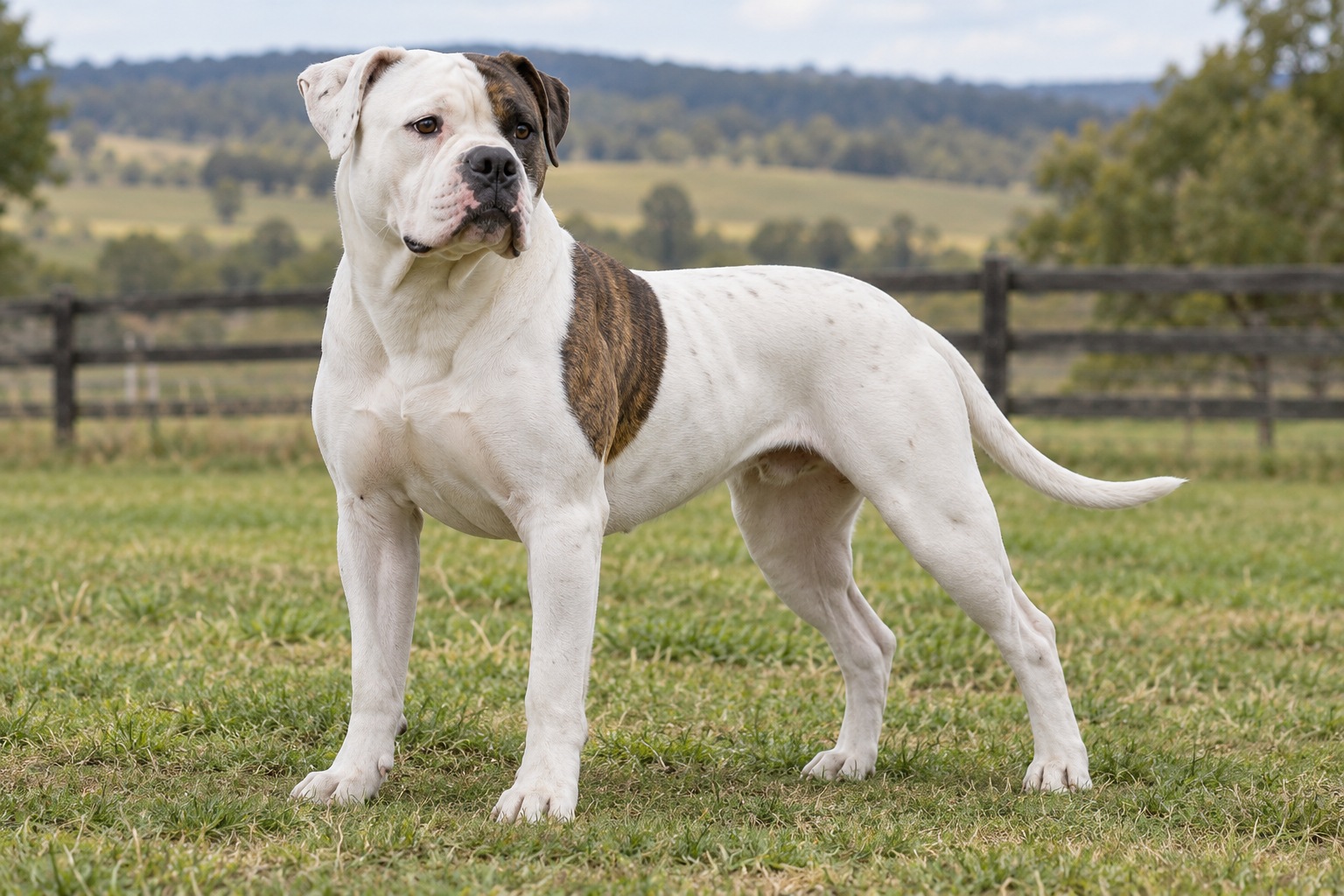
The American Bulldog is a muscular, short-coated dog with an American farm-working background. Choosing one calls for a clear view of the individual dog and the life ahead of it. A broad head, a powerful build or a confident stance does not tell a buyer how the dog behaves with people, handles everyday routines or responds to training.
Working background and individual suitability
The breed developed through practical work around farms and livestock. Modern dogs come from different breeding programmes, so a historical role does not prove that an individual has the ability or training for a particular job. Ask what the parents and close relatives have actually done.
Describe the activities you intend to pursue and ask an experienced professional whether the dog is a sensible prospect. Avoid choosing a powerful dog on a promise of protection. Dependable behaviour, clear handling and appropriate management matter in daily life, whatever working ambition an owner may have.
Appearance and functional condition
Look beyond bulk. Observe comfortable movement, ordinary breathing at rest and the way the dog changes position. Ask the owner about any limitations on activity and have a veterinarian assess concerns about an individual dog. Do not treat an exaggerated outline as evidence of greater working ability.
Confirm the registered breed identity and the records for the individual dog. American Bulldog, Bulldog, American Bully and Olde English Bulldogge are different breed labels. Ask the seller to explain the paperwork rather than inferring ancestry or suitability from appearance.
Temperament and home life
Plan for secure management, consistent household rules and time spent teaching ordinary skills. Ask to see the dog on a lead, resting between activities and responding to familiar handling. Discuss any history of difficulty with people or animals openly. A buyer should understand the management already needed before agreeing to a placement.
Meet adult relatives where practical. Ask about their behaviour in the situations your household will regularly encounter. Do not assume that a friendly meeting with one person proves compatibility with every visitor or animal. A responsible breeder should discuss both good qualities and management challenges.
Training and activity
Begin with useful everyday skills: coming when called in suitable settings, walking on a lead, settling, tolerating routine care and leaving distractions when asked. Build lessons gradually, with guidance from a competent trainer when needed. Do not confuse pressure, fear or uncontrolled arousal with a finished working behaviour.
Ask the breeder and veterinarian to help plan activity appropriate to the individual dog’s development and condition. Make room for rest as well as exercise. The routine must remain workable through the months when organised training or other outings are less frequent.
Records and breeder questions
Ask which health screenings were carried out, why they were selected and how to verify the results for each parent. Review veterinary history for an adult dog. A breed label or registration certificate does not replace individual records or professional assessment.
Request the contract early. Clarify identification, registration, payments, restrictions and what happens if the placement does not work. Explain your home accurately and expect the breeder to ask questions in return. Choose a dog whose current needs and likely development fit the time, space and experience you can provide.
Breed reference: UKC American Bulldog breed standard.
Explore American Bulldogs on Working Dog Central
View the American Bulldog breed profile or browse American Bulldog listings.


