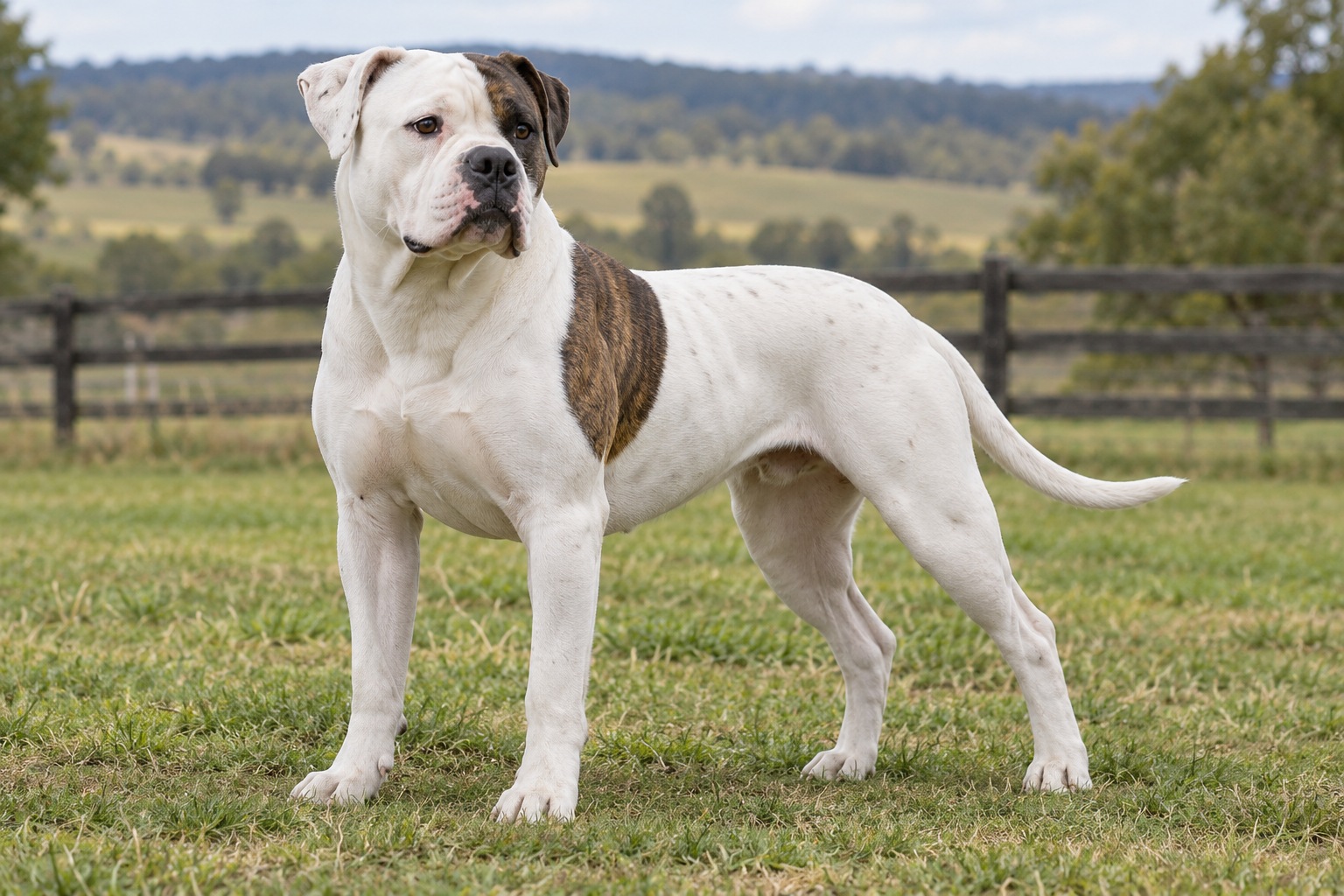
An American Bulldog puppy should be selected for the home and training you can provide. Tell the breeder about visitors, children, other animals and the activities you intend to pursue. Ask how their observations over time led them to recommend a particular puppy. One bold approach during a visit is not a complete temperament assessment.
Keep the individual dog in view
Confirm the registered breed identity and the records for the individual dog. American Bulldog, Bulldog, American Bully and Olde English Bulldogge are different breed labels. Ask the seller to explain the paperwork rather than inferring ancestry or suitability from appearance.
Plan for secure management, consistent household rules and time spent teaching ordinary skills. Ask to see the dog on a lead, resting between activities and responding to familiar handling. Discuss any history of difficulty with people or animals openly. A buyer should understand the management already needed before agreeing to a placement.
Assess the puppy and its upbringing
Ask the breeder to describe the puppy over time: how it approaches familiar people, explores a change and settles after activity. A single visit is useful, but it cannot reveal every aspect of temperament. Observe the litter and environment when a visit is possible, following the breeder’s arrangements to protect the puppies.
Find out what the puppy has actually experienced. Handling, a lead, a crate and travel should be described plainly, with no claim that a young dog has been permanently prepared for every future situation. Ask the breeder how they chose this puppy for the home you described.
Check identity, records and terms
Request the date of birth, registered parentage where applicable, identification details and veterinary records. Ask which health screening was carried out on the parents and how to verify the results. Discuss the records with your veterinarian rather than trying to infer the puppy’s future health from an advertisement.
Read the contract before collection. Clarify the total price, what registration is included, any restrictions and the return or support arrangements. If a term matters to your decision, put it in writing. A pedigree documents ancestry; it does not establish that a puppy will meet a particular training standard.
Make the first weeks workable
Prepare secure space, a place to rest and a routine the household can follow. Arrange professional advice on the puppy’s individual care and suitable outings. Begin training with short, achievable lessons; do not rush difficult field situations to prove that the purchase was a good one.
Choose a breeder you can talk to after the sale. When a problem appears, a clear record of the puppy’s previous routine and experiences is more useful than a claim that it was already perfect.
Make the agreement practical
Ask the seller what is uncertain, which claims can be verified and what support continues after the handover. Discuss a difficult example as well as a successful one. The person placing the dog should be able to explain its needs without relying on a general claim about what all American Bulldogs are like.
Review the offer against the home and activity you described at the start. If the match depends on behaviour or working ability that has not been demonstrated, resolve that gap before paying. A clear decision is easier while both parties still have time to reconsider.
Explore American Bulldogs on Working Dog Central
View the American Bulldog breed profile or browse American Bulldog listings.


