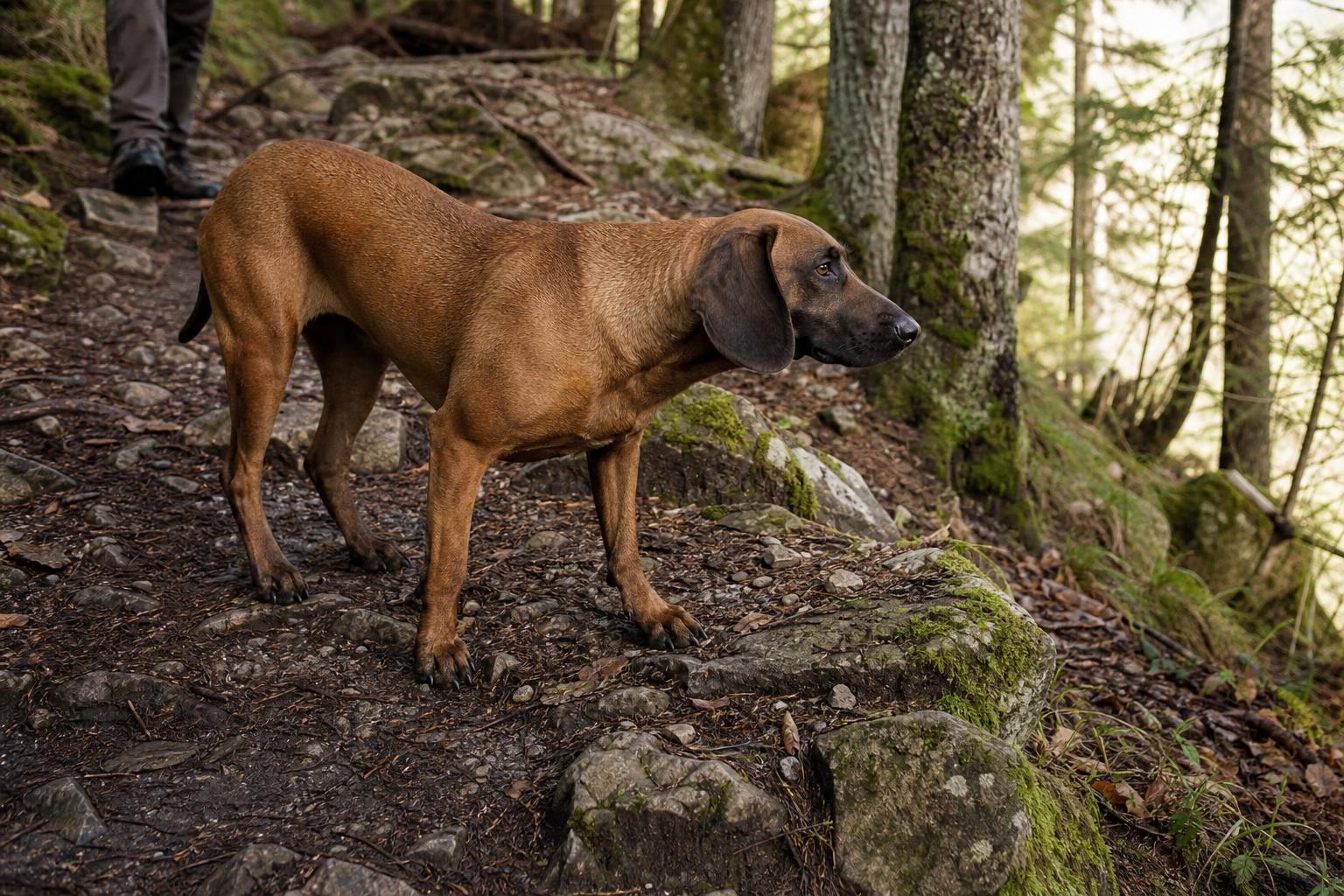
The Bavarian Mountain Hound is a specialist scent hound with a serious working history and a devoted, steady nature at home. Developed in southern Germany for tracking wounded game through steep, difficult country, this breed was never meant to be a decorative companion or a casual weekend novelty. It was built for endurance, nose work, and close cooperation with a handler who understands the value of patience.
For buyers researching the Bavarian Mountain Hound, the first question should not be whether the breed is attractive or rare. It should be whether your daily life can support a dog whose strongest instincts revolve around scent, persistence, and purposeful activity. In the right home, this hound can be loyal, affectionate, calm indoors, and deeply satisfying to train. In the wrong home, the same qualities can become frustration, roaming, selective listening, or boredom.
History of the Bavarian Mountain Hound
The Bavarian Mountain Hound, also known in its homeland as the Bayerischer Gebirgsschweisshund, was developed in the mountainous regions of southern Germany. Hunters and gamekeepers needed a lighter, agile hound that could follow faint blood trails across rocky slopes, dense cover, and uneven terrain. The breed traces to crosses that combined the strong scenting ability of the Hanoverian Scenthound with lighter Alpine hounds suited to mountain work.
Its traditional role was tracking wounded large game such as deer and wild boar. That background matters for modern owners because the breed’s instinct is not simply to sniff casually; it is to lock onto a trail and work it with determination. This is why secure handling, reliable routines, and appropriate scent outlets are so important.
Bavarian Mountain Hound Temperament
The Bavarian Mountain Hound is commonly described as calm, devoted, biddable, and self-assured. Many are affectionate with their family and reserved with strangers without being aggressive. This reserve should not be mistaken for dullness. These dogs are observant, sensitive to their surroundings, and often very bonded to the person who gives them fair structure and meaningful work.
Because the breed was selected for focused tracking, independence can appear when scent is involved. A Bavarian may understand what you asked and still find a fresh trail more rewarding than your voice unless training, management, and motivation have been built carefully. Early socialization is important, not to erase the breed’s natural reserve, but to help the dog become stable around new people, places, dogs, vehicles, surfaces, and household situations.
Size, Build, and Appearance
The Bavarian Mountain Hound is a medium-sized, athletic dog with a body slightly longer than tall and a strong but not heavy frame. The overall impression should be functional: stamina, sure-footed movement, and muscle without bulk. The head is broad, the ears hang close to the head, and the expression is alert and thoughtful.
The coat is short, dense, close-fitting, and moderately harsh. Common breed-standard colors fall in the red, tan, and fawn range, often with darker shading on the muzzle or ears. Grooming is usually straightforward, but the ears deserve regular attention because hanging ears can trap moisture and debris.
Working Style and Hunting Background
This breed’s strongest historical purpose is tracking wounded game. The Bavarian Mountain Hound is valued for endurance, scenting ability, and determination in difficult conditions. It is not best understood as a general-purpose bird dog or a flashy field trial breed. If a buyer is looking for a flushing, pointing, or retrieving specialist, they should compare the breed’s original function carefully against their hunting goals.
For owners who do not hunt, structured scent work can still be a valuable outlet. Tracking games, nosework-style searches, long-line walks, and controlled exploration can give the dog a job without pretending every home needs access to mountain hunting. The key is to provide mental work that respects what the breed was made to do.
Training a Bavarian Mountain Hound
Training should be calm, consistent, and rewards-based. Heavy-handed methods can damage trust, while vague rules can create a dog that simply follows its nose and makes its own decisions. The best approach is clear boundaries, short sessions, repetition in real-life settings, and rewards the dog genuinely values.
Important training priorities
- Leash skills and long-line manners for safe scent exploration.
- Recall foundations, with realistic expectations around wildlife scent.
- Impulse control at doors, gates, vehicles, and trailheads.
- Comfort with handling, ear checks, nail care, and veterinary visits.
- Quiet settling after exercise so the dog learns both work and rest.
Off-leash freedom in unfenced areas should be treated cautiously. A scent hound following a compelling trail may travel farther than an owner expects. Secure fencing, thoughtful leash use, and emergency recall practice are practical safety tools, not signs of training failure.
Exercise and Daily Care
The Bavarian Mountain Hound needs daily activity that is both physical and mental. A short walk around the block is unlikely to be enough for most individuals. Long walks, hiking, tracking practice, scent puzzles, and purposeful training are better matches. This does not mean the dog must be frantic all day. In fact, many Bavarians settle beautifully indoors after appropriate work.
Grooming is manageable. Weekly brushing helps remove dirt and dead hair. Ears should be checked regularly, especially after wet outings or time in heavy cover. Nails should be kept short enough to support efficient movement, and dental care should be part of the routine. As with any athletic dog, keeping the Bavarian lean and well-conditioned supports long-term comfort.
Health Considerations
Responsible buyers should ask practical health questions without assuming every registry, screening program, or title applies equally in every country or breeding community. Hip health is commonly discussed in medium athletic breeds, and buyers should ask breeders what screening has been completed and what is known about close relatives. Ear health, sound movement, body condition, and overall veterinary care also matter.
Verify reported working titles and test results with the issuing organisation. Confirm that the programme applies to the breed and ask what the result demonstrates about the individual dog.
Is the Bavarian Mountain Hound a Good Family Dog?
With the right owner, the Bavarian Mountain Hound can be affectionate, loyal, and gentle in the home. Properly socialized individuals may do well with children and other pets, but buyers should remember that this is a hunting and tracking breed with strong instincts. Supervision, introductions, and household rules matter.
This breed is often best for people who enjoy outdoor activity, training, and routine. It may be a poor match for someone who wants an easy, low-drive companion, a casual dog park dog, or a breed that can be trusted off leash with little effort. Apartment life may be possible for an exceptionally committed owner, but a secure yard and regular outdoor structure are usually helpful.
Buying a Bavarian Mountain Hound
Because the Bavarian Mountain Hound is relatively uncommon in many areas, buyers should be patient. Look for breeders who can explain why they breed, what kind of homes suit their dogs, how puppies are raised, and what support they provide after placement. A thoughtful breeder should welcome questions about temperament, health history, socialization, and working ability or companion suitability.
Questions to ask breeders
- What traits are you selecting for in this litter?
- How do you evaluate temperament and placement fit?
- What health screening or veterinary care has been completed?
- Can I review documentation for any registry, test, or title claims?
- What exercise, fencing, and training expectations do you have for owners?
- What happens if the placement does not work out?
Be cautious of sellers who rely only on rarity, dramatic hunting claims, or vague promises. A good placement is not just about getting a Bavarian Mountain Hound puppy; it is about matching a serious scent hound with a home prepared for the adult dog it will become.
Buyer-Focused Conclusion
The Bavarian Mountain Hound is a devoted, capable, and highly focused scent hound for owners who respect its working purpose. It offers loyalty, steadiness, and remarkable tracking instinct, but it also requires structure, exercise, training, and honest management. If you want a practical partner for outdoor life and scent-based work, this breed is worth careful consideration. If you want a simple, low-maintenance pet, keep researching before you commit.
Explore Bavarian Mountain Hound on Working Dog Central
View the Bavarian Mountain Hound breed profile or browse Bavarian Mountain Hound listings.


