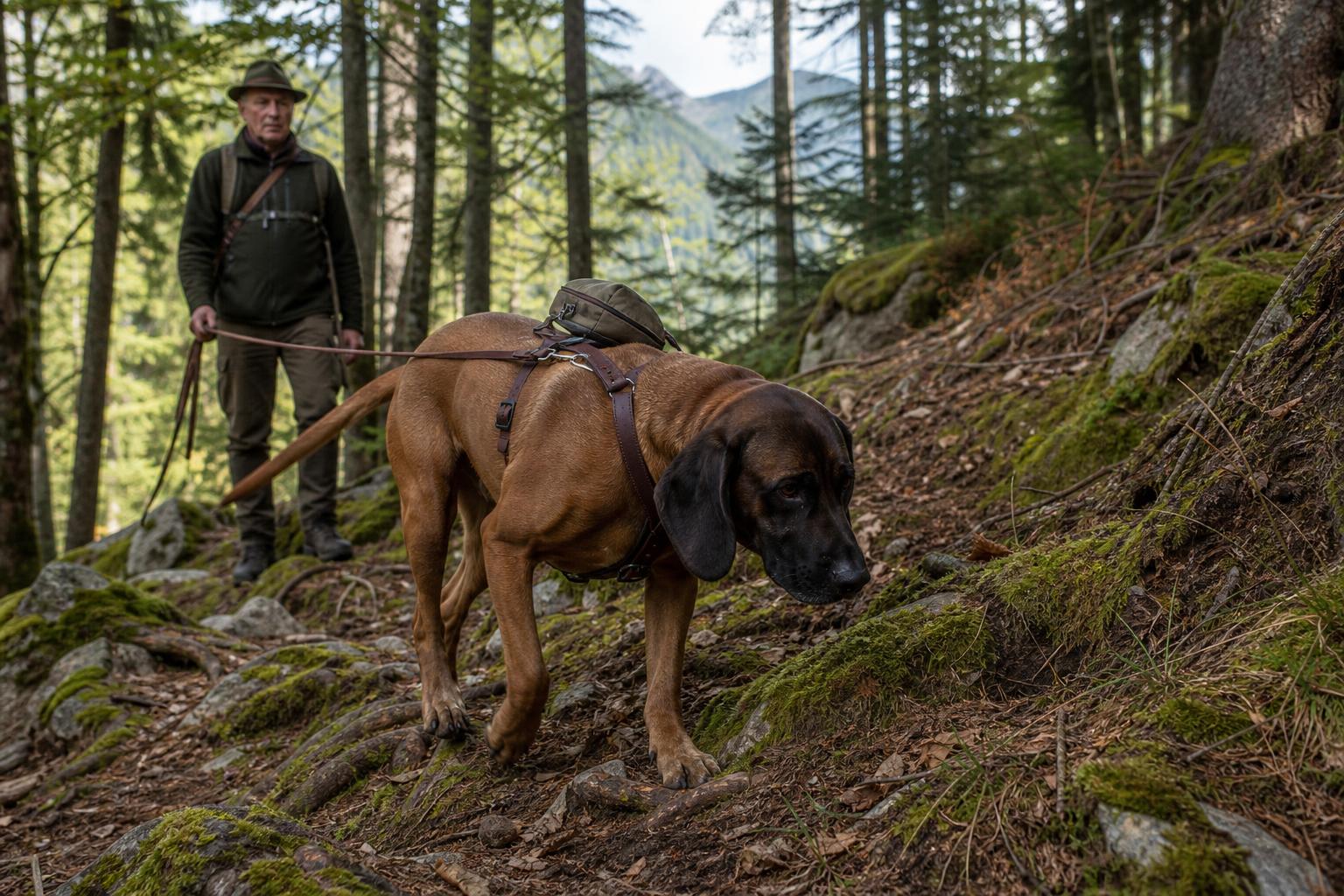
A finished Bavarian Mountain Hound is not simply an older dog with some obedience. This breed was developed as a specialist scent hound for tracking wounded game through steep, difficult country, and a truly finished dog should show reliability, steadiness, and practical working judgment in the kind of tracking work the breed was made to do. For buyers, that means looking past attractive photos and asking for clear evidence of training, field experience, temperament, and fit for your hunting or active home.
The Bavarian Mountain Hound is typically calm, devoted to its handler, and reserved with strangers, but it also carries a strong independent streak when scent is involved. That combination can be wonderful in capable hands and frustrating for a buyer who expects an easy, push-button companion. A finished dog may save you time compared with raising a puppy, but it still requires thoughtful handling, secure containment, continued conditioning, and a realistic plan for keeping the dog mentally engaged.
What makes a finished dog
For a Bavarian Mountain Hound, the phrase finished should mean the dog has moved beyond basic exposure and is consistently useful in real tracking or breed-appropriate scent work. At minimum, the seller should be able to explain what the dog has been trained to do, how often it has worked, what terrain it has handled, and how it behaves before, during, and after a track. Because the breed's traditional purpose is following wounded game, a finished dog should show persistence, nose, composure, and handler connection rather than just excitement.
- Reliable response to the handler on lead, long line, or the seller's normal working setup.
- Demonstrated ability to follow scent in realistic conditions, not only in a backyard drill.
- Good manners around vehicles, kennels, people, and other dogs when properly managed.
- Enough physical condition to handle rugged terrain without being overweight or under-muscled.
- A temperament that matches the buyer's household, experience level, and intended use.
Ask the seller to show, not just tell. A finished dog should be demonstrated in a way that reflects the work you expect from it. If you are buying remotely, request unedited video of obedience, handling, kennel behavior, and a representative tracking exercise. No demonstration can guarantee future performance in a new home, but it can reveal whether the word finished is being used honestly.
Hunt tests
Hunt tests can be useful context when they are relevant to the breed, the country, and the registry or organization involved. However, buyers should not assume that every Bavarian Mountain Hound will have hunt test titles, especially because this breed is less common in many parts of North America and is traditionally evaluated through tracking ability rather than the same formats used for retrievers or pointing dogs. If a seller mentions hunt tests, ask which organization ran the test, what the test measured, what level the dog passed, and whether documentation is available.
For this breed, a hunt test record is most meaningful when it aligns with the dog's intended job. A certificate or title that proves steadiness, tracking discipline, handler cooperation, or real field competence may add confidence. A title that is unrelated to the work you need may still show trainability, but it should not replace a practical demonstration. Treat hunt test claims as one piece of the evaluation, not the entire reason to buy.
Verify working records and breed eligibility
Verify reported working titles and test results with the issuing organisation. Confirm that the programme applies to the breed and ask what the result demonstrates about the individual dog.
Verify reported working titles and test results with the issuing organisation. Confirm that the programme applies to the breed and ask what the result demonstrates about the individual dog.
Trial records
Trial records can help document performance under pressure, but buyers should study the type of trial before assuming it predicts success in their own hunting life. A Bavarian Mountain Hound with a legitimate record in tracking, scent work, or another demanding field venue may be attractive if the record is documented and the dog still fits your needs. Ask for registration numbers when available, event names, dates, placements, and the rules under which the dog competed.
Be cautious with vague statements such as proven, champion blood, or competition trained without paperwork or clear explanation. Trial success can show talent and training, but it does not automatically mean the dog will be easy to live with, safe around your property, or suited to your game and terrain. A buyer-focused evaluation should include how the dog handles pressure, how it recovers after work, whether it can settle indoors or in a kennel, and whether its drive level is appropriate for your experience.
Age expectations
Finished dogs are usually mature enough to have meaningful training and real exposure. For a Bavarian Mountain Hound, many buyers will see finished prospects in the young adult to prime working age range rather than as very young puppies. Age alone does not define finish. A three-year-old dog with inconsistent handling may be less dependable than a younger dog that has been trained carefully and worked often. Likewise, an older dog may be an excellent buy if its health, conditioning, and workload expectations are honest.
Ask how long the dog has been in training, who trained it, what methods were used, and why it is being sold. Also ask about daily routine. A dog that has lived only in a kennel may need a transition plan for a family home. A dog that has been a house companion may still need structured work to stay content. Because Bavarian Mountain Hounds can be devoted to their handler, plan for an adjustment period. The first weeks should focus on relationship, routine, containment, and clear rules rather than immediately testing the dog in the most difficult conditions you can find.
Investment value
A finished Bavarian Mountain Hound can represent significant investment value when the training is real, the dog is sound, and the buyer needs a working partner sooner than a puppy could provide. You may be paying for selection, raising, socialization, conditioning, professional time, birds or breed-appropriate game exposure where relevant, tracking setups, travel, and the seller's judgment about the dog's strengths and limits. That value should be supported by evidence, not sales language.
Avoid sellers who promise exact results, guaranteed finds, or effortless performance in every situation. Scenting work depends on conditions, handler skill, terrain, game, and ongoing practice. A fair seller should discuss both strengths and weaknesses: whether the dog is reserved with strangers, how it handles other dogs, how intense it is on scent, what containment it needs, and what kind of owner will help it thrive. The right finished dog is not always the flashiest dog; it is the one whose training, temperament, health, and purpose line up with your life.
Health, soundness, and documentation
Before purchasing, ask for veterinary records, vaccination history, parasite prevention information, and any health screening available from the breeder or current owner. Hip health is commonly discussed for athletic breeds, and buyers should ask whether hip screening or other orthopedic evaluation has been completed or is available through close relatives. Do not assume OFA, DNA panels, or registry programs apply in the same way to every dog or every country. Instead, ask what has been done, request copies, and have your veterinarian review anything you do not understand.
Watch the dog move at a walk and trot if possible. The breed should look athletic, balanced, and capable of endurance, not heavy or fragile. Check ears, coat condition, teeth, body weight, feet, and general attitude. A pre-purchase veterinary exam is wise, especially when buying a mature working dog. It protects both buyer and seller by documenting the dog's condition at the time of sale.
Questions to ask before you buy
- What specific work has this Bavarian Mountain Hound completed, and how recently?
- Can I see video or an in-person demonstration of tracking and obedience?
- What commands, equipment, and routines does the dog already understand?
- How does the dog behave with strangers, children, other dogs, and livestock?
- What health records, registry papers, or performance documentation are included?
- Why is the dog being sold, and what kind of buyer would not be a good match?
- Is there a written bill of sale that explains trial period, return policy, and seller support?
Buyer-focused conclusion
A finished Bavarian Mountain Hound can be a remarkable partner for the right buyer: steady, focused, loyal, and built for serious scent work in challenging country. The key is to verify the word finished with practical evidence. Look for documented training, honest discussion of limitations, sound health, and a temperament that fits your home as well as your hunting goals. If the seller can clearly show what the dog knows and you are prepared to maintain that training, a finished Bavarian Mountain Hound may be one of the most efficient ways to step into a capable working companion.
Explore Bavarian Mountain Hound on Working Dog Central
View the Bavarian Mountain Hound breed profile or browse Bavarian Mountain Hound listings.


