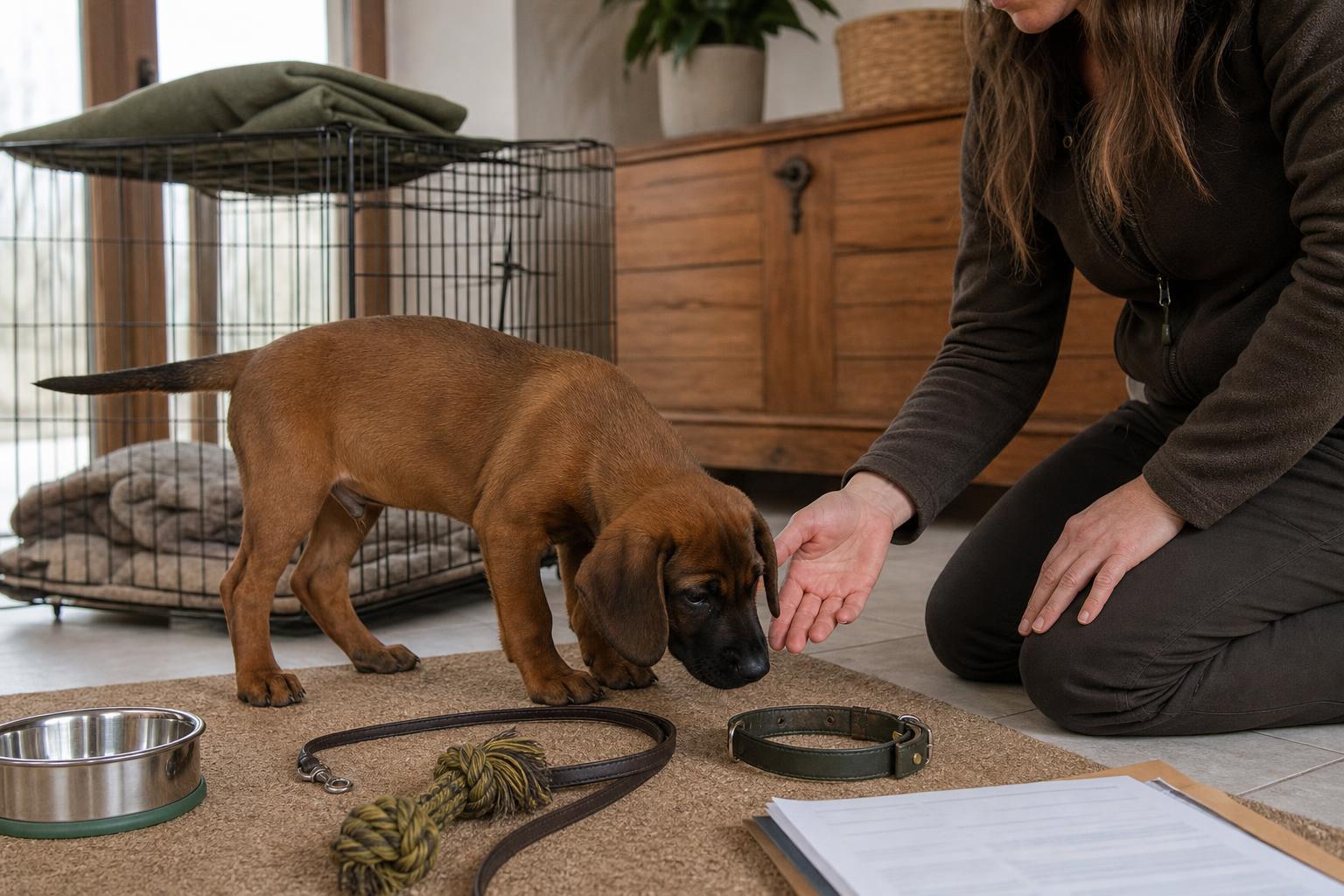
Looking at Bavarian Mountain Hound puppies for sale is exciting, but this is a breed where the right match matters more than speed. The Bavarian Mountain Hound was developed as a specialized scent hound for tracking wounded game in mountainous terrain, and that background still shapes the way many puppies grow up. Buyers should expect an athletic, nose-driven dog that bonds closely with its handler, thinks independently when following scent, and needs daily structure, training, and meaningful activity.
This guide is written for buyers comparing listings, speaking with breeders, and deciding whether a Bavarian Mountain Hound puppy is a realistic fit. Use the breed facts as your starting point: medium size, dense close coat, steady temperament, strong tracking instincts, and a lifestyle best suited to active owners who can provide scent work, hiking, training, and secure management. A good puppy purchase is not just about finding an available litter; it is about finding a breeder who understands the breed and a puppy whose needs match your home.
Choosing a breeder
A responsible Bavarian Mountain Hound breeder should be able to explain why the litter was planned, what the sire and dam are like, and what kind of homes they believe suit the puppies. Because this breed is still comparatively uncommon outside parts of Europe, do not be surprised if you need to wait, travel, or join a breeder's future litter list. Rarity should not pressure you into accepting vague answers or skipping basic buyer checks.
Start by asking about temperament, working aptitude, and daily life with the parent dogs. The breed is commonly described as calm, devoted, and reserved with strangers, not shy or aggressive. Puppies should be raised with thoughtful handling and age-appropriate exposure to normal household sights, surfaces, noises, people, and gentle boundaries. If the breeder works their dogs in tracking, hunting, or scent work, ask what traits they are selecting for and how those traits show up in a family setting.
- Ask to see photos, videos, or in-person behavior of the dam and, when possible, information about the sire.
- Request health screening details that are relevant to the breed and the breeder's program, especially any hip information they track.
- Ask how puppies are matched to buyers and whether the breeder evaluates confidence, drive, sociability, and recovery from new experiences.
- Look for clear contracts, realistic expectations, and a willingness to take the dog back or help with rehoming if a serious problem arises.
- Be cautious of breeders who always have puppies immediately available, cannot describe the parents beyond color, or avoid questions about health and temperament.
A strong breeder will also interview you. That is a good sign. They may ask about fencing, your daily schedule, hunting or training plans, children, other pets, and your experience with scent hounds. The Bavarian Mountain Hound can be affectionate and gentle in the home, but it is not usually the best choice for someone seeking a low-drive, casual companion with little training investment.
AKC registration
Registration details can vary by country, kennel club, and individual breeder, so buyers should verify what applies before placing a deposit. The Bavarian Mountain Hound has European roots and is recognized by international organizations such as the Fédération Cynologique Internationale, but buyers in the United States should not assume every litter is AKC registered or that AKC paperwork will be available for every puppy.
If AKC registration matters to you, ask the breeder directly which registry the litter uses, whether the sire and dam are registered, and what paperwork you will receive. If the breeder mentions AKC, UKC, FCI, or another registry, ask for the registered names of the parents and confirm the information through the appropriate registry when possible. Registration is not a substitute for good breeding, health screening, or temperament selection, but clear paperwork can help verify identity, pedigree, and breeding rights.
- Confirm whether the puppy is sold with limited or full registration.
- Ask whether registration papers are provided at pickup or after proof of spay/neuter or another contract condition.
- Understand that registry status does not guarantee working ability, health, or suitability for your home.
- Be wary of sellers who use vague phrases like “papered lines” but cannot identify the registry or parent dogs.
Vaccinations
Vaccination claims should be specific and documented. A Bavarian Mountain Hound puppy should leave with a written health record showing any vaccines, deworming, veterinary exams, microchip information if applicable, and the date each item was completed. Do not rely on a listing that simply says “shots done” without dates, product names, and a vet or breeder record.
Because vaccine schedules depend on age, location, disease risk, and veterinary guidance, the safest plan is to take the record to your veterinarian promptly after pickup. Ask your vet what boosters are due, when your puppy can safely visit public spaces, and how to balance socialization with disease prevention. For an active scent hound, early socialization is important, but it should be done thoughtfully: controlled visits, clean environments, safe surfaces, and positive exposure rather than random dog-park interactions.
- Get a copy of the puppy's health and vaccination record before or at pickup.
- Schedule a veterinary wellness visit soon after bringing the puppy home.
- Ask the breeder what food the puppy is eating and whether any digestive issues have occurred.
- Keep parasite prevention and vaccination decisions under your veterinarian's guidance.
Bringing puppy home
Bringing a Bavarian Mountain Hound puppy home goes better when you prepare for a curious nose and a developing working brain. Secure fencing, leash habits, crate training, and a predictable routine are not extras for this breed; they are part of everyday safety. Even young puppies may become intensely interested in scent trails, wildlife odor, and open gates, so build management habits early.
Set up a quiet sleeping area, a crate or pen, chew-safe toys, food and water bowls, a leash and long line, grooming tools, and cleaning supplies. The breed's dense, close coat is usually straightforward to maintain, but ears should be checked regularly because hanging ears can trap moisture and debris. Keep exercise age-appropriate: short training sessions, gentle exploration, and sniffing games are better than forced running or repetitive jumping while joints are still developing.
Training should begin immediately, but it should feel like communication rather than confrontation. Reward attention, recall, calm handling, leash walking, and settling. Because scent can override everything else, practice recall in low-distraction areas and use a long line outdoors where safety is not guaranteed. Many owners find that structured sniffing time, tracking games, and nosework-style activities make daily life easier because they give the puppy an appropriate job.
- Introduce household rules from the first day: where the puppy sleeps, how doors are managed, and what is off limits.
- Use positive reinforcement and short sessions to build confidence and focus.
- Socialize carefully with people, surfaces, sounds, vehicles, and calm dogs without overwhelming the puppy.
- Do not assume off-leash reliability in unfenced areas; scent hounds need careful management.
Typical puppy prices
Typical puppy prices for a Bavarian Mountain Hound can vary widely based on region, breeder reputation, import costs, pedigree, working background, health screening, and demand. Because the breed is not as common as many household breeds, buyers may see higher prices or added expenses for travel, transport, or waiting-list deposits. It is best to treat any exact online price as temporary rather than universal.
Instead of shopping by the lowest number, compare what is included and what the breeder can document. A fair price should reflect thoughtful breeding, care of the dam and litter, early socialization, clear records, and breeder support. Very low prices can be a red flag if the seller cannot explain parentage, health history, or puppy raising practices. Very high prices also deserve scrutiny if they are justified only by rarity or color rather than quality, health, and support.
- Ask what the deposit is, whether it is refundable, and what happens if no suitable puppy is available.
- Confirm what is included: vet exam, vaccines given to date, deworming, microchip, registration paperwork, starter food, and contract.
- Budget beyond purchase price for veterinary care, training, fencing, crates, travel, food, and enrichment.
- Avoid sellers who demand rushed payment, refuse phone or video conversation, or will not provide a written agreement.
Questions to ask before you commit
Before buying, make a short list of questions and listen for practical, breed-specific answers. A good breeder should talk openly about both strengths and challenges. The Bavarian Mountain Hound can be loyal, intelligent, and deeply satisfying for the right owner, but its tracking drive, energy, and independence can frustrate homes that are not prepared.
- What are the sire and dam like with strangers, children, other dogs, and new environments?
- What health screening or veterinary history is available for the parents and close relatives?
- Are the puppies expected to go to working, sport, or active companion homes?
- How are puppies exposed to scent work, handling, crates, household sounds, and outdoor surfaces?
- What support does the breeder provide after the sale?
- What would make you say this breed is not right for a buyer?
Red flags in Bavarian Mountain Hound puppy listings
Some warning signs apply to any breed, but they are especially important with a specialized scent hound. Be careful with listings that focus only on cute photos, rare status, or immediate availability while offering little information about the parents. Avoid sellers who cannot describe temperament, who dismiss the need for training and containment, or who promise a perfect off-leash companion. No responsible breeder can guarantee adult behavior, medical outcomes, or working success.
Also be careful with medical or registry claims that are not backed by records. If a seller mentions OFA, DNA testing, AKC registration, imported lines, or working titles, ask for details and verify relevance. Those items may or may not apply to a specific dog or breeding program, and honest breeders will not be offended by respectful verification.
Conclusion: finding the right Bavarian Mountain Hound puppy
A Bavarian Mountain Hound puppy can become a devoted companion and capable scent-work partner when matched with an owner who understands the breed's purpose. Take your time, verify paperwork, ask practical questions, and choose a breeder who values health, temperament, and honest placement over quick sales. The best puppy is not simply the one available today; it is the one bred, raised, and placed with your long-term success in mind.
Explore Bavarian Mountain Hound on Working Dog Central
View the Bavarian Mountain Hound breed profile or browse Bavarian Mountain Hound listings.


