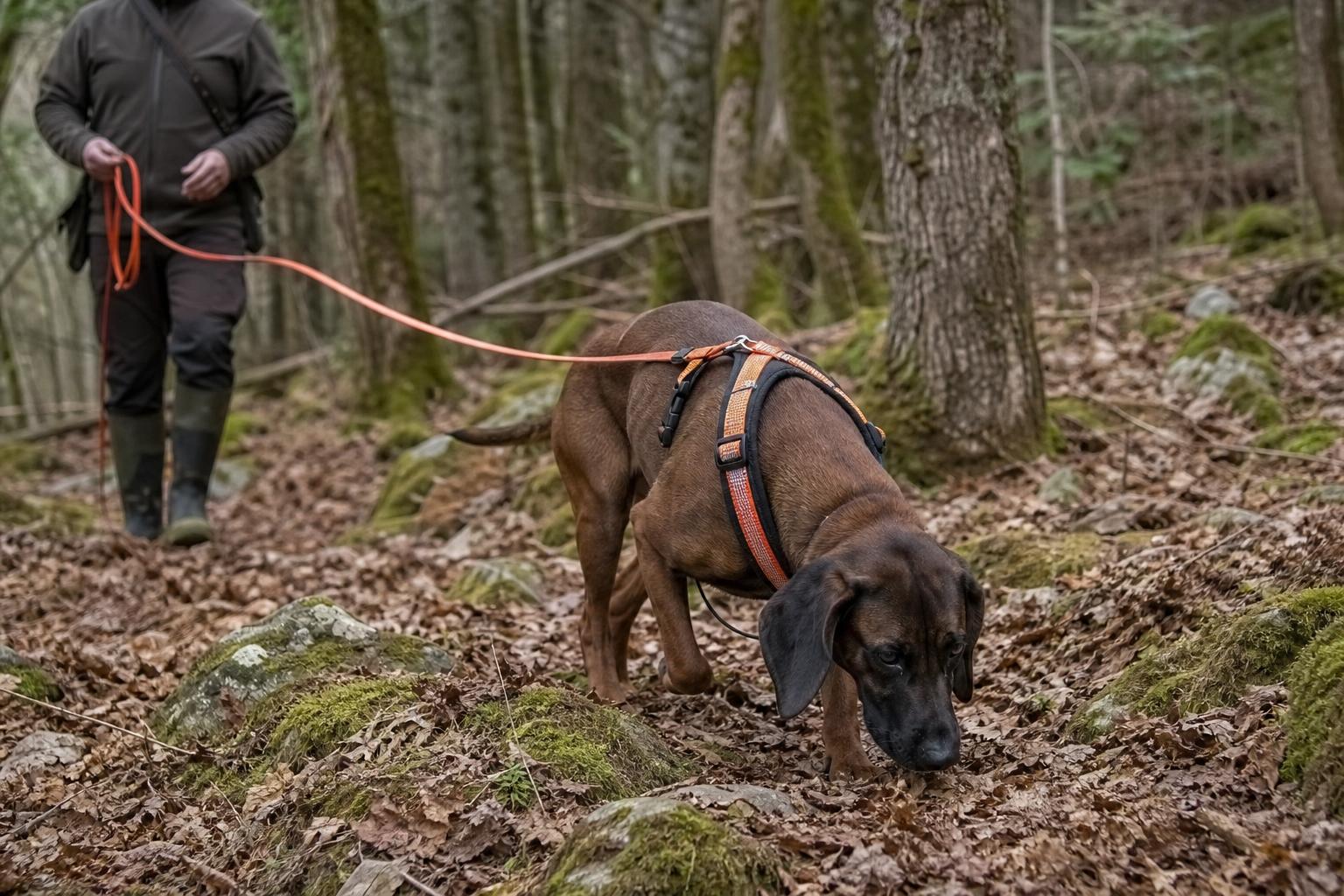
A started Bavarian Mountain Hound can be an appealing choice for a buyer who wants to skip the earliest puppy stage and begin with a young dog that already understands basic handling, routine, and breed-appropriate work. This breed was developed in southern Germany as a specialized scent hound for tracking wounded game across steep, rugged terrain. That history matters when you evaluate a started dog: the best prospect is not simply energetic or friendly, but calm, focused, physically sound, and genuinely interested in using its nose with purpose.
Because Bavarian Mountain Hounds are still relatively uncommon in many areas, buyers should be careful with labels. One seller may call a dog started because it has had household manners and leash work. Another may mean the dog has followed artificial blood trails, worked controlled tracking drills, or had field exposure with an experienced handler. Before you commit, ask exactly what has been taught, how often it has been practiced, and whether the dog can demonstrate those skills in a fair setting.
What qualifies as “started”
For a Bavarian Mountain Hound, “started” should mean the dog has moved beyond simple socialization and has begun a structured foundation for the work or lifestyle it is being sold for. At minimum, expect age-appropriate conditioning, crate or kennel familiarity, leash manners, recall foundations, calm handling, and exposure to outdoor environments. A stronger started prospect should also show early scent-tracking development, confidence on varied footing, and the ability to focus on a trail despite moderate distractions.
Started does not mean finished. A started Bavarian Mountain Hound should not be represented as fully reliable on difficult real-world tracks, completely steady around every distraction, or ready to work independently without continued training. This is an intelligent, independent scent hound. When its nose turns on, the handler must have already built trust, control, and clear habits. The value of a started dog is the foundation, not a guarantee that every future hunt or tracking job will be easy.
- Ask the seller to define started in writing.
- Request the dog’s age, training timeline, and current daily routine.
- Watch the dog work rather than relying only on photos or claims.
- Look for calm focus, not frantic drive or uncontrolled chasing.
Birds introduced or breed-appropriate game exposure
The Bavarian Mountain Hound is not primarily a pointing or flushing bird dog. Its traditional role is scent work, especially following wounded large game such as deer or wild boar in difficult conditions. For this reason, breed-appropriate exposure may involve blood-trail exercises, tracking shoes, scent drags, hides, controlled game scent, or supervised work in terrain that teaches the dog to solve scent problems carefully. If a listing mentions birds, ask why birds were used and what the training goal was. Bird exposure may be useful as general environmental experience, but it should not replace the scent-hound foundation that fits this breed.
Good exposure is measured by the dog’s response. Does the Bavarian Mountain Hound lower its nose, settle into a methodical track, and show persistence? Can it handle turns, aging scent, light cover, and distractions without falling apart? Has it worked on grass, woods, slopes, wet ground, or rocky footing? Those details tell you more than a broad claim that the dog has “seen game.”
Buyers should also verify local laws and ethical requirements for tracking wounded game. In some places, tracking dogs are used under specific rules, seasons, permissions, or licensing expectations. A responsible seller should be comfortable discussing how the dog has been trained without overstating what is legal or appropriate in your area.
Gun introduction when relevant
Gun introduction may or may not be central to a Bavarian Mountain Hound’s job, depending on the buyer’s intended use. For a dog expected to accompany hunters or work around shooting activity, gun conditioning should be gradual and positive. The goal is a dog that remains composed and responsive, not one that merely endured loud noise. Ask whether the dog was introduced at a distance, paired with enjoyable work or reward, and advanced slowly as confidence improved.
Do not assume a started Bavarian Mountain Hound is gun-conditioned unless the seller can explain and demonstrate it. Some tracking-focused dogs may have more experience with scent work than gunfire. That is not automatically a flaw, but it changes what you need to plan after purchase. If gun introduction is important for your use, ask to see the dog’s reaction in a safe, controlled, low-pressure setup. Avoid any test that surprises or overwhelms the dog; a harsh evaluation can create the very problem you are trying to avoid.
Obedience level
Obedience in a started Bavarian Mountain Hound should be practical and reliable enough for safe daily handling. Expect the dog to accept a leash, load or crate reasonably, recover from distractions, and respond to basic cues such as come, sit or stand, place, leave it, and quiet handling for ears, feet, and collar work. Because this breed is scent-driven and can become deeply absorbed in a trail, recall should be discussed honestly. A seller who claims perfect off-leash reliability in all unfenced settings may be overselling.
For many Bavarian Mountain Hounds, long-line control, emergency recall foundations, and secure containment are more realistic than casual off-leash freedom. The dog should show a willingness to work with the handler, but buyers should expect to continue reinforcing obedience around wildlife scent and new environments. Look for a dog that can settle after work, not just one that performs when excited.
- Watch leash manners before and after scent work.
- Ask the dog to demonstrate recall in a fenced or long-line setting.
- Check whether the dog can be handled by a new person calmly.
- Confirm crate, vehicle, and house manners if the dog will live indoors.
Evaluating training
The best way to evaluate a started Bavarian Mountain Hound is to see a realistic demonstration. A polished video can help, but an in-person or live demonstration is better when possible. Ask for a short track appropriate to the dog’s age and claimed training level. The seller should be able to describe the age of the track, scent source, distance, number of turns, terrain, and how much help the handler will give. A young started dog does not need to solve an expert problem, but it should show interest, confidence, and a recoverable attitude when it makes a mistake.
Pay attention to the handler as much as the dog. Is the dog being guided fairly, or pressured into looking correct? Does the handler understand scent conditions, wind, and terrain? Are corrections mild and clear, or is the dog worried? Bavarian Mountain Hounds are often devoted to their owners and can be reserved with strangers, so a little caution around new people is not unusual. Still, the dog should not appear shut down, aggressive, or impossible to touch.
Verify reported working titles and test results with the issuing organisation. Confirm that the programme applies to the breed and ask what the result demonstrates about the individual dog.
Questions to ask before buying a started Bavarian Mountain Hound
- What exact training has the dog completed, and who trained it?
- How many tracks or scent sessions has the dog run?
- What game scent or breed-appropriate exposure has been used?
- Has the dog been introduced to gunfire, vehicles, kennels, children, livestock, or other dogs?
- What are the dog’s weaknesses right now?
- What support will the seller provide after the sale?
A trustworthy seller will not describe the dog as perfect. They should be able to tell you where the dog is strong, where it still needs repetition, and what kind of home or handler will suit it. For this breed, a good match usually means an active owner who values scent work, structure, secure management, and a close working relationship.
Buyer-focused conclusion
A started Bavarian Mountain Hound can be a rewarding purchase when the dog’s foundation matches your goals. Look for honest training records, breed-appropriate tracking exposure, stable temperament, manageable obedience, and a seller willing to demonstrate the dog’s current ability. Do not pay finished-dog expectations for a started-dog foundation, and do not mistake bold advertising for real preparation. The right started Bavarian Mountain Hound should give you a thoughtful head start while still leaving room for the training, bonding, and field experience that make this scent hound shine.
Explore Bavarian Mountain Hound on Working Dog Central
View the Bavarian Mountain Hound breed profile or browse Bavarian Mountain Hound listings.


