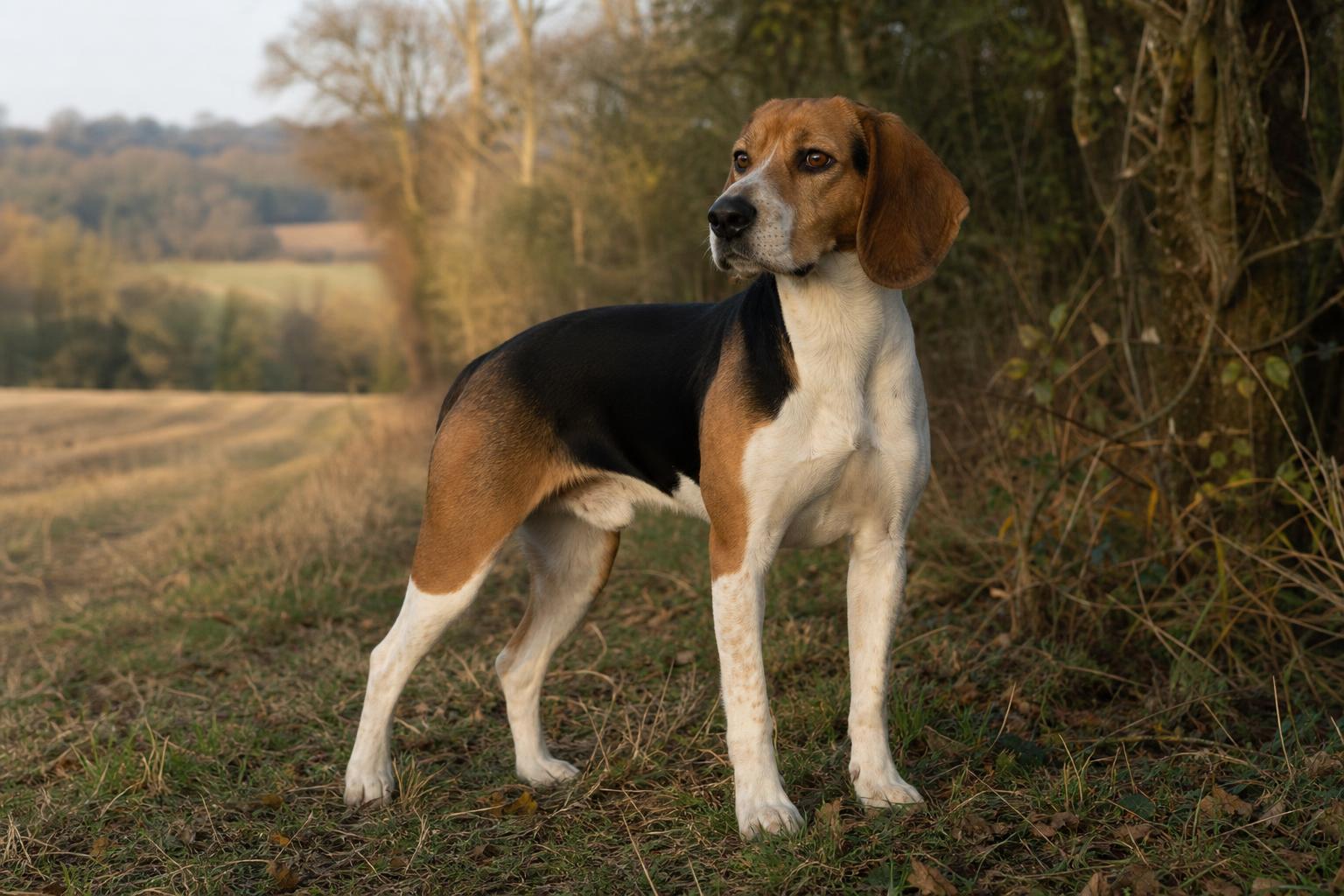
The Beagle-Harrier is a medium-sized French scenthound developed for steady, practical hunting work. For buyers researching a Beagle-Harrier, the most important thing to understand is that this is not simply a tall Beagle or a small Harrier. It is a rare, energetic, nose-driven hound with its own history, structure, and working style. The breed was shaped to track and chase hare, fox, rabbits, and other small to medium game across varied terrain, often in a pack setting.
Because the Beagle-Harrier remains uncommon outside France, good buying decisions depend on patience and verification. A responsible breeder or owner should be able to explain the dog’s temperament, activity level, health history, and how the individual fits the breed’s traditional purpose. This guide uses the breed facts provided for the Beagle-Harrier as the foundation and focuses on practical ownership, training, care, and buyer considerations.
Beagle-Harrier History and Purpose
The Beagle-Harrier emerged in France in the late nineteenth century from crosses between the Beagle and the Harrier. French hunters wanted a hound that combined the Beagle’s compact size and keen nose with the Harrier’s stamina, speed, and agility. The result was a mid-sized scenthound suited to moving across country with drive and endurance.
Over time, breeders refined the Beagle-Harrier into a balanced working dog: slightly larger and longer-legged than a typical Beagle, but smaller and handier than a Harrier. Its history is tied closely to pack hunting and scent work, which still matters for modern buyers. Even when purchased primarily as a companion, this breed usually retains the instincts of a working hound. It wants to move, investigate, follow scent, and interact with people or other dogs.
The breed has been recognized by international canine organizations, including the Fédération Cynologique Internationale, and is also noted as recognized by the United Kennel Club. However, registry recognition can vary by country and organization. Buyers should verify what registration, pedigree paperwork, or working documentation is relevant in their own region rather than assuming every registry pathway applies.
Beagle-Harrier Appearance, Size, and Build
The Beagle-Harrier has the look of a small foxhound: athletic, balanced, and built for miles. Most adults stand about 45 to 50 cm, or roughly 18 to 20 inches, at the withers. The breed should show substance without heaviness, with a short, firm, well-muscled back and an ample chest that supports endurance work.
The head is moderately strong, with a broad skull, a stop that is not too pronounced, and a muzzle about equal in length to the skull. The ears are set around eye level, fairly short for a hound, and carried close to the head with a slight turn near the lower part. The coat is flat, rather thick, and not too short. Typical color is tricolor, often fawn with black and white, with some grey-tri variations also seen in breed standards.
What buyers should look for in structure
- Sound, efficient movement without obvious stiffness or imbalance.
- A lean athletic body condition rather than excess weight.
- A chest and overall frame that suggest stamina, not exaggeration.
- Clean skin, clear eyes, and ears that are maintained and healthy-looking.
- A confident, curious expression typical of a social scenthound.
Beagle-Harrier Temperament
The Beagle-Harrier is generally described as energetic, determined, loyal, friendly, and sociable. Its pack-hound background often makes it comfortable around other dogs, and many individuals enjoy busy family life when properly exercised. The breed can be affectionate and playful in the home, especially with owners who provide routine, boundaries, and plenty of outdoor activity.
That said, the Beagle-Harrier is also a scenthound. Once its nose finds something interesting, attention can narrow quickly. Buyers should expect some independence, especially outdoors. This is not a breed for someone who wants instant off-leash reliability in unfenced areas. A Beagle-Harrier may understand a command and still choose to investigate a scent unless training and management are in place.
Family fit
For active families, hunters, hikers, and people who enjoy training games, the Beagle-Harrier can be a rewarding companion. It is usually best suited to a home that appreciates hound behavior rather than trying to suppress it. Children should be taught respectful dog handling, and all dog-to-dog introductions should be managed thoughtfully. As with any breed, individual temperament matters more than assumptions based on breed name alone.
Hunting and Working Style
The Beagle-Harrier was developed for scent tracking and chasing game such as hare, fox, rabbits, and other small to medium-sized animals. Its strengths are nose, stamina, agility, and the ability to keep working across varied terrain. The breed’s purpose is different from pointing dogs, retrievers, or flushing spaniels. Buyers looking for a gun dog should be clear about the type of hunting they do and whether a scenthound’s natural style fits that work.
Some Beagle-Harriers may be used in traditional hound work, while others may live primarily as companions with scent games, tracking, hiking, or canine sports as outlets. If a seller references hunt tests, field trials, pack work, or other performance records, ask exactly what organization issued the record and how the result relates to the breed. Not every testing system is relevant in every country, and not every Beagle-Harrier will have formal records available.
Training a Beagle-Harrier
Training should be calm, consistent, and reward-based. The Beagle-Harrier can learn quickly when the goal is clear and the reward matters, but long repetitive drills often lose the dog’s attention. Short sessions, food rewards, play, praise, and practical real-world practice usually work better than pressure or frustration.
Recall deserves special attention. Scent trails are highly reinforcing, so buyers should plan on long lines, fenced areas, and gradual proofing around distractions. A reliable recall is built over time; it should not be assumed simply because the dog is friendly or bonded to its owner. Leash manners, settling in the house, crate comfort, and polite greetings are also worth starting early.
Useful training outlets
- Tracking-style games that encourage the dog to use its nose with structure.
- “Find it” exercises in the yard or home.
- Long-line walks in safe fields or woods.
- Basic obedience practiced in short, upbeat sessions.
- Calm socialization to people, dogs, vehicles, livestock, and new places.
Exercise and Daily Care
Daily exercise is the foundation of Beagle-Harrier care. A quick walk around the block is usually not enough for a young or fit adult. This breed benefits from brisk walks, jogging, hiking, fenced running, scent work, and supervised outdoor exploration. Without enough movement and mental work, a bored hound may become noisy, destructive, restless, or determined to escape in search of scent.
Grooming is generally straightforward. The coat is short to moderate, flat, and fairly dense, so occasional brushing helps remove loose hair and dirt. Nails should be kept trimmed to support sound movement. Because the breed has drop ears and may spend time outdoors, routine ear checks are important. Owners should ask their veterinarian how to clean ears safely and how often it is needed for the individual dog.
Body condition also matters. Many hounds are food-motivated, and extra weight can interfere with comfort, stamina, and long-term soundness. Measure meals, monitor treats, and adjust food based on activity level. Hunting season, heavy hiking, winter downtime, and age can all change a dog’s calorie needs.
Health Considerations for the Beagle-Harrier
There is less widely published breed-specific health data for the Beagle-Harrier than for more common breeds, so buyers should focus on responsible screening, sound structure, and honest health history. No seller should make sweeping medical guarantees or imply that a rare breed has no health concerns. Instead, ask what the breeder tracks, what veterinary care the parents have received, and whether any orthopedic, eye, ear, or inherited issues have appeared in related dogs.
Health clearances such as OFA evaluations or DNA tests may or may not be common, available, or relevant depending on the breeder’s country, registry, and breeding program. Buyers should not assume every Beagle-Harrier litter will have the same paperwork used by more common American sporting breeds. The practical approach is to ask for documentation, confirm what organization issued it, and discuss the findings with a veterinarian if needed.
Questions to ask about health
- What health problems have occurred in the breeder’s line?
- What veterinary care have the sire and dam received?
- Are any orthopedic, eye, or genetic screenings available?
- How are puppies or adults evaluated before placement?
- What support does the seller provide after purchase?
Buying a Beagle-Harrier
Because the Beagle-Harrier is relatively rare in many areas, buyers should expect a longer search. It may require contacting breed clubs, international breeders, working hound communities, or experienced owners. Avoid rushing into a purchase because a puppy or adult is available immediately. Scarcity can attract careless sellers, so verification is especially important.
A responsible source should be willing to discuss temperament, exercise needs, containment, training, health history, and whether the breed truly fits your household. The Beagle-Harrier is best for people who want an active hound and are realistic about scent drive. If you need a low-energy apartment dog or a naturally close-working off-leash companion, another breed may be a better match.
Practical buyer checklist
- Confirm the dog is truly a Beagle-Harrier and review pedigree or registration paperwork when available.
- Meet the breeder, owner, or a knowledgeable representative by video or in person when possible.
- Ask how the dog or litter has been socialized and exercised.
- Review health history without accepting vague claims.
- Ask about return policies, contracts, deposits, transport, and ongoing support.
- Make sure your fencing, schedule, and training plan fit a driven scenthound.
Is the Beagle-Harrier Right for You?
The Beagle-Harrier is a strong match for active owners who enjoy hounds, outdoor routines, and scent-based work. It can be a lively family companion, a capable hunting partner in the right setting, and a cheerful dog for people who appreciate independence rather than fighting it. The breed needs time, movement, secure management, and patient training.
It is probably not the best fit for buyers who want a dog that will reliably ignore wildlife, stay off-leash with minimal training, or remain content with little daily exercise. The same qualities that make the Beagle-Harrier appealing—nose, stamina, curiosity, and determination—can become challenges in an underprepared home.
Beagle-Harrier Buyer-Focused Conclusion
A well-matched Beagle-Harrier can be affectionate, athletic, and deeply engaging. The key is to buy with clear eyes. Verify registry and health information, understand the breed’s scenthound purpose, prepare for daily exercise, and choose a seller who is honest about both strengths and challenges. For the right home, the Beagle-Harrier offers the classic appeal of a practical working hound: energy, nose, heart, and a bright interest in the world.
Explore Beagle-Harrier on Working Dog Central
View the Beagle-Harrier breed profile or browse Beagle-Harrier listings.


