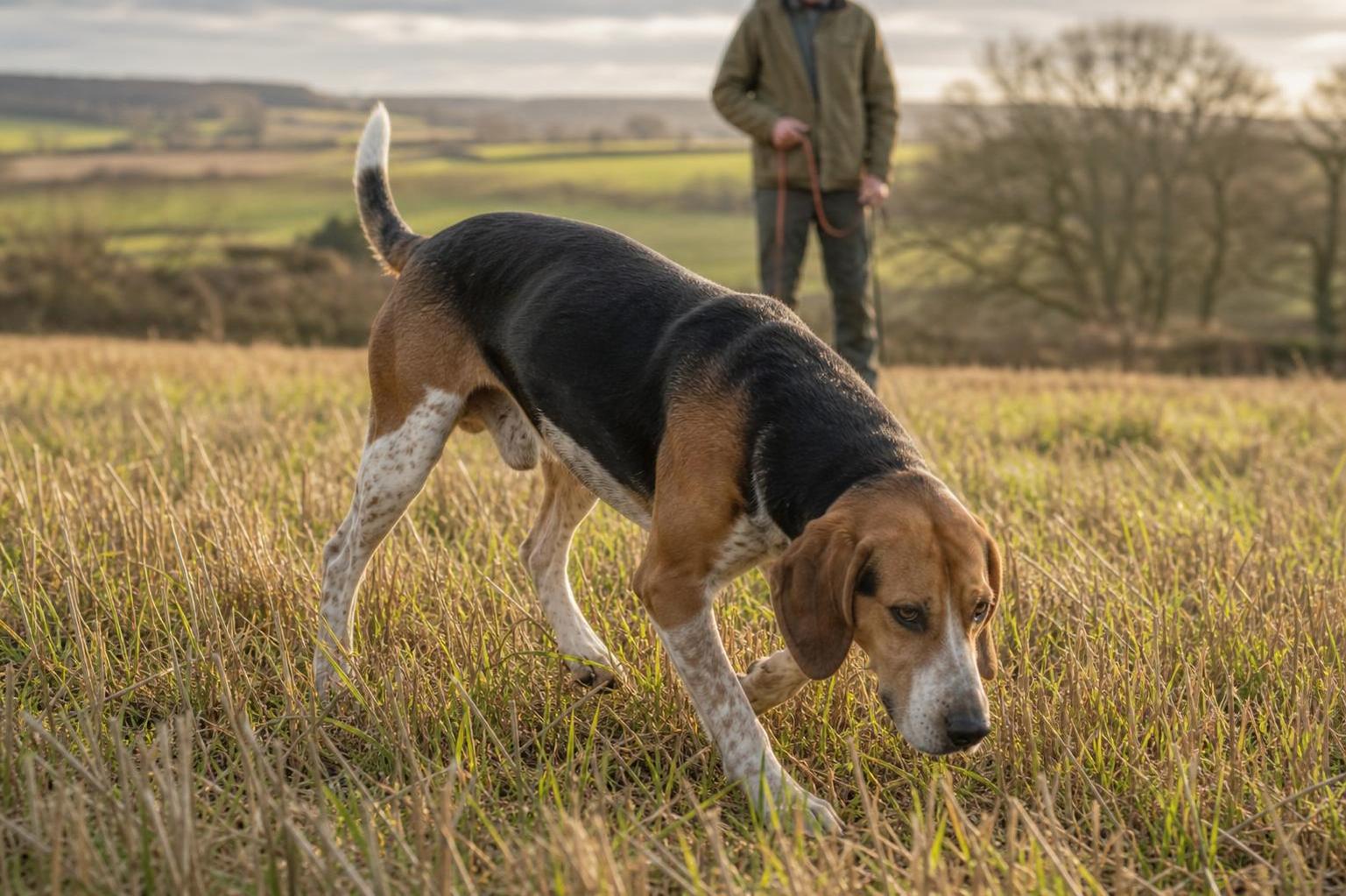
A finished Beagle-Harrier is not simply an older hound with a few seasons behind it. For buyers, the phrase should mean a mature, conditioned, field-proven scenthound that understands its job, handles reliably for its training level, and has shown the nose, stamina, voice, and pack manners expected of a practical rabbit, hare, fox, or small-game hound. Because the Beagle-Harrier is a relatively rare French breed outside its homeland, finished dogs may be harder to locate than puppies or young prospects. That makes careful evaluation especially important.
The Beagle-Harrier was developed from Beagle and Harrier ancestry to create a medium-sized hound with more stride and substance than a Beagle while remaining handy, social, and energetic. Its strongest assets are scenting ability, endurance, and a pack-oriented temperament. A buyer looking at a finished dog should focus less on labels and more on proof: where the dog has hunted, what game it has been exposed to, how it works with other hounds, and whether its temperament fits the home as well as the field.
What makes a finished dog
In practical terms, a finished Beagle-Harrier should be able to do the work it is being sold for with consistency. For a scenthound, that usually means the dog can find and follow scent, stay engaged on a line, contribute honestly in a pack, and return to control when the work is over. It should have enough experience on breed-appropriate game to show judgment, not just excitement. A seller should be able to explain the dog’s strengths clearly: speed, line control, check work, voice, independence, pack cooperation, or suitability for a particular terrain.
Finished does not mean perfect. Hounds are living animals, and scenthounds can be independent when scent is hot. What matters is whether the dog’s habits are known, manageable, and appropriate for your expectations. Ask to see the dog in a realistic setting if possible. A polished kennel description is helpful, but field behavior tells the truth.
- Ask what game the dog has hunted and how often.
- Ask whether it works alone, in a brace, or in a pack.
- Ask about recall, loading, kenneling, handling, and manners around other dogs.
- Ask what faults the seller has seen, because every working dog has some.
Hunt tests
Hunt tests can be useful when they are relevant to the registry, country, and working tradition involved, but buyers should not assume that every Beagle-Harrier will have hunt test credentials. The breed has FCI recognition and a working scenthound background, while availability of organized tests may vary by region. In North America, some hound events, club activities, or registry programs may be more relevant than others depending on how the dog is registered and campaigned.
If a seller mentions hunt tests, ask for the organization name, event type, dates, scores or qualifying results, and what those results actually measured. A finished hound for hunting hare or rabbit should still be evaluated on real-world performance. A test record can support the story, but it should not replace watching the dog work or speaking with people who have hunted over it.
Verify working records and breed eligibility
Verify reported working titles and test results with the issuing organisation. Confirm that the programme applies to the breed and ask what the result demonstrates about the individual dog.
For most Beagle-Harrier finished-dog purchases, more useful documentation may include field notes, club trial results, references from hunters, pack records, videos of the dog working, or direct observation. The goal is to confirm ability in the work the breed was made to do: tracking and pursuing game with stamina, voice, and scenting drive.
Trial records
Trial records can add value, especially when they come from a format that rewards the qualities you want. For scenthounds, the details matter. A dog that excels in one style of competition may not be the right fit for a hunter who values a different pace, tighter line control, or quieter kennel manners. Ask what registry or club hosted the trial, what class the dog ran in, how many dogs competed, and whether the results were earned over multiple outings or one exceptional day.
Because the Beagle-Harrier is uncommon, some dogs may have limited formal records despite being useful hunting hounds. That is not automatically a weakness. A rare breed may be owned by people who hunt more than they trial. Still, the burden of proof remains with the seller. Look for consistency, honest representation, and a willingness to discuss both accomplishments and limitations.
Age expectations
A finished Beagle-Harrier is usually mature enough to have meaningful field experience and settled enough to show its true temperament. Very young dogs can be talented, but they may still be prospects rather than finished hounds. Older dogs may offer steadiness, known habits, and immediate usefulness, but buyers should evaluate condition, soundness, teeth, weight, stamina, and recovery after work.
For a medium, athletic hound, age should be considered alongside mileage and care. A six-year-old dog that has been kept lean, conditioned, and well managed may be a better investment than a younger dog with poor habits or uncertain training. Ask about injury history, heat tolerance, foot toughness, ear care, parasite prevention, and how the dog performs after a long day. A veterinarian’s exam is wise before purchase, especially for a dog expected to hunt regularly.
Investment value
The value of a finished Beagle-Harrier comes from saved time, proven ability, and reduced uncertainty. You are not just buying a dog; you are buying the years of selection, handling, exposure, and field work that shaped that dog. Because prices can vary widely by region, pedigree, training, records, age, and availability, avoid anyone who insists there is one universal price for a finished hound. Instead, compare the asking price to the evidence provided.
Strong value indicators include a clear work history, sound temperament, verifiable references, healthy body condition, transparent ownership history, and a seller who can match the dog to the buyer’s needs. Weak indicators include vague claims, no opportunity to observe the dog, pressure to send money quickly, unwillingness to discuss faults, or promises that sound too broad to be true.
Evaluating a Beagle-Harrier before purchase
Start with the basics: is the dog physically sound, socially stable, and appropriate for your household? The Beagle-Harrier is often friendly and social, but it is still an active scenthound with a strong nose and an independent streak. A finished dog should be manageable around people and other dogs, but buyers should ask about kennel behavior, barking, escaping, livestock exposure, cats, children, and travel manners.
Whenever possible, see the dog outside a kennel. Watch how it moves at a walk and trot. Look for efficient, balanced movement and willingness to engage with the handler. In the field, pay attention to how the dog searches, opens, checks, and responds to pressure. If you cannot attend in person, ask for recent unedited video that shows the dog before, during, and after work.
Questions to ask the seller
- What game has this Beagle-Harrier hunted most often?
- Does the dog work best alone, with one other dog, or in a larger pack?
- What commands does the dog know, and how reliable are they around scent?
- Has the dog been trialed, tested, or evaluated by a club?
- What health screening or veterinary history can be shared?
- Why is the dog being sold?
Health, paperwork, and verification
There is less widely published breed-specific health data for the Beagle-Harrier than for many common breeds, so buyers should be practical. Ask for veterinary records, vaccination history, parasite prevention information, and any screening the owner or breeder has performed. If OFA, DNA testing, or registry paperwork is mentioned, verify the documents directly with the issuing organization where possible rather than assuming they apply in the same way they might for another breed.
Registration status also deserves careful attention. The Beagle-Harrier has international recognition, including FCI recognition, and the breed may appear in different registries depending on country and lineage. Do not assume AKC registration or a particular registry pathway unless the seller provides documentation. For a hunting buyer, registration can matter, but it should sit beside field proof, soundness, and temperament rather than replace them.
Buyer-focused conclusion
A finished Beagle-Harrier can be a smart choice for a buyer who wants a capable, social, medium-sized scenthound without starting from puppyhood. The best examples offer nose, drive, stamina, and pack sense in a dog that can still fit an active household. Take your time, verify claims, watch the dog work when possible, and match the individual hound to your terrain, game, kennel setup, and expectations. With a rare working breed, patience and due diligence are part of the purchase—and they are often what lead you to the right dog.
Explore Beagle-Harrier on Working Dog Central
View the Beagle-Harrier breed profile or browse Beagle-Harrier listings.


