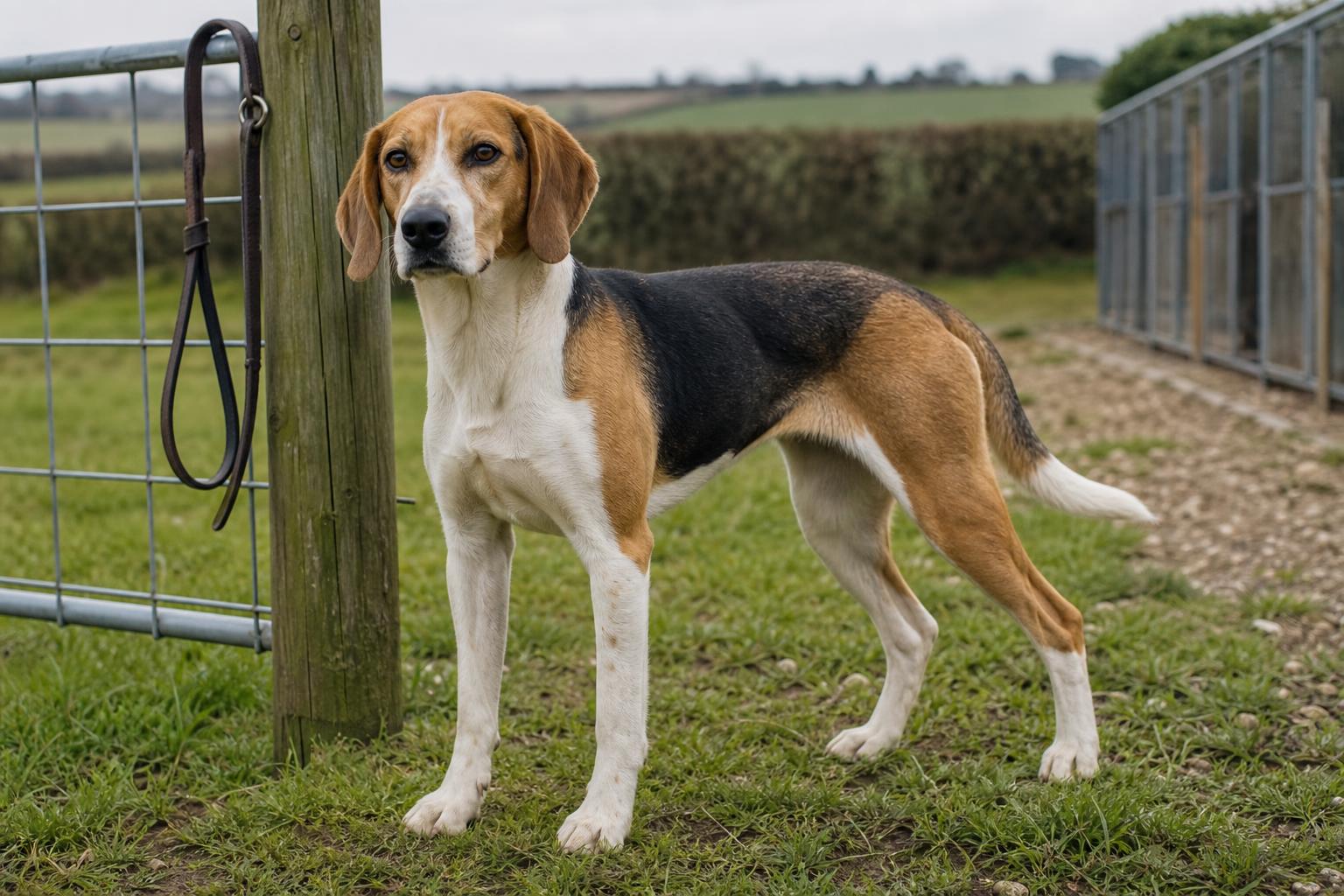
Buying a proven female Beagle-Harrier is different from buying a puppy or a young started hound. You are evaluating a mature female with a known breeding history, a visible temperament, and often a record of what she has produced. That can be valuable, especially with a rarer French scenthound where access to quality bloodlines may be limited. It also means the buyer needs to look carefully at facts rather than romance. A proven female should be judged on her own soundness, her prior litters, her maternal ability, her health history, and how well she fits the buyer's kennel goals.
The Beagle-Harrier is a medium-sized, energetic pack scenthound developed in France from Beagle and Harrier influence. Breed information describes a balanced, athletic hound with a keen nose, stamina, social nature, and strong interest in scent work. Those traits matter when evaluating a brood female because she should represent the breed as more than a pedigree on paper. A good Beagle-Harrier female should be physically useful, mentally stable, and capable of producing hounds suited for active homes, field work, or both.
Production record in a Beagle-Harrier proven female
The first question is simple: what has she produced? Ask for a clear production record that lists each prior litter, the sire used, whelping date, litter size, survival rate, and any notable results from the offspring. Because the Beagle-Harrier is uncommon in many regions, documentation may vary, but a seller should still be able to describe where offspring went and what kind of dogs they became.
- Ask whether previous pups matured into sound, athletic hounds with good noses and steady temperaments.
- Look for consistency across a litter, not just one standout pup.
- Ask about any known health, bite, structure, fertility, or temperament issues in offspring.
- Request contact with prior puppy buyers when appropriate, especially hunters, trainers, or active companion homes.
A proven female does not need a famous record to be worth buying, but vague claims should not replace evidence. A practical seller can usually explain what the female tends to stamp on her pups: size, drive, voice, biddability, sociability, coat, stamina, or independence.
Prior litters and maternal ability
Maternal ability is one of the biggest reasons to consider a proven female. Ask how she handled pregnancy, whelping, nursing, and early puppy care. A Beagle-Harrier female that whelped naturally, settled well with her puppies, kept weight appropriately, and raised consistent litters may be easier to evaluate than an unbred female. Still, every breeding carries risk, and past success is not a guarantee.
Discuss whether she required veterinary intervention, whether she accepted handling around the whelping box, and whether she stayed mentally steady while raising pups. Good maternal ability includes more than milk production. It also includes calmness, cleanliness, patience, and the ability to raise pups in a stable environment. If there were losses or complications, ask for the context without assuming the worst. Responsible breeders are usually direct about what happened and what they learned.
Age and breeding history
Age matters. A female's value as a proven brood prospect depends partly on how many productive breeding years remain and whether additional breeding is fair to the dog. Ask for her date of birth, number of litters, dates of those litters, and rest periods between them. A female that has been bred too often may not be a good investment, even if she has produced nice puppies.
Buyers should also ask whether the seller's veterinarian has any concerns about future breeding. Do not accept promises of guaranteed future litters. Fertility changes with age, condition, stress, and individual biology. A fair evaluation considers both the female's past record and her current quality of life. If the purchase is primarily for breeding, build your plan around veterinary guidance and humane limits rather than simply trying to recover the purchase price quickly.
Health clearances and veterinary records
Health records should be reviewed carefully, but buyers should avoid assuming that every registry or screening system applies equally to every breed or country. The Beagle-Harrier has international recognition, including FCI context, and is also noted as recognized by UKC, but breed availability and documentation may differ by region. Ask the seller what health screening has actually been performed and request copies rather than verbal summaries.
- Review general veterinary history, reproductive history, vaccination records, parasite prevention, and any past injuries or illnesses.
- Ask about orthopedic soundness and observe movement at a walk and trot.
- For drop-eared hounds, ask about ear history and routine ear care.
- If OFA, DNA panels, or other databases are mentioned, verify the results directly where possible.
Do not assume OFA, DNA testing, or breed-specific panels are automatically available or standard for every Beagle-Harrier. Instead, ask what is relevant for this family of hounds, what the seller has done, and what your veterinarian recommends before future breeding. Clear paperwork is important, but honest disclosure and a sound, functional female are just as important.
Temperament and daily behavior
A proven female should be evaluated as a living hound, not only as breeding stock. The Beagle-Harrier is described as friendly, sociable, energetic, and often good with people and other dogs, but also independent and scent-driven. Spend enough time with the female to see how she behaves in normal situations. Watch her around other dogs, new people, kennel activity, feeding, handling, and outdoor distractions.
Independence is normal in scenthounds, but chronic fear, sharpness, poor recovery from stress, or unmanageable reactivity should make a buyer pause. For a pack-oriented breed, social stability is especially important. If you plan to keep her in a working kennel, ask how she handles turnout, travel, hunting environments, and being separated from other dogs. If she will live in a family setting, ask about house manners, children, noise, confinement, and recall expectations.
Pedigree strength and working proof
Pedigree matters most when it is tied to real dogs and real outcomes. Ask the seller to explain the female's pedigree in plain language: which ancestors were strong workers, which lines are known for nose or stamina, and where weaknesses might be. The Beagle-Harrier was developed for tracking and chasing hare and other small to medium game, so working ability should be discussed in terms of scenting desire, endurance, pack behavior, and practical field use.
If hunt tests, trial records, or formal titles are presented, verify what organization issued them and whether those records are meaningful for this breed and your goals. In some areas, Beagle-Harriers may be rare enough that formal records are limited. In that case, firsthand field references, video, trainer notes, or offspring performance may help. Avoid sellers who use broad claims like champion bloodlines without explaining how those dogs actually worked or what they produced.
Fertility considerations
Fertility should be discussed with care and realism. Ask about heat cycles, successful breedings, missed breedings, litter sizes, whelping ease, and recovery after weaning. If the seller used outside stud service, ask whether breedings were natural, timed by veterinary testing, or managed another way. Do not assume that frozen semen, live cover, or artificial insemination options are practical or available for this female. Those choices depend on the dog, location, registry rules, veterinary access, and the stud owner.
Before buying a proven Beagle-Harrier female for breeding, involve a veterinarian who understands reproduction. A pre-purchase reproductive exam may be appropriate, but no exam can promise future results. The best purchase agreements are honest about what is known, what is unknown, and what happens if the female does not produce another litter.
Fair purchase evaluation
A fair price for a proven female is not based only on her last litter. It should reflect age, health, temperament, pedigree, remaining breeding potential, production record, and whether she also has value as a hunting or companion dog. Exact prices vary too widely by region and circumstances to state responsibly. Instead, compare similar mature hounds, ask what documentation is included, and consider the cost of transport, veterinary review, future breeding, and responsible retirement.
- Get the agreement in writing, including registration papers if applicable, transfer terms, and any breeding restrictions.
- Clarify whether the sale includes full ownership or co-ownership.
- Ask whether the seller retains breeding rights, puppy-back terms, or first refusal.
- Confirm what happens if undisclosed reproductive or health issues appear shortly after purchase.
Be cautious with pressure tactics, incomplete paperwork, reluctance to show records, or claims that a female is guaranteed to pay for herself. A good Beagle-Harrier proven female can be a serious asset, but she is still a dog whose welfare comes first.
Conclusion: choosing the right Beagle-Harrier proven female
The best Beagle-Harrier proven female is not simply the one with the most impressive story. She is the one whose record, condition, temperament, and breeding history can be verified and whose future use is fair to her. Review prior litters, maternal ability, age, health clearances, pedigree, working proof, and fertility with a clear head. When the facts line up, a proven female can help preserve the athletic, social, scent-driven qualities that make the Beagle-Harrier valuable to hunters and active homes.
Explore Beagle-Harrier on Working Dog Central
View the Beagle-Harrier breed profile or browse Beagle-Harrier listings.


