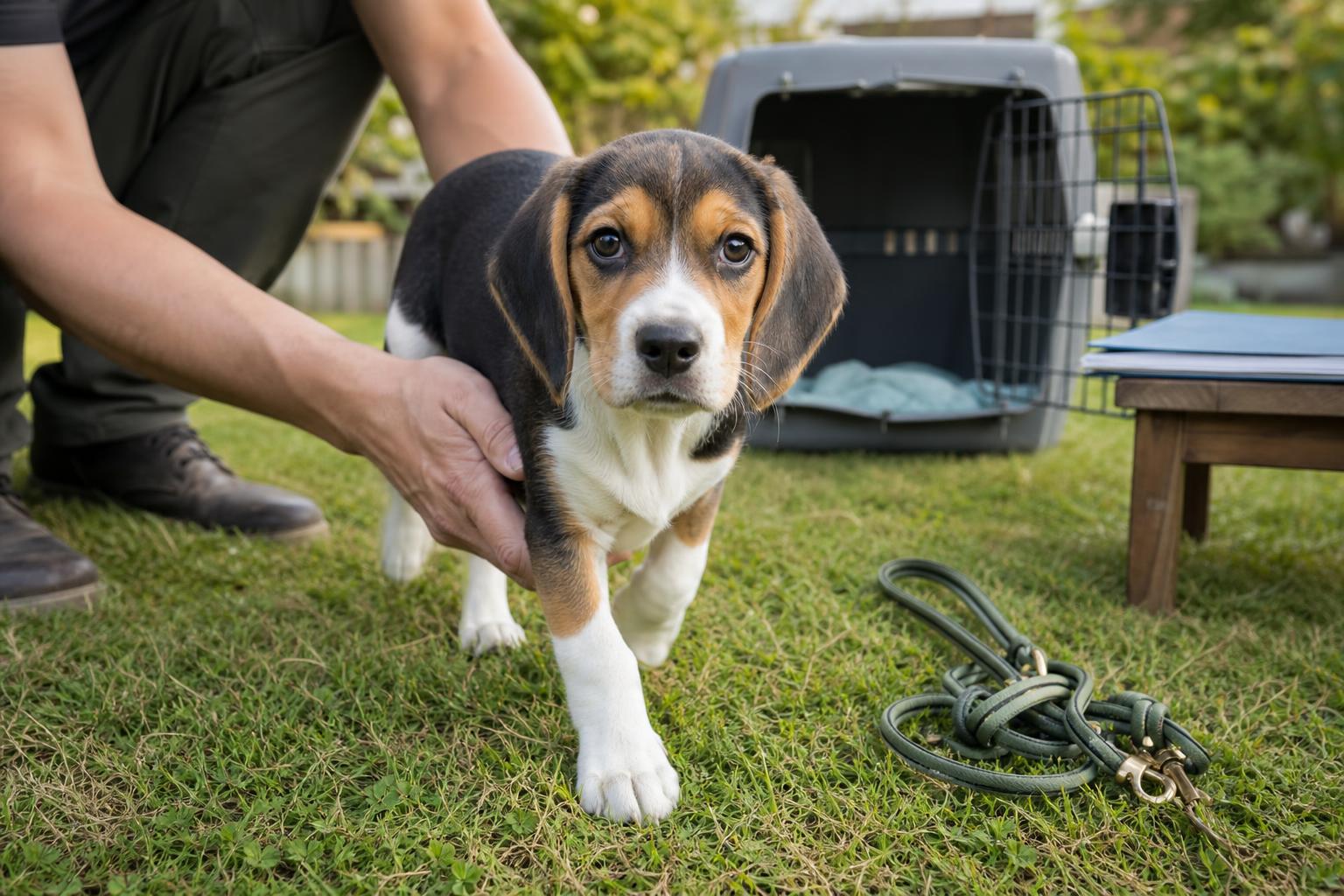
The Beagle-Harrier is a medium-sized French scenthound developed from Beagle and Harrier ancestry to hunt hare and other game with stamina, nose, and pack sense. For buyers searching for Beagle-Harrier puppies for sale, that background matters. This is not simply a taller Beagle or a casual house pet with hound markings. A well-matched Beagle-Harrier puppy can grow into an affectionate, athletic companion, but the breed is best suited to people who enjoy daily outdoor activity, patient training, and the realities of living with a scent-driven dog.
Because the Beagle-Harrier remains relatively rare outside its home region, buyers should expect the search to take time. A responsible breeder may not have puppies available immediately, and the best litter for your household may require waiting, travel, or a longer conversation about fit. Use the wait wisely. Learn what the breeder is producing, how the puppies are raised, and whether the parents reflect the breed's working hound temperament: social, energetic, determined, and keenly interested in scent.
Choosing a breeder
When evaluating Beagle-Harrier puppies for sale, start with the breeder rather than the advertisement. A good breeder should be able to explain why the litter was planned, what kind of homes the puppies are suited for, and how the sire and dam represent the breed. Since Beagle-Harriers were developed as pack scenthounds, ask about sociability with people and other dogs, steadiness in the home, and how strongly the pups are expected to follow scent outdoors.
Look for clear, specific answers. The breeder should know the difference between an active family home, a hunting home, and a casual buyer who may not be ready for a hound. They should discuss exercise honestly: brisk walks, hiking, scent games, and safe fenced areas are more realistic than assuming a puppy will be satisfied with occasional play. They should also talk openly about management, including leash work, recall training, secure fencing, and the possibility that a nose-down hound may ignore you when a scent trail is more interesting.
- Ask to see written information on the puppy's parents, age, temperament, and health history.
- Ask how puppies are socialized before placement, including exposure to household sounds, handling, crates, car rides, and age-appropriate outdoor experiences.
- Ask whether the breeder evaluates each puppy before matching it to a home.
- Be cautious of sellers who always have puppies, avoid questions, promise off-leash reliability, or cannot describe the breed beyond appearance.
Questions that reveal real breed knowledge
A strong Beagle-Harrier breeder should be comfortable discussing the breed's French scenthound roots, its medium size, short dense coat, tricolor appearance, drop ears, and athletic build. More importantly, they should understand temperament. These dogs are often friendly and loyal, but also independent and easily distracted by scent. Early training should be positive, consistent, and built around short sessions with meaningful rewards. If a seller describes the breed as automatically obedient or low-energy, keep asking questions.
AKC registration
Registration can be confusing with rare or internationally recognized breeds. Do not assume that every Beagle-Harrier puppy offered for sale will be eligible for AKC registration. The breed has recognition history with international organizations such as the FCI and is recognized by some registries, but registry options can vary by country, bloodline, and documentation. Buyers should verify exactly what paperwork is being offered before leaving a deposit.
Ask the breeder which registry the litter is recorded with, whether both parents are registered, and whether the puppy will come with individual registration papers or only a pedigree copy. If AKC participation matters to you, contact the AKC or review current AKC resources directly rather than relying on a seller's casual statement. For hunting, performance, or breeding goals, also ask whether the available registry supports the events or documentation you care about.
- Confirm the registered names and numbers of the sire and dam when available.
- Ask whether registration is full, limited, export-only, or otherwise restricted.
- Make sure the name on the paperwork matches the breeder or legal seller.
- Keep copies of contracts, pedigrees, health records, and correspondence.
Vaccinations
Vaccination records should be part of any Beagle-Harrier puppy purchase, but buyers should avoid treating a seller's health comments as a substitute for veterinary care. Ask for a dated record showing what vaccines the puppy has received, who administered them, and when the next boosters are due. Many puppies leave for new homes before their vaccine series is complete, so the first veterinary appointment should happen promptly after pickup.
Because Beagle-Harriers are active hounds often suited to outdoor homes, discuss lifestyle risks with your veterinarian. Hunting, hiking, rural exposure, ticks, and contact with other dogs may affect vaccine timing, parasite prevention, and overall preventive care. A responsible breeder may provide guidance based on their experience, but your veterinarian should tailor the plan to your region and the individual puppy.
Health records to request
- A vaccination and deworming record with dates and product names if available.
- A veterinary exam record or health certificate when required by law or contract.
- Information on the parents' health history and any screening the breeder performs.
- Feeding instructions and the current food so diet changes can be made gradually.
For this breed, also ask about ears, body condition, and movement. Drop-eared hounds can need routine ear checks, especially when they spend time outdoors. Athletic structure matters because the Beagle-Harrier was built for steady miles in the field, not just a pretty outline in photos.
Bringing puppy home
Bringing a Beagle-Harrier puppy home should be planned around safety, routine, and scent management. These puppies are curious and driven by their noses. Before pickup, check fencing, gates, crate setup, leash equipment, and where the puppy will sleep. A secure yard is helpful, but it is not a replacement for supervised exercise and training. Young hounds should not be expected to make good decisions around roads, livestock, wildlife, or unfenced spaces.
Start with simple structure: regular meals, predictable potty trips, short crate sessions, and calm handling. Keep training upbeat and brief. Reward name response, leash following, check-ins, and coming when called, but do not assume early puppy recall will hold up around scent. Long lines and fenced areas are practical tools, not signs of failure. The goal is to build habits before the puppy discovers that the wider world is full of trails to follow.
Early priorities for Beagle-Harrier puppies
- Socialize carefully with friendly people, stable dogs, household noises, vehicles, and safe outdoor settings.
- Practice handling ears, feet, mouth, collar, and body checks so routine care is easier later.
- Use food rewards, praise, and play to make training worthwhile.
- Introduce scent games such as finding treats or following short, easy trails.
- Prevent rehearsals of unwanted behavior, including door dashing, nuisance barking, and ignoring recall in open areas.
A Beagle-Harrier can be a wonderful family companion when the household understands the breed's need for movement and mental work. Children should be taught to respect the puppy's space, and adults should supervise interactions. If other dogs are in the home, introduce them gradually and avoid overwhelming the puppy during the first few days.
Typical puppy prices
Typical puppy prices for Beagle-Harriers can vary widely because the breed is uncommon, litters may be limited, and location can affect availability. It would be misleading to promise an exact price range without knowing the breeder, country, pedigree, travel requirements, and what is included in the sale. Instead of shopping by the lowest number, compare what the price represents.
A responsible price discussion should include the puppy's age, registration status, veterinary records, breeder support, contract terms, and whether transportation is involved. Imported or distant puppies may involve added costs such as travel, export documentation, health certificates, or ground transport. A higher price does not automatically prove quality, and a low price does not automatically mean a bad puppy, but vague answers and pressure tactics are red flags.
What should be clear before paying a deposit
- The total purchase price and what is included.
- Whether the deposit is refundable, transferable, or tied to a specific litter.
- The pickup date, transport plan, and who is responsible for travel costs.
- Any spay/neuter, breeding, registration, or return-to-breeder terms.
- What happens if the puppy is not a good fit or a veterinary concern is found soon after purchase.
Be especially careful with online listings that use stolen photos, refuse phone or video conversations, request unusual payment methods, or claim immediate availability of a rare breed without meaningful screening. For a Beagle-Harrier, a thoughtful breeder will usually care where the puppy is going.
Buyer-focused conclusion
Finding Beagle-Harrier puppies for sale is less about chasing the first available listing and more about matching a rare, active scenthound to the right life. Verify registration rather than assuming it. Review vaccination and veterinary records. Choose a breeder who understands the breed's hunting heritage, social pack nature, exercise needs, and independent nose. If you can offer structure, outdoor time, patient training, and secure management, a Beagle-Harrier puppy can become an affectionate, lively partner for field, trail, and family life.
Explore Beagle-Harrier on Working Dog Central
View the Beagle-Harrier breed profile or browse Beagle-Harrier listings.


