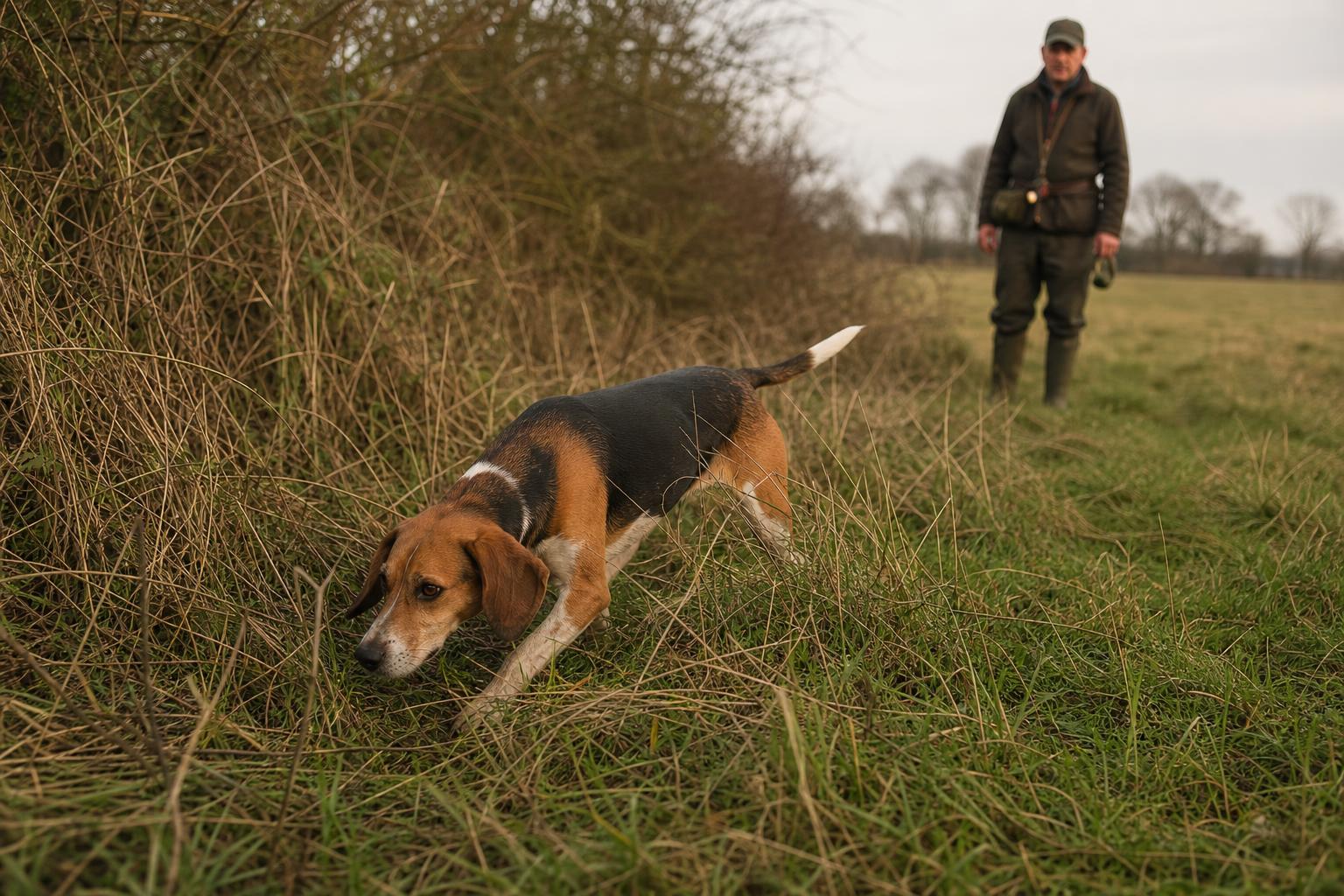
A started Beagle-Harrier can be a smart choice for a buyer who likes this French scenthound’s nose, stamina, and social nature but wants more information than a young puppy can provide. The Beagle-Harrier was developed as a medium-sized pack hound for hare, fox, and similar game, so a good started dog should show curiosity, endurance, and a desire to follow scent while still being manageable around people and other dogs. Because the breed is uncommon in many regions, buyers should be patient, ask detailed questions, and evaluate the individual dog rather than relying on broad assumptions.
The term started is useful, but it is not a guarantee. One seller may mean a young dog that has been exposed to basic handling and field walks. Another may mean a hound that is already trailing game, hunting with other dogs, loading well, and returning to the handler reliably in familiar settings. Before you travel or place a deposit, ask the seller to define exactly what the Beagle-Harrier has done, where it has done it, and how recently the work was observed.
What qualifies as “started” in a Beagle-Harrier
For a Beagle-Harrier, a started dog should have more than ordinary pet manners. At minimum, the dog should have age-appropriate exposure to the environments and routines expected of a working scenthound. That may include wearing a collar or tracking equipment comfortably, riding in a vehicle or dog box, spending time around other hounds, walking on lead, coming when called in a controlled area, and showing interest in scent or game sign. A started Beagle-Harrier does not need to be finished, but it should offer real evidence of trainability and working potential.
Because this breed is a pack-oriented hound, buyers should ask how the dog behaves alone and with other dogs. A dog that follows along in a group may look promising, but the seller should be able to tell you whether it independently hunts, opens on scent, checks back, handles pressure, and settles when the hunt is over. Good sellers can explain the dog’s strengths and limitations in plain language. Be cautious if every answer sounds vague or if the dog is described only with big claims and no examples.
- Ask the dog’s age and how long it has been in structured training.
- Ask what commands or handling cues it understands.
- Ask whether it has worked alone, in pairs, or in a pack.
- Ask what terrain, weather, and cover it has experienced.
- Ask for recent video that shows the dog before, during, and after work.
Birds introduced or breed-appropriate game exposure
The Beagle-Harrier is a scenthound, not a pointing breed or retriever, so buyers should frame game exposure around the breed’s purpose. Breed-appropriate exposure usually means scent trails and pursuit of hare, rabbit, fox, or other legal small to medium game where permitted. In some regions, trainers may use controlled scent drags, enclosed starting pens, or field walks in areas with natural game sign. The important question is not whether the dog has seen birds, but whether it has been introduced to the type of work you actually want it to perform.
If a seller advertises a Beagle-Harrier as a started gun dog, ask what that means in their program. Some hound buyers want a dog for traditional pack hunting. Others want a versatile outdoor companion that can trail, hike, and work scent games without formal hunting. Both can be valid, but the training should match the goal. Do not assume that exposure to one kind of game transfers perfectly to another. A dog started on rabbit may still need time, confidence, and guidance before working different terrain or quarry.
Questions to ask about game exposure
- What game or scent has the Beagle-Harrier been introduced to?
- Was the exposure natural, controlled, or both?
- Does the dog show honest interest, or does it mainly follow other dogs?
- How does the dog respond when scent is weak, old, or interrupted?
- Has the dog hunted legally in the type of country where you expect to use it?
Be especially careful with claims that sound too polished. A rare young hound that is advertised as exceptional on every species, in every terrain, and with no flaws deserves extra verification. Honest sellers usually know that young dogs are still developing and will describe both progress and work still needed.
Gun introduction when relevant
Gun introduction may or may not be central for a Beagle-Harrier, depending on the hunting style and local customs. Where firearms are part of the hunt, the dog should be introduced gradually and positively, not surprised at close range. A started dog should show comfort with normal field noise and should not panic, bolt, shut down, or become difficult to handle after a shot. However, buyers should not assume every Beagle-Harrier has been gun conditioned just because it is listed as started.
Ask the seller to separate general noise tolerance from true gun introduction. A dog that is comfortable around kennel noise, trucks, and barking hounds has not necessarily been conditioned to gunfire. If gun work matters to you, request specifics: what type of firearm or blank pistol was used, at what distance, how many sessions the dog has experienced, and how the dog responded before and after the shot. If gun work is not relevant to your intended use, the conversation is still useful because it tells you how thoughtful the trainer has been with pressure and environmental exposure.
Safe verification points
- Was gun introduction done gradually at a distance?
- Was it paired with something positive or exciting for the dog?
- Has the dog heard shots while engaged in scent work or only around the kennel?
- Did the seller observe any worry, avoidance, or recovery time?
- Can you see a calm demonstration in an appropriate, legal setting?
If the seller cannot verify gun introduction, do not treat that as a fatal flaw by itself. It simply means you should price and plan for continued training with a careful, low-pressure approach.
Obedience level for a started Beagle-Harrier
Obedience in a Beagle-Harrier should be judged through a hound lens. This breed is energetic, social, and scent-driven, and many individuals become highly focused when their nose locks onto something interesting. A started dog should not be expected to behave like a polished obedience competitor, but it should have enough foundation to live and travel safely. Look for leash manners, crate or kennel acceptance, reasonable recall in controlled areas, comfort being handled, and the ability to settle after exercise.
Recall deserves special attention. Scenthounds can be independent outdoors, and a started Beagle-Harrier may need long-line work, fenced areas, and consistent reinforcement before being trusted in more distracting settings. Ask the seller what the dog does when called off scent, around other dogs, near roads, and in new places. If the answer is that the dog is perfect off leash everywhere, ask for proof and be skeptical. Management is part of responsible hound ownership.
Useful obedience foundations
- Comes when called in a fenced or low-distraction area.
- Walks on lead without constant pulling that is unsafe for the handler.
- Loads, rides, and unloads with reasonable control.
- Accepts collaring, foot checks, ear checks, and basic grooming.
- Can be kenneled or crated without excessive distress after adjustment.
- Shows social stability around people and compatible dogs.
For a buyer, the goal is not perfection. The goal is clarity. Know what the dog understands today, what still needs repetition, and whether the dog’s temperament fits your home, hunting style, and training skill.
Evaluating training before you buy
The best way to evaluate a started Beagle-Harrier is to see the dog work in person. If travel is not possible, ask for unedited video that shows the dog being brought out, handled, exposed to the field, and put away. Short highlight clips can be useful, but they do not tell the whole story. You want to see the dog’s attitude, recovery, independence, and response to the handler over time.
Ask the seller to demonstrate the exact skills they claim. If the dog is said to trail game, watch it search and follow scent. If the dog is said to work with a pack, observe how it interacts with other hounds. If the dog is said to be started on recall, ask to see a realistic recall in a safe area. If the dog has been exposed to gunfire, ask for a thoughtful explanation and, where appropriate, a demonstration that does not create unnecessary stress.
Documents and history to request
- Pedigree or registration information if available and relevant.
- Vaccination and veterinary records appropriate to the dog’s age.
- Any health screening records the breeder or seller actually has.
- Training notes, hunting logs, or trial records if they exist.
- A written bill of sale that states what is and is not guaranteed.
Verify reported working titles and test results with the issuing organisation. Confirm that the programme applies to the breed and ask what the result demonstrates about the individual dog.
Health, structure, and temperament checks
A started dog gives you the advantage of seeing more of the adult dog than you can see in a puppy. Watch the Beagle-Harrier move at a walk and trot. The breed should look balanced, athletic, and capable of steady miles, with a strong back, useful chest, and efficient movement. Limping, extreme fatigue, reluctance to load, or obvious discomfort after normal work should be discussed with a veterinarian before purchase.
Because published breed-specific health data is limited compared with more common breeds, buyers should ask practical questions rather than expecting a universal checklist. Ask about orthopedic soundness, past injuries, ear care, parasite prevention, weight, conditioning, and any screenings the seller performs. If terms such as OFA or DNA testing are mentioned, verify what was tested, which dog was tested, and how the result relates to the Beagle-Harrier. Do not accept health claims that cannot be documented.
Temperament matters as much as field interest. A started Beagle-Harrier should be social enough for its intended life, whether that is a hunting kennel, active family home, or combination of both. Look for a dog that recovers from surprise, accepts handling, and shows normal curiosity. Excessive fear, uncontrolled aggression, or inability to settle may require more expertise than many buyers expect.
Price, fit, and fair expectations
Started dogs usually cost more than puppies because the seller has invested time, feeding, housing, exposure, and selection. Exact prices vary by region, age, training level, pedigree, health documentation, and demand, so avoid anyone who pressures you with a one-size-fits-all explanation. Instead, compare what is included: verified training, records, support after the sale, transportation, and a clear agreement about trial period or return terms if offered.
Fit is the most important value measure. A lively Beagle-Harrier that thrives in a pack and needs daily miles may be a bargain for an active hunter and a poor match for a quiet household. A dog with basic scent exposure and excellent manners may be ideal for a family that wants a trainable outdoor companion, even if it is not yet a hard-driving pack hound. Define your goal before you shop, then choose the dog whose actual skills line up with that goal.
Buyer-focused conclusion
A Beagle-Harrier started dog can shorten the learning curve, but only when the word started is backed by honest detail. Look for breed-appropriate game exposure, sensible gun introduction when relevant, useful obedience, social stability, and clear records. Verify registry claims, health information, and event eligibility instead of assuming they apply. With patient evaluation and realistic expectations, the right started Beagle-Harrier can become an athletic, affectionate, nose-driven partner for buyers who understand and enjoy a true working scenthound.
Explore Beagle-Harrier on Working Dog Central
View the Beagle-Harrier breed profile or browse Beagle-Harrier listings.


