The Belgian Malinois: The Modern Military Dog
Jeff Davis | https://workingdogcentral.com
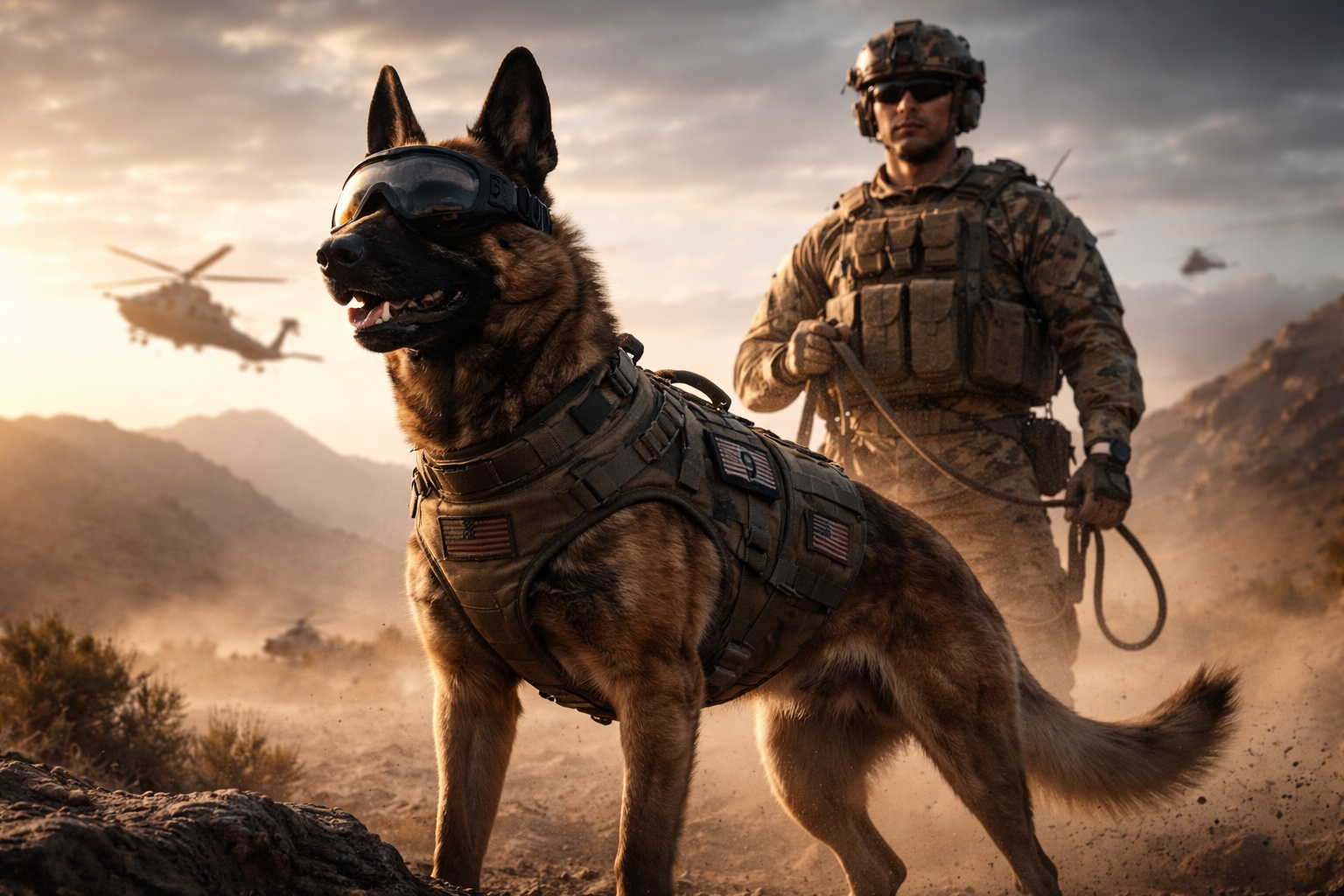
There are certain dogs that seem almost purpose-built for hard work. The Belgian Malinois is one of them. Anyone who has spent time around serious working dogs can recognize it immediately—the intensity in the eyes, the restless energy, the laser-focused attention waiting for a command.
This isn’t the kind of dog that lounges around a living room waiting for supper. The Malinois was bred to work, and in today’s world it has become the gold standard for military and tactical working dogs.
While many breeds have served in military roles over the years, the Belgian Malinois has risen to the top in modern operations. From patrol and detection work to some of the most sensitive missions conducted by elite military units, these dogs have earned a reputation for speed, intelligence, and relentless determination.
To understand why the Malinois has become the modern military dog, you have to look back at where the breed came from.
From Belgian Pastures to the World Stage
The Belgian Malinois traces its roots to the herding dogs of Belgium, where farmers needed tough, intelligent dogs capable of managing livestock across open countryside. In the late 1800s, Belgian breeders began formalizing several varieties of shepherd dogs. The Malinois emerged as the short-haired, fawn-colored variety with a black mask.
From the beginning, the breed stood out for its high energy and working drive.
Shepherds valued these dogs for their endurance and intelligence. A good Malinois could think independently, react quickly to livestock movement, and work tirelessly through long days in the field. Those traits would later prove invaluable in an entirely different environment—the battlefield.
By the early twentieth century, Belgian shepherd dogs were already being used in police work across Europe. Their sharp minds and willingness to train made them natural candidates for detection, patrol, and protection roles.
As global conflicts evolved and law enforcement began adopting canine units more widely, the Malinois steadily built a reputation as one of the most capable working breeds available.
Built for Speed, Stamina, and Focus
Spend a few minutes watching a Belgian Malinois move, and the first thing you notice is speed. These dogs are fast in a way that feels explosive. When they launch into motion, it’s like watching a coiled spring release.
That athleticism is one of the key reasons military trainers value the breed so highly.
A typical Malinois weighs between 60 and 80 pounds, but the dog carries that weight with remarkable agility. The build is lean, muscular, and efficient. Compared to heavier breeds, the Malinois can scale obstacles quickly, maneuver through tight spaces, and maintain endurance over long operations.
Speed alone, however, doesn’t make a great military dog.
What truly sets the Malinois apart is its focus.
Handlers often describe the breed as having a kind of relentless mental intensity. Once trained for a task, a good Malinois locks onto the job with remarkable dedication. Whether searching for explosives, tracking a suspect, or protecting a handler, the dog works with a seriousness that is hard to replicate in many other breeds.
That focus allows them to perform in chaotic environments where distractions would overwhelm lesser-trained dogs.
The Rise of the Malinois in Special Operations
For decades, the German Shepherd dominated military and police K9 programs. The breed served with distinction in both world wars and became the face of working dogs for generations.
But in recent decades, the Belgian Malinois began gaining ground.
One reason is simple practicality. Compared to many modern German Shepherd lines, Malinois tend to be lighter, faster, and capable of maintaining peak physical performance for longer periods. Their agility and drive make them especially well suited for the kind of rapid-response missions common in modern warfare.
The breed gained widespread public attention when a Belgian Malinois named Cairo accompanied U.S. Navy SEALs during the raid that resulted in the death of Osama bin Laden in 2011. That moment introduced millions of people to the role military working dogs play in special operations.
But within the working dog community, the Malinois had already been proving itself for years.
These dogs are trained to parachute with handlers, rappel from helicopters, detect explosives, track enemy movement, and apprehend hostile targets when necessary. It’s a level of versatility that few breeds can match.
Intelligence That Demands a Job
If there is one thing every experienced handler will tell you about the Belgian Malinois, it’s this: these dogs need a purpose.
Their intelligence is extraordinary, but that intelligence comes with energy and drive that must be directed somewhere. Without structured training and work, a Malinois can quickly become frustrated or destructive.
In the hands of a skilled trainer, however, that same intensity becomes an incredible asset.
Military working dogs undergo rigorous training that begins at a young age. They learn obedience, scent detection, tracking, and controlled aggression techniques designed to safely apprehend threats.
A well-trained Malinois becomes more than just a dog following commands. The animal develops a close partnership with its handler, learning to read body language and subtle cues while working in high-pressure environments.
Handlers often describe their dogs not simply as tools, but as teammates.
The Bond Between Handler and Dog
Anyone who has hunted behind a good dog understands something about the partnership between human and canine. Whether it’s a pointer locking up on a covey of quail or a retriever bringing back a downed duck, there’s a quiet understanding that forms between dog and handler over time.
That bond becomes even deeper in military working dog teams.
Handlers rely on their dogs for safety. In many situations, the dog is the first to enter a building or search an area for explosives. That level of trust creates a connection that goes far beyond simple obedience training.
A Malinois learns to depend on its handler just as much as the handler depends on the dog.
In the field, that partnership can mean the difference between life and death.
Why the Malinois Continues to Dominate
There are many good working breeds in the world. German Shepherds, Dutch Shepherds, Labrador Retrievers, and several others continue to play important roles in military and police work.
But the Belgian Malinois occupies a unique place in modern K9 programs.
The breed combines intelligence, athleticism, and trainability in a way that fits perfectly with the demands of modern tactical operations. They are tough enough to handle extreme environments, yet responsive enough to perform delicate detection work.
Just as importantly, they possess the kind of drive that keeps them engaged in difficult work day after day.
For military trainers searching for the ideal working dog, those traits are hard to ignore.
A Breed That Earned Its Reputation
The Belgian Malinois didn’t become the modern military dog overnight. Its reputation was built through decades of real-world performance, from police patrol units to some of the most demanding missions imaginable.
These dogs are not flashy show animals or casual companions. They are serious working dogs bred for purpose, discipline, and endurance.
In the right hands, a Malinois becomes one of the most capable canine partners a handler could ever ask for.
And whether they are searching for explosives in a crowded airport, tracking a suspect across rough terrain, or standing beside soldiers on a distant battlefield, these remarkable dogs continue to prove why they have earned their place as one of the greatest working breeds in the world.
This isn’t the kind of dog that lounges around a living room waiting for supper. The Malinois was bred to work, and in today’s world it has become the gold standard for military and tactical working dogs.
While many breeds have served in military roles over the years, the Belgian Malinois has risen to the top in modern operations. From patrol and detection work to some of the most sensitive missions conducted by elite military units, these dogs have earned a reputation for speed, intelligence, and relentless determination.
To understand why the Malinois has become the modern military dog, you have to look back at where the breed came from.
From Belgian Pastures to the World Stage
The Belgian Malinois traces its roots to the herding dogs of Belgium, where farmers needed tough, intelligent dogs capable of managing livestock across open countryside. In the late 1800s, Belgian breeders began formalizing several varieties of shepherd dogs. The Malinois emerged as the short-haired, fawn-colored variety with a black mask.
From the beginning, the breed stood out for its high energy and working drive.
Shepherds valued these dogs for their endurance and intelligence. A good Malinois could think independently, react quickly to livestock movement, and work tirelessly through long days in the field. Those traits would later prove invaluable in an entirely different environment—the battlefield.
By the early twentieth century, Belgian shepherd dogs were already being used in police work across Europe. Their sharp minds and willingness to train made them natural candidates for detection, patrol, and protection roles.
As global conflicts evolved and law enforcement began adopting canine units more widely, the Malinois steadily built a reputation as one of the most capable working breeds available.
Built for Speed, Stamina, and Focus
Spend a few minutes watching a Belgian Malinois move, and the first thing you notice is speed. These dogs are fast in a way that feels explosive. When they launch into motion, it’s like watching a coiled spring release.
That athleticism is one of the key reasons military trainers value the breed so highly.
A typical Malinois weighs between 60 and 80 pounds, but the dog carries that weight with remarkable agility. The build is lean, muscular, and efficient. Compared to heavier breeds, the Malinois can scale obstacles quickly, maneuver through tight spaces, and maintain endurance over long operations.
Speed alone, however, doesn’t make a great military dog.
What truly sets the Malinois apart is its focus.
Handlers often describe the breed as having a kind of relentless mental intensity. Once trained for a task, a good Malinois locks onto the job with remarkable dedication. Whether searching for explosives, tracking a suspect, or protecting a handler, the dog works with a seriousness that is hard to replicate in many other breeds.
That focus allows them to perform in chaotic environments where distractions would overwhelm lesser-trained dogs.
The Rise of the Malinois in Special Operations
For decades, the German Shepherd dominated military and police K9 programs. The breed served with distinction in both world wars and became the face of working dogs for generations.
But in recent decades, the Belgian Malinois began gaining ground.
One reason is simple practicality. Compared to many modern German Shepherd lines, Malinois tend to be lighter, faster, and capable of maintaining peak physical performance for longer periods. Their agility and drive make them especially well suited for the kind of rapid-response missions common in modern warfare.
The breed gained widespread public attention when a Belgian Malinois named Cairo accompanied U.S. Navy SEALs during the raid that resulted in the death of Osama bin Laden in 2011. That moment introduced millions of people to the role military working dogs play in special operations.
But within the working dog community, the Malinois had already been proving itself for years.
These dogs are trained to parachute with handlers, rappel from helicopters, detect explosives, track enemy movement, and apprehend hostile targets when necessary. It’s a level of versatility that few breeds can match.
Intelligence That Demands a Job
If there is one thing every experienced handler will tell you about the Belgian Malinois, it’s this: these dogs need a purpose.
Their intelligence is extraordinary, but that intelligence comes with energy and drive that must be directed somewhere. Without structured training and work, a Malinois can quickly become frustrated or destructive.
In the hands of a skilled trainer, however, that same intensity becomes an incredible asset.
Military working dogs undergo rigorous training that begins at a young age. They learn obedience, scent detection, tracking, and controlled aggression techniques designed to safely apprehend threats.
A well-trained Malinois becomes more than just a dog following commands. The animal develops a close partnership with its handler, learning to read body language and subtle cues while working in high-pressure environments.
Handlers often describe their dogs not simply as tools, but as teammates.
The Bond Between Handler and Dog
Anyone who has hunted behind a good dog understands something about the partnership between human and canine. Whether it’s a pointer locking up on a covey of quail or a retriever bringing back a downed duck, there’s a quiet understanding that forms between dog and handler over time.
That bond becomes even deeper in military working dog teams.
Handlers rely on their dogs for safety. In many situations, the dog is the first to enter a building or search an area for explosives. That level of trust creates a connection that goes far beyond simple obedience training.
A Malinois learns to depend on its handler just as much as the handler depends on the dog.
In the field, that partnership can mean the difference between life and death.
Why the Malinois Continues to Dominate
There are many good working breeds in the world. German Shepherds, Dutch Shepherds, Labrador Retrievers, and several others continue to play important roles in military and police work.
But the Belgian Malinois occupies a unique place in modern K9 programs.
The breed combines intelligence, athleticism, and trainability in a way that fits perfectly with the demands of modern tactical operations. They are tough enough to handle extreme environments, yet responsive enough to perform delicate detection work.
Just as importantly, they possess the kind of drive that keeps them engaged in difficult work day after day.
For military trainers searching for the ideal working dog, those traits are hard to ignore.
A Breed That Earned Its Reputation
The Belgian Malinois didn’t become the modern military dog overnight. Its reputation was built through decades of real-world performance, from police patrol units to some of the most demanding missions imaginable.
These dogs are not flashy show animals or casual companions. They are serious working dogs bred for purpose, discipline, and endurance.
In the right hands, a Malinois becomes one of the most capable canine partners a handler could ever ask for.
And whether they are searching for explosives in a crowded airport, tracking a suspect across rough terrain, or standing beside soldiers on a distant battlefield, these remarkable dogs continue to prove why they have earned their place as one of the greatest working breeds in the world.