The Best Dog Breeds for Detection Work
Jeff Davis | https://workingdogcentral.com
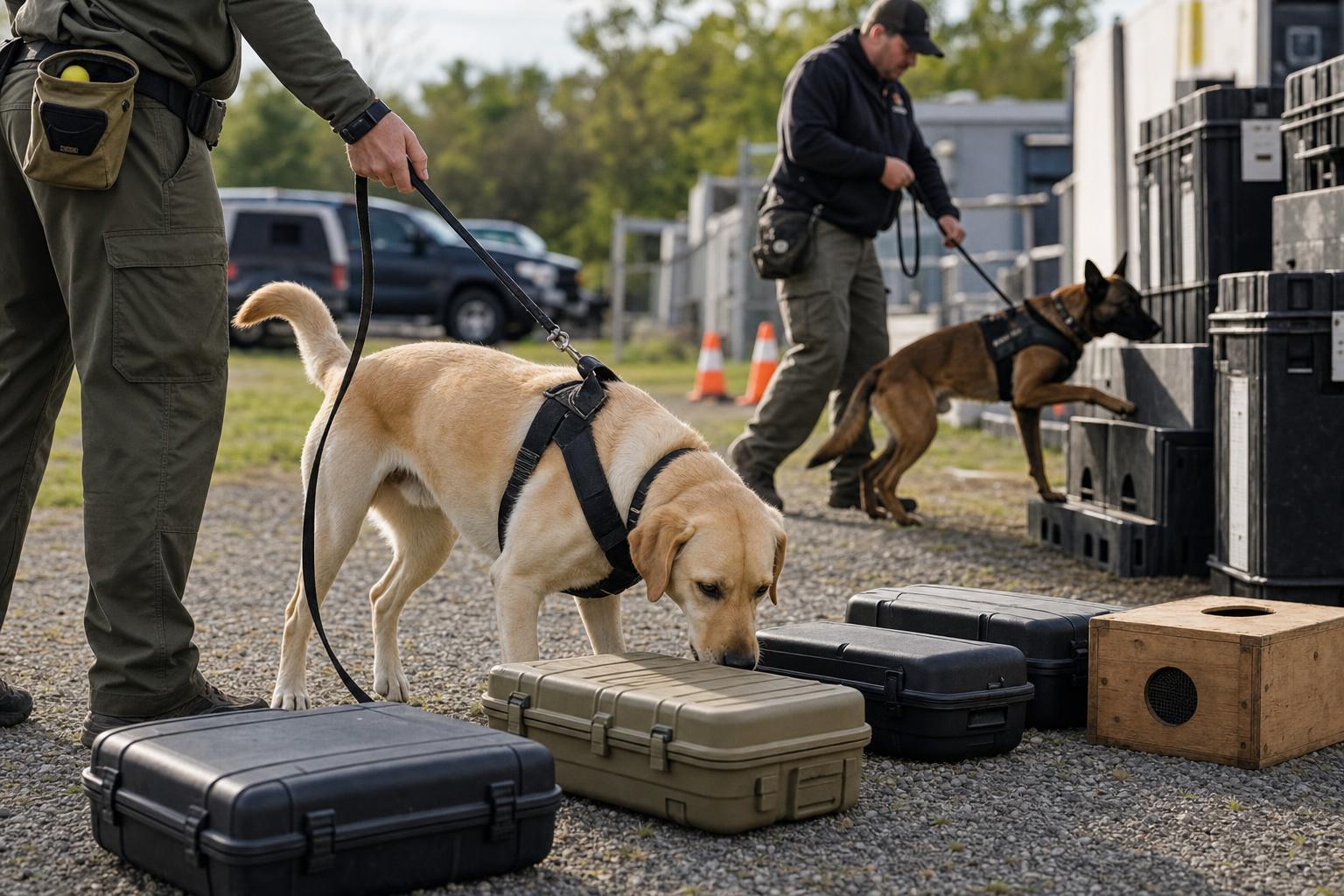
Detection work is not just about scenting ability. Every dog on earth lives by its nose, but only a handful of breeds consistently bring the whole package needed to search with purpose, stay on task under pressure, and keep hunting when the day gets long, the weather turns rough, or the environment gets noisy. A true detection dog needs nose, yes, but it also needs heart, nerve, stamina, and a mind that wants to work with a human partner.
I have seen good dogs search baggage lines, vehicles, warehouses, training fields, and rough outdoor ground where scent drifts and pools in ways that can make a young handler doubt his own eyes. The best detection breeds are the ones that keep their heads, trust their nose, and work honestly. They do not quit when the hide gets difficult, and they do not fall apart when the setting changes. That is what separates a decent prospect from a dependable detection dog.
What Makes a Great Detection Dog?
Before talking breeds, it helps to understand what really matters. A solid detection dog usually carries strong hunt drive, reward motivation, environmental confidence, and clear-headed focus. The dog has to push into new spaces willingly, work through distractions, and stay engaged with the handler without becoming dependent on constant help. In practical terms, that means a dog that will search dark rooms, slick floors, crowded areas, vehicles, brush lines, and open fields with the same honest effort.
Good detection dogs also recover fast. They do not get rattled for long by sudden noise, strange footing, or a missed find. They come back to the task. That kind of mental resilience is often every bit as important as scenting talent. A dog with a great nose and weak nerves will disappoint you sooner or later.
Labrador Retriever
If I had to name one breed that has earned its reputation over and over in detection work, it would be the Labrador Retriever. A good Lab brings a powerful nose, natural hunt instinct, strong food or toy reward drive, and a temperament that fits a wide range of handlers and environments. They are often easier to live with than some of the sharper working breeds, and that matters more than people admit. A dog that can switch off at home and turn on at work is a valuable animal.
Labs shine in detection because they tend to search with enthusiasm and persistence without becoming frantic. Many of them show a natural desire to use their nose and a willingness to work close with a handler. In crowded public settings, that stable and social temperament can be a real advantage. Whether the job involves explosives, narcotics, conservation work, or search patterns in complex indoor spaces, the Labrador remains one of the most dependable detection breeds in the world.
Why Labs Keep Showing Up in Detection Programs
It is not hype. It is consistency. Well-bred Labs often combine trainability, drive, and approachability in a way few breeds can match. They are athletic enough for demanding searches, yet steady enough for real-world deployment. When you find one with strong nerves and genuine hunt obsession, you have a dog built for the job.
German Shepherd Dog
The German Shepherd Dog has long been associated with police and military work, and for good reason. A strong working-line Shepherd can bring intensity, intelligence, stamina, and the confidence to handle serious environments. These dogs often excel when detection work overlaps with patrol, tracking, or protection demands. They are versatile, and that versatility has kept them relevant for generations.
That said, not every Shepherd is automatically a detection standout. The breed can vary widely in nerve, structure, and working drive depending on bloodline. The best ones for detection are clear-headed, environmentally sound, and deeply committed to the search. When you get that balance right, a German Shepherd can be a tremendous partner, especially for handlers who appreciate a dog with presence and grit.
Belgian Malinois
The Belgian Malinois has become a favorite in high-level working dog circles, and its reputation in detection is well earned. These dogs are fast, intense, athletic, and usually loaded with hunt and toy drive. A good Malinois attacks a search problem with energy that seems to come from somewhere below the earth. They are often well suited for demanding operational work where speed, precision, and endurance all matter.
But the same traits that make the Malinois impressive can make it a poor fit for the wrong home or inexperienced handler. They need structure, purpose, and thoughtful training. A Malinois that lacks direction can become a handful in a hurry. For professional handlers or committed working-dog owners, though, the breed offers a level of drive and responsiveness that is hard to beat.
Best Fit for High-Drive Handlers
In my experience, Malinois tend to thrive when the handler enjoys managing intensity rather than trying to soften it. If you want a detection dog that works with urgency and can carry that edge through long sessions, this breed belongs near the top of the list.
English Springer Spaniel
There is something honest about a good Springer in detection work. They are busy, eager, and built to hunt. Those traits have made them excellent choices for detection roles that require quick movement, high energy, and a dog that will throw itself into a search with enthusiasm. Their size can also be an advantage in tight spaces, vehicles, luggage areas, and dense cover.
Springers often bring a cheerful intensity to the work. They can search hard without the same level of physical intimidation some larger breeds present, which can be useful in public-facing roles. When bred well and trained correctly, they offer sharp noses, responsive handling, and the kind of persistent hunt behavior that detection trainers love to see.
German Shorthaired Pointer
The German Shorthaired Pointer does not always get mentioned first in general conversations about detection dogs, but that should not fool anybody. A driven GSP is a serious scent worker. These dogs were developed to hunt with purpose, cover ground efficiently, and use their nose in changing outdoor conditions. That heritage carries over well into certain types of detection work, especially where stamina and natural searching behavior are prized.
They tend to be energetic and intelligent, and they often need meaningful work to stay at their best. For active handlers, a well-bred GSP can be an outstanding detection prospect. Their athletic build and strong field instinct make them especially appealing for outdoor search environments and conservation-related scent work.
Beagle
Never underestimate the Beagle. Folks see the size and friendly face and sometimes forget they are looking at one of the most determined scent hounds ever developed. Beagles have proven themselves in detection work for years, especially in roles where a smaller dog with an exceptional nose is ideal. They can work carefully, thoroughly, and with remarkable persistence.
What makes the Beagle special is its natural commitment to scent. Once engaged, a good one can stay locked into odor with impressive honesty. Their approachable look can also help in busy public areas where a larger, sharper-looking breed might draw more concern. They may not fit every detection role, but in the right setting, they are extremely effective.
Other Breeds Worth Mentioning
Detection work is not limited to a narrow club of breeds. I have seen strong results from Dutch Shepherds, Border Collies, and even mixed-breed dogs selected for the right traits rather than the right pedigree. Breed matters, but individual dog quality matters more. The nose, the drive, the recovery, the nerve, and the desire to search are what count when the work begins.
That is a point worth sitting with. People often shop for a breed name when they should be looking for working traits. A mediocre dog from a famous breed will not outperform a well-selected dog from a less celebrated background. Good programs know this and test for behavior, motivation, and stability before they ever worry about image.
Choosing the Right Detection Breed for Your Goals
The best breed for detection work depends on the job, the environment, and the handler. A Labrador may be ideal for broad public-facing detection roles. A Malinois may excel in intense operational settings. A Springer may be perfect where speed and compact size matter. A Beagle may be the smartest choice for careful screening in close quarters. The right match is not always the flashiest one.
Dog owners interested in working dogs should also think about life outside the search. A high-drive detection prospect still has to live in your home, travel, recover, and train day after day. That balance matters. The finest dog in the kennel will still fail if its temperament, energy level, or management needs do not fit the handler behind the leash.
Final Thoughts on the Best Detection Dog Breeds
After all the talk about breeds, bloodlines, and working style, it still comes down to a simple truth I have seen in the field more times than I can count: the best detection dogs love the hunt. They search because they are built for it, and because somewhere along the way the work itself became the game they cannot wait to play. Breed gives you a strong starting point, but the individual dog is where the story gets written.
If you want the best dog breed for detection work, start with proven working stock and honest evaluation. Look for nerve, drive, health, and trainability. Then match those traits to the work you actually need done. Do that, and whether you end up with a Labrador, German Shepherd, Belgian Malinois, Springer Spaniel, GSP, or Beagle, you will have a much better chance of finding the kind of dog that can search hard, stay true, and make you proud when it counts.
I have seen good dogs search baggage lines, vehicles, warehouses, training fields, and rough outdoor ground where scent drifts and pools in ways that can make a young handler doubt his own eyes. The best detection breeds are the ones that keep their heads, trust their nose, and work honestly. They do not quit when the hide gets difficult, and they do not fall apart when the setting changes. That is what separates a decent prospect from a dependable detection dog.
What Makes a Great Detection Dog?
Before talking breeds, it helps to understand what really matters. A solid detection dog usually carries strong hunt drive, reward motivation, environmental confidence, and clear-headed focus. The dog has to push into new spaces willingly, work through distractions, and stay engaged with the handler without becoming dependent on constant help. In practical terms, that means a dog that will search dark rooms, slick floors, crowded areas, vehicles, brush lines, and open fields with the same honest effort.
Good detection dogs also recover fast. They do not get rattled for long by sudden noise, strange footing, or a missed find. They come back to the task. That kind of mental resilience is often every bit as important as scenting talent. A dog with a great nose and weak nerves will disappoint you sooner or later.
Labrador Retriever
If I had to name one breed that has earned its reputation over and over in detection work, it would be the Labrador Retriever. A good Lab brings a powerful nose, natural hunt instinct, strong food or toy reward drive, and a temperament that fits a wide range of handlers and environments. They are often easier to live with than some of the sharper working breeds, and that matters more than people admit. A dog that can switch off at home and turn on at work is a valuable animal.
Labs shine in detection because they tend to search with enthusiasm and persistence without becoming frantic. Many of them show a natural desire to use their nose and a willingness to work close with a handler. In crowded public settings, that stable and social temperament can be a real advantage. Whether the job involves explosives, narcotics, conservation work, or search patterns in complex indoor spaces, the Labrador remains one of the most dependable detection breeds in the world.
Why Labs Keep Showing Up in Detection Programs
It is not hype. It is consistency. Well-bred Labs often combine trainability, drive, and approachability in a way few breeds can match. They are athletic enough for demanding searches, yet steady enough for real-world deployment. When you find one with strong nerves and genuine hunt obsession, you have a dog built for the job.
German Shepherd Dog
The German Shepherd Dog has long been associated with police and military work, and for good reason. A strong working-line Shepherd can bring intensity, intelligence, stamina, and the confidence to handle serious environments. These dogs often excel when detection work overlaps with patrol, tracking, or protection demands. They are versatile, and that versatility has kept them relevant for generations.
That said, not every Shepherd is automatically a detection standout. The breed can vary widely in nerve, structure, and working drive depending on bloodline. The best ones for detection are clear-headed, environmentally sound, and deeply committed to the search. When you get that balance right, a German Shepherd can be a tremendous partner, especially for handlers who appreciate a dog with presence and grit.
Belgian Malinois
The Belgian Malinois has become a favorite in high-level working dog circles, and its reputation in detection is well earned. These dogs are fast, intense, athletic, and usually loaded with hunt and toy drive. A good Malinois attacks a search problem with energy that seems to come from somewhere below the earth. They are often well suited for demanding operational work where speed, precision, and endurance all matter.
But the same traits that make the Malinois impressive can make it a poor fit for the wrong home or inexperienced handler. They need structure, purpose, and thoughtful training. A Malinois that lacks direction can become a handful in a hurry. For professional handlers or committed working-dog owners, though, the breed offers a level of drive and responsiveness that is hard to beat.
Best Fit for High-Drive Handlers
In my experience, Malinois tend to thrive when the handler enjoys managing intensity rather than trying to soften it. If you want a detection dog that works with urgency and can carry that edge through long sessions, this breed belongs near the top of the list.
English Springer Spaniel
There is something honest about a good Springer in detection work. They are busy, eager, and built to hunt. Those traits have made them excellent choices for detection roles that require quick movement, high energy, and a dog that will throw itself into a search with enthusiasm. Their size can also be an advantage in tight spaces, vehicles, luggage areas, and dense cover.
Springers often bring a cheerful intensity to the work. They can search hard without the same level of physical intimidation some larger breeds present, which can be useful in public-facing roles. When bred well and trained correctly, they offer sharp noses, responsive handling, and the kind of persistent hunt behavior that detection trainers love to see.
German Shorthaired Pointer
The German Shorthaired Pointer does not always get mentioned first in general conversations about detection dogs, but that should not fool anybody. A driven GSP is a serious scent worker. These dogs were developed to hunt with purpose, cover ground efficiently, and use their nose in changing outdoor conditions. That heritage carries over well into certain types of detection work, especially where stamina and natural searching behavior are prized.
They tend to be energetic and intelligent, and they often need meaningful work to stay at their best. For active handlers, a well-bred GSP can be an outstanding detection prospect. Their athletic build and strong field instinct make them especially appealing for outdoor search environments and conservation-related scent work.
Beagle
Never underestimate the Beagle. Folks see the size and friendly face and sometimes forget they are looking at one of the most determined scent hounds ever developed. Beagles have proven themselves in detection work for years, especially in roles where a smaller dog with an exceptional nose is ideal. They can work carefully, thoroughly, and with remarkable persistence.
What makes the Beagle special is its natural commitment to scent. Once engaged, a good one can stay locked into odor with impressive honesty. Their approachable look can also help in busy public areas where a larger, sharper-looking breed might draw more concern. They may not fit every detection role, but in the right setting, they are extremely effective.
Other Breeds Worth Mentioning
Detection work is not limited to a narrow club of breeds. I have seen strong results from Dutch Shepherds, Border Collies, and even mixed-breed dogs selected for the right traits rather than the right pedigree. Breed matters, but individual dog quality matters more. The nose, the drive, the recovery, the nerve, and the desire to search are what count when the work begins.
That is a point worth sitting with. People often shop for a breed name when they should be looking for working traits. A mediocre dog from a famous breed will not outperform a well-selected dog from a less celebrated background. Good programs know this and test for behavior, motivation, and stability before they ever worry about image.
Choosing the Right Detection Breed for Your Goals
The best breed for detection work depends on the job, the environment, and the handler. A Labrador may be ideal for broad public-facing detection roles. A Malinois may excel in intense operational settings. A Springer may be perfect where speed and compact size matter. A Beagle may be the smartest choice for careful screening in close quarters. The right match is not always the flashiest one.
Dog owners interested in working dogs should also think about life outside the search. A high-drive detection prospect still has to live in your home, travel, recover, and train day after day. That balance matters. The finest dog in the kennel will still fail if its temperament, energy level, or management needs do not fit the handler behind the leash.
Final Thoughts on the Best Detection Dog Breeds
After all the talk about breeds, bloodlines, and working style, it still comes down to a simple truth I have seen in the field more times than I can count: the best detection dogs love the hunt. They search because they are built for it, and because somewhere along the way the work itself became the game they cannot wait to play. Breed gives you a strong starting point, but the individual dog is where the story gets written.
If you want the best dog breed for detection work, start with proven working stock and honest evaluation. Look for nerve, drive, health, and trainability. Then match those traits to the work you actually need done. Do that, and whether you end up with a Labrador, German Shepherd, Belgian Malinois, Springer Spaniel, GSP, or Beagle, you will have a much better chance of finding the kind of dog that can search hard, stay true, and make you proud when it counts.