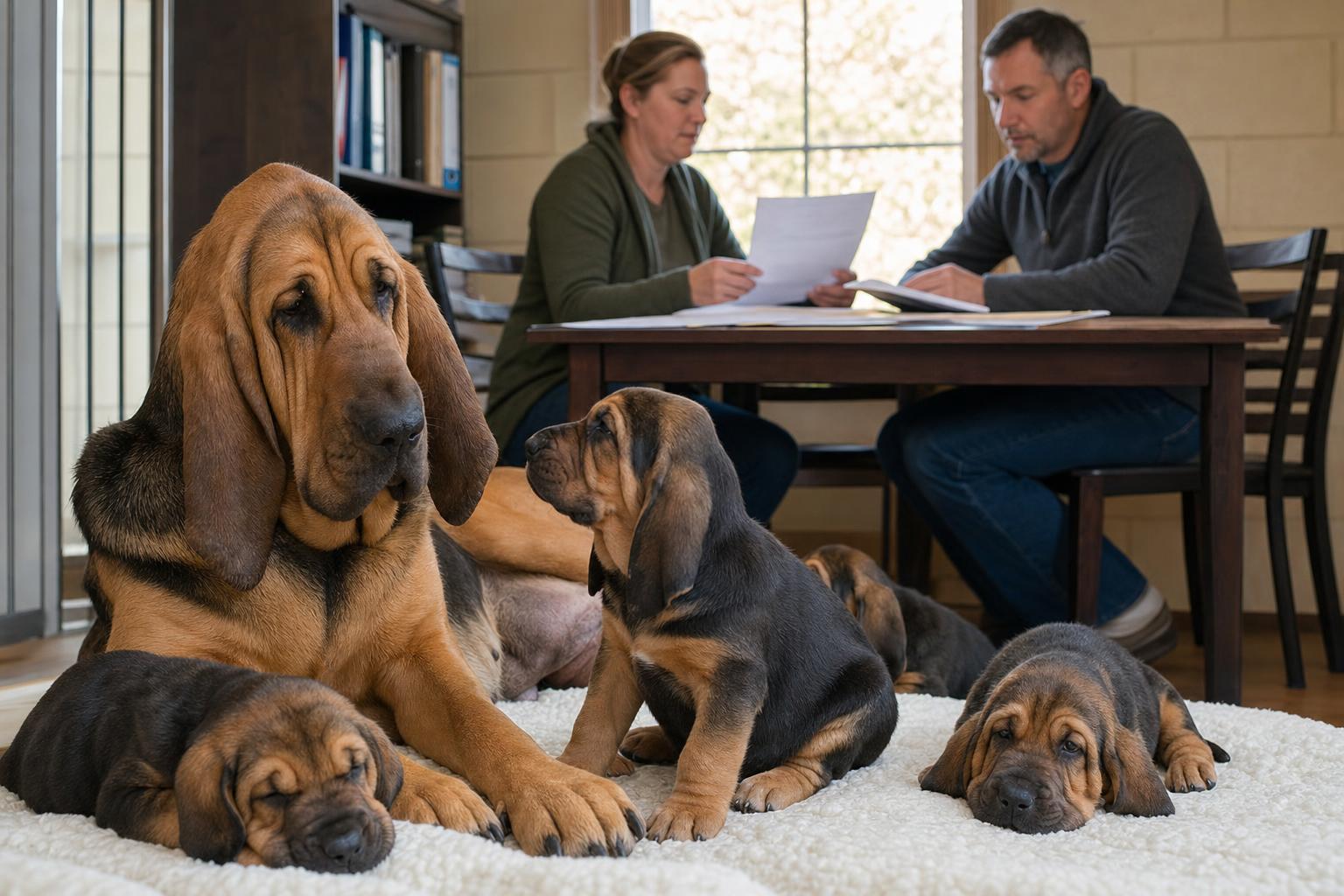
If you spend enough time around hounds, you learn that every breed carries its own kind of honesty. Some are fiery and sharp, some are cold-nosed and methodical, and some seem to live with one foot in the old world. The Bloodhound belongs in that last camp. This is a breed with history in its bones and purpose in every long, deliberate step. Folks know the Bloodhound for its wrinkled face, heavy ears, and mournful expression, but anybody who has followed one through a field edge, creek bottom, or patch of timber understands there is far more going on behind those eyes. This dog is a specialist, and one of the finest scenting specialists ever bred.
For dog owners interested in hound dogs, the Bloodhound can be both deeply rewarding and surprisingly demanding. They are affectionate, memorable dogs with a legendary nose, but they are not a breed you bring home on looks alone. They need room, structure, patient training, and owners who understand that scent drives almost everything they do.
History and Purpose of the Bloodhound
The Bloodhound is one of the oldest scent hound breeds still working today. Its roots trace back through Europe, where monks and breeders carefully preserved hounds prized for trailing human scent over long distances. Over generations, that selective breeding created a dog with extraordinary olfactory power and the stamina to stay on a line when other dogs would lose interest or drift off. In practical terms, the Bloodhound was built to track. That purpose still defines the breed.
Modern Bloodhounds have been used in search and rescue, law enforcement, and recovery work for decades, and with good reason. Their scenting ability is not a tall tale from a dog show brochure. It is real, field-proven, and almost hard to appreciate until you watch one work old ground with complete confidence. A seasoned Bloodhound will put its nose down and move with a seriousness that feels less like play and more like duty.
Bloodhound Temperament
Despite their imposing size and dramatic appearance, most Bloodhounds are gentle dogs at heart. They are generally affectionate with their people, tolerant by nature, and often surprisingly soft in close family life. Many are calm indoors after proper exercise, content to sprawl across a cool floor and rest those long legs. They usually enjoy company and tend to bond strongly with the household.
That said, the Bloodhound is no pushover. This breed has an independent streak a mile wide. When a Bloodhound catches scent, the world around it can disappear in an instant. Calls, commands, and common sense may take a back seat to the trail. That does not mean the dog is stubborn in a lazy or defiant way. It means the dog is highly driven and bred to trust its nose above all else.
Owners should also know that Bloodhounds are sensitive. Heavy-handed correction does not usually improve them. In my experience, a hound that feels treated unfairly will either shut down or decide your opinion does not matter much. Calm repetition, consistency, and clear boundaries go a lot farther than force ever will.
Are Bloodhounds Good Family Dogs?
In the right home, yes. Bloodhounds can be excellent family companions for people who understand large dogs and can manage their strength. They are often patient with children, though supervision matters because a full-grown Bloodhound is powerful enough to knock over a child without meaning to. Their size, enthusiasm, and wagging tail can clear a coffee table in one sweep, so space helps.
They usually do best with families who appreciate hound behavior rather than fight it. If you expect perfect off-leash reliability, instant obedience, and a dog that never follows its nose into trouble, this breed may test your patience. If you value loyalty, character, and the kind of old-fashioned hound sense you cannot fake, the Bloodhound has plenty to offer.
Size, Appearance, and Physical Traits
The Bloodhound is a large, substantial dog with a powerful frame and loose skin that gives the breed its unmistakable look. Adult males commonly stand taller and carry more bone than females, but both sexes have impressive presence. The long ears, deep-set eyes, and wrinkled brow help funnel scent and protect the face while the dog works. Nothing about the Bloodhound is accidental. Form follows function all through this breed.
Coat colors commonly include black and tan, liver and tan, and red. The coat itself is short and fairly dense, without much fuss in texture, though those facial folds and ears require more maintenance than the coat would suggest. A healthy Bloodhound should look strong and capable, not overdone or cumbersome.
Exercise Needs and Daily Life
One mistake people make is assuming a Bloodhound is lazy because it has a solemn expression and enjoys a long nap. The truth is more complicated. This breed may be calm at rest, but it still needs meaningful exercise and mental engagement. A bored Bloodhound is a wandering, drooling, digging, counter-surfing problem waiting to happen.
Daily walks are essential, and secure areas for sniffing are worth their weight in gold. I always tell folks that a Bloodhound does not just need movement. It needs scent work. Letting this dog use its nose is as important as stretching its legs. Long lead walks, tracking games, and structured scent exercises help satisfy instincts that otherwise come spilling out in inconvenient ways.
A securely fenced yard is strongly recommended. Not because the Bloodhound is trying to leave home forever, but because a drifting scent can pull one half a county away before it remembers supper is at six. Off-leash freedom in unsecured areas is a gamble most owners lose sooner or later.
Training a Bloodhound
Training a Bloodhound requires patience, timing, and a sense of humor. This is not a breed that thrives on drilling. It learns best when lessons are consistent, fair, and rewarding. Start young with basic obedience, leash manners, and recall work, but understand that recall around hot scent will never be the breed’s strongest card.
Food motivation is often useful, and praise matters more than some people think. Short sessions work better than drawn-out battles. The Bloodhound wants a reason to cooperate, and if training feels like pointless repetition, interest can dry up quickly. Keep it practical, keep it clear, and finish on a good note.
Socialization Matters Early
Because of their size and confidence, Bloodhounds benefit from broad early socialization. They should meet different people, hear different sounds, and learn how to settle in varied environments. A mature Bloodhound that has not been properly socialized can become difficult to handle simply because of raw strength and sensory focus. Good manners are much easier to build in a floppy-eared pup than in a hundred-pound adolescent hound that has discovered the power of its own nose.
Grooming and General Care
The Bloodhound’s short coat is relatively easy to maintain with regular brushing, especially during seasonal shedding. The real work lies in the ears, skin folds, and drool management. Those long ears can trap moisture and debris, so regular cleaning is important. Facial wrinkles should be checked and gently cleaned to prevent irritation or infection. Owners also need to get comfortable with slobber. A dry Bloodhound is usually either asleep or imaginary.
Nails should be kept trimmed, and because this breed carries substantial weight, foot health matters. Bedding should be supportive, and living surfaces should provide good traction, especially as the dog ages. Like many large breeds, Bloodhounds benefit from owners who pay close attention to mobility and body condition.
Bloodhound Health Concerns
The Bloodhound is generally hardy in spirit, but there are health issues prospective owners should understand. Bloat, or gastric dilatation-volvulus, is a serious concern in deep-chested breeds and requires immediate veterinary attention. Hip and elbow problems can also occur, particularly in poorly bred dogs or those allowed to become overweight. Ear infections, skin issues, and eye concerns may appear as well.
Choosing a responsible breeder matters a great deal. Good breeders focus on sound structure, stable temperament, and health testing rather than simply producing oversized dogs with exaggerated features. If you are adopting, ask as many questions as you can and have a veterinarian evaluate the dog early. With proper care, many Bloodhounds live solid, useful lives, but they are not a breed to leave on autopilot.
Is the Bloodhound a Good Hunting Dog?
The Bloodhound is not the typical all-around hound many hunters picture when they think about running game, but where tracking is concerned, few breeds can touch it. Bloodhounds excel in trailing work, especially where patience, persistence, and cold scenting ability matter. They are often valued for tracking wounded game as well as for specialized recovery and man-trailing tasks.
I have always respected a dog that does not hurry itself into mistakes, and the Bloodhound has that kind of measured confidence. It works with a deep seriousness. There is no needless flash in it. When a Bloodhound is on task, you can feel generations of breeding showing up in real time. For the owner who appreciates nose work more than speed or showmanship, this breed offers something special.
Is a Bloodhound Right for You?
The Bloodhound is right for people who want a true hound, not just a dog that looks distinctive on the porch. This breed fits best with owners who have space, patience, and a willingness to work with instinct rather than against it. If you enjoy training with purpose, can provide secure containment, and do not mind some mud, some drool, and a little household chaos now and then, the Bloodhound may be a fine match.
It may not be the easiest breed for first-time dog owners, especially those living in tight quarters or expecting a highly obedient companion. But for the right person, the Bloodhound is unforgettable. It is noble without being delicate, affectionate without being clingy, and driven in a way that still reflects the old working hounds. That kind of authenticity is hard to come by.
Final Thoughts
The Bloodhound remains one of the most remarkable scent hound breeds in the world. It brings history, ability, and heart into one oversized, wrinkled package. For dog owners interested in hound dogs, this breed offers a close look at what purposeful breeding can create when function stays at the center. It is not a casual dog, but it is a deeply honest one.
If you choose a Bloodhound, choose with open eyes. Give it training, room to work, and a life that respects its instincts. Do that, and you will not just own a famous hound. You will live with a tracking legend.
Explore Bloodhound on Working Dog Central
View the Bloodhound breed profile or browse Bloodhound listings.


