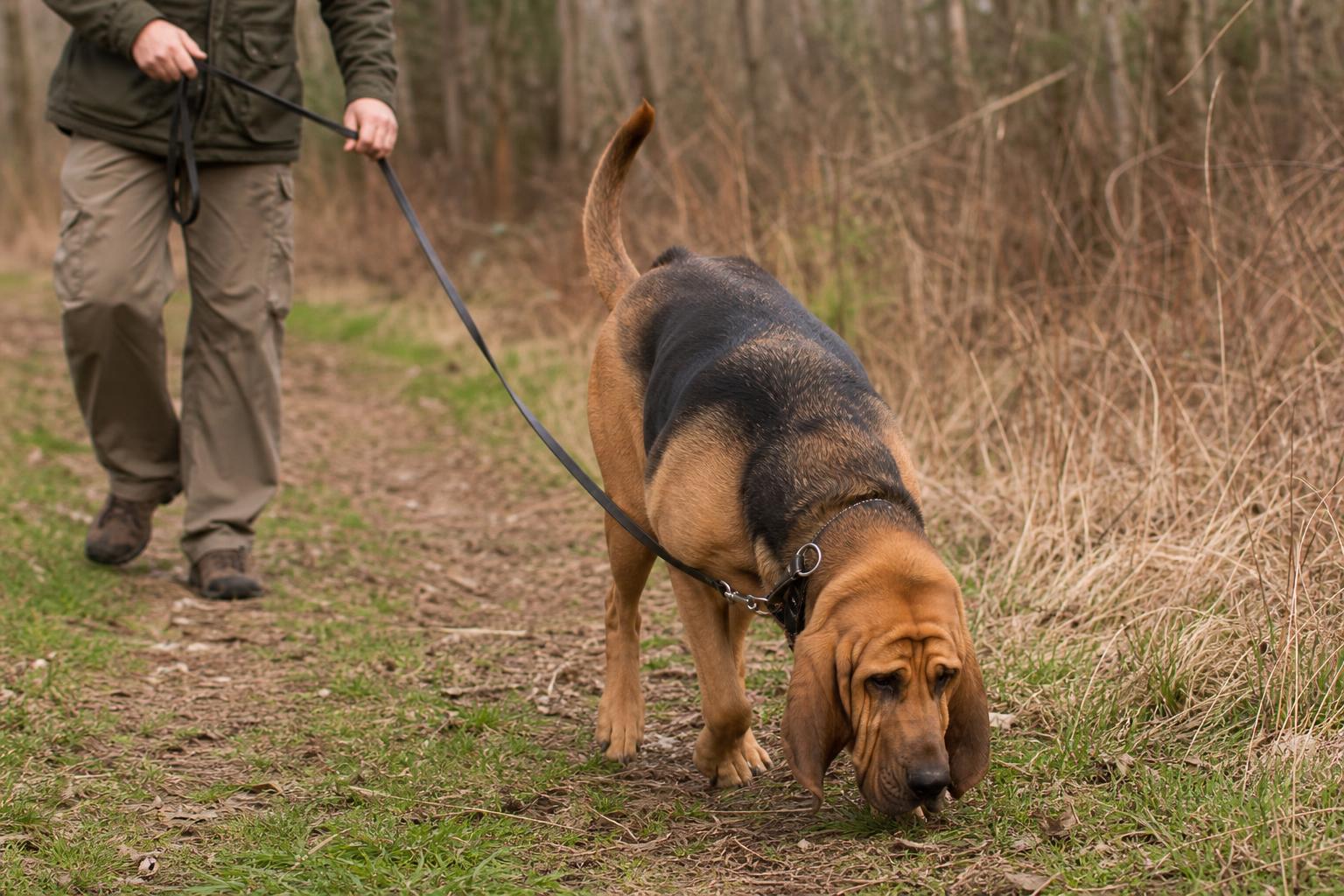
A finished Bloodhound is not the same kind of purchase as a young pet prospect or a lightly started hound. This breed is famous for methodical scent work, long-distance trailing, and a calm, affectionate nature at home, but a dog advertised as finished should be able to demonstrate useful, repeatable skills under real handling conditions. For buyers on Working Dog Central, the goal is to separate a well-trained working Bloodhound from a dog that simply has age, size, or a few training sessions behind it.
Bloodhounds are large, powerful scenthounds with strong independence once they are committed to a trail. That independence is part of their value, but it also means a finished dog must have clear handling, reliable management habits, and a realistic match between the dog's training and the buyer's intended use. Before discussing price or transport, ask what the dog has been trained to do, who trained it, how often it has been worked, and what evidence is available to support the seller's claims.
What makes a finished dog
For a Bloodhound, “finished” should mean the dog has moved beyond introductions and basic exposure. A finished Bloodhound should understand its job, work with purpose, and have enough experience that a capable handler can evaluate the dog in a realistic setting. In this breed, that usually centers on scent trailing, tracking people, working calmly on lead, managing distractions, and recovering focus after a difficult turn or loss of scent.
Finished does not mean perfect. Even a highly trained Bloodhound is still a hound with a powerful nose and an independent mind. The more useful standard is whether the dog has consistent habits and a clear record of work. Buyers should ask for demonstrations or documentation that show the dog can start a trail, stay engaged, work through changing surfaces or cover, and remain manageable around vehicles, people, livestock, other dogs, and public environments when those situations are relevant.
- Ask what commands, cues, and equipment the dog already understands.
- Confirm whether the dog has worked aged trails, fresh trails, urban surfaces, rural cover, or search-style scenarios.
- Watch how the dog loads, crates, travels, and settles between work sessions.
- Evaluate leash manners carefully; Bloodhounds are strong and can pull hard when scent-driven.
- Clarify whether the seller means finished for tracking, search work, sport, or general obedience.
Hunt tests
Many finished-dog guides for gun dog breeds discuss hunt tests, but buyers should be careful applying that language to Bloodhounds. The Bloodhound is a scenthound best known for human trailing and tracking rather than pointing, flushing, retrieving, or versatile gun dog work. If a seller references hunt tests, ask exactly which organization, event type, title, score sheet, and date they mean. Do not assume that a hunt-test claim common to retrievers or pointing breeds automatically applies to this breed.
Useful verification may include copies of certificates, event records, club contacts, judge information, or public databases when available. If no formal hunt-test structure is relevant to the individual dog, that is not automatically a problem. For a Bloodhound, practical trailing demonstrations, scent-work records, search-and-rescue training logs, or breed-appropriate tracking credentials may be more meaningful than a generic claim that the dog is “test proven.” The key is to verify relevance rather than accepting terminology at face value.
Verify working records and breed eligibility
Verify reported working titles and test results with the issuing organisation. Confirm that the programme applies to the breed and ask what the result demonstrates about the individual dog.
Verify reported working titles and test results with the issuing organisation. Confirm that the programme applies to the breed and ask what the result demonstrates about the individual dog.
Trial records
Trial records can be helpful, but they need context. With Bloodhounds, buyers may encounter references to tracking tests, mantrailing events, scent-work competition, breed club activities, or other performance records rather than traditional field trials built for upland or retrieving breeds. Ask the seller to define the record in plain language. What was the dog asked to do? Who judged or verified it? Was the dog handled by its current owner, a professional trainer, or someone else?
When reviewing trial or working records, look for consistency instead of one impressive phrase. A single ribbon may tell you less than a long pattern of training notes, successful evaluations, and steady behavior in varied locations. Also verify the dog's identity: microchip, registration number when applicable, veterinary records, and title paperwork should all line up. If trial claims cannot be documented, treat them as conversation starters rather than proof of finished ability.
Age expectations
A finished Bloodhound is usually mature enough to have both physical development and field experience. Because this is a large breed, buyers should be cautious about hard work placed on a young dog before the body is ready. A very young Bloodhound advertised as finished may be talented, but it may not have enough mileage to prove long-term reliability. Conversely, an older finished dog may offer a calmer mind and a clearer record, but buyers should assess stamina, joints, weight, ears, skin folds, and overall veterinary history carefully.
Age should be evaluated alongside the dog's intended role. A buyer who wants an experienced tracking partner may prefer a mature dog with a documented work history. A buyer who wants a trained household companion may value obedience, manners, and temperament more than extreme trail complexity. Ask how the dog behaves after a long session, how it recovers in heat or humidity, and what maintenance routine keeps it comfortable. Bloodhounds can be affectionate and docile indoors, but they are still large dogs with significant care costs.
Investment value
A finished Bloodhound can represent a major investment because the buyer is paying for time, training, maturity, and reduced uncertainty. Value should come from demonstrated ability, health information, temperament, and fit—not from vague labels. Avoid sellers who rely only on phrases like “fully trained,” “best bloodlines,” or “ready for anything” without showing what the dog actually does. Strong sellers are usually willing to answer detailed questions, provide veterinary records, explain the dog's limits, and arrange a practical evaluation when possible.
Ask about ongoing support after the sale. A finished dog still needs a transition period, especially a Bloodhound that has learned one handler's cues, routines, and equipment. The seller should explain feeding, exercise, commands, crate habits, travel behavior, scent-work setup, and any management needs. Clarify whether there is a written bill of sale, return policy, trial period, health disclosure, or transfer paperwork. Do not invent or assume a health guarantee; get every promise in writing before money changes hands.
- Request current veterinary records and ask about ears, skin folds, weight, and large-breed orthopedic concerns.
- Confirm registration only if it matters to the sale, and verify the registry directly rather than assuming status.
- Watch the dog work in conditions close to your intended use.
- Meet the handler or trainer who knows the dog best whenever possible.
- Budget for transport, equipment, food, veterinary care, and follow-up training, not only the purchase price.
Buyer-focused conclusion
The right finished Bloodhound can save a buyer years of training and provide a proven partner for tracking-focused work or a more settled companion with breed-appropriate skills. The wrong one can be expensive, difficult to handle, and poorly matched to the buyer's expectations. Use the breed's facts as your guide: Bloodhounds are gentle, powerful, scent-driven, independent, and highly specialized. Verify every claim, insist on practical evidence, and choose the dog whose demonstrated work, temperament, health history, and daily management needs honestly fit your life.
Explore Bloodhound on Working Dog Central
View the Bloodhound breed profile or browse Bloodhound listings.


