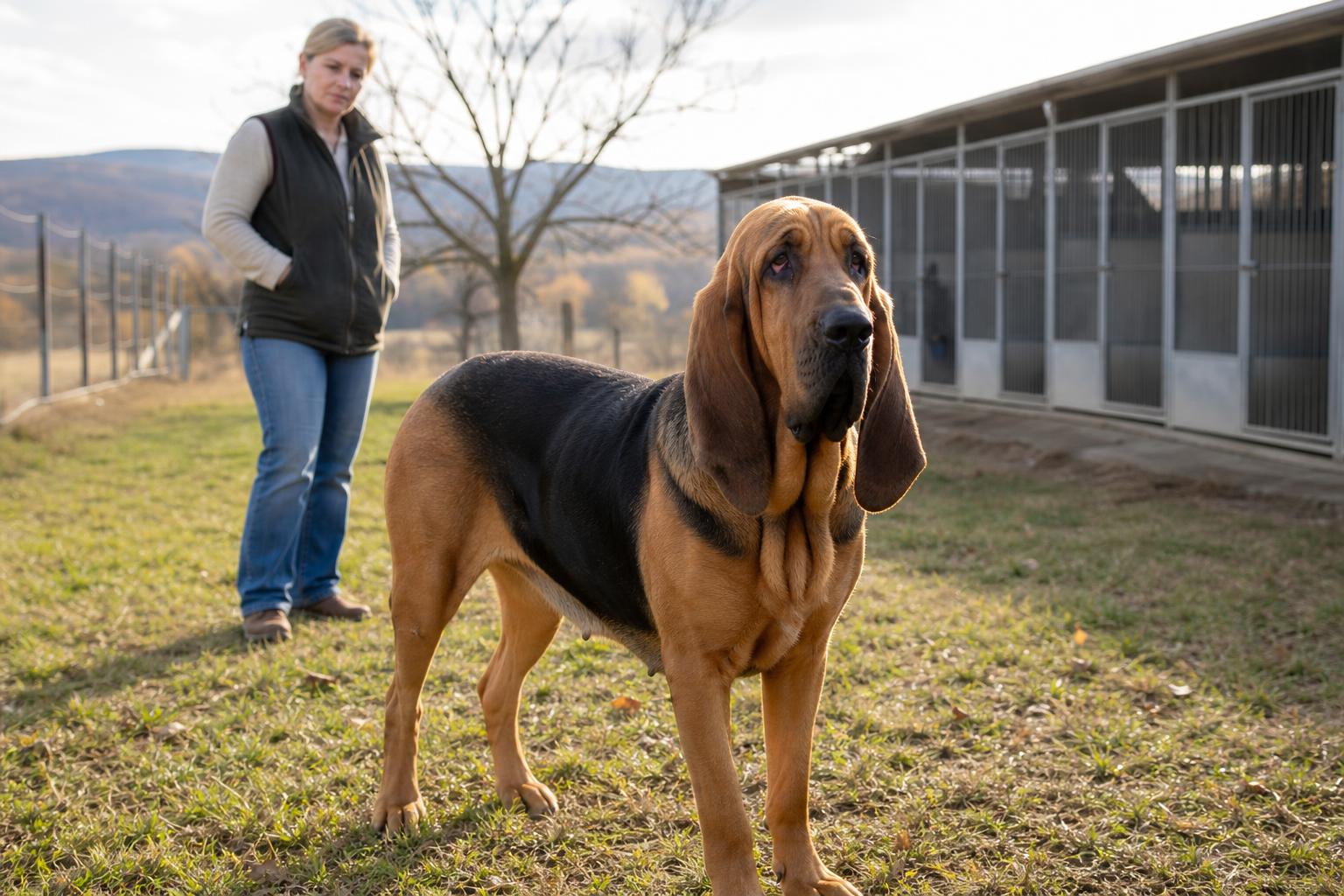
A proven female Bloodhound can be an important purchase for a breeder who understands the breed's size, scenting instinct, temperament, and management needs. Unlike buying a puppy, buying a mature female with prior breeding history means evaluating what she has already produced, how she handled motherhood, and whether her age, health, temperament, and pedigree make sense for your program. The Bloodhound is a large, powerful scenthound known for human-trailing ability, long ears, loose skin, and a gentle but independent nature. Those same traits make careful selection especially important.
This guide is written for buyers reviewing Bloodhound proven females on Working Dog Central or through private breeder referrals. It does not assume every female is appropriate for every home or kennel. Instead, it focuses on practical questions: what she has produced, whether her records are verifiable, how she behaves away from a litter, and whether the seller is transparent about both strengths and limitations.
What a Proven Female Bloodhound Really Means
A proven female is generally a mature bitch that has produced at least one litter. That phrase alone does not prove quality. A female may be proven because she whelped naturally, raised puppies well, passed desirable traits to her offspring, or came from a valuable pedigree. She may also be called proven simply because she has been bred before. Buyers should separate marketing language from evidence.
- Ask how many litters she has had and when they were born.
- Ask how many puppies were whelped and how many were raised.
- Ask whether there were complications, C-sections, bottle-feeding needs, or rejected puppies.
- Ask for references from owners of her previous pups when possible.
- Ask why she is being offered for sale now.
With Bloodhounds, maternal soundness matters because the puppies grow into large, strong dogs that require stable temperament, good structure, and realistic handling expectations. A female that produces affectionate, trainable, healthy pups is more valuable than one with a famous name but little proof behind it.
Production Record and Prior Litters
The production record is the heart of the evaluation. For a Bloodhound proven female, look for consistency across her previous litters rather than one impressive claim. Did her puppies mature into sound adults? Are they good-natured, scent-driven, manageable on leash, and suitable for the homes they entered? Bloodhounds are often gentle and friendly, but they can be stubborn when following scent. A buyer should want pups that inherited both working instinct and stable everyday behavior.
Request photos, weights, veterinary summaries, placement information, and follow-up from prior litters. If the female has offspring in search-and-rescue, tracking, law-enforcement support roles, scent work, show homes, or family companion homes, ask what can actually be verified. Do not treat vague statements like “great working lines” as proof. Ask for names, dates, titles, training records, or direct references where appropriate.
Maternal Ability in Bloodhound Females
Maternal ability includes more than becoming pregnant. A good Bloodhound mother should whelp and care for puppies with appropriate supervision, keep the litter clean, allow reasonable human handling, and maintain enough condition during nursing. Because Bloodhounds are large and heavy-bodied, careful whelping management is important. Buyers should ask whether the female was attentive, whether she accidentally laid on puppies, and whether the breeder needed unusually heavy intervention.
No breeder can guarantee a future litter will be identical to a past litter, but past behavior is useful. If a female required a C-section, supplemental feeding, or close management, that is not automatically disqualifying, but it should affect price, planning, and risk. A fair seller will explain what happened plainly rather than hiding complications.
Age, Breeding History, and Timing
Age is one of the most important factors in a proven female purchase. Bloodhounds are a large breed, and mature females should not be evaluated like small dogs with long breeding windows. Ask for the female's date of birth, heat cycle history, number of litters, spacing between litters, and the date of her most recent litter. A buyer should also discuss reproductive plans with a veterinarian before breeding again.
Be cautious with any female being sold immediately after repeated litters, with unclear records, or with pressure to breed her quickly. A responsible purchase considers recovery time, body condition, and long-term welfare. The female is not just breeding stock; she is a living Bloodhound that may spend many years in your kennel or home after her breeding career ends.
Health Clearances and Veterinary Records
Health claims should be verified, not assumed. For a Bloodhound proven female, ask for veterinary records, vaccination history, parasite prevention history, reproductive records, and any health screening documents the seller has. Bloodhounds can need attention to ears, skin folds, joints, weight management, and large-breed risks such as bloat. A seller should be willing to discuss routine care, not just breeding value.
Some buyers may ask about OFA, DNA testing, or other screening programs. These may or may not be available, relevant, or completed for a particular Bloodhound. The right approach is to verify what has actually been done, review certificates directly, and ask a veterinarian or breed mentor how those results should influence the purchase. Do not accept “clear by parentage,” “vet checked,” or “healthy line” as a substitute for records unless the seller can explain exactly what is meant.
Temperament Away from Puppies
A proven female should be evaluated as an adult dog, not only as a producer. Bloodhounds are commonly affectionate, gentle, and sociable, but they are also powerful hounds with intense scent drive. Ask to see how the female behaves on leash, around strangers, in a kennel, in a vehicle, and around other dogs. If she will live in a home, ask about house manners, crate habits, drooling, baying, and whether she respects fencing.
Temperament is especially important because a mature female may need to adapt to a new environment. Some Bloodhounds settle quickly; others are sensitive to change or determined to follow scent trails. Secure fencing, leash discipline, and patient handling are essential. A fair purchase should include honest discussion of her strengths and quirks.
Pedigree Strength and Working Proof
Pedigree can add value when it is understood correctly. The Bloodhound has a long history as a human-trailing hound, and some lines emphasize tracking ability, search-and-rescue aptitude, show structure, companion temperament, or a blend of these traits. A strong pedigree should help predict the kind of puppies the female may produce, but names on paper are not enough.
Verify reported working titles and test results with the issuing organisation. Confirm that the programme applies to the breed and ask what the result demonstrates about the individual dog.
Fertility Considerations
A proven female may still have fertility risk. Ask about conception history, litter sizes, skipped heats, progesterone timing if used, semen type used for previous breedings, and whether the female required special reproductive care. If a seller claims she is easy to breed, ask what that claim is based on. If she was bred by live cover, artificial insemination, or chilled or frozen semen, request details and veterinary documentation where available.
Before purchase, many buyers arrange a pre-purchase veterinary exam and, when appropriate, a reproductive consultation. That is especially wise if the purchase price depends on future breeding potential. No ethical seller can guarantee a future pregnancy, but good records can help both parties understand risk.
Fair Purchase Evaluation
Price for a proven female Bloodhound should reflect the whole dog: age, health, temperament, pedigree, production record, fertility history, current condition, and the seller's transparency. Exact market prices vary by region, timing, pedigree, and goals, so buyers should avoid one-size-fits-all price assumptions. A young, healthy female with strong records and quality offspring is different from an older female nearing retirement or one with incomplete documentation.
- Compare documentation, not just asking prices.
- Clarify whether registration papers, breeding rights, and records transfer.
- Use a written contract covering health disclosures and any guarantees.
- Confirm transport arrangements and who bears risk during travel.
- Plan for food, fencing, veterinary care, and large-dog management costs.
Red Flags When Buying a Bloodhound Proven Female
Walk away from pressure, secrecy, or evasive answers. Red flags include missing birth dates, no litter records, unclear ownership, refusal to share veterinary history, exaggerated claims about guaranteed production, or a seller who cannot explain why the female is available. Be equally cautious if the female appears underweight, fearful, poorly socialized, or exhausted from repeated litters.
Because Bloodhounds are distinctive and highly driven scent hounds, the buyer should also be realistic about lifestyle. A female that produced good puppies may still be a poor fit for a casual home without secure fencing or hound experience.
Conclusion: Buy the Female, Not the Sales Pitch
The best Bloodhound proven female purchase is based on records, observation, and honest expectations. Look for a female with a clear production history, sound temperament, appropriate health documentation, and a seller who can discuss both positives and limitations. When in doubt, slow down, verify the details, and involve a veterinarian or experienced Bloodhound mentor. A carefully chosen proven female can strengthen a breeding program and become a valued companion, but only when her welfare and long-term fit matter as much as her next litter.
Explore Bloodhound on Working Dog Central
View the Bloodhound breed profile or browse Bloodhound listings.


