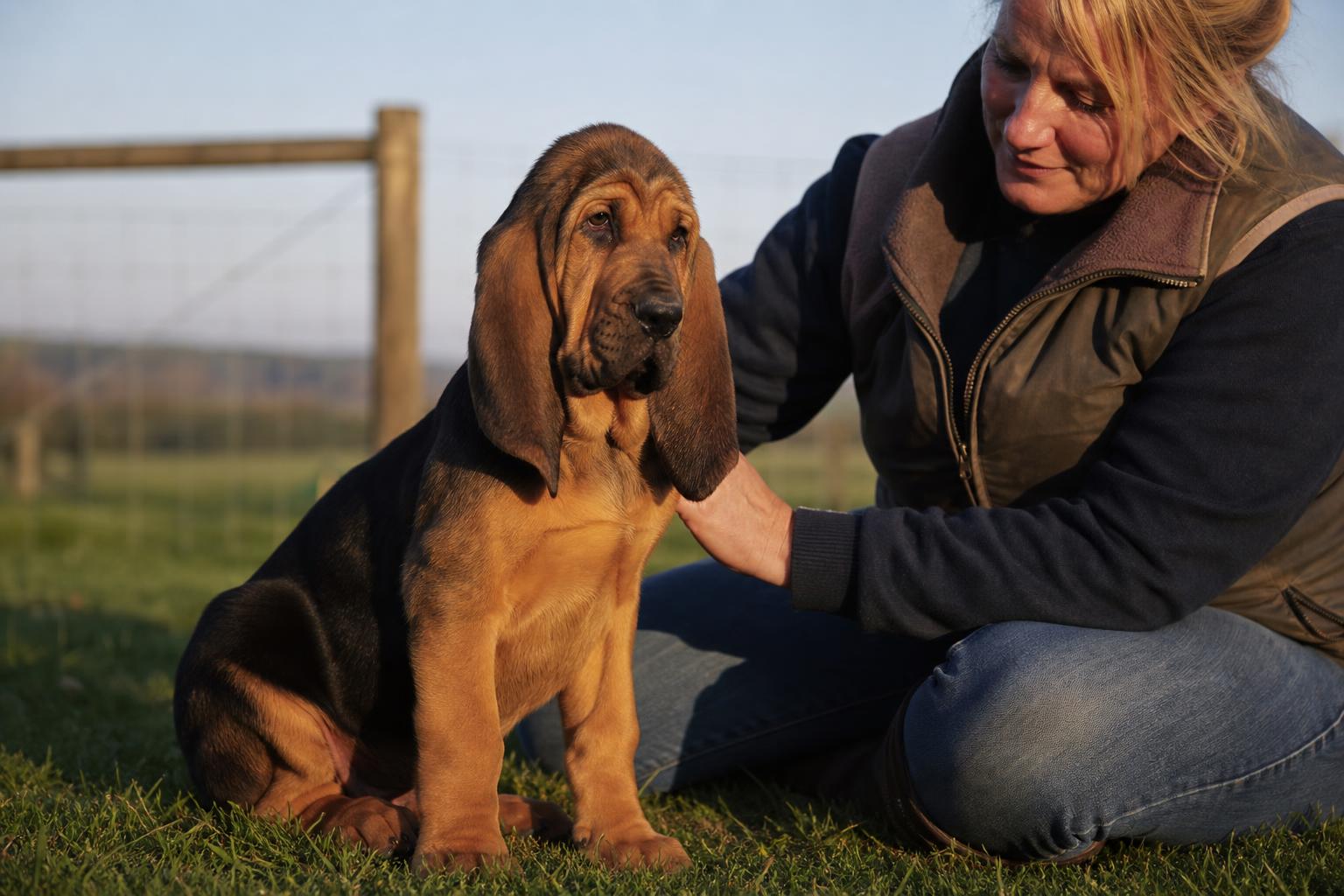
Bloodhound puppies are memorable from the start: long ears, loose skin, a solemn expression, and a nose that will eventually want to investigate everything. The Bloodhound is a large scenthound with a long history of tracking work, including search-and-rescue, law enforcement, and human scent trailing. At home, many Bloodhounds are affectionate, gentle, and good-natured, but buyers should not mistake that sweetness for an easy, low-maintenance puppy. This is a big hound bred to follow scent with determination.
If you are comparing Bloodhound puppies for sale, your goal is not simply to find the cutest pup or the closest litter. You are choosing a breeder, a family line, and a puppy whose instincts, size, and care needs must fit your household. A well-bred Bloodhound can become a loyal companion and capable tracking partner, but the breed rewards owners who plan ahead for training, secure containment, exercise, ear care, skin-fold care, drool, and large-dog expenses.
Choosing a breeder
A good Bloodhound breeder should be able to talk in detail about temperament, structure, scenting instincts, and day-to-day care. The best conversations usually feel more like an interview in both directions than a sales pitch. Expect the breeder to ask about your fencing, experience with large dogs, plans for training, and whether you understand that Bloodhounds may ignore recall when they are committed to a trail.
Ask how the puppies are raised, what the sire and dam are like to live with, and whether the breeder has kept in touch with owners from earlier litters. Because Bloodhounds are large, powerful dogs, early socialization and sensible handling matter. Puppies should be exposed to normal household activity, gentle handling, varied surfaces, and age-appropriate challenges without being pushed beyond their developmental stage.
Questions to ask before reserving a Bloodhound puppy
- Can I see information about the sire and dam, including temperament and working or companion history?
- What health screening is relevant for these lines, and can you share documentation?
- How do you match puppies to homes?
- What age do puppies go home, and what support do you provide afterward?
- What does your contract say about returns, rehoming, breeding rights, and limited or full registration?
- How do you prepare buyers for Bloodhound-specific issues such as scent drive, drool, ears, wrinkles, and secure fencing?
Be cautious with sellers who always have puppies available, avoid questions, refuse basic documentation, or pressure you to send a deposit immediately. Also be wary of exaggerated claims. No breeder can guarantee a puppy will become a search-and-rescue dog, police tracker, perfect family dog, or problem-free adult. They can only explain their breeding goals, show what they know about the parents, and help you make a responsible choice.
AKC registration
The Bloodhound is recognized by the American Kennel Club, and the breed has a long recorded history in organized dog registries. AKC registration can be useful because it documents parentage through that registry and may allow participation in certain events. However, registration by itself is not proof of quality, health, training, or ethical breeding. A registered puppy can still come from a poor breeding situation, and an unregistered dog may still be a beloved companion or working hound depending on the context.
When a litter is advertised as AKC registered, ask what that means in writing. Some puppies are sold with limited registration, which may restrict breeding rights while still documenting the dog. Others may be sold with full registration, often at the breeder's discretion. If registration, showing, performance events, or future breeding rights matter to you, clarify everything before paying a deposit.
How to verify registration claims
- Ask for the registered names or numbers of the sire and dam when appropriate.
- Confirm whether the puppy comes with limited or full registration.
- Make sure the name on the paperwork matches the seller or is otherwise clearly explained.
- Understand that registration does not replace health screening, temperament evaluation, or a sound contract.
For Bloodhound buyers who primarily want a family companion or tracking prospect, registration should be one part of the evaluation, not the whole reason to buy. The breeder's honesty, the condition of the dogs, the match between puppy and home, and the support provided after sale often matter more in daily life.
Vaccinations
Bloodhound puppies should receive age-appropriate veterinary care before they leave the breeder. The exact vaccination schedule can vary by veterinarian, location, disease risk, and the puppy's age, so buyers should not rely on an advertisement alone. Ask for written veterinary records that show dates, products or services provided, deworming history if applicable, and any findings from a puppy exam.
Once your puppy comes home, schedule a prompt visit with your own veterinarian. This is not a sign of distrust; it is a normal part of responsible ownership. Your vet can review the breeder's records, continue the puppy vaccine schedule, discuss parasite prevention, talk about safe socialization before full immunity, and help you understand large-breed growth concerns.
Health and care records to request
- Veterinary exam record for the litter or individual puppy.
- Vaccination and deworming dates, if those treatments were given.
- Microchip information if the puppy is chipped before pickup.
- Feeding instructions and current food details.
- Any notes about ears, skin folds, weight, or development.
Because Bloodhounds have long ears and loose facial skin, buyers should also ask how the breeder introduces routine handling. A puppy that is comfortable having ears checked, paws handled, and wrinkles gently inspected will be easier to care for as it grows into a large adult. Avoid breeders who make medical promises beyond what can reasonably be known. Instead, look for transparency, records, and willingness to discuss both strengths and risks.
Bringing puppy home
Bringing a Bloodhound puppy home requires more planning than bringing home a small, low-drive companion breed. Even as puppies, Bloodhounds grow quickly and can be strong, curious, and persistent. Before pickup day, prepare a safe sleeping area, sturdy crate or pen, washable bedding, cleaning supplies, food and water bowls, a leash and properly fitted collar or harness, and a plan for house training.
Secure fencing is especially important. Bloodhounds are famous for scenting ability, and that instinct does not wait until adulthood to appear. A young puppy may follow an interesting smell through a gap, under a weak barrier, or toward a road. Supervision, leashing, and safe containment should be treated as basic care rather than optional training goals.
First-week priorities
- Keep routines simple: feeding, potty trips, rest, and short positive training sessions.
- Introduce household sounds and surfaces gradually without overwhelming the puppy.
- Start gentle leash manners early, before the dog becomes powerful.
- Reward attention, name response, calm handling, and settling.
- Use controlled sniffing walks instead of expecting long forced exercise.
Bloodhounds can be affectionate and gentle, but they can also be stubborn when something captures their nose. Training should be patient, consistent, and reward-based. Heavy-handed corrections are a poor fit for a sensitive, independent scenthound and can damage trust. Focus early on cooperation: coming when called in easy situations, trading objects, accepting handling, walking politely, and relaxing in the house.
Families should also talk honestly about drool, baying, size, and mess. Bloodhounds are not the right puppy for every home. Their long ears may drag through water bowls, their wrinkles need attention, and their voice can carry. For buyers who appreciate the breed's character, these quirks are manageable. For buyers who want a tidy, highly obedient, off-leash dog with little maintenance, they can become daily frustrations.
Typical puppy prices
Typical Bloodhound puppy prices vary widely by region, breeder reputation, pedigree, health screening, registration terms, working background, and what is included before pickup. It is better to think in ranges and value factors rather than expect one exact price. A higher price does not automatically prove better quality, and a bargain price can become expensive if the seller provides little care, no support, or poor information.
When discussing price, ask what is included. Some breeders include initial veterinary care, registration paperwork, microchip, starter food, written contract, and lifetime take-back support. Others may include less. Clarify deposit terms, refund policies, pickup timing, transport arrangements, and whether the puppy is being sold as a companion, working prospect, show prospect, or breeding prospect.
How to evaluate value fairly
- Compare breeder transparency, not just advertised price.
- Factor in large-dog costs such as food, equipment, training, and veterinary care.
- Ask about health screening that is relevant to the parents and breed.
- Avoid sellers who use urgency, rare-color hype, or vague champion claims without documentation.
- Budget for training classes, secure fencing, ear care supplies, and emergency veterinary savings.
Buyers should also remember that the purchase price is only the beginning. Bloodhounds are large dogs with ongoing costs for food, preventives, veterinary care, sturdy equipment, and possibly professional training. Planning for those expenses before the puppy comes home is part of choosing responsibly.
Buyer-focused conclusion
Bloodhound puppies for sale should be evaluated with patience and a clear understanding of the breed. Look for a breeder who is honest about both the charm and the challenges: the affectionate nature, the exceptional nose, the independent streak, the need for secure containment, and the care required for ears, skin folds, and a large growing body. Verify registration claims when they matter, review vaccination and veterinary records, prepare your home before pickup, and treat price as one part of a much larger decision.
If the breeder welcomes questions, provides documentation, explains the sire and dam, and helps match the right puppy to the right home, you are much more likely to start well. A Bloodhound can be a remarkable companion and tracking-minded partner, but the best outcomes begin before the puppy ever leaves the litter.
Explore Bloodhound on Working Dog Central
View the Bloodhound breed profile or browse Bloodhound listings.


