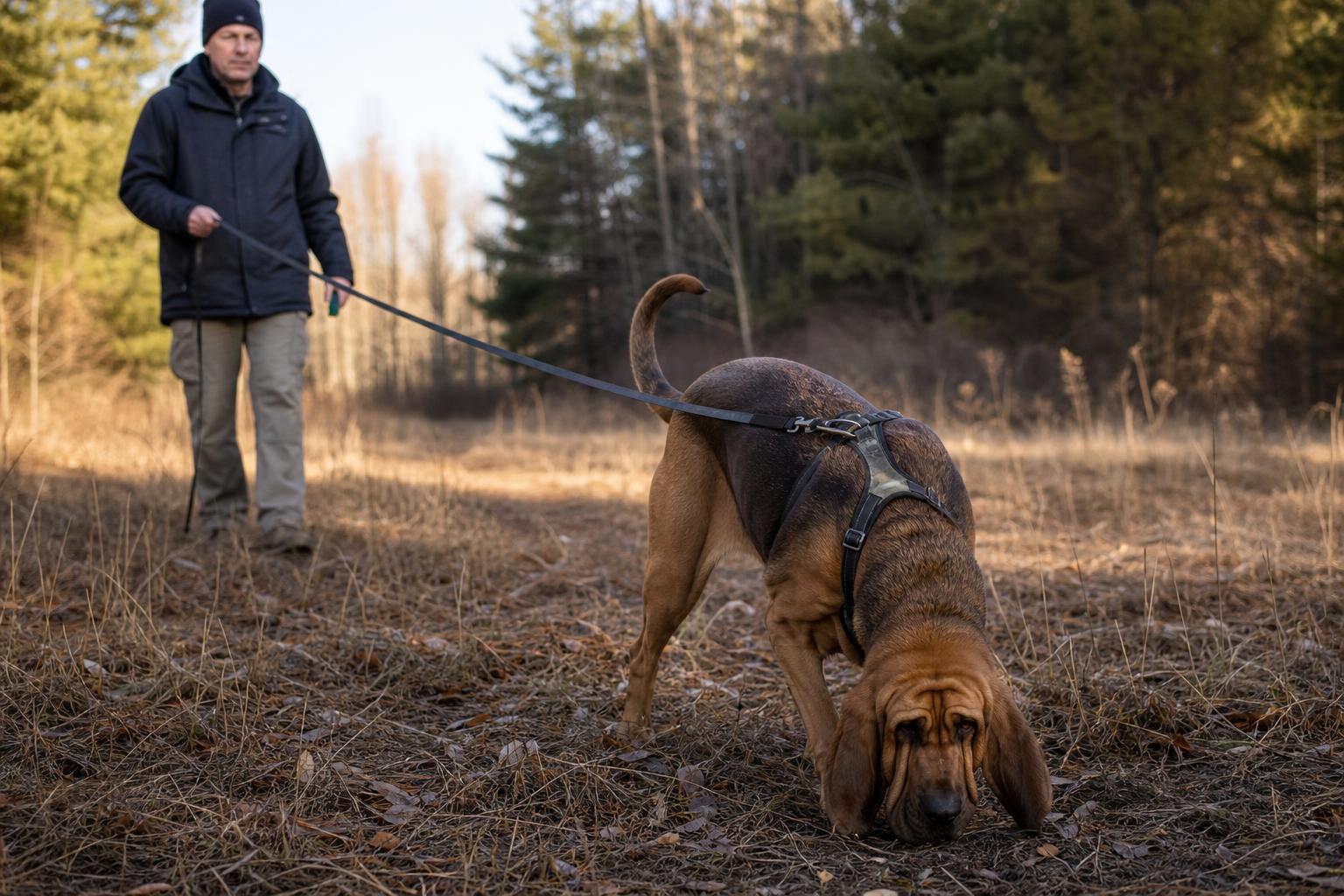
A started Bloodhound can be a smart choice for buyers who want to move beyond the puppy stage and evaluate a young or adult dog with some real-world experience. With this breed, the word started should be understood through the lens of a large scenthound, not a pointing dog, retriever, or flushing breed. Bloodhounds are famous for their ability to follow human scent over distance and time. They are affectionate and often calm at home, but when their nose finds a trail, they can become intensely focused, independent, and hard to redirect.
That combination is exactly why buyers need to ask careful questions. A started Bloodhound should show more than size, age, and enthusiasm. The dog should have a foundation in handling, leash manners, household routine, social confidence, and some form of structured scent work or breed-appropriate tracking exposure. The right started dog is not necessarily finished, certified, titled, or ready for professional search work. It is a dog with enough foundation for a buyer to judge temperament, trainability, drive, and fit.
What qualifies as “started” in a Bloodhound
For a Bloodhound, started usually means the dog has moved past basic puppy raising and has begun meaningful work in the areas that matter for the breed. That may include leash control, crate training, loading in a vehicle, exposure to different surfaces and environments, and early trailing exercises. Because Bloodhounds mature into large, powerful dogs, basic manners are not cosmetic; they are part of safety and long-term usability.
A seller should be able to explain exactly what the dog has been started on. Vague claims such as “started on tracking” or “ready to work” are not enough. Ask how many trails the dog has run, what kind of scent article or start method was used, how old the tracks were, what terrain was involved, and how the dog responded to distractions. If the Bloodhound is being promoted primarily as a companion, ask about house manners, children, other dogs, grooming tolerance, ear handling, and behavior on walks.
- Started should mean documented foundation work, not simply an older puppy.
- The dog should have observable leash, handling, and social skills.
- Breed-appropriate scent exposure is more relevant than bird work for most Bloodhounds.
- Buyers should expect progress, not perfection.
Birds introduced or breed-appropriate game exposure
Bloodhounds are historically and practically scenthounds, especially known for tracking human scent. They are not normally evaluated the same way as upland bird dogs or waterfowl retrievers. If a listing mentions birds, game, or hunting exposure, clarify what that means. For many Bloodhounds, breed-appropriate exposure will be trailing, scent discrimination, search-and-rescue style practice, or controlled tracking work rather than bird introduction.
That does not mean outdoor experience is unimportant. A good started Bloodhound should have been exposed to fields, woods, roadsides, yards, kennels, vehicles, strangers, livestock or household animals where appropriate, and changing weather conditions. The buyer’s goal is to learn whether the dog can focus on a track while staying manageable and safe. Because the breed is known for following scent with determination, secure leashes, long lines, and fenced areas are essential during evaluation.
Ask the seller to describe the dog’s typical work session. Does the Bloodhound drop its nose and commit to a trail? Does it cast when it loses scent? Does it pull with control or lunge without awareness? Does it recover after excitement? For a family buyer, also ask whether the dog can settle after activity. A started Bloodhound that works well but cannot be handled safely may not be the right match for an inexperienced home.
Gun introduction when relevant
Gun introduction may or may not be relevant to a Bloodhound, depending on the dog’s intended use. Unlike many gun dog breeds, Bloodhounds are not primarily judged by steadiness to shot, marking ability, or performance around bird flushes. If the seller claims the dog has been introduced to gunfire, ask why it was done, how it was done, and what the dog’s response looked like.
Responsible sound introduction is gradual and paired with positive experiences. It should never mean that a young dog was startled, pressured, or forced to tolerate loud noise. For a Bloodhound intended for tracking, search work, or companion life, environmental confidence may matter more than gunfire. Sirens, traffic, crowds, doors, livestock equipment, kennel noise, and unfamiliar surfaces can all be relevant forms of exposure.
If you need a Bloodhound for a setting where gunfire, loud equipment, or emergency response environments are likely, ask to see the dog in a controlled demonstration. Do not accept a blanket statement that the dog is “gun broke” unless the seller can define the term and show calm, recoverable behavior. If gun work is not relevant to your plans, focus your evaluation on scent drive, nerve, handling, and the dog’s ability to settle.
Obedience level
Obedience in a started Bloodhound should be practical and realistic. This breed is highly intelligent, but it was bred to think through scent problems and continue working a trail. Buyers should not expect the same off-leash responsiveness they might expect from some retrievers or herding breeds. A reliable started foundation usually includes name recognition, leash walking, crate or kennel comfort, loading into a vehicle, polite greetings, basic sit or down, and the ability to be examined and handled.
Recall deserves special caution. Bloodhounds can ignore a handler when scent takes over, so off-leash reliability should never be assumed. A seller who presents a Bloodhound as fully reliable off leash in open country should be questioned carefully. Secure fencing and leashed management remain important even for trained dogs.
Watch how the dog responds to the handler. Does it take food rewards? Does it recover when redirected? Is it pushy but good-natured, nervous, shut down, or overcorrected? Bloodhounds usually respond best to patient, consistent, reward-based training. Heavy-handed handling can damage trust and may create avoidance or stubborn resistance. A started dog should show that it has learned from people without losing its natural confidence.
Evaluating training
The best way to evaluate a started Bloodhound is to see the dog work and live, not just read a listing. Ask for a demonstration that matches the claims. For scent work, that might be a short known trail, a simple aged track, or a controlled exercise where the seller explains the start, the line, the dog’s mistakes, and the correction or restart process. For a companion-focused dog, ask to see leash walking, kennel behavior, loading, basic handling, and calm interaction in a normal environment.
Verify reported working titles and test results with the issuing organisation. Confirm that the programme applies to the breed and ask what the result demonstrates about the individual dog.
- Ask to see the dog handled by the seller and, if safe, by you.
- Observe recovery after distraction, not just the dog’s best moment.
- Request clear records of training, health care, and ownership history.
- Have a veterinarian review health questions before purchase.
- Use a written agreement that defines trial period, transfer terms, and responsibilities.
Health and care evaluation should be part of the training review. Bloodhounds are large dogs with ears, skin folds, and weight management needs. Ask how the dog’s ears and wrinkles are maintained, what diet it is on, and whether the seller has discussed large-breed concerns such as bloat with a veterinarian. Do not treat any seller statement as a medical guarantee. A pre-purchase veterinary exam and clear records are the safer path.
Buyer-focused conclusion
A started Bloodhound can offer a valuable head start: visible temperament, early scenting ability, and a better sense of size, strength, and handling needs than a young puppy can show. The best purchase is made by matching the dog’s actual foundation to your real goals. Look for honest descriptions, breed-appropriate scent exposure, manageable obedience, sound social behavior, and a seller willing to demonstrate the work. When the claims are specific and the dog fits your home, a started Bloodhound can become a remarkable tracking partner, working prospect, or affectionate companion.
Explore Bloodhound on Working Dog Central
View the Bloodhound breed profile or browse Bloodhound listings.


