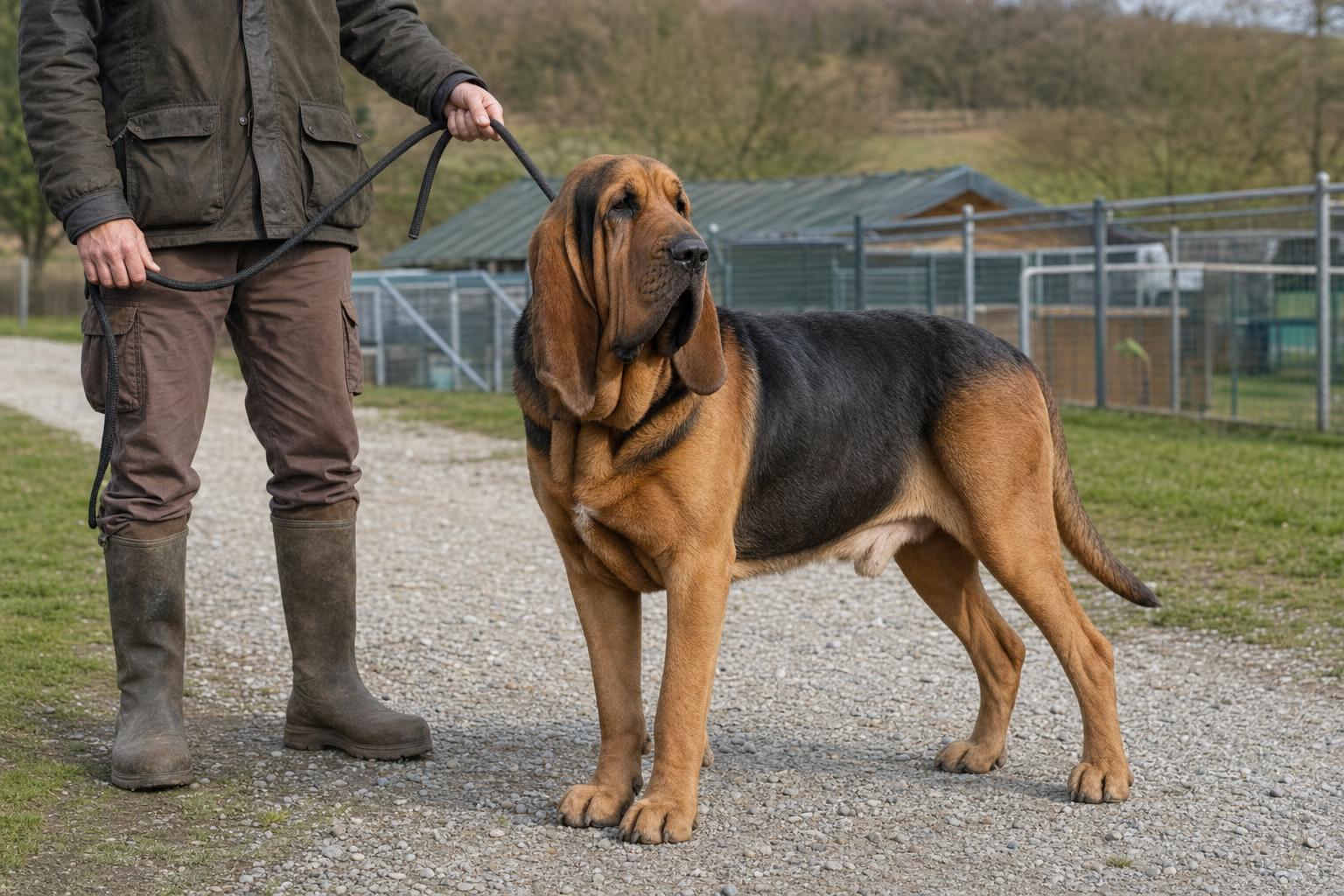
Choosing a Bloodhound stud dog is not just a matter of finding an impressive-looking hound. The Bloodhound is a large, powerful scenthound with a long history of human-trailing work, a gentle nature at home, and a famously independent nose when a scent trail is present. A good stud decision should protect the breed's working ability, temperament, structure, and long-term soundness. That means looking beyond photos, titles, and pedigree names to verify health information, evaluate real-world suitability, and understand the breeding agreement before a mating is planned.
This guide is written for buyers, breeders, and serious Bloodhound owners comparing stud dogs for a planned litter. It does not assume that every registry, test, breeding method, or performance venue applies to every dog. Instead, it explains what to ask for, what to verify, and how to judge whether a particular Bloodhound stud is a responsible fit for the female, the breeder's goals, and the future puppies' homes.
Health Clearances
Health clearances are one of the first areas to review when evaluating Bloodhound stud dogs. Because Bloodhounds are large, heavy-boned hounds, breeders should pay careful attention to orthopedic soundness, overall condition, ears, skin, eyes, and general veterinary history. The breed's size also makes responsible weight management and age-appropriate development important, especially for dogs used in a breeding program.
Ask the stud owner for copies or database links for any completed health screenings rather than accepting a casual statement that the dog is healthy. A current, active dog can still carry risks that are not visible in a photograph. Clearances do not guarantee perfect puppies, but they show that the breeder is making decisions with evidence instead of guesswork.
- Request documentation for completed screenings and dates performed.
- Ask whether results are public in a recognized database or available from the veterinarian or testing organization.
- Discuss any known issues in close relatives, not only the stud himself.
- Consider temperament, working drive, structure, and health together rather than treating one item as the whole picture.
OFA
OFA records can be useful when comparing Bloodhound stud dogs, particularly for orthopedic and other breed-relevant screenings. The Orthopedic Foundation for Animals maintains searchable health data for many dogs, but the specific tests completed may vary by breeder, bloodline, age, and breeding goals. Do not assume that a stud has every possible OFA result simply because he is advertised as breeding quality.
When OFA information is provided, confirm the dog by registered name, registration number when available, date of birth, and owner information. Make sure the result belongs to the same dog being advertised. If a result is preliminary, understand how that differs from a final adult evaluation. If no OFA record is listed, ask why. The answer may be reasonable in some circumstances, but a responsible stud owner should be willing to discuss what health evaluation has been done and what remains unknown.
DNA Testing
DNA testing can help breeders verify parentage and identify certain inherited risks, but it should be interpreted carefully. Not every DNA panel is equally relevant to every breed, and a clear panel does not replace structural evaluation, veterinary exams, or knowledge of the family. For Bloodhounds, use DNA information as one part of a broader breeding decision, not as a marketing shortcut.
Ask which laboratory performed the test, what conditions were included, and whether results are available as a report. If the stud owner mentions parentage verification, confirm what registry or program recognizes that verification. If a DNA result identifies carrier status for any condition, discuss how the female has been tested and whether the planned pairing avoids producing affected puppies. The key is not to demand a buzzword; it is to understand what the result actually tells you.
Frozen Semen
Frozen semen may be an option for some Bloodhound stud dogs, especially when the dog is geographically distant, deceased, retired from live breeding, or part of a carefully preserved line. However, availability should never be assumed. Frozen semen requires proper collection, storage, documentation, shipping arrangements, and veterinary timing for the female. It can also involve additional costs and a more complex contract.
If frozen semen is advertised, ask how many breeding units are available, where they are stored, what paperwork transfers with them, and whether the semen has prior fertility history. A veterinarian experienced with canine reproduction should guide timing and insemination method. Also clarify what happens if the breeding does not result in a pregnancy, because replacement terms are not automatic unless they are written into the agreement.
Live Cover vs AI
Live cover and artificial insemination each have practical considerations. Live cover may be preferred by some stud owners when the dogs are compatible, healthy, and safely managed. With a large breed like the Bloodhound, both dogs' size, temperament, experience, and handling matter. The female should not be put at risk, and the stud should not be handled casually simply because he has bred before.
Artificial insemination may be used when distance, safety, timing, stud age, semen type, or veterinary advice makes it the better choice. AI can include fresh, chilled, or frozen semen depending on what is available and appropriate. Because rules and paperwork can vary by registry and situation, verify in advance what documentation is required for litter registration, if registration is part of the breeding plan. Do not assume that AKC, another registry, or a specific reproductive method applies without confirming it for the exact dogs and mating.
Stud Contracts
A Bloodhound stud contract should be clear before the female is bred. Handshake agreements create problems when timing, pregnancy, litter size, fees, or registration questions become stressful. A useful contract explains the stud fee, what service is included, who pays veterinary and shipping costs, what documentation is provided, and what happens if the breeding does not produce a litter.
- Identify the stud and female by registered name or permanent ID when available.
- State the stud fee, deposit terms, and when payment is due.
- Clarify live cover, fresh chilled, frozen semen, or AI arrangements.
- Define any return service or repeat breeding terms.
- List health testing, brucellosis testing if required, and veterinary responsibilities.
- Explain registration paperwork, litter paperwork, and any restrictions.
- Include expectations for communication before and after whelping.
Good contracts protect both parties and, more importantly, keep the focus on responsible planning for the puppies. If a contract is vague, rushed, or dismissive of health and temperament questions, treat that as a warning sign.
Pedigree Analysis
Pedigree analysis for Bloodhound stud dogs should go deeper than counting famous names. The Bloodhound's value comes from a combination of scenting ability, endurance, structure, biddability, and the affectionate temperament that makes the breed manageable in real homes. A pedigree can suggest patterns, but it must be matched against the actual stud, the female, and the goals for the litter.
Verify reported working titles and test results with the issuing organisation. Confirm that the programme applies to the breed and ask what the result demonstrates about the individual dog.
Also consider the female honestly. A stud should complement her, not simply add marketing appeal. If she is strong in scent drive but needs improvement in structure, temperament steadiness, or size balance, those concerns should shape the stud choice. Responsible breeders are usually willing to discuss why a pairing makes sense and what risks they are trying to avoid.
Evaluating the Bloodhound Stud Dog in Person or at a Distance
When possible, observe the stud in normal conditions. A Bloodhound may be gentle and relaxed in the yard but intense once his nose is engaged. That is part of the breed, but the dog should still be manageable, safe to handle, and stable around people. Ask how he lives, how he behaves on leash, whether he has produced previous litters, and what feedback has come from puppy owners.
If distance makes an in-person visit impossible, request recent video, references, and direct conversation with the stud owner. Photos alone are not enough. Video can show movement, condition, attitude, and handler relationship. References can help confirm whether the owner communicates well after the fee is paid, which matters if paperwork, pregnancy questions, or a repeat service becomes necessary.
Buyer-Focused Conclusion
The right Bloodhound stud dog should offer more than a handsome head and a memorable pedigree. Look for documented health evaluation, clear communication, an appropriate breeding method, a written contract, and a thoughtful match between stud and female. Verify OFA, DNA, semen, registry, and performance claims instead of assuming they apply. A careful stud choice helps preserve the Bloodhound's remarkable trailing ability while supporting the soundness and temperament future owners depend on.
Explore Bloodhound on Working Dog Central
View the Bloodhound breed profile or browse Bloodhound listings.


