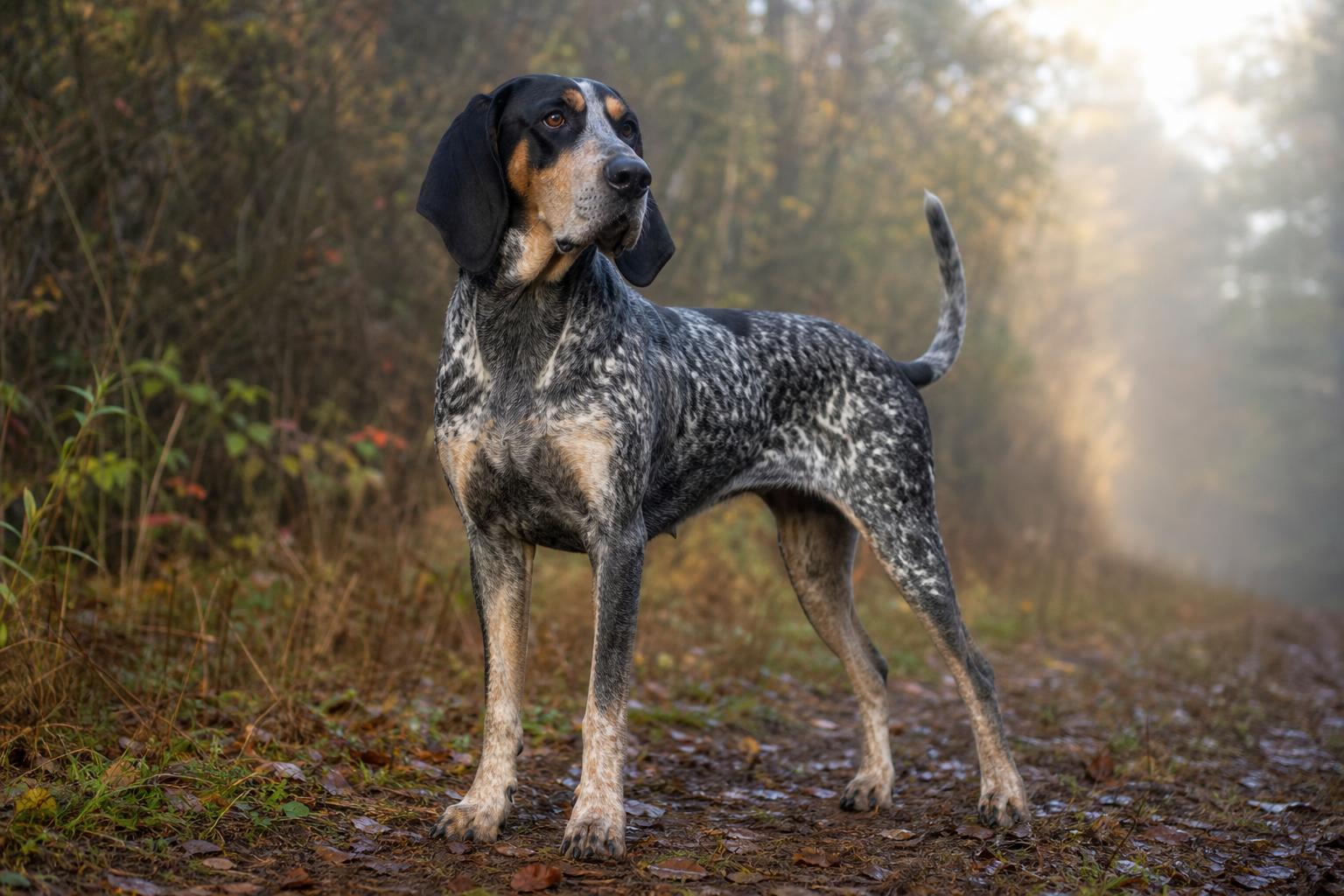
The Bluetick Coonhound is a distinctly American scenthound built around nose, voice, stamina, and persistence. For buyers researching this breed on Working Dog Central, the most important thing to understand is that the qualities that make a Bluetick valuable in the woods are the same qualities that shape everyday ownership. This is a friendly, loyal, energetic hound that can be affectionate in the home and intensely focused once a scent trail catches its attention.
Developed largely in the southern United States for trailing and treeing raccoons and other game, the Bluetick Coonhound is not a generic family dog with a hound coat. It is a working-minded breed with a deep, recognizable bay, a strong prey drive, and enough independence to solve problems without constant handler direction. In the right home, that combination is rewarding. In the wrong home, it can become noise, roaming, frustration, and unmet exercise needs.
Bluetick Coonhound History and Working Background
The Bluetick Coonhound traces its roots to early American hunting culture, with ancestry commonly associated with French Grand Bleu de Gascogne hounds, English Foxhounds, and other European scent hounds refined by hunters in states such as Louisiana, Tennessee, and Mississippi. These dogs were shaped for practical work in woods, swamps, and rough country where a cold nose, endurance, and a carrying voice mattered more than flash.
Unlike some hounds selected for speed above all else, Blueticks became known as methodical trailers. A good one can work older scent, stay committed to the track, and communicate through a bay that hunters can follow after dark. The breed was recognized separately by the United Kennel Club in 1946 and later received full American Kennel Club recognition in 2009. Buyers should still remember that recognition does not replace evaluation of the individual dog, its parents, and the breeder's goals.
Appearance, Size, and Build of the Bluetick Coonhound
The Bluetick Coonhound is a medium to large, athletic hound with a sleek muscular build, deep chest, strong legs, and a balanced outline built for endurance. The coat is short, close, and glossy, with the well-known blue mottled or ticked pattern created by dark ticking on a lighter background. Many dogs also show black patches, darker ears and head, and tan points on the face, chest, or legs.
- Males are commonly about 22 to 27 inches at the shoulder.
- Females are commonly about 21 to 25 inches at the shoulder.
- Adult weight often falls around 45 to 80 pounds depending on sex, conditioning, and build.
- The long, low-set ears and expressive hound face are classic breed features.
When evaluating a Bluetick, look for function rather than exaggeration. A working hound should move freely, carry lean muscle, and appear capable of covering ground for long periods. Excess weight can reduce stamina and may increase stress on joints.
Bluetick Coonhound Temperament and Household Fit
Many Blueticks are sweet, social, and devoted to their people. They can be affectionate with families and, with proper socialization, often do well with respectful children and other dogs. Their friendly nature, however, does not erase their hunting instincts. This breed may show intense interest in squirrels, cats, poultry, or other small animals, and buyers should plan for supervision, slow introductions, and secure management.
Vocalization is another major lifestyle point. The Bluetick's deep, melodic bark and bay are prized in the field, but they can be challenging in dense neighborhoods, apartments, or homes where quiet is essential. A prospective owner should ask breeders or rescues about the noise level of the specific dog or line, not just rely on a general breed description.
Best homes for a Bluetick Coonhound
- Active owners who enjoy outdoor time, hiking, hunting, tracking, or scent games.
- Homes with secure fencing and a realistic leash plan.
- Handlers who appreciate independence instead of expecting constant obedience-style focus.
- Families willing to provide daily exercise and mental work.
Hunting Style and Scenting Ability
The Bluetick Coonhound is known for scenting ability, endurance, and a steady, determined way of working a track. Traditionally, the breed was used for raccoon hunting and other small to medium game, and some lines are still selected strongly for field performance. A Bluetick may be cold-nosed, meaning it can work older scent trails, though actual ability varies by individual, training, and breeding program.
If you are buying for hunting, ask direct questions about the parents and relatives. Have they been hunted regularly? On what game? In what terrain? Do they tree, trail, check back, handle, and load well? Are they hunted alone, in company, or both? If titles, hunt tests, trial records, or registry programs are mentioned, verify what those records mean for coonhound work and whether they are relevant to your goals.
Training a Bluetick Coonhound
Training a Bluetick requires patience, consistency, and respect for the breed's scent-driven brain. This is not usually a dog that lives to repeat drills for their own sake. Short upbeat sessions, food rewards, praise, play, and permission to sniff can all be useful reinforcers. The goal is to create cooperation without trying to erase hound instinct.
Recall and leash work
Recall is often the biggest training project. A Bluetick that catches a hot trail may not respond like a handler-focused retriever or pointing dog. Start early with long-line work, reward heavily, and avoid giving off-leash freedom in unfenced areas until the dog has proven reliable under distraction. Many responsible owners still use leashes, tracking collars where legal and appropriate, and fenced spaces because prevention is safer than hoping a hound ignores scent.
Managing voice and independence
Teach a quiet cue, reinforce calm behavior, and provide enough physical and mental work to reduce boredom barking. Crate training, structured routines, and scent-based enrichment can help a Bluetick settle indoors. Independence should be managed, not punished; the same persistence that can frustrate a novice owner is part of what makes the breed effective in the field.
Care, Grooming, and Health Considerations
Basic grooming is straightforward. The short coat needs occasional brushing and bathing as needed, especially after muddy hunts or long hikes. The ears deserve more attention. Long, low-set ears can trap moisture and debris, so owners should check them regularly and speak with a veterinarian if they notice odor, redness, head shaking, or discomfort.
Blueticks are generally sturdy working dogs, but buyers should still ask about soundness and health screening in the family. Medium to large athletic dogs can face orthopedic concerns such as hip problems, and a deep-chested build means owners should discuss bloat risk and prevention with their veterinarian. Avoid any breeder who dismisses health questions or makes sweeping guarantees that cannot be supported.
- Keep the dog lean and conditioned rather than heavy.
- Use routine parasite prevention because scent hounds often move through brush, fields, and damp cover.
- Check feet, ears, and skin after hard outdoor work.
- Ask what health testing is actually performed on the parents and how results can be verified.
Buying a Bluetick Coonhound: Practical Questions
A good purchase starts with honest matching. Some Blueticks are bred primarily for competition or hunting, while others may come from companion-focused homes. Neither is automatically better, but the fit matters. Buyers should ask about temperament, prey drive, vocal tendencies, containment needs, and the amount of daily activity the dog will require.
Questions to ask breeders or sellers
- What are the sire and dam like in the house and in the field?
- What kind of hunting, tracking, or scent work is behind this litter?
- How are puppies or adult dogs socialized before placement?
- What health screening, veterinary care, and records are provided?
- What support is available if training or behavior questions come up?
- Are registry papers, titles, or performance records available to review directly?
If AKC, UKC, hunt records, or other credentials are advertised, buyers should verify them with the issuing organization and understand what they do and do not prove. A registration certificate is not a guarantee of working ability, health, or temperament. It is one piece of documentation within a larger evaluation.
Is the Bluetick Coonhound Right for You?
The Bluetick Coonhound is a strong choice for owners who want a true hound: affectionate, expressive, athletic, and driven by scent. It is less ideal for someone who wants a quiet, low-exercise dog or a breed that can be casually trusted off leash in open country. Secure containment, daily activity, and hound-savvy training are not optional details; they are the foundation of a successful life with this breed.
For the right buyer, the reward is a devoted companion with character, field heritage, and a voice that belongs to American hunting tradition. Take time to evaluate the individual dog, the breeder's honesty, and your own lifestyle. A well-matched Bluetick Coonhound can be both a capable working partner and a loyal family member.
Explore Bluetick Coonhound on Working Dog Central
View the Bluetick Coonhound breed profile or browse Bluetick Coonhound listings.


