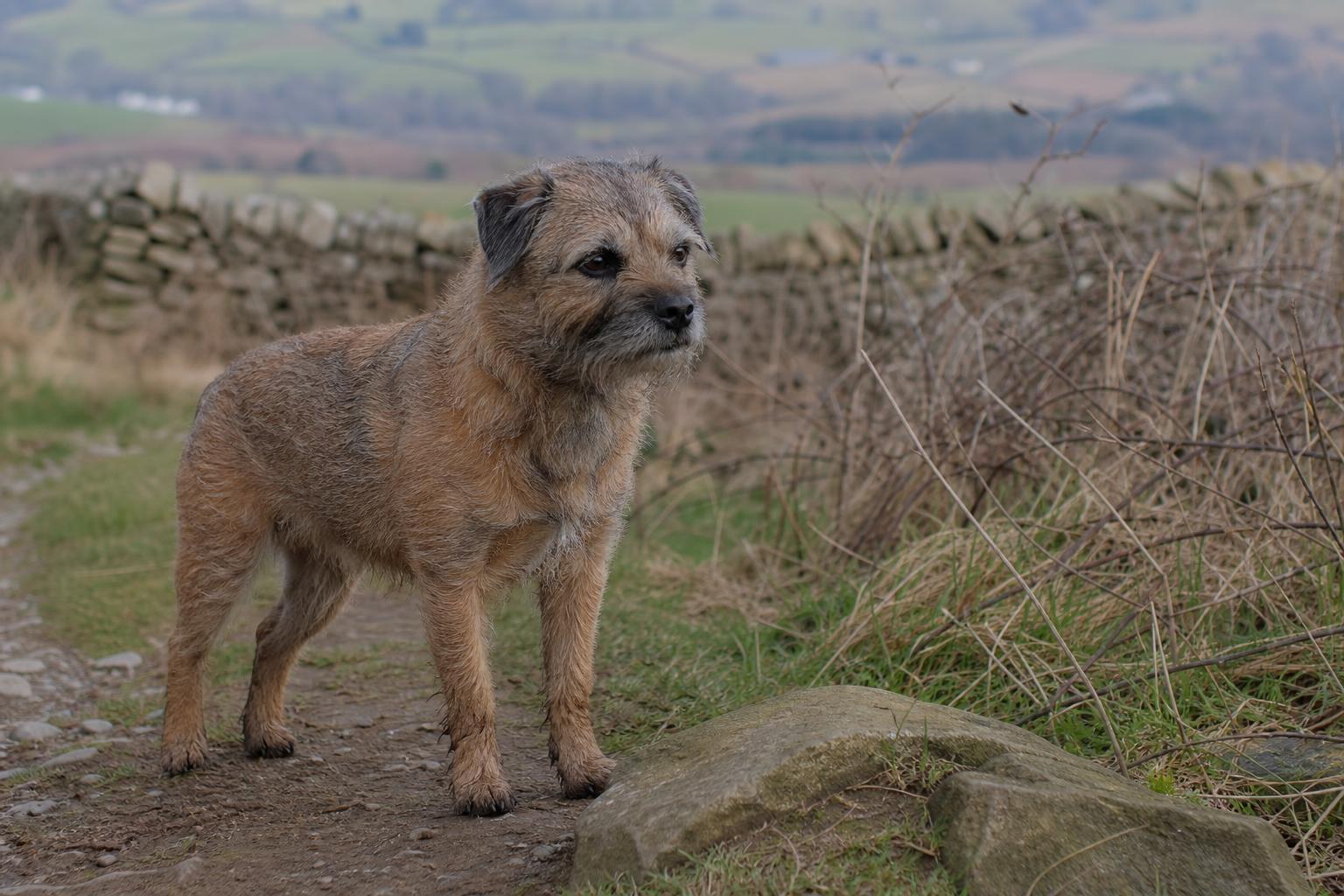
The Border Terrier is a small, hardy working terrier with roots in the rough border country between England and Scotland. Bred to help farmers and mounted hunts pursue foxes and vermin, the breed combines a compact frame, surprising stamina, and a bold terrier mind. For buyers researching the Border Terrier today, the key point is balance: this is an affectionate companion breed, but it is not a decorative lapdog. A good Border still wants movement, problem solving, and clear household rules.
On Working Dog Central, many visitors are evaluating dogs with working purpose in mind. The Border Terrier is not a classic pointing or retrieving gun dog, but it belongs in the larger sporting and working conversation because it was created for practical field work. Its original job required courage underground, enough leg to travel with horses, and enough sense to live around people, livestock, and other dogs. Those traits still shape the breed’s ownership needs.
History and Original Purpose
The Border Terrier developed in the border region of England and Scotland, where terrain, weather, and farm life demanded a no-nonsense dog. Farmers needed terriers that could handle fox and small game, move through dense cover, and enter tight places when quarry went to ground. Compared with some shorter-legged terriers, the Border Terrier was built with enough leg to keep up during a day’s work while remaining narrow and flexible enough for earth work.
The breed’s history also explains its temperament. A Border had to be game and persistent, but it also needed to work around hounds, horses, handlers, and farm families. That background helped produce a terrier that is often friendlier and more socially adaptable than many people expect, while still retaining a strong prey drive and independent streak. Formal recognition came later, with the Kennel Club in the United Kingdom recognizing the breed in 1920 and the American Kennel Club recognizing it in 1930.
Size, Build, and Appearance
Border Terriers are small dogs with a functional, rugged outline. The selector facts describe them as compact, sturdy, rectangular, and built for endurance. They commonly stand around 10 inches at the shoulder and are light enough to be easy to live with, though buyers should verify expected adult size with the breeder because individual lines can vary.
The head is one of the breed’s signatures and is often described as otter-like. Small V-shaped drop ears, keen eyes, and a practical expression give the Border its distinctive look. The body should be narrow and deep enough to be “spanned” behind the shoulders, reflecting the breed’s ability to work in tight spaces. Coat colors include red, wheaten, grizzle and tan, and blue and tan.
Coat care
The Border Terrier has a harsh, wiry outer coat with a dense undercoat. This coat was meant to resist weather and rough cover, not to look sculpted. Weekly combing helps remove debris and prevent matting. Many breed enthusiasts maintain proper texture through periodic hand-stripping or a groomer familiar with terrier coats. Clipping may be convenient, but it can soften the coat over time, so buyers should ask breeders what grooming approach they recommend.
Temperament and Home Life
A well-bred Border Terrier is typically alert, affectionate, upbeat, and people-oriented. Many enjoy children and family life when properly socialized and supervised. They are often described as big dogs in small bodies because they bring confidence and curiosity to everyday situations. That charm is real, but so is the terrier intensity underneath it.
Prospective owners should expect prey drive. Squirrels, rabbits, cats, poultry, and other small animals may trigger chasing behavior, especially if the dog is under-trained or poorly managed. Early socialization can help a Border Terrier learn household manners, but it does not erase instinct. Secure fencing, leash discipline, and a reliable management plan matter more than wishful thinking.
- Best fit: active homes that enjoy training, walking, hiking, scent games, or dog sports.
- Possible challenge: boredom can lead to digging, barking, escaping, or chasing.
- Social needs: many Borders like being included in family routines and may struggle if isolated for long periods.
Exercise and Working Style
The Border Terrier is small, but it is not low energy. Daily walks are helpful, yet many individuals need more than a slow stroll around the block. Brisk movement, safe off-leash running in enclosed areas, nose work, barn hunt, agility, and short reward-based training sessions all suit the breed well. Because the breed was developed to follow scent and pursue quarry, recall should be practiced carefully, but owners should not assume recall will override a live chase.
For hunting-minded buyers, it is important to be specific about expectations. The Border Terrier is historically a fox and vermin terrier rather than a flushing, pointing, or retrieving breed. If you want a dog for field sport or farm pest control, talk directly with breeders about the work behind their lines, the temperament of their dogs, and what type of exposure puppies receive. Avoid anyone who makes broad claims without showing actual experience, references, or records.
Training the Border Terrier
Training goes best when it is consistent, upbeat, and practical. Border Terriers are intelligent and can learn quickly, but many are independent enough to question repetitive drilling. Short sessions, high-value rewards, and varied exercises usually work better than harsh corrections or long lectures. Foundation skills should include name response, leash manners, crate comfort, handling for grooming, leave-it, and recall games on a long line.
Managing terrier independence
A Border Terrier may understand a command and still decide that a scent trail is more interesting. That does not mean the dog is bad; it means the training plan needs better rewards, better timing, and better management. Gates, fences, long lines, enrichment toys, and structured routines are part of responsible ownership. Many Borders thrive when given a legal outlet for the behaviors they already enjoy, especially sniffing, searching, and problem solving.
Health and Responsible Breeding
Border Terriers are generally sturdy dogs, but buyers should still take health seriously. The breed information notes that DNA testing is available in the United Kingdom for spongiform leucoencephalomyelopathy, also called SLEM, a serious neurological disease. Rather than assuming any individual breeder has completed every possible test, ask for documentation and have your veterinarian help you understand what the results mean.
Responsible breeders should be comfortable discussing family health history, temperament, structure, and long-term support. Ask what screening they do, whether any OFA or other orthopedic evaluations are relevant to their program, and whether DNA testing applies to the lines they breed. Do not accept vague promises in place of records. Also ask how puppies are socialized, introduced to normal household experiences, and evaluated before placement.
- Request copies of health testing or registry documentation when available.
- Ask about SLEM testing or family history where relevant.
- Look for clear contracts, return policies, and breeder support.
- Be cautious of guaranteed medical claims, pressure tactics, or sellers who cannot answer breed-specific questions.
Living With a Border Terrier
Border Terriers can adapt to city, suburban, or rural homes if their needs are met. Apartment life can work for committed owners, but only if exercise and enrichment are built into the day. A yard is useful, yet it must be secure; terriers can dig, squeeze, and investigate weaknesses. Country homes should also supervise outdoor time because wildlife and livestock can create temptation.
Food management matters because many Borders are enthusiastic eaters. Keeping the dog lean helps protect joints, stamina, and long-term comfort. Routine nail trimming, ear checks, dental care, parasite prevention, and veterinary visits are basic parts of care. The breed’s small size can make it easy to underestimate these responsibilities, but a hardworking terrier benefits from the same thoughtful maintenance as any larger sporting dog.
Buying a Border Terrier
When evaluating Border Terrier puppies, adults, or rescue dogs, prioritize temperament and honesty over convenience. A reputable breeder or breed-savvy rescue should help match the dog to the home, not simply sell to the first person with payment ready. Ask to meet the dam when possible, review the sire’s information, and discuss the energy level and personalities of related dogs.
If registration is important to you, verify it directly with the relevant registry rather than assuming a puppy is registered because an advertisement says so. The breed has AKC recognition, but registration status belongs to a specific dog and litter, not the breed name in general. Likewise, hunt records, earthdog titles, OFA results, DNA results, or other credentials should be checked through documentation, not taken on faith.
Questions buyers should ask
- What traits are you selecting for in this breeding?
- What health testing or DNA screening has been completed, and can I see records?
- How are puppies socialized before they go home?
- What grooming method do you recommend for this coat?
- How much prey drive do your dogs typically show?
- What support do you provide after placement?
Is the Border Terrier Right for You?
The Border Terrier is a wonderful choice for owners who want a small, durable, affectionate dog with genuine working heritage. It is especially appealing to people who enjoy an active companion that can hike, train, play, and then settle with the family. It is less ideal for someone wanting a low-drive dog that can be left unstimulated or trusted off leash around small animals without training and management.
For the right home, the Border Terrier offers a rare mix: compact size, rugged construction, friendly character, and the spark of an old working terrier. Choose your source carefully, verify claims, plan for grooming and enrichment, and respect the breed’s instincts. Do that, and a Border Terrier can be both a capable little worker and a deeply rewarding companion.
Explore Border Terrier on Working Dog Central
View the Border Terrier breed profile or browse Border Terrier listings.


