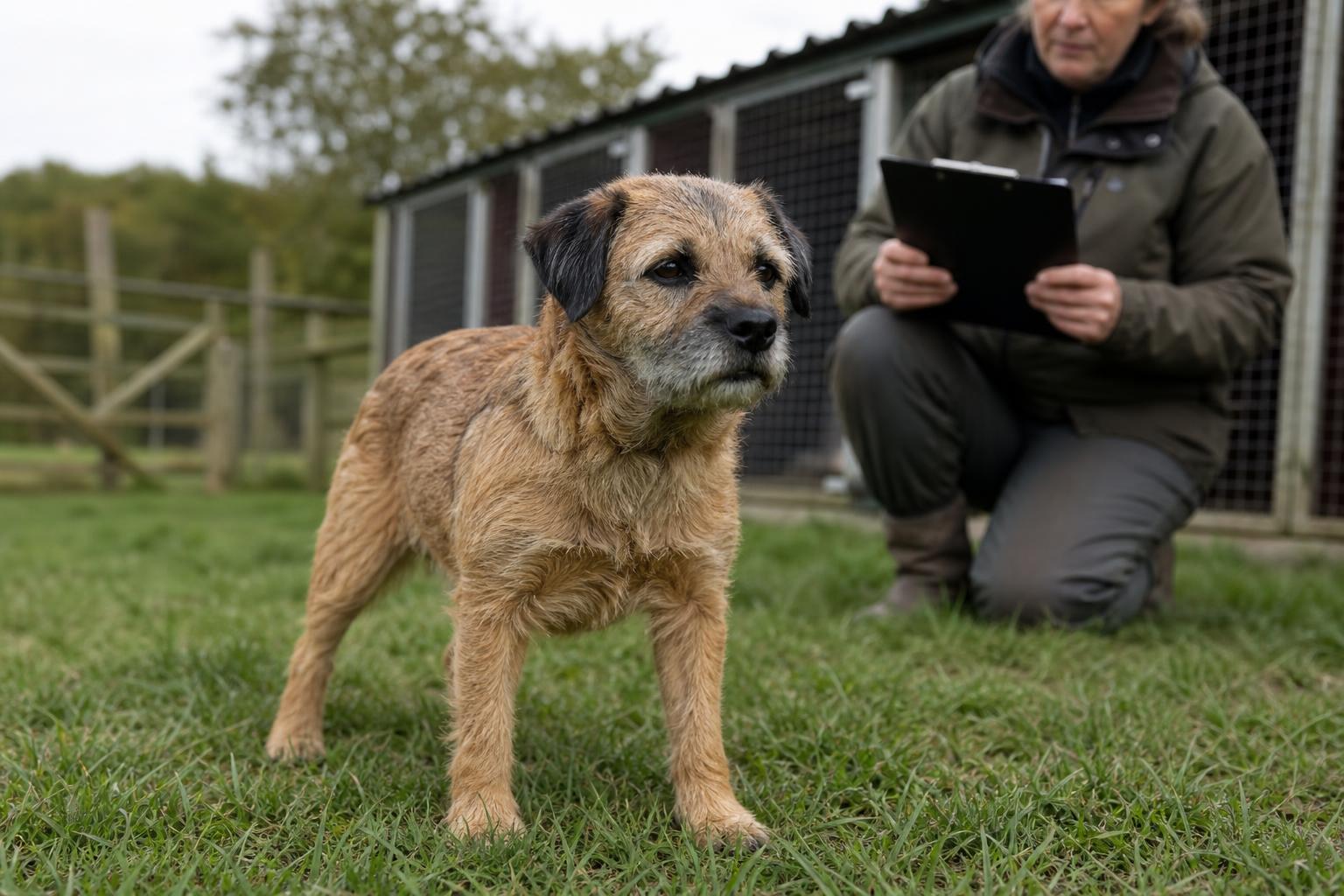
A proven female Border Terrier can be a valuable purchase for the right breeder, but she should never be evaluated only by the phrase “has had puppies.” In this breed, a fair evaluation looks at the whole dog: her temperament, health history, age, previous litters, maternal behavior, pedigree, working character, and how honestly the seller documents her record. Border Terriers are small, tough terriers developed in the border country between England and Scotland, where they needed enough leg and stamina to follow horses and enough determination to work fox and vermin in rough ground. That background still matters today because a quality female should show the breed’s practical virtues: soundness, a harsh weather-resistant coat, an alert mind, and a stable, people-oriented nature.
This guide is written for buyers researching Border Terrier proven females for a breeding program, a working terrier home, or a dual-purpose family and performance kennel. It does not replace veterinary advice, breed-club guidance, or registry verification. Instead, use it as a buyer-focused checklist so you can ask better questions before money changes hands.
What “Proven Female” Should Mean
In dog listings, “proven” usually means the female has produced at least one litter. That fact alone is not enough. A better definition is a female with a documented reproductive history, known temperament, clear ownership records, and transparent information about her puppies. For a Border Terrier, you should want to know whether she conceived naturally or needed reproductive assistance, how many puppies were born, whether the litter was healthy, how she behaved as a mother, and whether previous pups matured into sound, typical dogs.
Because Border Terriers are compact, athletic, and often long-lived, buyers sometimes assume any adult female with prior puppies is a safe breeding investment. That is risky. A proven female may be offered because a breeder is reducing numbers, changing bloodlines, retiring a dog from a program, or moving a female to a home where she can be more central. She may also be offered because of fertility problems, whelping complications, temperament concerns, or poor production. The listing should make the reason for sale understandable without pressure or vague claims.
Production Record and Prior Litters
Ask for a simple, dated production record. It should list each breeding, sire, litter date, number born, number surviving, delivery method if the seller is willing to share it, and any notable complications. You are not asking for gossip or private veterinary files; you are asking for enough information to judge risk and value. A female with one modest, healthy litter and excellent maternal behavior may be a better choice than a female with several poorly documented litters.
- How many litters has she had, and at what ages?
- Were the puppies raised by her without unusual intervention?
- Did any puppies have serious congenital or developmental issues?
- Can the seller share updates, photos, or references from prior puppy buyers?
- Were previous sires related or unrelated, and did results differ by cross?
Border Terriers are known for being affectionate, spirited, and game. Those qualities should be visible in offspring as balance, confidence, and trainability, not uncontrolled sharpness or nervousness. If the seller can describe what her pups are like as adolescents and adults, that is often more useful than a polished sales phrase.
Maternal Ability and Whelping History
Maternal ability has real value. A good Border Terrier mother is attentive, steady, and able to settle with her puppies while still accepting normal household handling. Ask whether she cleaned and nursed puppies well, maintained condition, and tolerated reasonable human support. Also ask whether she needed bottle feeding, constant supervision, or other intensive help. Some assistance is normal in responsible breeding; a pattern of serious problems should be priced and planned for honestly.
Do not accept vague guarantees that future litters will be easy. Reproduction is never certain. A seller can truthfully describe the female’s history, but no one should promise exact litter size, effortless whelping, or future fertility. If a previous C-section, reabsorption, missed breeding, or neonatal loss occurred, that does not automatically make her unsuitable, but it does mean you should discuss the record with your veterinarian before purchase.
Age, Breeding History, and Fertility Considerations
Age expectations matter because a proven female is usually an adult. A younger adult with one carefully raised litter is different from an older female near retirement. Ask for her date of birth, heat cycle history, last season, last litter date, and any rest periods between litters. Responsible breeding allows the female to recover and maintain condition; repeated close litters without clear reasoning are a red flag.
Fertility should be discussed carefully. If artificial insemination, shipped semen, frozen semen, or live cover were used, ask why and request documentation where appropriate. These methods may or may not apply to a specific Border Terrier female or breeding program. The important point is verification: confirm breeding dates, progesterone timing if used, semen source, and whether a veterinarian was involved. If the seller cannot explain how prior breedings were managed, slow down.
Health Clearances and Veterinary Records
Border Terriers are generally sturdy, but health screening still matters. The breed information available for this dog notes responsible attention to inherited conditions and mentions DNA testing availability for SLEM, spongiform leucoencephalomyelopathy, in UK breeding guidance. Depending on country, registry, and breeder practice, other evaluations may be relevant. Rather than assuming a listing has AKC, OFA, DNA, or breed-club records, ask the seller to show what has actually been completed.
- Request routine veterinary records, vaccination history, and parasite prevention history.
- Ask about DNA testing that is relevant to Border Terriers and the seller’s registry environment.
- Verify any OFA or similar clearance claims directly with the issuing database when available.
- Ask about allergies, chronic GI issues, exercise intolerance, dental problems, and prior surgeries.
- Confirm current weight and body condition; Borders can be enthusiastic eaters, and extra weight adds risk.
A seller should not need to make medical claims beyond the records. Good wording is specific: test names, dates, results, and registration numbers when applicable. Be cautious with “fully health tested” unless the seller can define exactly what that means.
Temperament and Working Character
Border Terriers are typically affectionate with their people, alert, and energetic, but they are still terriers. They may show prey drive, vocal excitement, independence, and a strong desire to investigate scent and movement. A proven female should be evaluated as a dog you can live with, not just as a producer. Meet her if possible. Watch how she handles strangers, confinement, grooming, other dogs, and normal household activity.
Verify reported working titles and test results with the issuing organisation. Confirm that the programme applies to the breed and ask what the result demonstrates about the individual dog.
Pedigree Strength and Compatibility
Pedigree analysis is more than recognizing famous kennel names. Study the female’s relatives, the consistency of type, and any known health or temperament patterns. Border Terriers should have the narrow, deep body traditionally described as spannable, an otter-like head, moderate bone, and a harsh jacket. A pedigree that consistently produces sound structure and stable minds is worth more than a pedigree marketed only with buzzwords.
Ask the seller which bloodlines have crossed well with her and which they would avoid. If you already own or have access to a potential sire, compare coefficients, shared ancestors, size, temperament, coat quality, and health history. A proven female can still be a poor match for your planned male. When in doubt, consult experienced Border Terrier breeders who are willing to speak plainly.
Fair Purchase Evaluation
Pricing for proven females varies widely by age, health records, fertility history, pedigree, show or working proof, and whether breeding rights are included. Avoid anyone promising exact future income or guaranteed litter sizes. Instead, calculate value based on documented facts and realistic costs: purchase price, transport, veterinary exam, reproductive consultation, registry transfer, possible grooming, conditioning, and time before a responsible breeding could occur.
- Get a written contract that states ownership, registration rights, breeding restrictions, and return terms.
- Confirm whether the female is being sold intact and whether any co-ownership remains.
- Ask what support the seller will provide after placement.
- Schedule an independent veterinary exam promptly after purchase.
- Do not rush because another buyer is supposedly waiting.
Red Flags in Proven Female Listings
Be cautious if the seller will not share age, litter history, registration information, or health records. Other warning signs include heavy pressure for quick payment, refusal to allow a vet check, inconsistent stories about prior litters, unclear ownership, or claims that every puppy from the female is guaranteed to be show, breeding, or working quality. A Border Terrier proven female should come with enough transparency that you can make a calm decision.
Conclusion: Buy the Whole Dog, Not Just the Label
The best Border Terrier proven females are not merely dogs that have produced puppies. They are healthy, typical, mentally stable adult females with honest records and a reasoned place in a future breeding plan. Focus on documentation, maternal history, temperament, health verification, and pedigree compatibility. If the seller welcomes careful questions and the female fits your goals, she may be a meaningful foundation for a thoughtful program. If answers are vague or the dog’s welfare feels secondary to a sales pitch, walk away and keep looking.
Explore Border Terrier on Working Dog Central
View the Border Terrier breed profile or browse Border Terrier listings.


