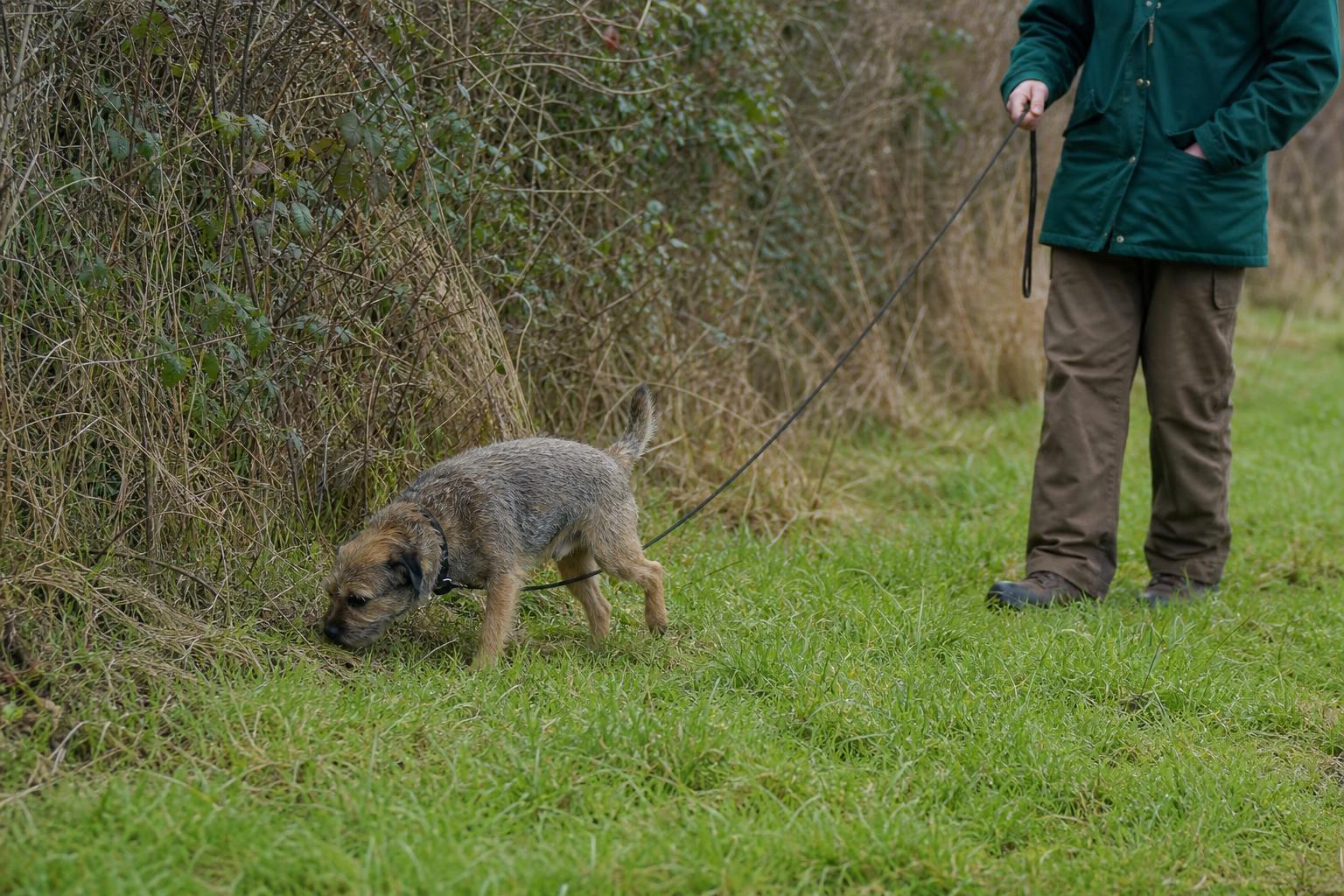
A started Border Terrier can be a smart choice for a buyer who wants more than a young puppy but still wants time to build a partnership. The word “started” should not be treated as a guarantee of finished work. It should mean the dog has had consistent foundation handling, age-appropriate exposure, and enough real-world experience for a buyer to evaluate temperament, trainability, confidence, and fit.
The Border Terrier is a small, tough working terrier from the border country between England and Scotland. Breed facts matter when shopping for a started dog. This is an affectionate, lively, intelligent terrier with a strong prey drive, a wiry weather-resistant coat, and a compact body built for rough cover and tight places. A good prospect should show curiosity, resilience, and people-focused cooperation without losing the bold independence that makes the breed useful.
What Qualifies as a Started Border Terrier?
For this breed, a started dog is usually past the earliest puppy stage and has begun structured life skills. That may include crate manners, leash walking, recall games, basic obedience, grooming handling, travel experience, and controlled exposure to new places, people, dogs, and outdoor distractions. Because Border Terriers can be independent and quick to chase movement, management and impulse control are just as important as simple command response.
Ask the seller to explain exactly what has been started. A clear answer should describe the dog’s daily routine, what cues the dog understands, how rewards are used, where training has been practiced, and what still needs work. Vague phrases like “well started” or “ready to hunt” are not enough by themselves. You are looking for evidence you can watch, not a label you have to trust.
Breed-Appropriate Game and Outdoor Exposure
The Border Terrier was developed to work around foxes and small game and to navigate rough terrain and dense underbrush. A started dog may have been introduced to scent work, barn hunt-style problems, controlled vermin work where legal and appropriate, hiking, farm routines, or other breed-suitable outlets. The key is not simply whether the dog has seen game, but whether the exposure was thoughtful, safe, and matched to the dog’s maturity.
- Look for interest, focus, and confidence without frantic or unsafe behavior.
- Ask whether exposure was controlled or accidental.
- Find out if the dog can disengage when asked or must be physically removed from every distraction.
- Confirm the dog has worked in secure areas, since prey drive can override recall in the moment.
A Border Terrier that has never been given an outlet may still become a fine companion, but a buyer should know the difference between natural instinct, early exposure, and actual trained reliability. Started does not mean finished, and prey drive should be managed honestly.
Gun Introduction When Relevant
Some Border Terrier buyers are hunters or working-dog owners, while others are looking for an active family companion. If the dog is advertised in a gun dog or sporting context, ask whether any gun introduction has been done. For many terriers, the more relevant question may be general noise confidence and recovery rather than formal field dog steadiness.
Good introduction should be gradual and paired with positive activity at a comfortable distance. Avoid dogs that have simply been exposed to loud noise with no plan. Ask what sounds the dog has heard, at what distance, in what setting, and how the dog responded afterward. A useful started dog should recover well, remain willing to engage, and not show lingering avoidance.
Obedience Level to Expect
Border Terriers are intelligent and often learn quickly, but they can also be independent. A started dog should show practical obedience in ordinary situations, not just in a quiet yard with food in hand. Expect to evaluate name response, sit or stand for handling, leash manners, crate comfort, recall games on a long line, and a useful leave-it or interruption cue.
- Recall: should be practiced, but should not be oversold around wildlife or small animals.
- Leash manners: should show improvement and handler awareness, even if the terrier still investigates scents.
- Crate and travel: important for buyers who hunt, train, travel, or manage multiple dogs.
- Handling: the dog should tolerate feet, ears, mouth, and coat checks with reasonable cooperation.
Because the breed’s wiry coat benefits from regular grooming and sometimes hand-stripping, handling comfort matters. A started dog that fights basic grooming or body checks may need careful retraining before it is easy to live with.
Evaluating Training in Person
Whenever possible, watch the dog work before buying. Ask the handler to demonstrate known cues in a normal setting and then in a slightly more distracting area. The goal is not perfection. You want to see how the dog thinks, how the handler supports the dog, and whether the dog becomes more engaged or more stressed as expectations increase.
Pay attention to recovery. If the dog startles, gets distracted, or makes a mistake, does it come back to the handler? Does it accept redirection? Does it offer behavior willingly, or does it shut down? Border Terriers can be bold and game, but a good match should still be reachable and trainable.
Temperament and Household Fit
Border Terriers are often affectionate and friendly with their families, and many do well with children and other pets when socialized from a young age. Still, they are terriers with a strong chase instinct. Ask how the dog behaves around other dogs, cats, poultry, livestock, and small pets. Do not assume friendliness with people equals safety around small animals.
For a family home, look for a dog that can settle after exercise, accepts routine, and enjoys human contact without becoming frantic. For a working or sport home, look for stamina, curiosity, and confidence in new environments. In either case, secure fencing and supervised outdoor time are practical requirements, not optional extras.
Health, Coat, and Care Questions
Use the seller’s breed facts as the starting point for questions. Border Terriers are generally sturdy, but responsible sellers should discuss family history, routine veterinary care, parasite prevention, and any relevant screening. The selector facts note that DNA testing is available in the UK for SLEM, a serious neurological disease, so buyers should ask what testing or pedigree information is available when applicable.
- Ask for veterinary records and vaccination or parasite-prevention history.
- Ask what food and daily exercise routine the dog is used to.
- Ask how the coat has been maintained and whether hand-stripping is recommended.
- Ask about any past injuries, digestive issues, itching, or exercise intolerance.
A started dog should arrive with more information than a young puppy. The more history the seller can provide, the easier it is to continue the dog’s progress without creating confusion.
Questions to Ask Before You Buy
- What age is the dog, and how long has structured training been underway?
- Which cues are reliable, and in what environments have they been tested?
- What breed-appropriate game, scent, or outdoor exposure has the dog had?
- Has the dog had any gun or loud-noise introduction, and how was it done?
- How does the dog behave around children, dogs, cats, and small animals?
- What does the dog still need help with?
- Will the seller provide support after placement?
Bottom Line
A Border Terrier started dog should be evaluated as an individual, not bought on the strength of a label. The best candidates combine the breed’s lively, affectionate nature with useful foundation training, honest exposure, and a temperament that fits your home or work. Choose the dog whose current skills, instincts, and management needs you understand clearly. That is how a started terrier becomes a reliable partner instead of a surprise project.
Explore Border Terrier on Working Dog Central
View the Border Terrier breed profile or browse Border Terrier listings.


