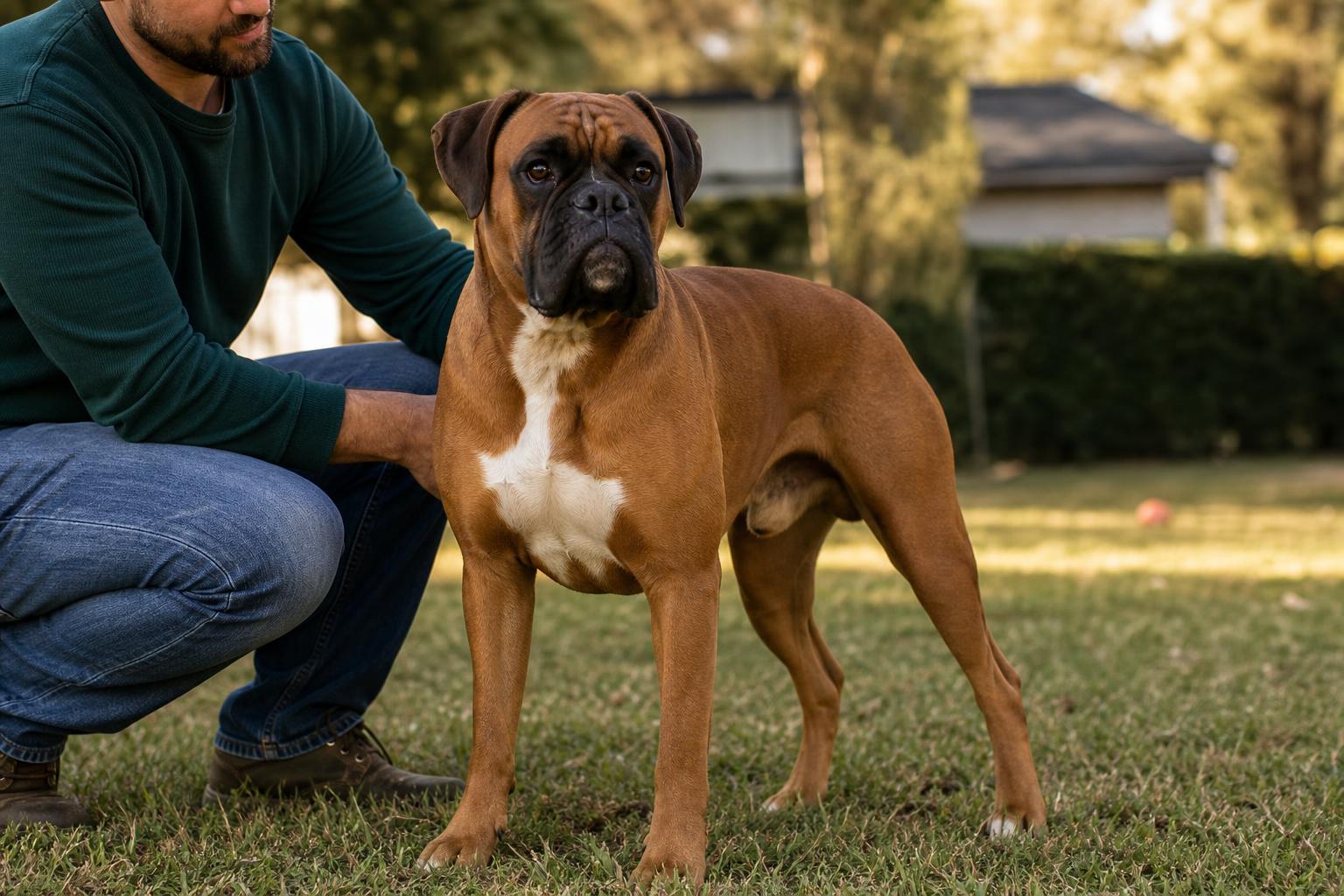
The Boxer is a muscular, square-built working dog with a famously expressive face and an equally memorable personality. For many households, the appeal is obvious: Boxers are affectionate, energetic, loyal, and often clownish with the people they love. They can be wonderful family companions when their needs are understood, but they are not a low-effort breed. A Boxer needs exercise, structure, socialization, and owners who enjoy training a strong, enthusiastic dog.
This Boxer breed guide is written for buyers and owners who want a practical view rather than a sales pitch. The breed has real strengths: devotion, athleticism, intelligence, and a natural watchdog instinct. It also has real responsibilities, especially around impulse control, heat management, and health screening. A good Boxer should be confident and lively without being frantic, protective without being unstable, and playful without being allowed to bulldoze every boundary in the home.
Boxer History and Working Background
The Boxer developed in Germany near the end of the nineteenth century. Its principal ancestor was the Bullenbeisser, a mastiff-type dog historically used in big-game hunting. As large-game hunting changed and the need for that type of dog declined, breeders refined the type by crossing those dogs with other breeds, including early Bulldogs. The result was a more versatile working dog: powerful, athletic, trainable, and useful for guarding, utility work, and companionship.
Boxers gained recognition for police, military, messenger, and guard work because they combined courage with a strong bond to handlers. They later became popular household dogs, especially after returning soldiers brought them home from Europe following World War II. The American Kennel Club recognized the breed in 1904, but modern buyers should still verify current registration details and documentation with the breeder or registry involved rather than assuming every dog offered is registered or eligible for a particular program.
Boxer Temperament
A well-bred, well-raised Boxer is usually people-focused, lively, confident, and deeply attached to family. Many Boxers are described as shadow dogs because they want to be close to their people and involved in ordinary household life. They are often playful well into adulthood and may use their front feet in a sparring or batting motion, which is one reason the breed's name feels so fitting.
That same enthusiasm can become a problem if it is not shaped early. Boxers are strong dogs with big feelings and fast bodies. Jumping, mouthiness, leash pulling, and overexcited greetings are common issues when training is delayed. Buyers should look for stable parents, thoughtful early socialization, and a breeder or rescue that is honest about each dog's energy level and confidence. A steady Boxer should be friendly or politely reserved in normal situations, not fearful, sharp, or impossible to settle.
Size, Build, and Appearance
The Boxer is a medium-to-large working breed with a short, smooth coat and a square, athletic outline. The body should look powerful without appearing clumsy. A broad chest, visible muscle, strong bone, and a distinctive head are all part of the breed's impression. The muzzle is short and deep, and the undershot jaw contributes to the classic Boxer expression.
Common coat colors include fawn and brindle, often with white markings and a dark mask. White Boxers also occur, though buyers should ask how a breeder handles color, registration, placement, and health considerations. Coat care is simple compared with many sporting and working breeds, but simple grooming should not be mistaken for simple ownership. The Boxer is easy to brush and hard to ignore.
Training a Boxer
Boxers are intelligent and usually enjoy working with their people, but they can be impulsive and strong-willed when bored or overexcited. Training should start early and should be consistent, positive, and practical. Short sessions often work better than drilling the same behavior until the dog loses interest. Reward calm choices, teach polite greetings, and make impulse control part of daily life.
Training priorities for Boxer owners
- Leash manners before the dog is full grown and physically harder to manage.
- Polite greetings with adults, children, and guests.
- Reliable recall in safe environments.
- Crate comfort and settle skills for downtime.
- Leave-it, drop-it, and waiting at doors or gates.
- Calm handling for veterinary care, nail trims, ear checks, and grooming.
Because Boxers are social and energetic, they often do well with structured activities such as obedience, rally, agility foundations, scent games, and trick training. Not every Boxer will be suited to every sport, and buyers should verify whether claims about hunt tests, trial records, protection work, or formal titles actually apply to the individual parents or line being discussed.
Exercise and Daily Life with a Boxer
A Boxer generally fits best with active owners who can provide daily movement and interaction. Walks, supervised play, training games, and safe running opportunities help burn energy and keep the dog mentally settled. Many Boxers become destructive or chaotic when they are expected to live as decorative house pets with only occasional exercise.
Boxers usually want to live indoors with their families. They are not a breed to leave isolated in a yard all day and still expect calm, polished behavior at night. Their short coat and people-oriented nature make them poor candidates for lonely outdoor living. They can adapt to smaller homes or apartments if exercise and training needs are met, but they are rarely a good match for owners who are gone long hours and do not have a plan for activity, companionship, and structure.
Care, Grooming, and Heat Management
Grooming a Boxer is straightforward. Regular brushing helps with shedding, and baths are usually needed only when the dog is dirty or has a skin issue that a veterinarian is helping manage. Nail trims, dental care, ear checks, and routine handling are more important than elaborate coat maintenance. Start these habits early so the dog learns that body handling is normal.
Heat management matters. Boxers have a relatively short muzzle and an all-in personality, so they may push themselves too hard in hot or humid weather. Owners should avoid intense exercise during the hottest parts of the day, provide shade and water, and watch for signs of distress. This is not a medical diagnosis or a substitute for veterinary advice; it is a practical ownership reality. If a Boxer shows coughing, fainting, unusual fatigue, noisy breathing, or exercise intolerance, a veterinarian should evaluate the dog promptly.
Boxer Health Considerations
Responsible Boxer buying requires serious attention to health screening. The breed has recognized concerns that can include cardiac disease, orthopedic issues, thyroid concerns, and other inherited conditions. A careful breeder should be willing to discuss what tests are relevant to their breeding dogs, share documentation where appropriate, and explain what the results mean. Buyers should not accept vague claims such as “vet checked” as a replacement for breed-relevant screening.
Health questions to ask before buying a Boxer
- Have the sire and dam had cardiac evaluations appropriate for Boxers?
- Are Holter monitoring, echocardiography, or other heart tests used in the breeding program?
- Have hips, elbows, or other orthopedic concerns been evaluated?
- Is thyroid testing part of the breeder's program?
- Are DNA tests used for conditions relevant to the breed or line?
- What health issues have appeared in related dogs, and how does the breeder track them?
- What support does the breeder provide if a serious health issue appears later?
Terms such as OFA, DNA testing, and cardiac screening can be meaningful, but buyers should verify the actual records, dates, dog identities, and relevance to the Boxer. Do not assume that a title, registry number, or attractive pedigree automatically equals responsible health selection.
Is the Boxer a Good Fit for You?
The Boxer can be an outstanding choice for an owner who wants an affectionate, athletic companion and enjoys daily involvement with the dog. Families often love the breed's humor and loyalty, but adults must still supervise children and dogs together. A bouncy young Boxer can accidentally knock over a small child even when the dog has no bad intent. Training, management, and realistic expectations are part of responsible ownership.
A Boxer may not be the right match if you want a calm, low-energy dog, dislike training, travel constantly, or expect a dog to entertain itself in the yard. The breed tends to thrive with people who like activity, routine, and close companionship. If you appreciate a dog with personality and are willing to put in the work, the Boxer can be deeply rewarding.
Practical Boxer Buying Considerations
When looking for a Boxer, start with temperament, health screening, and breeder transparency. A good source should be able to explain why a particular pairing was made, what the parents are like, what health testing has been done, and how puppies or adult dogs are matched with homes. For rescue or rehoming situations, ask about behavior history, dog-to-dog tolerance, crate training, child exposure, and any known medical concerns.
Signs of a responsible Boxer source
- Clear discussion of the breed's energy level, not just its charm.
- Documentation of relevant health screening when available.
- Thoughtful socialization and early handling for puppies.
- Honest answers about temperament, strengths, and challenges.
- A written agreement that explains responsibilities on both sides.
- Willingness to take back or help place a dog if the match fails.
Be cautious with sellers who always have puppies available, avoid health questions, pressure for fast deposits, or make sweeping promises about size, temperament, guarantees, protection ability, or future breeding value. No ethical breeder can promise a perfect outcome. What they can do is stack the odds through careful selection, honest placement, and long-term support.
Conclusion: Living Well with a Boxer
The Boxer is a loyal, athletic, funny, and people-centered breed with a genuine working-dog heritage. It is also a breed that asks for commitment. The best Boxer homes provide exercise, training, socialization, heat awareness, and careful attention to health screening. If you choose wisely and raise the dog with consistency, the reward is a devoted companion with energy, character, and heart.


