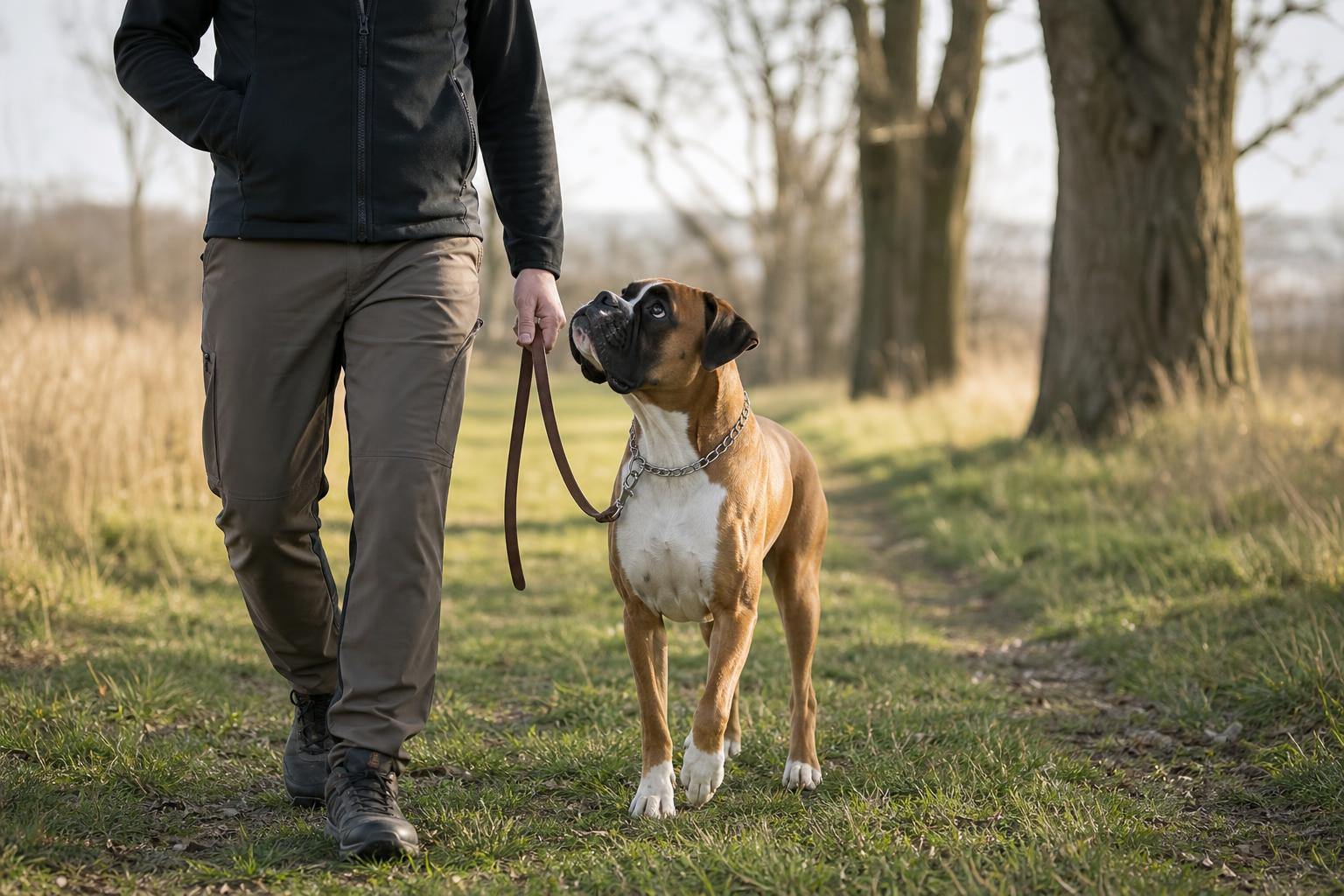
A Boxer started dog is not the same thing as a finished working dog, a fully trained protection dog, or a push-button family companion. For most buyers, the phrase means a Boxer that is beyond the baby puppy stage and has already received meaningful foundation work. That may include house manners, crate training, leash work, socialization, recall basics, and early exposure to the kind of lifestyle the dog is expected to live. Because the Boxer is an athletic, loyal, people-focused working breed with a playful and sometimes exuberant temperament, the quality of that early work matters more than the label itself.
Verify reported working titles and test results with the issuing organisation. Confirm that the programme applies to the breed and ask what the result demonstrates about the individual dog.
What qualifies as started
For Boxer started dogs, “started” should mean observable progress, not vague potential. A started Boxer may be an older puppy, adolescent, or young adult that has moved past the earliest puppy stages and has had structured training. At minimum, ask the seller to describe exactly what the dog knows, where the training has been practiced, and how reliably the dog performs around distractions.
- Basic obedience such as sit, down, stay or wait, recall, and loose-leash walking.
- Crate comfort, house training progress, and calm settling after exercise.
- Polite handling for grooming, nail trims, ear checks, and veterinary care.
- Social exposure to people, normal household activity, vehicles, public places, and other dogs when appropriate.
- Impulse control around doors, food, greetings, and exciting play.
A well-started Boxer should still act like a Boxer: bright, physical, affectionate, and often clownish. What you do not want is a dog whose energy has been ignored until it became chaos. The seller should be able to show the dog working with a handler, relaxing between activities, and recovering from excitement without needing harsh corrections.
Birds introduced or breed-appropriate game exposure
Because Boxers are not generally purchased as traditional pointing, flushing, or retrieving gun dogs, bird introduction may not be relevant to many Boxer started dog listings. If a listing mentions birds, game exposure, blood tracking, shed work, scent games, or hunting-related training, ask for specifics rather than assuming a standard field-dog progression. A Boxer may enjoy scent work, tracking-style games, obedience in outdoor environments, or controlled exposure to livestock and wildlife scents, but that is different from claiming the dog is a trained bird dog.
Breed-appropriate exposure for a Boxer often includes confidence-building in varied environments. Look for a dog that can walk on different surfaces, ride in a vehicle, recover from unexpected noises, focus around movement, and engage with the handler after being excited. If the seller says the Boxer has been exposed to birds or game, ask what species, what setup, how the dog reacted, whether the work was prey-drive play or formal hunting preparation, and whether the training is relevant to your intended use.
- Ask for video of the dog in the environment being advertised.
- Separate natural curiosity from trained reliability.
- Verify whether exposure was positive and controlled, not overwhelming.
- Do not pay a premium for field claims that are not demonstrated.
Gun introduction when relevant
Gun introduction is only relevant if the Boxer has truly been prepared for gunfire or noisy working environments. For many Boxer buyers, a more practical question is how the dog handles thunderstorms, traffic, dropped objects, barking dogs, crowds, and other sudden sounds. A confident Boxer should notice a new sound without shutting down, panicking, or becoming uncontrollable.
If a seller claims gun introduction, ask how it was done. Responsible introduction is gradual and positive, usually beginning at a distance while the dog is engaged in something enjoyable. It should never mean someone simply fired a gun near the dog to see what happened. Also ask whether gunfire exposure is necessary for your plans. If you want a Boxer for family companionship, sport obedience, scent work, or general active living, broad environmental stability may matter more than gunfire.
Verify reported working titles and test results with the issuing organisation. Confirm that the programme applies to the breed and ask what the result demonstrates about the individual dog.
Obedience level
Obedience is one of the clearest ways to evaluate a Boxer started dog. Boxers are intelligent and usually enjoy working with people, but they can also be strong, bouncy, and impulsive. A started Boxer should demonstrate more than a few commands in the seller’s yard. You want to know whether the dog can respond when mildly distracted, settle after activity, and accept calm handling.
- Recall: The dog should turn toward the handler promptly in a controlled area, with age-appropriate reliability.
- Leash manners: A Boxer does not need to heel like a competition dog, but should not drag the handler everywhere.
- Place or settle: Useful for a breed that wants to be involved in everything.
- Polite greetings: Essential because Boxer enthusiasm can overwhelm children, guests, and older adults.
- Handling tolerance: The dog should accept collar grabs, feet, ears, and mouth checks without excessive resistance.
Ask what training methods were used. Positive, clear, consistent training is especially important with Boxers because they are sensitive under all that muscle and humor. Heavy-handed methods can create avoidance, anxiety, or defensive behavior, while no boundaries at all can create an adolescent that is difficult to live with. The right started Boxer should look engaged, not intimidated.
Evaluating training
Do not evaluate a Boxer started dog from a written description alone. A good seller should be willing to explain the training history, provide current videos, and let you see the dog perform normal skills. If you visit in person, watch the dog before, during, and after the demonstration. The moments between commands often tell you the most.
Look for a Boxer that is physically sound, alert, responsive, and able to recover from excitement. The breed is known for an athletic build, short coat, square outline, and deep loyalty to family. That power and attachment are assets when properly guided, but they also mean the buyer must be realistic. A started dog still needs structure after purchase. Expect a transition period, refreshed house rules, and continued training as the dog bonds with a new household.
- Ask why the dog is being sold as started rather than kept, placed as a puppy, or advanced further.
- Request veterinary records and vaccination history without accepting broad health claims as proof.
- Discuss Boxer-relevant health screening questions, especially cardiac evaluations, hips, elbows, thyroid, and DNA tests when applicable.
- Watch for red flags such as no videos, pressure to pay immediately, inconsistent age or training claims, or refusal to answer basic questions.
- Confirm whether the dog has been around children, cats, livestock, kennels, traffic, or other conditions that matter in your home.
Health questions deserve particular care with Boxers. Responsible sellers should be comfortable discussing known breed concerns and what has or has not been screened. Do not assume OFA, DNA testing, Holter monitoring, echocardiograms, or other evaluations have been completed unless documentation is provided. Likewise, avoid interpreting a healthy-looking young dog as a guarantee of future health. Good records reduce uncertainty, but they do not eliminate it.
Matching a Boxer started dog to your home
The best Boxer started dog for one buyer may be the wrong match for another. A family may need a dog with excellent house manners and polite greetings. A performance home may value drive, focus, and resilience. A rural owner may need livestock sense and reliable recall, while a city owner may prioritize noise tolerance and leash manners. Be honest about your schedule, experience, fencing, children, other pets, and willingness to keep training.
Because Boxers can overheat in hot and humid conditions, ask how the dog has been conditioned and managed during exercise. The breed’s short muzzle and high-output personality make heat safety important. A started Boxer should have an exercise plan that builds fitness without reckless overwork. Daily walks, play, training games, and structured outlets are usually more useful than simply turning the dog loose and hoping it tires itself out.
Buyer-focused conclusion
A Boxer started dog can be a rewarding choice when the dog has honest foundation training, stable temperament, appropriate exposure, and records that match the seller’s claims. Focus on proof over promises. Ask to see obedience, verify any hunting or gun-related statements, review health documentation, and make sure the dog’s energy level fits your life. The right Boxer will still need leadership, exercise, and patience, but a well-started one gives you a stronger beginning with one of the most loyal and entertaining working breeds.


