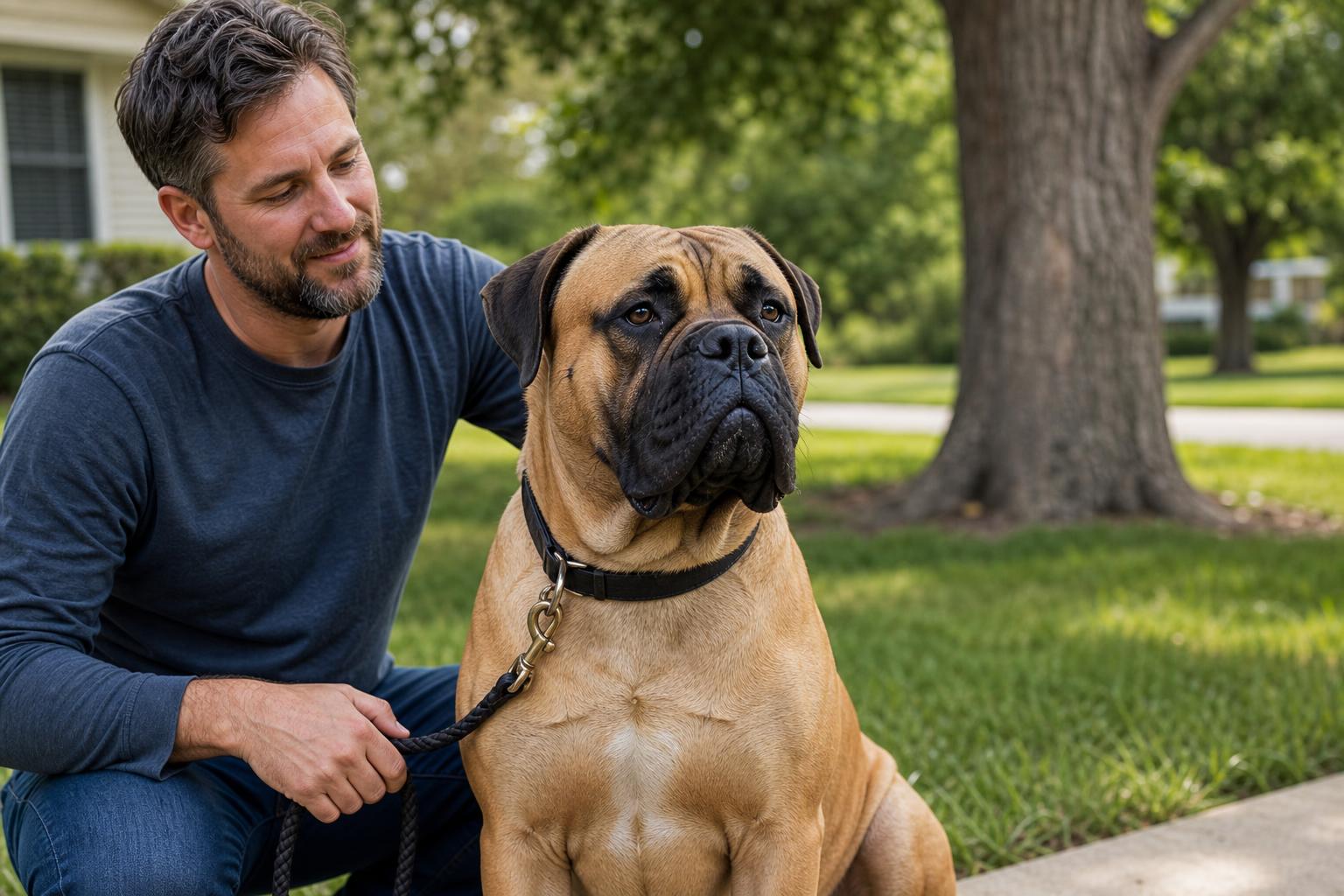
The Bullmastiff is a large, powerful guardian breed with a calm, loyal nature and a serious sense of responsibility. Developed in England to help gamekeepers protect estates, the breed was expected to be strong enough to stop a threat, steady enough to remain controllable, and quiet enough to work without constant barking. Today, many Bullmastiffs are family companions first, but their size, confidence, and protective instincts still shape the kind of home they need.
For buyers researching the Bullmastiff, the central question is not whether the breed is impressive. It is whether your household can provide the training, space, structure, and veterinary commitment that a giant guardian dog deserves. A well-bred, well-socialized Bullmastiff can be affectionate and dependable, but this is not a casual purchase or a breed to choose on appearance alone.
Bullmastiff History and Original Purpose
The Bullmastiff is a relatively modern breed, developed in the mid- to late 19th century in England. Gamekeepers needed a dog that could help prevent poaching on large estates. Early breeders crossed the Mastiff with the Old English Bulldog to create what became known as the “Gamekeeper’s Night Dog.” The goal was a dog with the Mastiff’s size and steadiness combined with the Bulldog’s determination and agility.
Unlike many sporting or bird dog breeds, the Bullmastiff was not developed to point, flush, retrieve, or range across upland cover. Its job was guardianship: quietly tracking, confronting, and holding intruders until the gamekeeper arrived. That background explains much of the modern Bullmastiff temperament. The breed is usually watchful rather than frantic, powerful rather than fast, and deeply loyal to its own people.
As estate life changed, the Bullmastiff moved from specialized working role into companion and guardian homes. The Kennel Club in the United Kingdom recognized the breed in 1924, and the American Kennel Club recognized it in 1933. Buyers should verify current registration options and breed club recommendations directly with the breeder or registry, rather than assuming every dog advertised is properly registered or bred to a recognized standard.
Bullmastiff Size, Build, and Appearance
The Bullmastiff is a giant, muscular dog with a broad, square head, short muzzle, broad chest, and strong limbs. The breed should look powerful and symmetrical without appearing clumsy. A correct Bullmastiff is substantial, but sound movement and overall balance matter just as much as mass.
The coat is short, dense, and weather-resistant. Common colors include fawn, red, and brindle, often with a dark muzzle or mask that gives the breed its distinctive expression. Grooming is simple compared with long-coated breeds, but buyers should still expect normal shedding, drool, large-dog mess around water bowls, and routine nail, ear, dental, and skin care.
- Short coat with relatively easy brushing needs
- Large frame that requires careful weight management
- Strong head and jaw structure, making early handling manners important
- Moderate exercise needs rather than high-endurance athletic demands
Bullmastiff Temperament and Family Fit
A typical Bullmastiff is calm, affectionate with family, alert, and reserved with strangers. Many are gentle with children when raised and managed responsibly, but no giant breed should be left to “figure it out” without supervision. Their size alone can knock over a small child or overwhelm visitors, even when the dog has friendly intentions.
Protective instinct is part of the Bullmastiff’s identity. That does not mean a good Bullmastiff should be uncontrolled, reactive, or suspicious of everything. The best examples are stable and thoughtful. They notice changes, watch unfamiliar people, and rely on their owner for direction. Early socialization helps teach the dog that normal guests, delivery drivers, veterinary staff, and other dogs are not automatic threats.
For families, the Bullmastiff often works best in a calmer household with consistent routines. This breed usually wants to be near its people, resting in the same room and participating in daily life. It is not typically the right match for someone wanting a tireless jogging partner, a high-speed sport dog, or a breed that can be managed casually without training.
Training a Bullmastiff
Training should begin early, before the puppy grows into adult strength. Bullmastiffs are intelligent but can be independent and selective in their responses. Calm, consistent, reward-based training is usually more effective than harsh correction. Heavy-handed methods may create resistance or mistrust, while inconsistent rules can produce a dog that uses its size to make its own decisions.
Core skills to prioritize
- Loose-leash walking before the dog becomes too strong to physically manage
- Calm greetings at doors, gates, vehicles, and public spaces
- Reliable recall in safe environments
- Leave-it and drop-it commands for household safety
- Neutral behavior around strangers, dogs, and routine handling
Because Bullmastiffs are natural guardians, socialization should be structured rather than chaotic. The goal is not to force the dog to love every stranger. The goal is a confident dog that can observe the world calmly and accept owner direction. Buyers should ask breeders how puppies are handled, what household experiences they receive, and whether the breeder evaluates temperament before matching puppies with homes.
Exercise, Housing, and Daily Care
Bullmastiffs usually need moderate daily exercise: regular walks, relaxed yard time, and mental engagement. They are not generally built for long-distance running or intense endurance work. Overexertion, heat, and excess weight can be hard on a giant breed, especially during growth. Puppy exercise should be thoughtful and not based on forced mileage or repeated jumping.
A fenced yard is helpful, but it is not a substitute for leash manners and household structure. A Bullmastiff can live in a suburban or rural setting and may adapt to a smaller home if exercise and management are consistent. What matters most is whether the owner can safely handle a strong dog and provide predictable rules.
Daily care includes brushing the short coat, trimming nails, cleaning ears as needed, maintaining dental care, and keeping facial folds or skin areas clean and dry if irritation develops. Owners should also learn the warning signs of bloat or gastric dilatation-volvulus, a serious emergency risk discussed in deep-chested and giant breeds, and should ask their veterinarian about feeding routines and prevention options.
Bullmastiff Health Considerations
Bullmastiffs are often described as generally healthy, but responsible buyers should not ignore known risks. Orthopedic issues such as hip and elbow dysplasia are commonly discussed in the breed. Heart concerns, including dilated cardiomyopathy and subaortic stenosis, may also be part of health screening conversations. Eye issues such as entropion or inherited retinal disease have been reported as well.
A buyer should ask for documentation, not vague reassurance. Depending on the breeder, country, and registry, relevant screening may include orthopedic evaluations, cardiac exams, eye evaluations, and other tests recommended by breed clubs or veterinary specialists. OFA-style databases, DNA tests, and registry programs can be useful tools when they apply, but buyers should verify relevance to the individual dog and line rather than assuming every advertised claim is complete.
Questions to ask a Bullmastiff breeder
- What health screenings were completed on the sire and dam?
- Can I see actual certificates, reports, or database links?
- What health issues have appeared in related dogs?
- How old are the parents and close relatives?
- What support do you provide after the puppy goes home?
Buying a Bullmastiff: Practical Considerations
When buying a Bullmastiff, prioritize temperament, health transparency, and breeder support over color, size bragging, or dramatic guardian claims. A breeder should be willing to discuss the breed’s challenges as openly as its strengths. Be cautious of sellers who market only intimidation, extreme size, or “rare” traits without meaningful information about health, structure, and temperament.
Good Bullmastiff breeders usually want to know about your home, experience, schedule, and ability to manage a giant guardian breed. That is a positive sign, not an inconvenience. Puppy contracts, return policies, registration details, and any health guarantee terms should be reviewed in writing. Do not assume exact prices, guarantees, or availability; these vary by breeder, region, pedigree, and timing.
If you are considering an adult Bullmastiff, spend time observing leash manners, visitor behavior, handling tolerance, and comfort around normal household activity. Ask why the dog is available, what training it has received, and whether it has lived with children, other dogs, cats, or livestock. Adult placements can be excellent, but honest evaluation is essential with a dog of this size.
Is the Bullmastiff Right for You?
The Bullmastiff is best suited to owners who want a steady, loyal companion and are prepared for the responsibilities of a giant guardian breed. This dog needs early training, thoughtful socialization, veterinary planning, and an owner who can be kind without being permissive. In the right home, the Bullmastiff can be calm, affectionate, watchful, and deeply devoted.
Choose the breed because its temperament and needs fit your life, not because its appearance makes a strong impression. If you value a quiet protector, can manage size and strength, and are committed to health-conscious buying, the Bullmastiff may be a rewarding companion. Take your time, verify breeder claims, and choose the individual dog whose temperament and background match your household.
Explore Bullmastiff on Working Dog Central
View the Bullmastiff breed profile or browse Bullmastiff listings.


