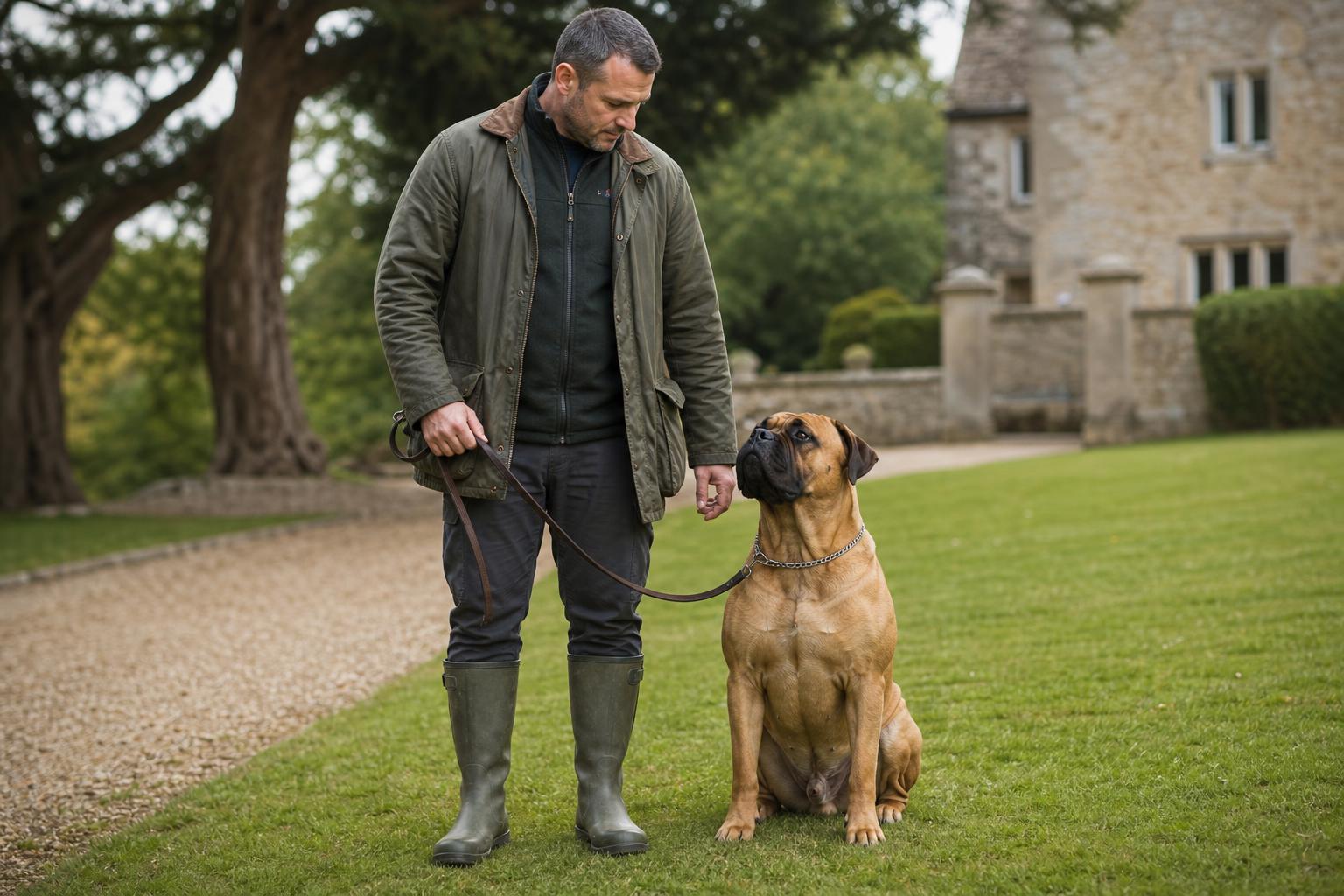
A finished Bullmastiff is not the same kind of purchase as a finished pointing dog, retriever, or field trial prospect. The Bullmastiff was developed as a powerful estate guardian, originally valued for steadiness, control, courage, and the ability to deter or hold a threat rather than hunt birds. That history matters when you evaluate a mature, trained Bullmastiff. The best candidates are not simply large dogs with a few obedience commands. They are stable, manageable adults whose training, temperament, health, and daily habits match the home or working environment where they will live.
For buyers using Working Dog Central to research working breeds and serious dogs, this guide focuses on practical evaluation. The Bullmastiff can be a loyal family guardian and calm companion, but size and protective instinct leave little room for guesswork. A buyer should verify what the seller means by “finished,” watch the dog work in realistic settings, review health information, and make sure the dog is safe, controllable, and appropriate for the buyer’s experience level.
What makes a finished dog
In many sporting dog circles, a finished dog has proven field skills: steady to wing and shot, reliable retrieves, blinds, advanced handling, or formal titles. For a Bullmastiff, the term should be defined differently. A finished Bullmastiff should be a mature or near-mature dog with reliable household manners, leash control, calm behavior around normal visitors, appropriate confidence in public, and a clear understanding of basic obedience under distraction.
Because Bullmastiffs are giant, powerful dogs, “finished” should include practical control rather than flashy routines. The dog should walk without dragging the handler, wait at doors, settle in the house, accept grooming and veterinary handling, load and unload safely from a vehicle, and respond to cues such as sit, down, stay, come, leave it, place, and heel or loose-leash walking. If the dog is being represented as a guardian prospect, ask exactly what training has been completed and what situations have been tested. Responsible sellers should be able to explain whether the dog has been trained for family companionship, estate watchfulness, basic protection sports, show handling, service-type manners, or another specific role.
A finished Bullmastiff should also show emotional steadiness. The breed is known for being faithful, dependable, and watchful, but a good dog should not be frantic, fearful, or indiscriminately aggressive. You want a dog that can notice a stranger without losing control, recover after surprise noises, and accept direction from the handler. That balance is far more valuable than a dog advertised with vague claims about being “protective.”
Hunt tests
Hunt tests are central for many gun dog breeds, but buyers should be careful about applying that standard to a Bullmastiff. This breed is not commonly evaluated through retriever, pointing, flushing, or versatile hunting tests. If a seller mentions hunt tests, ask which organization ran the test, what title or score was earned, and whether the event is actually relevant to the Bullmastiff’s intended role. Do not assume that every working-dog phrase used in an advertisement applies to this breed.
Instead of looking for traditional hunt test credentials, focus on practical proof of training. Ask to see the dog in everyday conditions: walking near traffic, meeting a neutral stranger, ignoring other dogs at a distance, settling on a mat, and responding calmly when the handler gives direction. If the Bullmastiff has participated in obedience, rally, conformation, temperament testing, therapy-style public access practice, or protection sport foundations, request documentation and watch current behavior rather than relying only on certificates.
Verify working records and breed eligibility
Verify reported working titles and test results with the issuing organisation. Confirm that the programme applies to the breed and ask what the result demonstrates about the individual dog.
Verify reported working titles and test results with the issuing organisation. Confirm that the programme applies to the breed and ask what the result demonstrates about the individual dog.
Trial records
Trial records can be meaningful, but the type of trial matters. A Bullmastiff is unlikely to have traditional pointing dog or retriever field trial records. Some individuals may have show records, obedience titles, rally titles, working dog sport participation, or temperament-related awards. Each of those records tells a different story, and none should replace a live evaluation of the dog in front of you.
When trial or title claims appear in a finished Bullmastiff listing, ask for complete names, registration numbers when applicable, event organizations, dates, and proof. Then interpret the records honestly. A conformation record may suggest the dog fits breed type, but it does not guarantee easy handling at home. An obedience title may show trainability, but you still need to see whether the dog responds to its current handler and can transfer those skills to you. A protection sport foundation may demonstrate nerve and drive, but it may not be appropriate for every family buyer. Good sellers will welcome careful questions because they want the dog placed correctly.
Age expectations
Age is especially important with Bullmastiffs. This is a giant breed that often matures slowly, both physically and mentally. A very young dog may know several commands but still lack the judgment and consistency most buyers expect from a finished adult. Many buyers looking for a truly finished Bullmastiff should expect to consider mature adolescents or adults rather than puppies with early training.
Ask how long the dog has lived with the current seller or trainer, what routines it knows, and how it behaves during normal downtime. A finished adult should be past the most chaotic puppy stage and should have enough maturity to show its real temperament. Still, do not confuse age with training. An older Bullmastiff with poor manners, weak socialization, or unmanaged reactivity is not a finished dog simply because it is grown.
Health and longevity should also be part of the age discussion. Bullmastiffs can be prone to orthopedic concerns such as hip and elbow dysplasia, cardiac issues, eye concerns, weight-related joint strain, and the emergency risk of bloat or GDV common to deep-chested large breeds. Buyers should ask what veterinary records, orthopedic evaluations, cardiac screening, eye exams, and other health information are available. Avoid sellers who make sweeping medical guarantees or dismiss breed-related health questions.
Investment value
A finished Bullmastiff can cost more than a puppy because the seller has invested time, food, veterinary care, socialization, and training into the dog. The value should come from verified work, not from marketing language. A fair evaluation looks at temperament, health transparency, training quality, pedigree relevance, age, manners, and the seller’s willingness to support the transition after purchase.
For many buyers, the strongest investment is a dog that reduces uncertainty. A well-raised adult lets you observe size, temperament, movement, confidence, and daily behavior before making a commitment. That can be valuable for families who want a steadier companion or property guardian and do not want to start from the puppy stage. However, buyers should budget beyond the purchase price. Giant-breed food, preventive care, medications, emergency care, secure fencing, training refreshers, and appropriate transportation can all be significant.
Be cautious of listings that frame a Bullmastiff only as a security tool. The breed’s best qualities are loyalty, calm watchfulness, and dependable companionship when properly bred, trained, and managed. A dog advertised as “fully trained protection” should come with clear documentation, a demonstration from a qualified trainer, and an honest discussion of liability, handling skill, and whether that level of training fits your home. For many buyers, a calm, obedient, socially stable guardian companion is more useful than a high-intensity dog with unclear training.
Questions to ask before buying a finished Bullmastiff
- What exactly does “finished” mean for this individual dog?
- Can I watch the dog demonstrate obedience, leash manners, settling, and visitor behavior?
- What health records, orthopedic evaluations, cardiac information, and eye testing are available?
- How does the dog behave around children, strangers, other dogs, livestock, or household pets?
- Has the dog ever shown fear, aggression, resource guarding, separation distress, or escape behavior?
- What food, exercise routine, crate habits, and house rules does the dog already know?
- Will the seller provide a written purchase agreement and transition support?
Buyer-focused conclusion
Buying a finished Bullmastiff can be a smart choice when you want a mature, trained, steady guardian companion and you are prepared for the responsibility of a giant breed. The key is to define the term “finished” in practical Bullmastiff terms: reliable manners, controlled strength, sound temperament, transparent health information, and a role that fits your household. Verify claims, watch the dog work, review records, and choose the individual whose training and temperament are proven rather than merely advertised.
Explore Bullmastiff on Working Dog Central
View the Bullmastiff breed profile or browse Bullmastiff listings.


