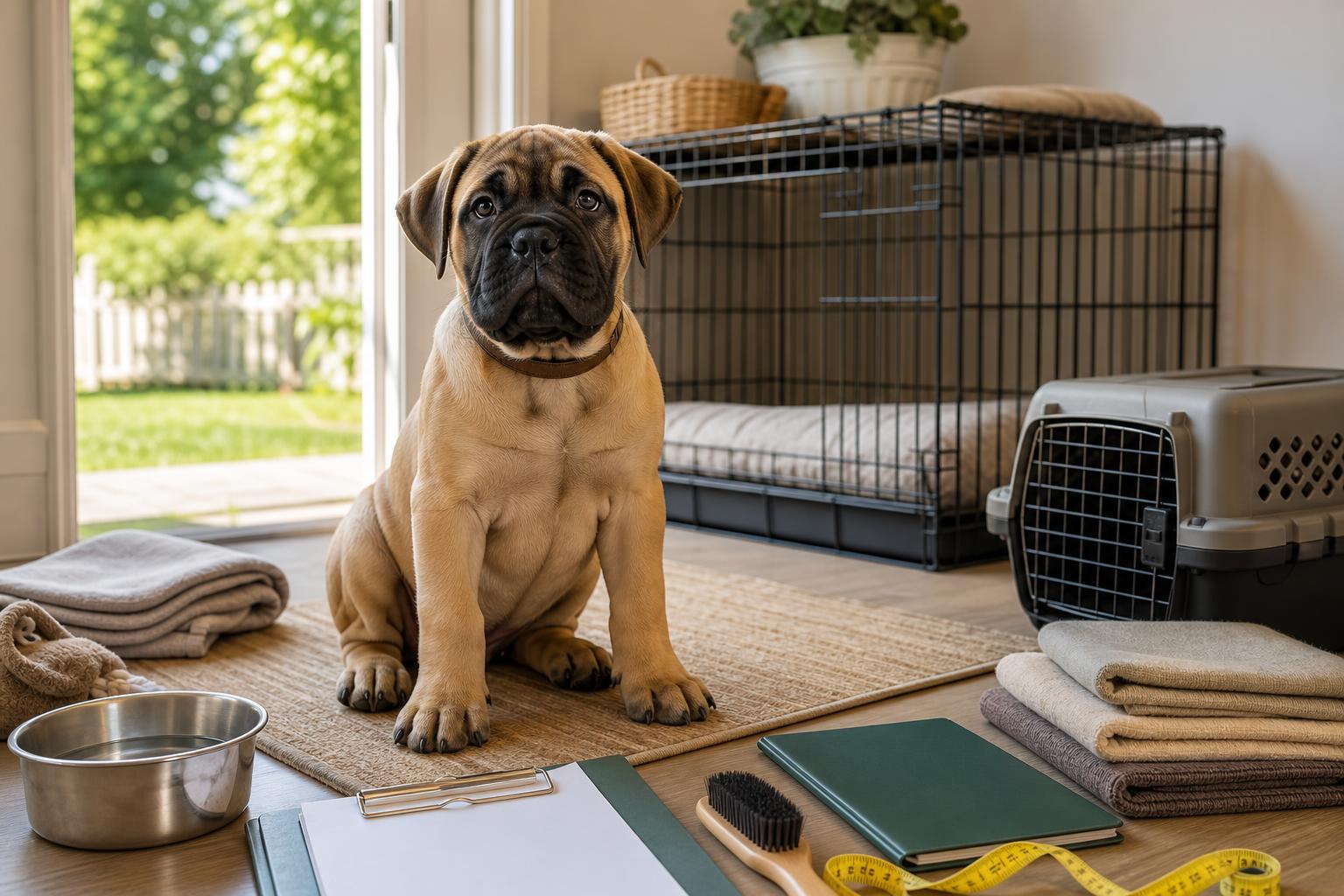
Looking at Bullmastiff puppies for sale is exciting, but this is a breed where careful buying matters. The Bullmastiff is a giant guardian breed with a calm, loyal nature, a powerful body, and a protective instinct that should be steady rather than sharp. A well-bred Bullmastiff can become a deeply affectionate family companion and dependable watchdog. A poorly matched puppy, or one raised without thoughtful socialization, can become difficult simply because of size, strength, and confidence.
This guide is written for buyers comparing Bullmastiff puppy listings on Working Dog Central and elsewhere. It focuses on practical questions: how to evaluate breeders, what registration does and does not prove, what vaccination records should look like, how to prepare your home, and how to think about typical puppy prices without assuming every litter is the same. Use the breed facts as your foundation: Bullmastiffs are generally calm, faithful, strong, short-coated dogs that need early manners, careful socialization, moderate exercise, and health-conscious ownership.
Choosing a breeder
The best Bullmastiff breeder is not simply the person with puppies available today. Look for someone who can explain why they bred a particular sire and dam, what temperament they expect, and what type of home each puppy may fit. Because Bullmastiffs are large guardians, temperament should be a primary conversation. Ask how the puppies are handled, what visitors or household sounds they experience, and how the breeder introduces basic grooming, nail trims, crate comfort, and calm human interaction.
A responsible breeder should be open about the breed’s strengths and challenges. You want honesty about drool, size, food costs, moderate exercise needs, training requirements, and the importance of controlled greetings. Be cautious if a seller markets Bullmastiff puppies mainly as protection dogs, rare colors, oversized dogs, or status symbols. The breed’s traditional guardian instinct is real, but a family Bullmastiff should be stable, manageable, and confident rather than encouraged toward suspicion.
Ask to learn about the parents. If meeting both parents is not possible, the breeder should still provide useful information about their temperaments, health history, structure, and daily behavior. A mature Bullmastiff should not be frantic or uncontrollable. Many are reserved with strangers, but they should be under control and able to settle. For buyers with children, other dogs, livestock, or frequent visitors, discuss those details before reserving a puppy.
- Ask what health screening has been done on the sire and dam.
- Ask how the breeder matches puppies to homes.
- Ask what support is offered after the puppy leaves.
- Review the sales contract before sending a deposit.
- Avoid pressure tactics, vague answers, and sellers unwilling to discuss health or temperament.
AKC registration
The Bullmastiff is recognized by the American Kennel Club, but AKC registration should be understood correctly. Registration can document that a puppy comes from AKC-recorded parents, but it is not a guarantee of health, temperament, training quality, or ethical breeding. Buyers should verify the registration details directly and make sure the paperwork matches the puppy, the litter, and the breeder’s claims.
Ask whether the puppy is sold with full registration, limited registration, or another arrangement. Limited registration is common for companion puppies and usually means the dog can be registered but offspring may not be eligible for AKC registration. That is not necessarily a negative; many good breeders use limited registration to discourage careless breeding. If breeding rights are important to you, discuss that openly and expect the breeder to ask serious questions in return.
Pedigree can be useful, but do not treat famous names as a substitute for current health information and stable temperament. For a Bullmastiff puppy, the practical value is in the living dogs behind the pedigree: how they move, how they breathe, how they behave around people, and what health records are available. If a listing mentions show titles, working background, or guardian lines, ask what those claims mean and how they relate to the puppy you are considering.
Vaccinations
Before bringing a Bullmastiff puppy home, ask for a written vaccination and deworming record. The record should show dates, products or clinic information when available, and what the puppy is due for next. Puppies commonly need a series of veterinary visits as they grow, so your first appointment should be scheduled soon after pickup. Your veterinarian can review the breeder’s records, build an appropriate vaccine plan, and discuss parasite prevention for your region.
Do not rely on verbal claims alone. A puppy advertised as “up to date” should still come with documentation. Also remember that vaccination timing depends on age and veterinary guidance; a young puppy is not instantly protected just because it has received an early shot. Until your veterinarian says your puppy is adequately protected, be careful about public dog areas, pet-store floors, and unknown dogs.
Health care for a giant breed also includes growth management. Talk with your veterinarian about diet, body condition, joint-friendly exercise, and safe routines around meals. Bullmastiffs are deep-chested dogs, so owners should learn the warning signs of bloat or GDV and discuss prevention strategies with a veterinarian. Avoid any seller who makes sweeping medical promises or dismisses known breed health concerns.
Bringing puppy home
A Bullmastiff puppy may be small enough to carry on pickup day, but that stage does not last. Prepare your home for the adult dog you are raising, not just the baby arriving this week. Set up a safe sleeping area, choose sturdy bowls, buy an appropriate crate or confinement setup, and plan for controlled introductions to children, pets, and visitors. Smooth floors, steep stairs, and rough play can be hard on growing joints, so keep early activity sensible.
Training should begin immediately in a calm, positive way. Focus on name recognition, coming when called, leash manners, sitting for greetings, accepting handling, and settling quietly. Because Bullmastiffs become powerful quickly, do not allow behaviors in a puppy that will be unsafe in an adult dog. Jumping, dragging on leash, guarding objects, and charging doors should be addressed early with structure and consistency.
Socialization does not mean letting every stranger crowd your puppy. It means carefully exposing the puppy to normal life so confidence develops. Short car rides, calm visitors, different surfaces, household noises, grooming practice, veterinary handling, and neutral observation of other dogs can all help. The goal is a steady Bullmastiff that can think before reacting.
- Schedule a veterinary visit shortly after pickup.
- Use a high-quality large-breed puppy diet recommended by your vet or breeder.
- Keep exercise moderate and age-appropriate.
- Practice calm handling of feet, ears, mouth, collar, and body.
- Start leash manners before the puppy is too strong to manage easily.
Typical puppy prices
Bullmastiff puppy prices vary by region, breeder experience, pedigree, health screening, included veterinary care, registration terms, and overall demand. It is better to think in ranges and value rather than chase the cheapest or most expensive listing. A higher price does not automatically prove quality, and a lower price may become costly if the breeder skips health testing, early care, or support.
When comparing listings, ask what is included: veterinary exam, vaccination and deworming records, microchip, registration paperwork, written contract, return policy, and breeder guidance after the sale. Also budget beyond the purchase price. Giant breeds can cost more for food, crates, beds, medications, preventive care, surgery, boarding, and emergency treatment because many expenses scale with size.
Be especially careful with sellers who demand fast deposits before answering basic questions. A fair deposit process should be documented, tied to a real litter or planned litter, and explained in writing. If a listing uses dramatic urgency, unclear photos, copied descriptions, or refuses video calls or reasonable verification, slow down. A good Bullmastiff is worth waiting for.
Health and temperament questions to ask
Because Bullmastiffs have recognized risks involving hips, elbows, heart conditions, eyes, and giant-breed growth, health transparency is important. Ask what screenings are relevant for the parents and request documentation rather than broad assurances. OFA evaluations, cardiac exams, eye checks, DNA testing, and other tools may be mentioned by some breeders, but buyers should verify what applies to this breed, what was actually completed, and how to read the results. Your veterinarian or breed club resources can help interpret unfamiliar records.
Temperament deserves the same attention. Ask how the parents behave with strangers, children, other dogs, grooming, vehicles, and routine household activity. Ask whether any puppies seem especially bold, soft, independent, or people-focused. The right answer is not always “pick the biggest” or “pick the first one that runs up.” The right puppy is the one whose temperament matches your experience, household, and plans.
Buyer-focused conclusion
Bullmastiff puppies for sale can be wonderful prospects for the right homes: loyal, calm, protective, and affectionate companions with an unmistakable presence. The key is to buy thoughtfully. Choose a breeder who values stable temperament, honest health discussion, sensible socialization, and lifelong support. Verify registration and veterinary records, prepare for giant-breed costs, and start training before size becomes a challenge. With patience and good judgment, a Bullmastiff puppy can grow into the steady family guardian this breed is known to be.
Explore Bullmastiff on Working Dog Central
View the Bullmastiff breed profile or browse Bullmastiff listings.


