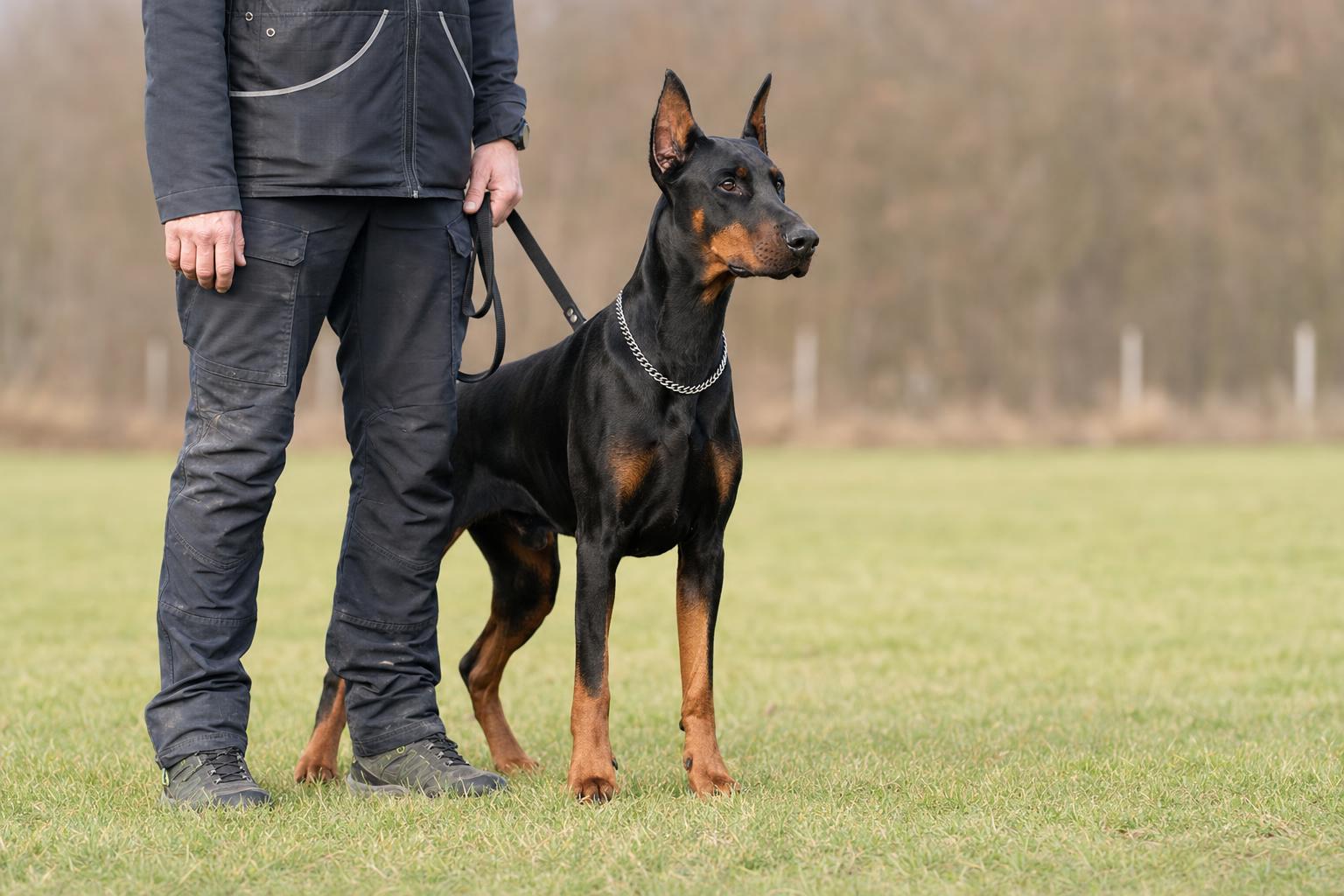
The Doberman Pinscher is one of the most recognizable working breeds in the world: sleek, muscular, alert, and intensely connected to its handler. Developed in Germany as a personal protection dog, the breed was built for speed, endurance, intelligence, and courage. A good Doberman is not simply a tough-looking dog. It is a highly trainable partner that needs structure, social exposure, and meaningful work to become the steady companion people admire.
For buyers researching the Doberman Pinscher, the most important point is that this is a high-responsibility breed. Dobermans can be affectionate family dogs, serious guardians, obedience prospects, sport dogs, and active companions, but they are rarely a good fit for owners who want a low-effort pet. They tend to learn quickly, notice everything, and bond closely with their people. Those strengths are exactly why the breed has succeeded in protection, police, military, obedience, agility, and other working roles, but they also mean the owner must provide consistent guidance.
History of the Doberman Pinscher
The Doberman Pinscher was developed in the late nineteenth century by Karl Friedrich Louis Dobermann of Apolda, Germany. Dobermann worked as a tax collector and also had access to dogs through his role as a dogcatcher. He wanted a loyal, protective companion that could travel with him through difficult areas and provide both deterrence and partnership. The exact breed mix behind the modern Doberman is not fully documented, but historical accounts often mention dogs such as the Rottweiler, German Pinscher, Weimaraner, Manchester Terrier, and possibly Greyhound influence.
That background helps explain the finished product: a square, athletic dog with a sharp mind, strong nerve, and a natural desire to work near a handler. By the early twentieth century, Dobermans were known for guarding, police work, and military service. During the World Wars, the breed served as sentries, messengers, scouts, and working partners. Today, the Doberman Pinscher remains a capable working dog and a devoted family companion when bred and raised with temperament, health, and trainability in mind.
Doberman Pinscher Appearance and Build
Breed standards describe the Doberman Pinscher as medium-sized, square-built, compact, muscular, and elegant. The dog should look powerful without being bulky. The short, sleek coat shows off a clean outline, firm topline, arched neck, and athletic frame. Commonly recognized colors include black, red, blue, and fawn, often with rust markings. The head is long and dry with a blunt-wedge shape, and the expression should be energetic and alert.
Because Dobermans are built for work, buyers should look beyond appearance alone. A sound dog should move freely, carry lean muscle, and have enough substance for athletic activity without appearing coarse or overdone. Cosmetic preferences, including ear carriage and tail status, vary by breeder, region, and legal requirements. Those details matter less than sound structure, stable temperament, and transparent health information.
Doberman Pinscher Temperament
The Doberman Pinscher is often described as loyal, energetic, obedient, alert, and determined. In daily life, many Dobermans behave like shadow dogs, preferring to stay close to their people and be included in family routines. They are usually quick to understand patterns, which makes them rewarding to train but also quick to notice inconsistent rules. A stable Doberman should be confident and watchful without being randomly reactive or difficult to control.
Early socialization is essential. Because the breed was developed with protective instincts, a young Doberman should learn how to handle normal life calmly: visitors, vehicles, children at a distance, veterinary handling, strange surfaces, public spaces, and other dogs under control. Socialization does not mean forcing the dog to greet everyone. It means building neutral confidence so the dog can observe the world, trust the handler, and respond appropriately.
Is the Doberman Pinscher a hunting dog?
Working Dog Central serves many sporting dog buyers, so it is worth being clear: the Doberman Pinscher is primarily a protection and working breed, not a traditional pointing, flushing, or retrieving gundog. Individual Dobermans may enjoy scent games, tracking, obedience, agility, and other structured work, but buyers should not assume the breed will perform like a purpose-bred upland or waterfowl dog. If a breeder advertises field, sport, or working credentials, ask what those achievements actually involve and whether they are relevant to your goals.
Training a Doberman Pinscher
Training should begin early and continue throughout the dog's life. Dobermans tend to respond best to clear markers, rewards, fair corrections when appropriate, and predictable household rules. Harsh or chaotic handling can create conflict, especially in a sensitive, driven dog. The best programs focus on confidence, impulse control, and real-world manners before moving into advanced sport or protection work.
Useful foundations include leash walking, recall, place or settle work, calm greetings, crate comfort, cooperative handling, and controlled exposure to distractions. A Doberman that understands how to relax is often easier to live with than one that is only physically tired. Mental work matters as much as exercise. Short obedience sessions, scent games, structured play, and problem-solving tasks can help channel the breed's intensity into cooperation.
- Start with simple routines and enforce them consistently.
- Reward attention, calm behavior, and recovery after excitement.
- Use experienced trainers for protection or bite-sport goals; do not improvise this work at home.
- Keep training practical: manners in the house, around guests, and in public matter more than tricks.
Exercise, Care, and Daily Life
The Doberman Pinscher needs daily physical exercise and mental engagement. Brisk walks, structured play, obedience practice, hiking, running when age-appropriate, agility foundations, rally, tracking-style games, or other work can all help. The breed is athletic, but owners should build conditioning gradually and avoid overdoing repetitive high-impact activity with young dogs.
Coat care is straightforward. The short coat usually needs regular brushing, nail trimming, dental care, and routine ear and skin checks. Dobermans do not have heavy insulation, so owners should plan for cold weather protection and sensible heat precautions. Keeping the dog lean is important for athletic longevity. A fit Doberman should show muscle and condition without carrying unnecessary weight.
Health Considerations for Doberman Pinscher Buyers
Health screening and breeder transparency are especially important in this breed. Breed communities commonly discuss DNA testing for von Willebrand disease type I, eye testing for conditions such as PHPV, hip evaluation, and other screening used by responsible breeders. Buyers should not assume every test applies in the same way to every line or every country. Instead, ask the breeder to show current results for the sire and dam, explain what the results mean, and discuss longevity and health history behind the pedigree.
A responsible seller should be comfortable talking about both strengths and risks in the breed. Be cautious of anyone who says their line has no health concerns, refuses to share documentation, or treats testing as optional marketing rather than breeding information. After purchase, maintain regular veterinary care and promptly investigate changes in stamina, coughing, fainting, appetite, or exercise tolerance. This guide is not a medical diagnosis; it is a reminder that informed ownership starts before the puppy or adult dog comes home.
Doberman Pinscher Ownership Fit
The Doberman Pinscher usually fits best with people who enjoy living with a thinking dog. The breed can do well in many home types, including suburban and active urban homes, if exercise, training, containment, and socialization are handled seriously. A fenced area is helpful, but it does not replace training or daily interaction. Dobermans often want to be indoor family companions rather than outdoor-only dogs.
Families should consider supervision, management, and expectations. A Doberman raised with children can be affectionate and loyal, but no powerful working breed should be treated as a babysitter. Teach children to respect the dog's space, and teach the dog polite behavior around movement, toys, food, doors, and guests. Owners should also be realistic about public perception. A calm, well-trained Doberman is a credit to the breed; an under-managed one can create problems quickly.
Buying a Doberman Pinscher
When evaluating Doberman Pinscher breeders or rescues, prioritize temperament, health documentation, and ongoing support. Good breeders should ask buyers questions, explain why a particular puppy or adult fits the home, provide a clear contract, and be willing to discuss training and socialization plans. They should also help buyers understand registration, health testing, pedigree information, and what is realistically expected from their dogs.
Questions to ask before buying
- What health testing has been completed on the sire and dam, and can I see documentation?
- What temperaments do you typically produce, and what kind of homes are best suited to them?
- How are puppies socialized before leaving?
- What support do you provide after the sale?
- Are there working, obedience, sport, or companion references from previous buyers?
- What does the contract require if the buyer can no longer keep the dog?
For adults, ask why the dog is available, what training it has, how it behaves around strangers and other animals, and whether there are any bite history, containment, anxiety, or medical concerns. A started or adult Doberman can be a wonderful match, but the evaluation should be honest and specific.
Practical Red Flags
Walk away from sellers who rely only on dramatic guard-dog language, cannot explain health testing, push rushed deposits, or avoid questions about temperament. Also be cautious with claims that sound too broad, such as guaranteed protection ability, perfect family behavior without training, or universal suitability for every buyer. The Doberman Pinscher is too serious and too capable for vague promises.
Verify reported working titles and test results with the issuing organisation. Confirm that the programme applies to the breed and ask what the result demonstrates about the individual dog.
Conclusion: Is the Doberman Pinscher Right for You?
The Doberman Pinscher can be a remarkable companion for the right owner: loyal, athletic, intelligent, and deeply engaged with its family. It is not the easiest breed, and that is part of the point. Dobermans reward structure, fairness, exercise, and thoughtful socialization. If you want a practical working companion and are prepared to invest in training, health research, and responsible ownership, the Doberman Pinscher is a breed worth serious consideration.
Explore Doberman Pinscher on Working Dog Central
View the Doberman Pinscher breed profile or browse Doberman Pinscher listings.


