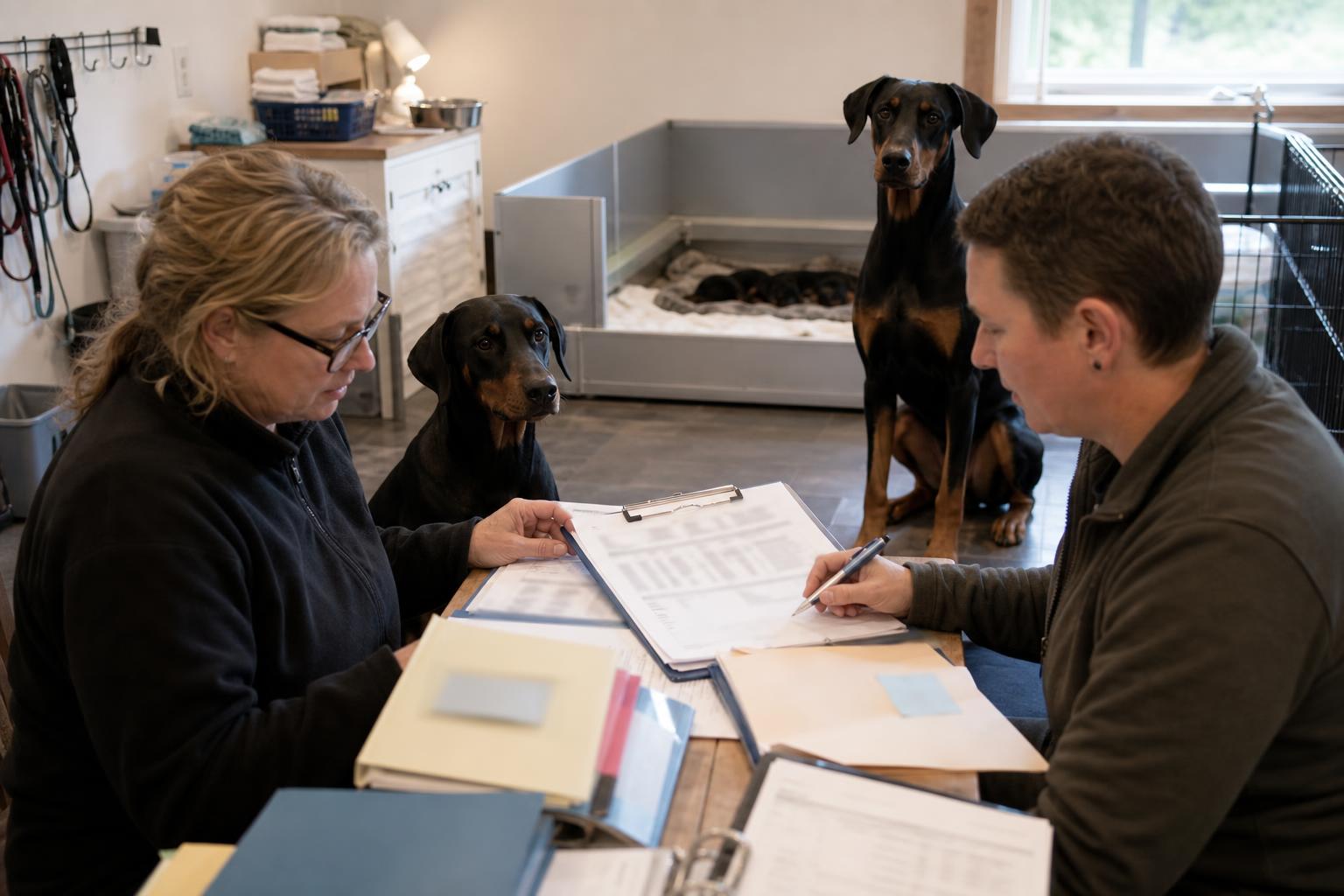
A Doberman Pinscher litter announcement can be exciting, but it should also give you enough information to slow down and evaluate the breeding with clear eyes. This breed is intelligent, athletic, loyal, and naturally watchful, with a history rooted in personal protection, police work, military service, obedience, agility, and close partnership with a handler. Those traits can make the right Doberman a remarkable companion, but they also make breeder selection especially important. A good announcement should help you understand not only that puppies are expected or available, but why this particular sire and dam were paired.
Because Dobermans are powerful, sensitive, quick-learning dogs, buyers should look for announcements that emphasize stable temperament, responsible health screening, socialization plans, and long-term breeder support. The best litter information reads less like a quick sales ad and more like a practical introduction to the parents, the breeder's goals, and the kind of homes that are likely to succeed with the puppies.
What a Strong Doberman Pinscher Litter Announcement Should Include
A useful announcement should identify the sire and dam, describe their temperaments, outline relevant health testing, give a realistic timeline, and explain how buyers are screened. It should also be honest about the breed. Dobermans are often affectionate with their family and deeply loyal, but they are not a casual, low-effort choice. They need structure, daily activity, mental work, and thoughtful social exposure from an early age.
- Registered names or clear identification for both parents when applicable.
- Basic pedigree information and why the pairing was chosen.
- Health testing details buyers can verify, not vague claims.
- Temperament notes that go beyond words like “sweet” or “protective.”
- Whelping date, expected go-home timing, deposit terms, and contract basics.
- Breeder expectations for training, containment, exercise, and communication.
If an announcement only says “Doberman puppies available” with a phone number and a few attractive photos, treat that as incomplete information. Photos are helpful, but they cannot replace documentation, conversation, and a breeder who can explain the litter in plain language.
Sire and Dam Information in a Doberman Pinscher Litter
The sire and dam are the heart of any litter announcement. For Doberman Pinschers, buyers should pay close attention to the parents' stability, trainability, confidence, and ability to live calmly in a home. The breed is known for being alert, obedient, energetic, and devoted. In practical terms, that means poor nerves, inconsistent handling, or weak socialization can create problems that are much harder to manage than in an easier breed.
Ask how each parent behaves with visitors, children when relevant, other dogs, veterinary handling, travel, crates, and everyday household routines. A mature Doberman should not be described only by intensity. You want to hear about self-control, responsiveness, and recovery after excitement. If the parents compete in obedience, agility, protection-oriented sports, search work, or other structured activities, ask what those accomplishments actually mean and whether they are relevant to the breeder's goals. Not every good family Doberman needs a long title list, but the breeder should be able to describe the dogs clearly and honestly.
Pedigree and Breeding Goals
Pedigree matters because it can show patterns in temperament, structure, working ability, and health. It should not be used as a substitute for evaluating the actual dogs. A responsible Doberman Pinscher breeder can explain why the sire complements the dam. Maybe the pairing was chosen for stable character, correct athletic structure, strong trainability, longevity in the family tree, or a balance of working aptitude and household suitability.
Buyers should be careful with announcements that rely only on famous names, imported lines, oversized claims, or dramatic protection language. The Doberman was developed as a working protection dog, but modern buyers still need a dog that can function safely in real life. The pedigree conversation should include temperament, health transparency, and whether the expected puppies fit the buyer's experience level.
Health Clearances and What to Verify
Health information should be specific. The breed facts for the Doberman Pinscher emphasize that health screening and breeder transparency matter, with breed communities commonly discussing DNA testing for von Willebrand disease type I and other screening such as eye testing, hip evaluation, and additional tests used within the breed community. Buyers should not assume every test applies to every breeder, registry, or country in the same way, but they should expect the breeder to explain what has been done and provide proof.
- Ask for copies or database links for health results on the sire and dam.
- Ask what each result means for the puppies, especially for DNA tests.
- Ask about longevity and major health issues in close relatives.
- Verify whether registry, club, or breed community recommendations are being followed.
- Be cautious if the answer is simply “vet checked” with no further documentation.
A litter announcement should never make medical guarantees that cannot be supported. A responsible breeder can reduce risk through testing, selection, and honesty, but no breeder can promise a dog will never develop a health problem. The most trustworthy language is transparent, verifiable, and willing to discuss both strengths and concerns.
Expected Temperament and Working Traits
A good Doberman Pinscher litter announcement should describe the type of Doberman the breeder expects to produce. Some litters may be aimed at experienced working or sport homes. Others may be better suited for active families that want a trainable companion with structure and socialization. Either way, the announcement should make clear that Dobermans need engagement. They are often “shadow dogs” that want to be near their people, and they can become frustrated if isolated, undertrained, or left without mental outlets.
Look for descriptions of confidence, biddability, environmental stability, food or toy motivation, social behavior, and recovery from stress. Be wary of language that sells suspicion, sharpness, or intimidation as the main feature. A dependable Doberman should be watchful and protective in instinct, but also clear-headed, controllable, and able to settle.
Deposits, Timing, and Buyer Screening
Deposit information should be straightforward. The announcement should explain whether deposits are refundable, how puppy placement decisions are made, what happens if the breeder does not have the right puppy for a buyer, and when puppies are expected to go home. Most careful breeders place puppies based on temperament and fit rather than allowing every buyer to choose only by color or order of deposit.
Timing matters too. Buyers should know the approximate whelping date, expected go-home age, what early socialization the puppies receive, and what support is provided after placement. For a Doberman Pinscher, early foundations are important: handling, crate introduction, household sounds, appropriate visitors, surfaces, play, and calm routines can all help prepare puppies for life with active owners.
Contracts, Registration, and Practical Details
Registration may be relevant, but buyers should verify what registry applies and what the papers do or do not mean. Registration alone is not proof of quality, health, or responsible breeding. A good announcement or follow-up conversation should also cover the sales contract, spay/neuter or breeding terms if any, return policy, microchip information, vaccination and deworming records, and what the breeder expects from the buyer.
If a breeder mentions AKC, performance titles, working certificates, or other credentials, ask for the exact registered names and records so you can verify them. If a credential does not apply to this litter or this breed's purpose, the breeder should say so plainly rather than using impressive terms as decoration.
Red Flags in Doberman Pinscher Litter Announcements
- No clear information about the sire and dam.
- Health claims without documents or database references.
- Pressure to send money immediately before basic questions are answered.
- Overemphasis on size, intimidation, rare color, or protection without stability.
- No buyer screening for a high-responsibility breed.
- Unclear deposit terms, no contract, or reluctance to discuss returns.
- Puppies placed too young or with little mention of socialization.
One red flag does not always prove bad intent, but several together should make a buyer pause. With Dobermans, the cost of a poor match can be high for both the dog and the family. It is better to wait for a transparent breeder than rush into a litter that cannot be properly evaluated.
Questions to Ask Before Joining a Waiting List
- Why did you choose this sire and dam?
- What are the parents like in the house and in public?
- Which health tests have been completed, and may I see proof?
- What temperament do you expect from this litter?
- How do you match puppies to buyers?
- What support do you provide after the puppy goes home?
- What happens if my circumstances change or the dog is not a fit?
The breeder's willingness to answer these questions matters as much as the answers themselves. Responsible breeders usually appreciate informed buyers because they want their puppies placed in homes that understand the breed.
Buyer-Focused Conclusion
A Doberman Pinscher litter announcement should help you make a thoughtful decision, not simply create urgency. Look for verifiable parent information, clear health screening, realistic temperament discussion, fair deposit terms, and a breeder who understands the responsibility that comes with this loyal, athletic, intelligent breed. When the announcement is transparent and the conversation confirms it, you are in a much better position to choose a Doberman Pinscher puppy that fits your home, your experience, and your long-term plans.
Explore Doberman Pinscher on Working Dog Central
View the Doberman Pinscher breed profile or browse Doberman Pinscher listings.


