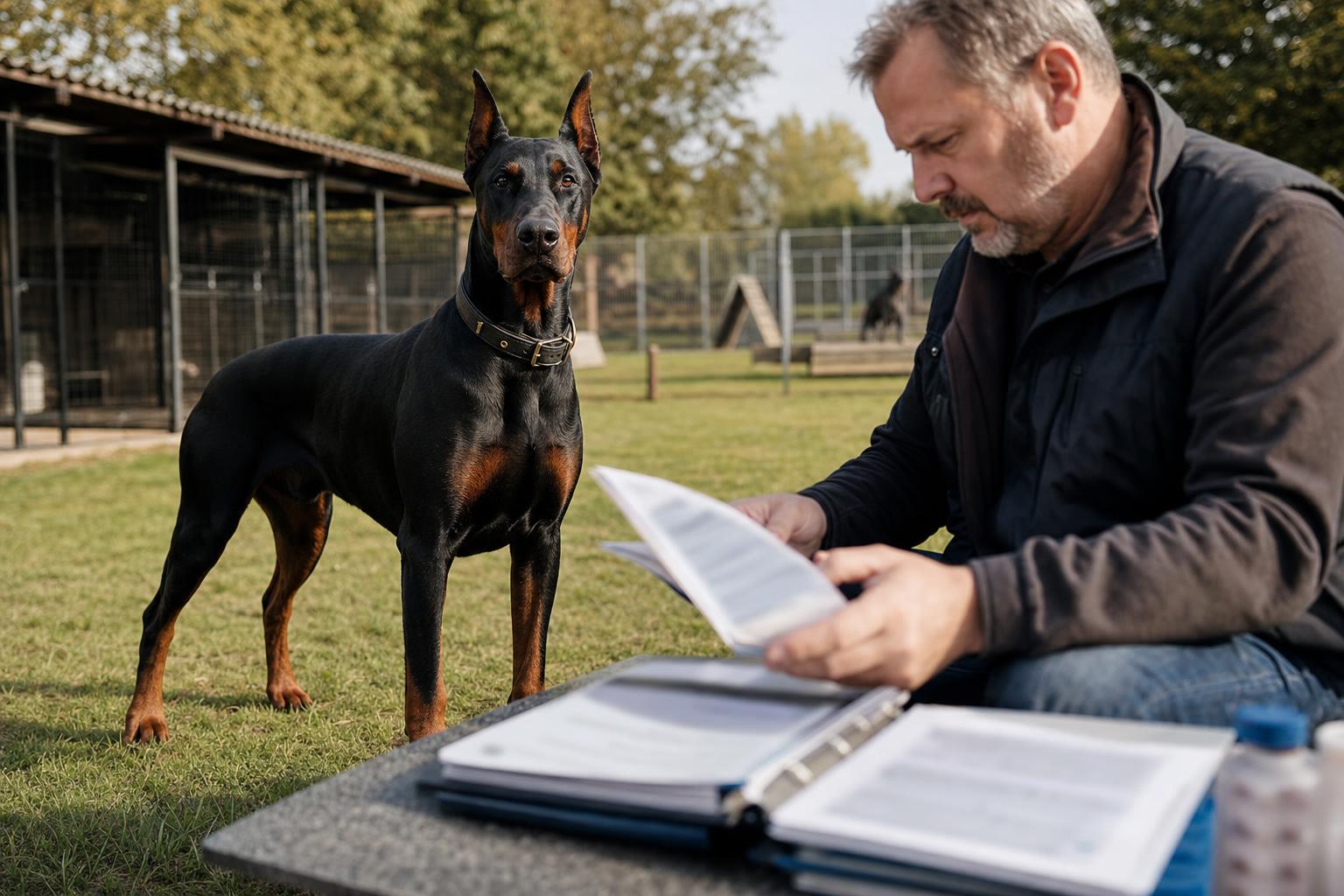
The Doberman Pinscher is an athletic, intelligent, handler-focused working breed with a long history in protection, police, military, obedience, and companion roles. That versatility is exactly why choosing a Doberman Pinscher stud dog deserves more attention than a simple pedigree match or a handsome photograph. A good stud decision should support stable temperament, sound structure, useful working ability, and transparent health information.
For anyone comparing Doberman Pinscher stud dogs, the goal is not to find the most heavily advertised male. The goal is to find the dog whose strengths, weaknesses, health background, and family record honestly complement the female being bred. Responsible breeders should be able to explain why a particular pairing makes sense, what risks they are watching, and how they plan to support puppy buyers after the litter is born.
Health Clearances for Doberman Pinscher Stud Dogs
Health clearances are one of the first things to review before using or promoting a Doberman Pinscher stud dog. The breed is known for intelligence, loyalty, athleticism, and close family bonds, but health screening and breeder transparency matter. A stud owner should be willing to share current, verifiable documentation rather than vague assurances that the dog is healthy.
Buyers should ask which tests were performed, when they were performed, who performed them, and how the results can be verified. The exact screening package may vary by country, registry, club recommendation, and breeder program, so the safest approach is to ask for records and confirm what is considered relevant for the Doberman Pinscher in that breeding community.
- Ask to see copies or database links for completed health testing.
- Confirm that the stud dog is old enough for the listed evaluations to be meaningful.
- Ask how the stud owner uses test results in breeding decisions.
- Discuss health and longevity patterns in parents, siblings, prior offspring, and close relatives.
No single clearance guarantees healthy puppies. Clearances are tools for risk management. A stud owner who explains limitations honestly is often more useful than one who treats testing as a marketing slogan.
OFA and Orthopedic Evaluation
OFA records can help buyers verify orthopedic and other health information when a Doberman Pinscher stud dog has been evaluated through that system. Depending on the dog and the breeder's program, OFA may be used for hips, elbows, cardiac-related records, thyroid, eyes, or other submitted evaluations. Not every record applies to every dog, and not every country uses OFA, so buyers should verify relevance rather than assuming all stud dogs will have the same documentation.
When OFA information is provided, check that the name, registration number, microchip or identification details, and birth date match the stud dog being advertised. If the stud owner says testing was completed but the record is not public, ask for a copy and a plain-language explanation of the result. For a working breed like the Doberman Pinscher, structure and athletic durability matter. Soundness affects not only appearance, but also the dog's ability to train, move, and live comfortably.
DNA Testing
DNA testing is especially important to discuss in Doberman Pinscher breeding programs because breed communities commonly emphasize testing for von Willebrand disease type I, often abbreviated vWD1, along with other DNA tests used by responsible breeders. A DNA result should be read carefully. Clear, carrier, and affected statuses have different breeding implications, and a carrier result is not automatically a reason to reject a dog if the planned pairing is managed correctly.
Ask the stud owner which DNA laboratory was used and whether the report identifies the dog clearly. Then ask how the female's results will be considered. DNA testing is most valuable when both sides of the pedigree are understood. If a test, registry, or condition may not apply to a particular line or breeding plan, the breeder should be able to explain why and show what other evidence they use.
- Request the original DNA report or a verifiable database listing.
- Confirm the stud dog's identity on the report.
- Compare the stud's results with the female's results before breeding.
- Ask whether additional breed-relevant screening is recommended by the breeder's club or veterinarian.
Frozen Semen
Frozen semen can make it possible to use a Doberman Pinscher stud dog across distance, after travel becomes impractical, or even after a notable dog is no longer living. It can also widen genetic options when used thoughtfully. However, frozen semen is not automatically better than a natural or fresh-chilled breeding, and it requires experienced reproductive veterinary support.
Before committing, buyers should verify collection records, storage location, semen quality information, ownership rights, shipping procedures, and any limits on use. Ask whether the semen has produced litters before, but avoid treating prior success as a guarantee. Timing, veterinary skill, the female's fertility, and semen handling all matter. The stud contract should spell out what happens if a breeding does not result in pregnancy, whether a repeat service is offered, and who pays related veterinary, storage, and shipping costs.
Live Cover vs AI
Live cover, fresh-chilled artificial insemination, frozen semen, and other reproductive options each come with practical considerations. Live cover may be straightforward when both dogs are local, compatible, healthy, and safely managed by experienced handlers. Artificial insemination may be preferred when distance, timing, safety, or semen preservation are factors. What matters most is that the method is legal, ethical, veterinary-supported where required, and appropriate for the dogs involved.
Doberman Pinschers are strong, athletic dogs, so safety and handling should be part of the conversation. Ask how the stud owner manages introductions, supervision, travel, boarding if needed, and veterinary timing. If AI is proposed, confirm who is responsible for progesterone testing, collection, shipment, insemination, and follow-up. If live cover is proposed, confirm vaccination expectations, disease screening, behavior expectations, and liability.
Stud Contracts
A Doberman Pinscher stud contract should be written, specific, and reviewed before any breeding takes place. Handshake arrangements are risky, especially when travel, semen shipment, repeat services, registration paperwork, or puppy-back arrangements are involved. A clear contract protects both the stud owner and the owner of the female.
- Identify the stud dog and female by registered name, registration number, microchip if available, and owner information.
- State the stud fee, payment timing, and what is included.
- Explain whether a return service is offered if no pregnancy or no live litter results.
- Define litter registration responsibilities and any registry paperwork requirements.
- List health testing, brucellosis or other disease screening expectations, and timing.
- Clarify semen collection, shipment, storage, veterinary, travel, and boarding costs.
- Include any limits on resale, transfer, or number of breedings if frozen semen is involved.
Buyers should be cautious of contracts that promise outcomes no breeder can control, such as guaranteed show champions, guaranteed working titles, or guaranteed medical results. A responsible contract is practical and honest. It should also make clear what support the stud owner will provide if questions arise after the litter is born.
Pedigree Analysis
Pedigree analysis is more than counting famous dogs. For Doberman Pinscher stud dogs, look at the pattern behind the names: temperament, longevity, structure, health testing, working aptitude, trainability, and consistency in offspring. A famous ancestor several generations back may matter less than the qualities seen in parents, siblings, half-siblings, and prior litters.
Ask the stud owner what the dog tends to produce. Does he consistently improve confidence, outline, trainability, head type, movement, or working focus? Are there weaknesses that should not be doubled up on? A useful stud owner will discuss both strengths and cautions. The right Doberman Pinscher stud for one female may be wrong for another if the pairing concentrates the same faults or health concerns.
Because the Doberman Pinscher is a powerful, highly intelligent, protective breed, temperament deserves special attention. Look for dogs with stable nerves, handler responsiveness, and appropriate social behavior. A protective reputation is not the same as sound temperament. A good breeding prospect should be confident and controllable, not reactive or difficult to manage.
Verifying Titles, Records, and Claims
Verify reported working titles and test results with the issuing organisation. Confirm that the programme applies to the breed and ask what the result demonstrates about the individual dog.
If a seller advertises titles, ask what the letters mean and whether the record belongs to the exact dog being offered at stud. For a breed with roots in protection and service work, sport or obedience accomplishments may provide useful information about trainability and nerve, but they do not replace health testing, pedigree review, or a realistic assessment of the female.
Red Flags When Comparing Doberman Pinscher Stud Dogs
- The stud owner refuses to share health documentation or says testing is unnecessary.
- Claims are based only on size, color, protection instinct, or intimidating appearance.
- The contract is missing, vague, or changed after payment.
- The owner cannot explain the dog's strengths and weaknesses.
- Registration, titles, semen ownership, or test results cannot be verified.
- The breeding is pushed urgently without reviewing the female's health, pedigree, or temperament.
Doberman Pinscher buyers and breeders should be especially careful with marketing that treats the breed as merely a guard dog. The best Dobermans are not just bold; they are intelligent, trainable, loyal, athletic, and stable. Stud selection should protect those qualities.
Buyer-Focused Conclusion
Choosing a Doberman Pinscher stud dog is a serious breeding decision with long-term consequences for the puppies, their owners, and the breed. Start with verifiable health clearances, including relevant DNA testing and any OFA or equivalent records that apply. Review contracts before breeding, understand the logistics of frozen semen or live cover versus AI, and study the pedigree for real patterns rather than famous names alone.
The right stud dog should make sense for the specific female, the goals of the litter, and the responsibilities that come after puppies go home. When a stud owner is transparent, organized, and willing to discuss both strengths and limitations, buyers are in a much better position to make a responsible Doberman Pinscher breeding choice.
Explore Doberman Pinscher on Working Dog Central
View the Doberman Pinscher breed profile or browse Doberman Pinscher listings.


