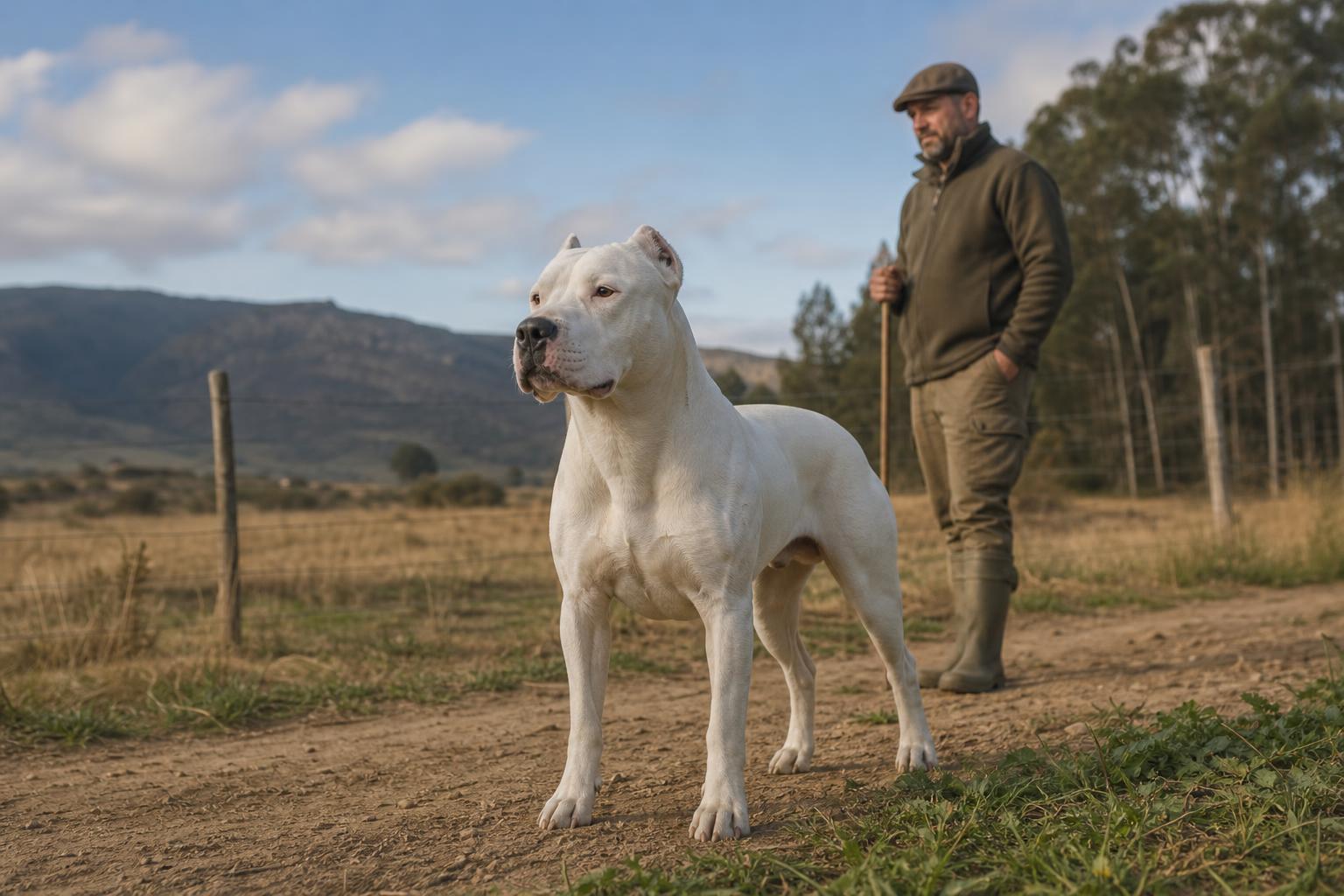
The Dogo Argentino is a large, powerful working dog developed in Argentina for serious big-game hunting, including wild boar and puma. For the right owner, the breed can be loyal, athletic, intelligent, and deeply devoted to family life. For the wrong match, the same strength, confidence, and protective instinct can become difficult to manage. This Dogo Argentino breed guide is written for buyers who want a realistic picture before contacting breeders or evaluating dogs listed on Working Dog Central.
Breed facts should always come first. The Dogo Argentino is not simply a white mastiff-type companion or a tough-looking guard dog. It was built as a functional athlete: muscular, enduring, brave, and able to work with people and other dogs in demanding country. A good Dogo should be steady and manageable, not chaotic or needlessly aggressive. Buyers should prioritize stable temperament, health transparency, correct structure, and responsible placement over size, hype, or intimidating marketing.
Dogo Argentino History and Original Purpose
The Dogo Argentino originated in Argentina in the early twentieth century. Dr. Antonio Nores Martínez began the breed in 1928, using the now-extinct Cordoba Fighting Dog as a foundation and crossing in other breeds to add size, scenting ability, endurance, sociability, and hunting utility. The goal was a dog capable of pursuing and holding dangerous game while remaining loyal and tractable with its human family.
That history matters for modern buyers. The breed's courage and physical power were selected for a real working purpose, not for backyard bravado. The best representatives of the breed should show athletic balance, confidence, and sound judgment. If a breeder promotes uncontrolled aggression or extreme bulk as the main selling point, that is a red flag. A Dogo Argentino should be strong enough for work, but also clear-headed enough to live safely under responsible management.
Appearance, Size, and Build
The Dogo Argentino is a large, muscular, short-coated dog with a broad head, deep chest, strong jaws, and an athletic frame. The selector facts describe typical height at about 24 to 27 inches at the shoulder and weight around 80 to 100 pounds. The coat is short, thick, glossy, and white. Breed standards generally prefer an all-white dog, though a limited dark marking on the head may be allowed by some standards. Buyers should verify the exact color and marking rules with the relevant registry or show organization if registration or competition eligibility matters.
Correct build should look powerful but functional. A Dogo should not be so heavy that it loses agility, stamina, or sound movement. When evaluating puppies or adults, look beyond photos. Ask for video of natural movement, note whether the dog appears lean and conditioned, and consider whether the structure supports the kind of work or active lifestyle you expect.
Dogo Argentino Temperament
A well-bred Dogo Argentino is typically brave, loyal, intelligent, and protective. Many are affectionate with their families and enjoy being included in daily activities. At the same time, this breed is naturally confident and may be suspicious of strangers without proper socialization and handling. That combination demands an experienced owner who can set clear expectations without creating conflict.
Temperament should be steady and predictable. Buyers should avoid dogs described as uncontrollable, excessively sharp, or suspicious of everything. Protective instinct is not a substitute for nerve strength. Ask breeders how they evaluate temperament, how puppies are socialized, and how adult dogs behave around visitors, children, livestock, other dogs, and unfamiliar environments. If you are considering an adult Dogo, arrange a careful evaluation with a qualified trainer who understands powerful working breeds.
Working Style and Hunting Relevance
The Dogo Argentino was developed for pack hunting large game, especially wild boar and puma in rugged Argentine terrain. In the United States, buyers should be careful about assuming that every Dogo advertised for sale is actively hunted or proven on game. Some are primarily family companions, some are show or sport dogs, and some may come from working lines with practical hunting exposure.
If hunting ability matters, verify it directly. Ask what game the parents or the individual dog has been exposed to, whether the work was controlled and legal, and what evidence the breeder can provide. Photos alone are not enough. Responsible sellers should be willing to discuss drive, manageability, recall, dog tolerance, conditioning, and safety. Because laws and accepted hunting practices vary by location, buyers should also confirm that any intended use is legal and ethical where they live.
Training a Dogo Argentino
Training should begin early and continue throughout the dog's life. The Dogo Argentino is intelligent and often trainable, but it is also strong, independent, and capable of making its own decisions. Clear reward-based training, consistent boundaries, and calm handling are better long-term tools than force or intimidation. The goal is cooperation, neutrality, and reliable control.
- Build leash manners before the dog is physically mature and difficult to hold.
- Practice recall with long lines and secure areas before trusting freedom.
- Teach place, settle, crate comfort, and polite greetings for household control.
- Use structured socialization to create neutrality around strangers, dogs, traffic, livestock, and public places.
- Work with a qualified trainer early if you see reactivity, resource guarding, or poor impulse control.
Socialization does not mean letting every person or dog rush the puppy. It means controlled, positive exposure and teaching the Dogo to observe, disengage, and relax. That distinction is especially important with a breed that can become protective.
Exercise, Care, and Daily Management
The Dogo Argentino is high-energy compared with many casual companion breeds. It needs daily physical outlets and mental work. Long walks, conditioning, hiking, obedience drills, scent games, and structured play can all help. A bored Dogo with no boundaries is a poor household plan.
Grooming is simple. The short coat generally needs weekly brushing, routine bathing as needed, nail trimming, ear care, and dental care. Because the coat is white, skin irritation can be easier to notice. Persistent redness, itching, odor, or ear problems should be discussed with a veterinarian rather than treated with guesswork. Secure containment is also part of care. This is a strong, athletic dog, so fencing, gates, crates, and walking equipment should be chosen with safety in mind.
Health Considerations for Dogo Argentino Buyers
Health claims should be verified, not assumed. The selector facts specifically flag hearing as an important topic in the breed, with unilateral or bilateral deafness treated as a serious issue in breed standards. Responsible breeders typically screen puppies for hearing. Ask what testing was performed, when it was done, and whether documentation is available.
Large, athletic dogs also benefit from lean condition, sensible exercise during growth, and veterinary guidance on joints, nutrition, parasite prevention, and long-term conditioning. Buyers should ask about health history in the sire, dam, siblings, and previous litters. Do not accept vague promises such as “never had a problem” in place of records. If OFA evaluations, DNA testing, or other screenings are mentioned, verify what was actually tested and whether those tests are relevant to the breed and the individual breeding program.
Is the Dogo Argentino a Good Fit?
The Dogo Argentino generally fits best with active, experienced owners who want a serious working-type dog and can provide structure every day. It is often a poor fit for first-time owners, apartments without a reliable exercise plan, homes that cannot manage visitors thoughtfully, or buyers who want a low-maintenance social butterfly. The breed may be affectionate and family-oriented, but it still requires leadership, training, and safe management.
Before buying, consider your household honestly. Do you have time for daily exercise? Are you prepared for a large dog with protective instincts? Can everyone in the home follow consistent rules? Do local laws, insurance policies, or housing restrictions affect ownership? Answering those questions before bringing home a puppy prevents problems later.
Buying a Dogo Argentino Responsibly
When evaluating breeders or listings, look for transparency. A responsible seller should be able to discuss temperament, health screening, hearing checks, pedigree goals, socialization, diet, vaccination history, and what kind of home each puppy or dog needs. They should ask you questions too. Careful placement is a good sign with a breed this powerful.
- Avoid breeders who emphasize aggression, extreme size, or rare marketing angles over stability and health.
- Ask to meet or see clear video of the dam and, when possible, the sire.
- Request written records for veterinary care, hearing screening, registration claims, and any health testing.
- Confirm whether AKC, UKC, FCI, or other registry status applies to the specific dog rather than assuming it from the breed name.
- Use a written purchase agreement that clearly explains responsibilities, guarantees if offered, return policy, and registration terms.
Buyer-Focused Conclusion
The Dogo Argentino can be an impressive hunting-bred working dog and devoted family companion, but it is not a casual purchase. Choose for stable temperament, sound structure, verified health information, and a breeder who values responsible ownership. If you can provide training, exercise, socialization, and secure management, the Dogo Argentino may be a powerful and rewarding partner. If those commitments feel optional, choose a different breed before problems begin.
Explore Dogo Argentino on Working Dog Central
View the Dogo Argentino breed profile or browse Dogo Argentino listings.


