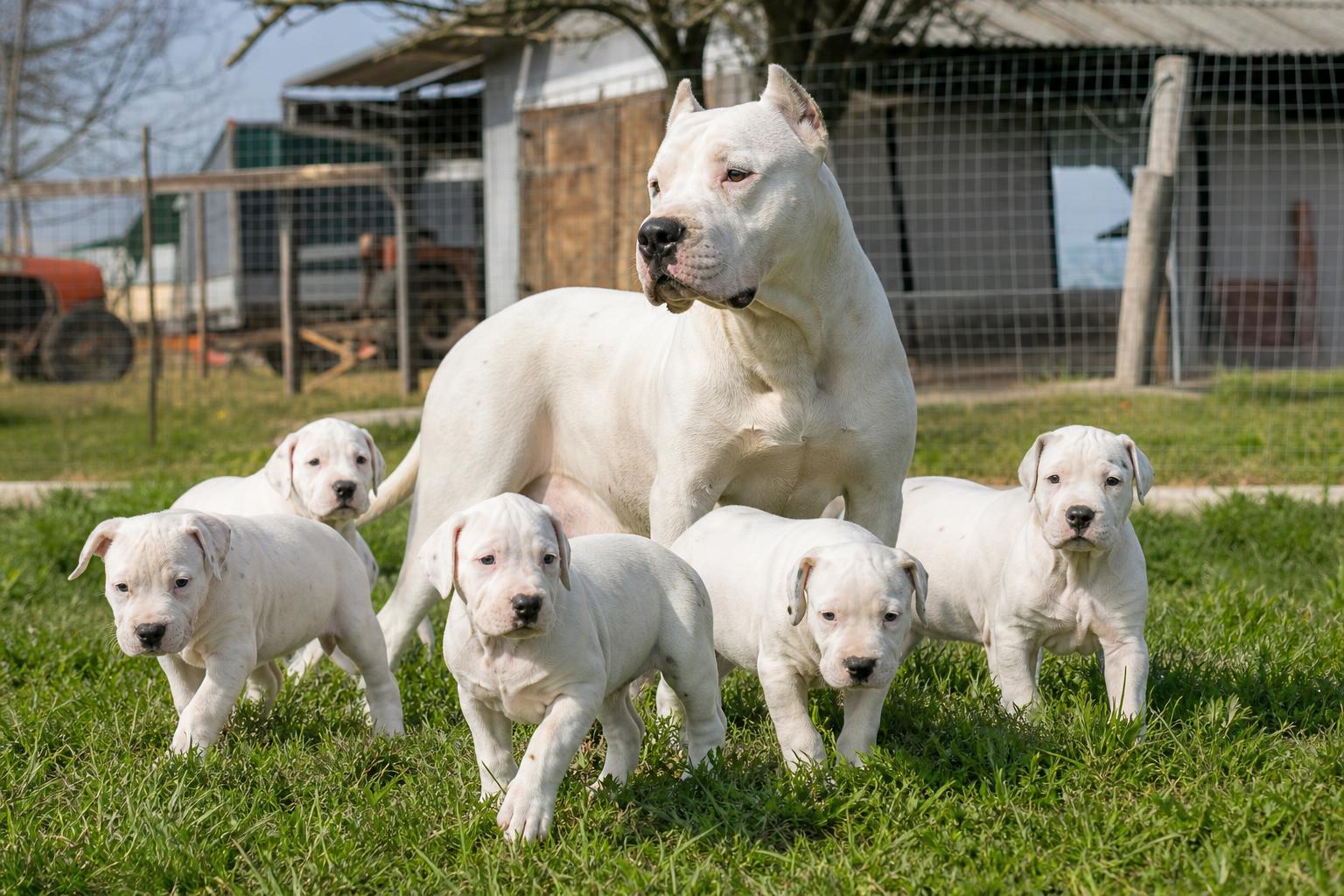
The Dogo Argentino is a powerful, athletic working breed developed in Argentina for serious big-game hunting, including wild boar and puma. A well-bred Dogo can be loyal, brave, intelligent, and deeply attached to family, but this is not a casual purchase. Buyers looking at Dogo Argentino puppies for sale should think beyond color, size, or a bold photograph. The right puppy starts with the right breeder, the right early socialization, and an honest plan for training a strong guardian-minded dog into a stable adult.
Working Dog Central buyers often come from hunting, working dog, and active outdoor backgrounds. That can be a good fit for the breed, because the Dogo needs exercise, structure, and a job-minded home. Still, a puppy buyer should verify every claim instead of assuming that a listing, pedigree, or attractive litter announcement proves quality. Use the breed facts as a starting point: the Dogo Argentino is large, muscular, short coated, mostly white, courageous, protective, and best suited to experienced owners who can provide daily leadership without turning training into conflict.
Understanding the Breed Before You Buy
The Dogo Argentino was created by Dr. Antonio Nores Martinez beginning in 1928, with the goal of producing a versatile dog for pack hunting dangerous game in rugged country. That history matters when you are evaluating puppies. The breed was not designed to be a soft, low-energy house ornament. It was developed to combine strength, endurance, courage, social loyalty, and working usefulness.
In modern homes, the same traits can be a gift or a problem depending on the owner. A good Dogo is usually confident, affectionate with its people, and capable of serious work. Poorly raised, poorly socialized, or poorly matched puppies can become difficult because the breed is strong, intelligent, and naturally protective. Before contacting breeders, ask yourself whether your household can support daily exercise, structured obedience, secure containment, and controlled social exposure from the first week home.
- Expect a large, athletic dog rather than a low-maintenance couch companion.
- Plan for early leash manners, recall work, place training, calm greetings, and handling practice.
- Be realistic about visitors, other pets, livestock, fencing, and local breed regulations.
- Choose temperament and health transparency over extreme size, intensity, or appearance.
Choosing a Responsible Dogo Argentino Breeder
The best breeder conversations are specific. A responsible breeder should be able to explain why the sire and dam were paired, what they are like to live with, what health screening was completed, how puppies are raised, and what type of homes are appropriate. Because the Dogo Argentino is powerful and protective, temperament should be treated as a primary selection factor, not an afterthought.
Look for breeders who raise puppies with household exposure, early handling, noise introduction, supervised visitors, and thoughtful socialization. A puppy that has only seen a kennel may have a harder transition into family life. Ask how the breeder evaluates puppies before placement. A responsible program should be matching pups to homes based on confidence, sociability, energy, and drive, not simply allowing buyers to pick by photo order.
Questions to Ask the Breeder
- What are the sire and dam like around family, strangers, other dogs, and new environments?
- What health screenings have been completed, and can you see documentation?
- Do you screen puppies for hearing or provide veterinary documentation related to hearing?
- How are puppies socialized before eight weeks?
- What support do you offer after the puppy goes home?
- What does your contract require regarding returns, spay/neuter timing, breeding rights, and health issues?
Be cautious with any seller who emphasizes aggression, extreme guarding, exaggerated size, or “rare” marketing more than stable temperament. A well-bred Dogo should be brave and steady, not unstable or randomly reactive. Standards and breed descriptions repeatedly value soundness, social stability, and working athleticism. Buyers should favor breeders who can discuss those qualities calmly and concretely.
AKC Registration and Registry Verification
Some Dogo Argentino puppies may be represented with AKC registration or other registry paperwork, but buyers should verify the specific registry status of the litter rather than assuming it applies. Ask to see registration documents for both parents and the litter when relevant. Registration is not the same thing as quality, health, or ethical breeding. It is one piece of verification, not the whole decision.
If AKC paperwork is advertised, confirm whether the litter registration is already filed, whether you will receive limited or full registration, and what restrictions are attached. Limited registration is common for companion or non-breeding placements and may be entirely appropriate. Full registration or breeding rights should involve a more serious discussion about health, temperament, structure, and long-term responsibility.
For hunting or working homes, do not assume that a registry certificate proves field ability. Ask for evidence of the parents’ real work, training background, stable temperament, and physical conditioning. If hunt tests, trials, or other working titles are mentioned, verify the record with the appropriate organization instead of relying only on advertising language.
Health, Hearing, and Veterinary Records
Health transparency matters in every breed, but it is especially important in a large white working dog. Breed standards identify deafness as a serious concern, and responsible breeders typically take hearing seriously. Ask what hearing evaluation is performed, when it is done, and what documentation is provided. Do not accept vague assurances when a breeder can provide clear veterinary records.
Buyers should also ask about orthopedic history, skin sensitivities, allergies or irritation, and overall condition in the family line. Keeping a Dogo Argentino lean and well-conditioned supports joints and long-term athletic ability. That does not mean a breeder can guarantee perfect health, and buyers should be wary of anyone making absolute medical promises. The better standard is documentation, transparency, and a contract that explains what happens if a legitimate health problem is discovered.
Health Questions Worth Asking
- Have the sire and dam had relevant health evaluations? If so, may I review the results?
- How do you monitor hearing in the litter?
- Have there been any orthopedic issues, skin problems, or temperament concerns in related dogs?
- What veterinary care has each puppy received before placement?
- What does the health section of the sales contract actually cover?
Vaccinations, Deworming, and Early Puppy Care
A puppy listing should clearly explain what veterinary care has already been provided. Before pickup, ask for a dated record of vaccinations, deworming, exams, microchip information if applicable, and any medications or preventives used. Your veterinarian will use that record to plan the next vaccine schedule and parasite prevention program.
Vaccination schedules vary by veterinarian, location, and disease risk, so buyers should not rely on a seller’s social media summary as a medical plan. Schedule a vet visit soon after the puppy comes home. Bring every record the breeder provides. Ask your veterinarian about core vaccines, deworming, flea and tick prevention, heartworm prevention, nutrition, growth rate, exercise limits, and safe socialization before the puppy is fully vaccinated.
Because Dogo Argentino puppies grow into large, powerful adults, early handling is part of health care. Practice calm nail trims, ear checks, mouth handling, bathing, crate time, and relaxed restraint using positive methods. A young puppy that learns to accept routine care is much easier to manage as a mature dog.
Bringing a Dogo Argentino Puppy Home
The first weeks should be calm, structured, and deliberate. Prepare before pickup: secure fencing, an appropriately sized crate, sturdy leash and collar or harness, safe chew items, food recommended by the breeder, cleaning supplies, and a quiet sleeping area. Avoid throwing the puppy into chaotic introductions with every neighbor, visitor, dog, or child at once. Socialization is important, but it should be controlled and positive.
For this breed, the goal is not to make the puppy meet everyone randomly. The goal is to teach the puppy that new places, people, noises, handling, vehicles, crates, and everyday routines are normal and manageable. Reward calm observation, engagement with the handler, and recovery from surprises. If you plan to hunt, hike, condition, or train for demanding work later, start with foundations rather than force. Build confidence, trust, recall habits, and basic obedience first.
First-Week Priorities
- Schedule a veterinary wellness exam and review the breeder’s records.
- Set a predictable feeding, potty, crate, and sleep routine.
- Begin short, positive obedience sessions: name response, recall games, sit, down, and place.
- Introduce grooming and body handling gently.
- Use safe, age-appropriate socialization instead of uncontrolled dog-park exposure.
- Supervise all interactions with children, guests, and other animals.
Training Expectations for a Serious Working Breed
A Dogo Argentino puppy needs more than affection. It needs rules that are fair, consistent, and easy to understand. Reward-based training, clear boundaries, and daily practice usually produce better cooperation than harsh corrections or constant physical conflict. The breed can be intelligent and independent; you want the dog thinking with you, not against you.
Start with practical life skills. Leash manners are essential because the adult dog will be strong. Recall should be practiced on a long line for a long time before off-leash freedom is trusted. Place training helps with visitors, meals, and household control. Calm greetings prevent the puppy from rehearsing pushy behavior. Neutrality around distractions is just as valuable as friendliness.
If you are not already experienced with powerful guardian-type or catch-dog heritage breeds, line up a qualified trainer early. Waiting until adolescence to seek help is a common mistake. A good trainer can help you build structure before size, hormones, confidence, and protective instincts make problems harder to fix.
Typical Dogo Argentino Puppy Prices
Prices for Dogo Argentino puppies vary widely by region, breeder reputation, pedigree, health testing, registration, training investment, and demand. Avoid treating any single advertised price as a universal market standard. A higher price does not automatically prove quality, and a bargain price may become expensive if the puppy lacks health records, socialization, or breeder support.
When comparing listings, look at what is included. A responsible sale may include veterinary records, registration paperwork when applicable, a written contract, microchip details, feeding instructions, breeder support, and documented health screening from the parents or litter. It may also include a careful placement process rather than instant payment and pickup. That process can feel slower, but it often protects the puppy and the buyer.
Be cautious with sellers who pressure immediate deposits, refuse video calls or visits when practical, will not show records, or advertise constant availability of many litters. Deposits should be tied to a written agreement that explains refund terms, puppy selection, pickup timing, and what happens if the promised puppy is not available.
Red Flags in Puppy Listings
- No clear information about the sire, dam, health records, or temperament.
- Claims of guaranteed aggression, protection, or dominance as selling points.
- No willingness to discuss hearing, veterinary care, or contract terms.
- Pressure to send money quickly without documentation.
- Puppies placed too young or without appropriate veterinary records.
- Breeder cannot explain the difference between registration paperwork and quality.
- Seller avoids questions about socialization, household exposure, or return policy.
Is a Dogo Argentino Puppy Right for You?
The right buyer for a Dogo Argentino puppy is prepared for a strong, loyal, athletic dog that needs daily structure. This breed can be a devoted family companion and capable working partner, but it is a poor match for owners who want a low-effort pet, lack secure containment, or are uncomfortable managing a powerful adult around strangers and other animals. The best homes are honest about training, exercise, socialization, and local responsibilities.
Before you commit, talk with multiple breeders, review documents carefully, and speak with trainers or owners who understand the breed. Verify registry claims, health records, hearing information, and contract language. Meet the adult dogs when possible or ask for detailed videos that show behavior in normal settings. A responsible breeder will want you to succeed, not just complete a sale.
Buyer-Focused Conclusion
Dogo Argentino puppies for sale can be appealing to buyers who admire courage, athleticism, loyalty, and serious working heritage. The smartest purchase is not the fastest one. Choose a breeder who prioritizes stable temperament, sound health practices, honest records, and thoughtful placement. Confirm AKC or other registration details when they are advertised, review vaccination and veterinary records with your own veterinarian, and prepare your home before the puppy arrives.
If you are ready for the responsibility, a well-selected Dogo Argentino puppy can grow into a remarkable companion and working dog. If you are not ready for the strength, structure, and socialization the breed requires, it is better to wait. Good buyers protect themselves, the breeder’s work, and the dog’s future by making a careful, informed decision.
Explore Dogo Argentino on Working Dog Central
View the Dogo Argentino breed profile or browse Dogo Argentino listings.


