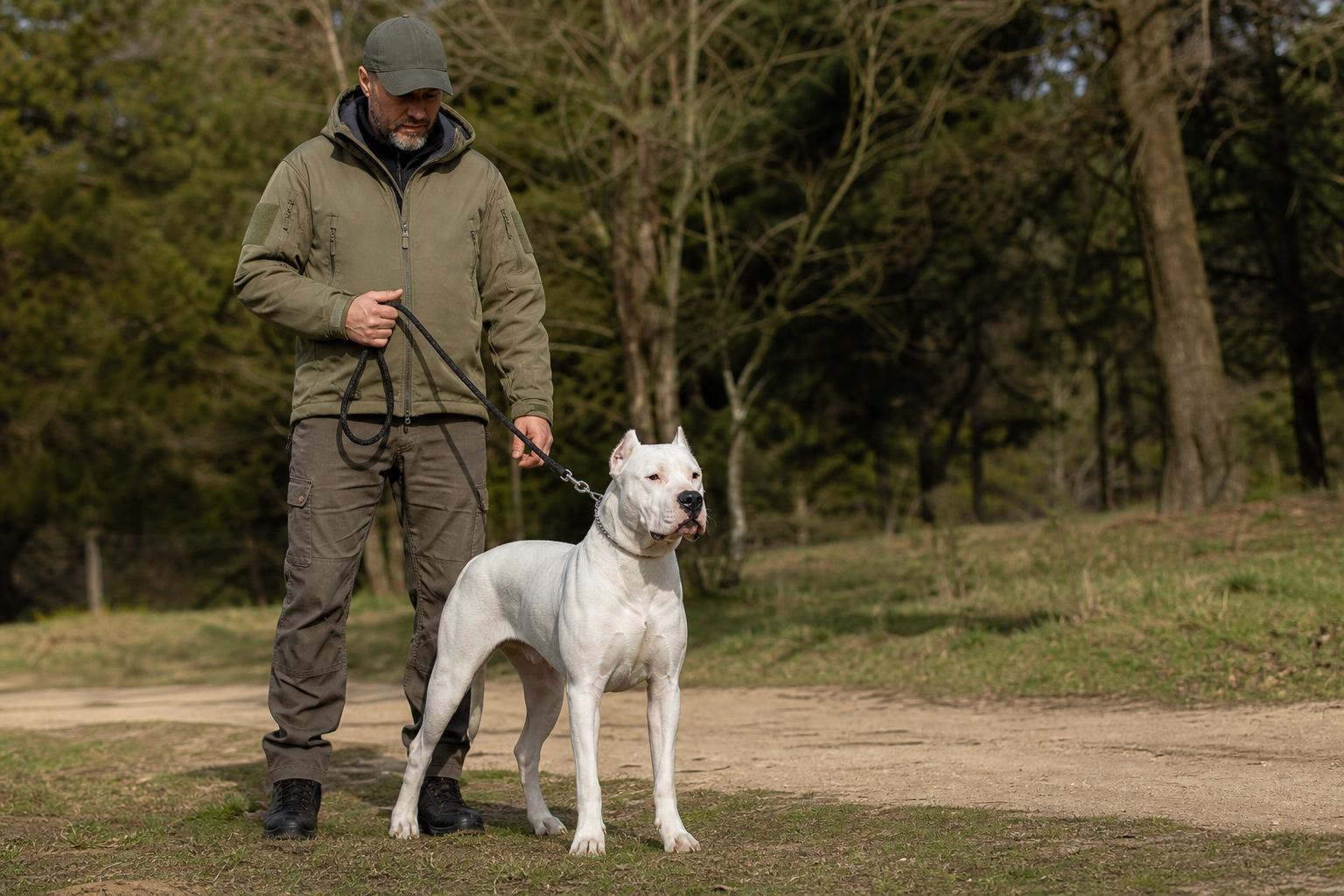
A Dogo Argentino started dog can be a smart choice for the right buyer: someone who likes the breed’s courage and athleticism, but wants more information than a young puppy can provide. The Dogo was developed in Argentina for demanding big-game work, including wild boar and puma, and the breed is known for strength, loyalty, stamina, and protective instincts. Those qualities can be valuable in a working dog, but they also raise the bar for evaluation. A started Dogo Argentino should show more than size or intensity. You want stable nerves, useful obedience, conditioning, socialization, and training that fits the role you expect the dog to perform.
Because this is a powerful, independent working breed, buyers should be careful with vague claims. “Started” can mean different things depending on the breeder, trainer, and venue. It may describe basic manners, early field exposure, controlled game introduction, conditioning, tracking foundations, or a dog that has begun structured work but is not finished. Before you commit, ask for clear proof of what the dog has actually done, how often it has done it, and how it behaves when pressure, novelty, and distractions appear.
What qualifies as “started” in a Dogo Argentino
For a Dogo Argentino, a started dog should be beyond the puppy stage in both maturity and training. At minimum, the dog should have a known routine, basic handling skills, and enough exposure for the seller to describe its temperament honestly. A started Dogo should not simply be an older puppy that has been kept in a kennel. The value comes from time invested: socialization, obedience, leash work, recall foundations, crate or kennel manners, travel experience, and supervised exposure to the kind of work the dog is being sold for.
In practical terms, ask the seller to define the dog’s current level in writing. Has the dog been hunted, conditioned, introduced to livestock or game, worked on a long line, or taken to new environments? Does it settle in the house or vehicle? Can it be handled by a veterinarian? How does it respond to strangers, other dogs, pressure on leash, and being corrected or redirected? A started Dogo Argentino buyer should look for a balanced dog: confident and capable, but not frantic, unsafe, or uncontrollable.
- Ask the seller to list specific commands the dog understands.
- Request recent video showing the dog in real situations, not only polished clips.
- Clarify whether the dog has lived in a home, kennel, or mixed setting.
- Find out why the dog is being sold at this stage.
- Confirm hearing status and any known health history before purchase.
Birds introduced or breed-appropriate game exposure
The Dogo Argentino is not a pointing or flushing breed in the traditional upland bird-dog sense. Its history is centered on big-game hunting and pack work, especially on tough quarry such as wild boar. That does not mean every Dogo for sale has been used on big game, and it does not mean every buyer needs that background. It does mean that “birds introduced” should be interpreted carefully. If a listing uses gun dog language, ask whether the dog has actually been exposed to birds, scent, tracking exercises, hog-dog style work where legal, or another breed-appropriate task.
For some Dogo Argentinos, appropriate exposure may include controlled scent trails, woods work, conditioning in rough cover, recall around wildlife scent, or carefully managed introduction to legal game scenarios. The key is safety and honesty. A started Dogo should not be represented as a finished hunting dog because it has seen a pen, smelled game once, or shown prey drive in the yard. Prey drive is not training. Buyers should ask who handled the dog, what game was involved, whether the exposure was legal and ethical, and how the dog responded afterward.
If birds are part of the seller’s program, clarify the purpose. Was the dog introduced to birds for general steadiness, noise exposure, scent curiosity, or cross-training? Or is the seller using “bird dog” terms loosely because the site serves working-dog buyers? Dogo Argentino buyers are best served by matching the dog’s actual experience to their intended use rather than relying on generic sporting-dog labels.
Gun introduction when relevant
Gun introduction may or may not be relevant for a Dogo Argentino started dog. Some Dogos are sold as family guardians, athletic companions, estate dogs, sport prospects, or hunting partners in regions where their work is appropriate and legal. If the dog is being advertised for hunting, ask whether it has had a structured gunfire introduction. Good introduction is gradual and controlled. It should not mean someone fired a gun over a young dog to “see what happens.”
When gun exposure matters, ask for details: distance, caliber or blank pistol type, the dog’s age at introduction, what positive activity was paired with the sound, and whether the dog has heard shots in the field rather than only at home. A seller should be able to describe the dog’s reaction calmly. Did the Dogo recover quickly, stay engaged with the handler, or show concern? Has the dog been around vehicles, other dogs, shouting, unfamiliar terrain, and field pressure at the same time? Those details matter more than a simple “gun broke” claim.
If the dog has not been introduced to gunfire, that is not automatically a deal breaker. It may simply mean the dog was developed for another purpose. What matters is that the seller does not overstate the dog’s readiness. Buyers who plan to hunt should budget time with an experienced trainer and move carefully, especially with a powerful dog whose confidence and control must remain intact.
Obedience level
Obedience is one of the most important parts of buying a started Dogo Argentino. This breed is large, muscular, athletic, and protective by nature. A started dog should have more than enthusiasm. It should show practical control. Useful basics include walking on leash without dragging the handler, coming when called in controlled settings, loading into a vehicle or crate, accepting a collar or harness, holding a place command, allowing routine handling, and disengaging from distractions when guided.
Do not confuse harsh control with good training. A reliable Dogo should understand clear rules and respond to fair handling. The best started dogs are not shut down; they are composed. They can be alert without being explosive. They can be affectionate with familiar people without being pushy. They can notice strangers without immediately escalating. Since breed descriptions emphasize early training and socialization, buyers should ask how the dog was exposed to people, surfaces, traffic, other animals, and new places.
- Watch the dog walk on leash before discussing price.
- Ask to see recall on a long line or in a safely fenced area.
- Have the seller demonstrate crate, loading, sit, down, place, and handling.
- Observe whether the dog can relax after activity.
- Ask what training tools have been used and whether the dog depends on them.
Evaluating training before you buy
The safest way to evaluate a started Dogo Argentino is to see the dog in person with the handler who trained it. If distance makes that impossible, ask for uncut video that shows the dog moving from kennel or house to leash, working around distractions, being handled, and settling after excitement. Short highlight clips can hide problems. Long, ordinary footage reveals far more about temperament and training.
Pay special attention to recovery. Every working dog can become excited, distracted, or unsure. The question is what happens next. Does the Dogo take direction? Can the handler lower the dog’s intensity? Does the dog remain safe around people and other dogs? Does it become more focused with structure, or does pressure make it worse? For this breed, stable temperament is not a luxury. It is central to responsible ownership.
Verify reported working titles and test results with the issuing organisation. Confirm that the programme applies to the breed and ask what the result demonstrates about the individual dog.
Price, fit, and responsible expectations
Started Dogo Argentino prices vary widely because training time, age, pedigree, health documentation, and proven field experience all affect value. Avoid anyone who gives an exact “standard” price without context. A fair evaluation looks at what the dog can actually do, how stable it is, what records come with it, and what support the seller provides after the sale. A dog with clear obedience, safe handling, honest exposure, and transparent health information may cost more than an untrained adolescent, but it may also save months of uncertainty.
Fit matters as much as price. The Dogo Argentino usually suits active, experienced owners who can provide structure, secure containment, exercise, and continued training. A started dog is not a shortcut around responsible ownership. It is a head start. Plan for a transition period, keep expectations realistic, and continue the routines that made the dog successful.
Conclusion: buying a Dogo Argentino started dog with confidence
A good Dogo Argentino started dog should offer clarity. You should know what the dog has been taught, what it has been exposed to, how it behaves under pressure, and what work still remains. Look past big claims and evaluate evidence: video, demonstrations, health records, registration details when relevant, and the seller’s willingness to answer practical questions. For the right home, a carefully selected started Dogo can be a loyal, athletic, and capable working companion. The best purchase is the one where the dog’s temperament, training, and purpose honestly match your life.
Explore Dogo Argentino on Working Dog Central
View the Dogo Argentino breed profile or browse Dogo Argentino listings.


