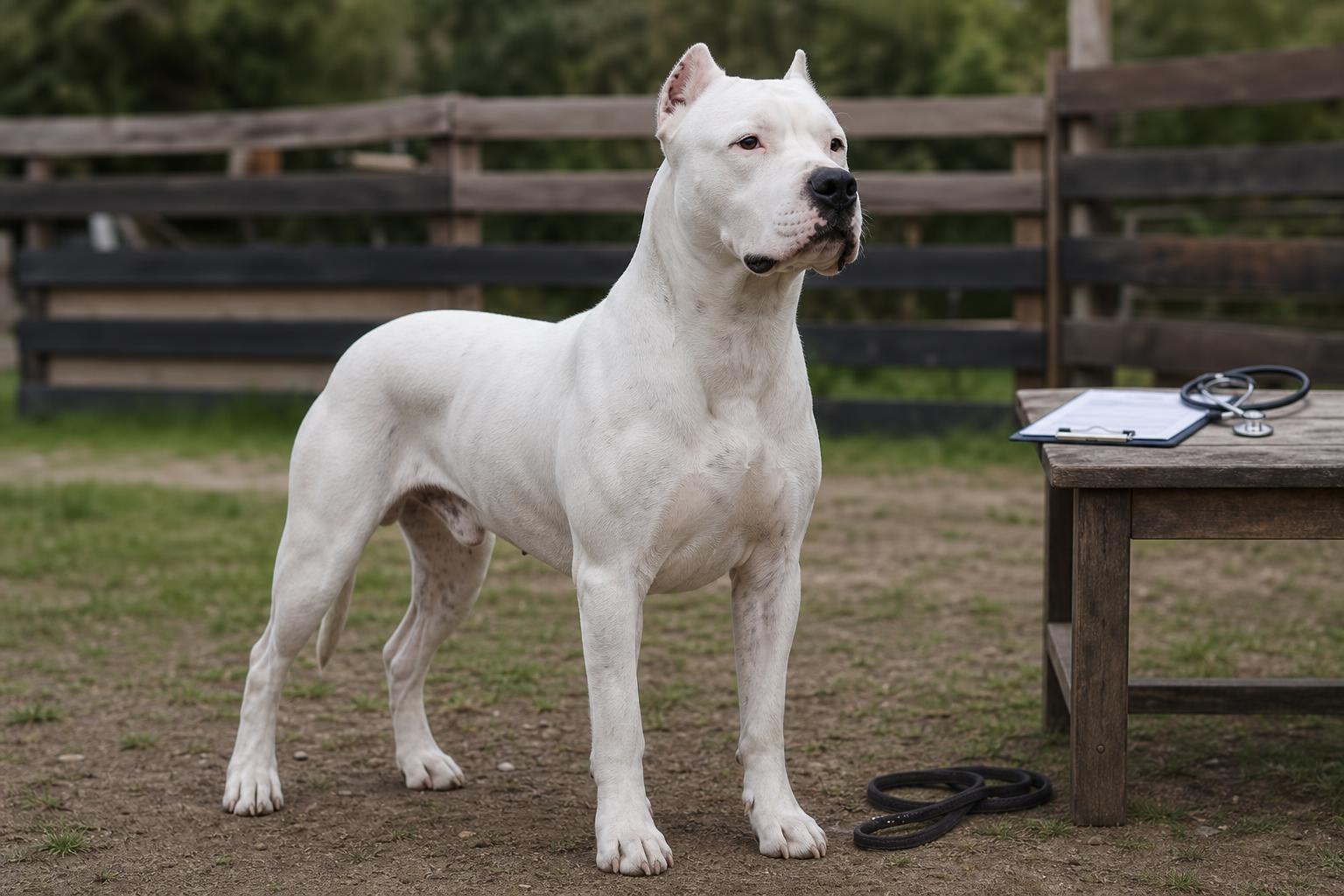
Choosing a Dogo Argentino stud dog is a serious working-dog decision, not just a search for a large white male with an impressive photo. The selector facts describe the Dogo Argentino as a powerful, courageous, athletic breed developed in Argentina for big-game hunting, including wild boar and puma. That history matters because a good stud should contribute more than size. He should support strength, endurance, stable nerves, trainability, and the ability to live responsibly with people when managed by experienced owners.
Dogos are often loyal, protective, intelligent, and highly people-focused with their families, but the breed also requires structure, early socialization, and consistent training. A stud candidate should reflect the balanced side of the breed: confident without being unstable, athletic without being cumbersome, protective without being indiscriminate, and cooperative enough for routine handling. If a male is promoted mainly for aggression, extreme mass, or intimidation, step back and evaluate whether he truly improves the breed and the future litter.
Health Clearances Before Considering a Stud
Health documentation should be reviewed before any breeding terms are discussed. The Dogo Argentino is a large, muscular working breed, so soundness, hearing, skin condition, and overall veterinary history all deserve attention. The selector facts specifically note that deafness is treated as a serious issue in breed standards and that responsible breeders typically screen puppies. For a stud dog, ask what hearing information is available, what orthopedic screening has been completed, and whether the owner can discuss health patterns in close relatives and previous offspring.
- Ask for copies of completed health clearances rather than relying on verbal claims.
- Discuss hearing status and any available hearing-screening documentation for the dog or his line.
- Review orthopedic history because the breed is large, athletic, and expected to remain functional.
- Ask about skin sensitivities, allergies, fertility history, injuries, and veterinary concerns in close relatives.
- Confirm that the stud owner is willing to share records before breeding, not after a litter is expected.
No clearance makes a breeding automatically responsible. Health records are part of a wider decision that includes the female's strengths and weaknesses, the pedigree, temperament, structure, and the kind of homes expected for the puppies. A transparent stud owner should be able to explain what has been checked, what has not been checked, and why. Vague answers such as “he has always been healthy” are not enough for a planned Dogo Argentino litter.
OFA and Orthopedic Evaluation
OFA-style evaluations are useful because Dogo Argentinos are built to be strong, agile, and enduring rather than simply heavy. A stud should move freely, carry himself in hard working condition, and remain capable of real activity. When reviewing orthopedic documentation, verify that the registered name or identifying information matches the dog being offered. Then compare those results with the female's results instead of judging the male in isolation.
Ask whether parents, siblings, and any previous offspring have available orthopedic information. Family data helps breeders understand whether soundness appears consistently or only in one individual. A male with good personal results but little information behind him may still be considered, but the unknowns should be acknowledged honestly. The goal is not to collect impressive acronyms; it is to reduce avoidable risk and produce athletic, comfortable dogs that can work, train, and live well.
DNA Testing and Line-Relevant Screening
DNA testing can help identify inherited risks that may not be visible in an adult stud dog. The selector data does not list a specific mandatory DNA panel for this breed, so avoid assuming that one advertised test settles every concern. Instead, ask the stud owner which DNA tests were chosen, what the results mean, and how those results should be matched with the female. If the female has been tested, compare results before breeding plans move forward.
A responsible interpretation is more important than a long list of unexplained test names. Some genetic findings may rule out a pairing, while others may be manageable if matched carefully and disclosed clearly. If a stud owner cannot provide documentation, cannot explain the test, or dismisses genetic screening as unnecessary for a working breed, treat that as a practical warning sign. Good breeders use available tools without pretending that testing replaces judgment.
Frozen Semen, Live Cover, and Artificial Insemination
Dogo Argentino stud arrangements may involve live cover, fresh semen, chilled semen, frozen semen, or artificial insemination. Each method needs planning. Live cover may require travel, secure handling, and careful supervision because both dogs are powerful. Artificial insemination can reduce some handling risks, but it requires veterinary coordination, timing, collection logistics, and clear responsibility for costs. Frozen semen can make a valuable dog available across distance or after his active years, but it also depends on proper storage, shipping, and reproductive veterinary support.
- Clarify whether the agreement covers live cover, fresh semen, chilled semen, frozen semen, or AI support.
- Confirm who schedules progesterone testing, collection, shipping, insemination, and pregnancy checks.
- Document who pays each veterinary, shipping, boarding, or collection expense.
- Define what counts as a completed service and what happens if the female does not conceive.
Because availability and reproductive options vary by individual dog and owner, do not assume a service is offered just because the dog is advertised as a stud. Ask for details early. The best arrangements are practical, calm, and written down before the female is in season or travel plans become urgent.
Stud Contracts and Breeding Terms
A written stud contract protects the female owner, the stud owner, and the future puppies. It should identify both dogs, list the breeding method, define the fee or puppy-back terms, state what health documentation each side must provide, and describe repeat-service terms if there is no pregnancy or a very small litter. If semen is collected, shipped, stored, or frozen, the contract should also explain ownership, storage responsibility, and how unused semen will be handled.
Pricing, availability, registration paperwork, and breeding restrictions vary by individual dog and owner, so avoid making assumptions. Ask direct questions and get the answers in writing. A strong contract does not need to be unfriendly; it simply prevents confusion. It should also address how the litter may be represented, what records the stud owner will receive, and whether there are expectations around puppy placement, disclosure, or follow-up on health and temperament outcomes.
Pedigree Analysis for a Dogo Argentino Pairing
Pedigree analysis should connect the names behind the stud to real dogs and real traits. The Dogo Argentino was developed from multiple breeds to create a capable big-game hunting dog with courage, endurance, loyalty, and family steadiness. When reviewing a pedigree, look for consistent athletic structure, stable temperament, appropriate social behavior, hearing awareness, and useful working qualities. Famous names alone do not guarantee a good match.
Compare the stud to the female honestly. If she needs improvement in confidence, structure, endurance, trainability, or overall balance, ask whether this male reliably contributes those traits. If both dogs share the same weakness, the pairing may reinforce it. Previous offspring can be very helpful if the stud has produced litters, but ask what those dogs are like as adults, not only what they looked like as puppies.
Questions to Ask the Stud Owner
- What health clearances, hearing information, and veterinary records can I review?
- What are the stud dog's strongest traits, and what weaknesses should be considered?
- How does he behave with strangers, other dogs, routine handling, and new environments?
- Has he produced previous litters, and what is known about those puppies as adults?
- What breeding methods are available, and which veterinarian handles reproductive work?
- What are the exact contract terms for fees, repeat service, semen shipping, and paperwork?
Final Thoughts
A responsible Dogo Argentino stud dog choice balances health records, OFA-style orthopedic information, thoughtful DNA testing, temperament, pedigree, and breeding logistics. This is a strong, intelligent, protective working breed that thrives with structure and experienced ownership, so the stud should represent stability and function rather than image alone. Verify records, compare the male to the female, and work with stud owners who are transparent about both strengths and limitations. A careful decision gives the litter a stronger foundation and gives future owners more confidence in the breeding behind their dog.
Explore Dogo Argentino on Working Dog Central
View the Dogo Argentino breed profile or browse Dogo Argentino listings.


