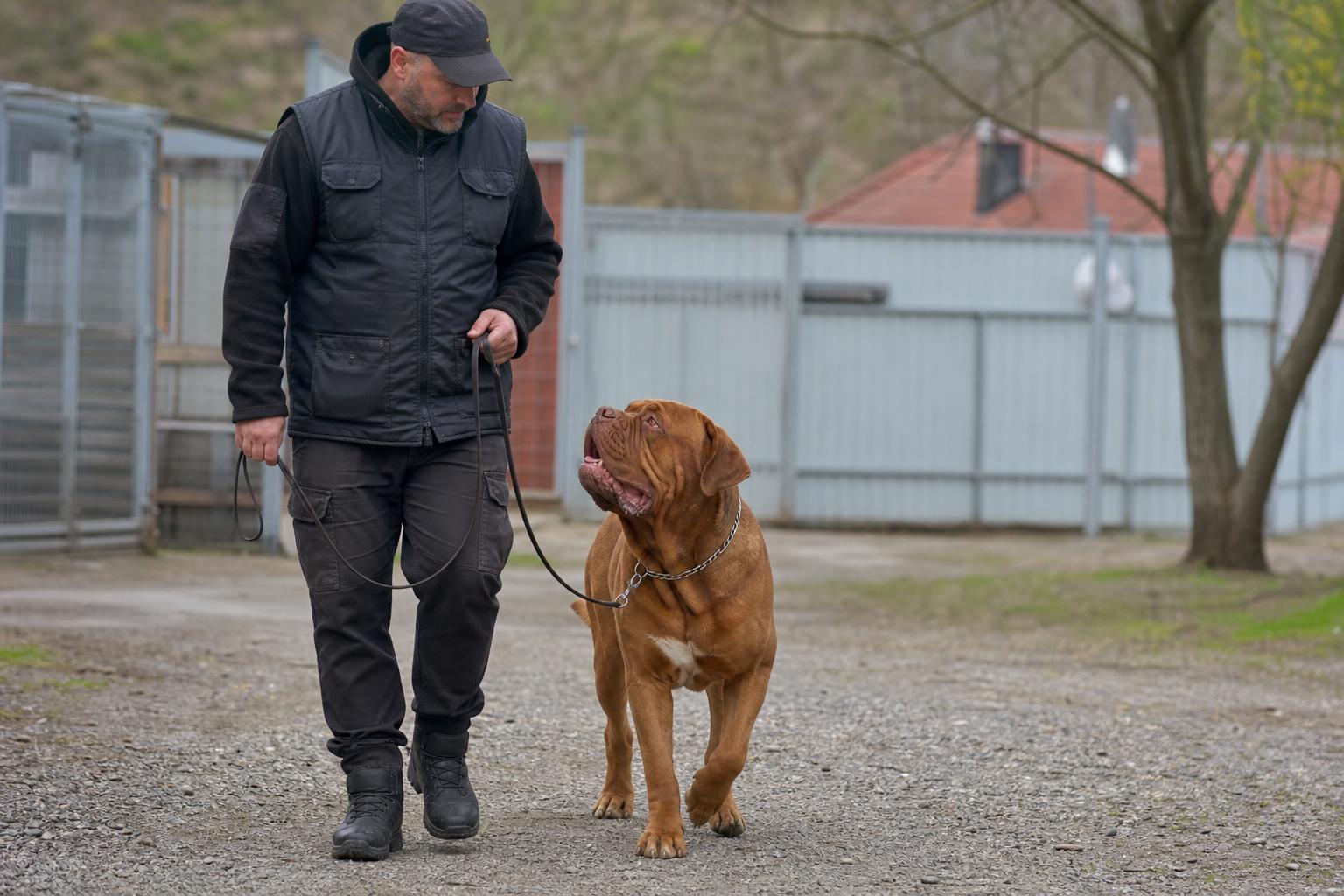
A Dogue de Bordeaux started dog can be an appealing choice for buyers who like the breed’s loyal, protective nature but want more information than a puppy can provide. The Dogue de Bordeaux, also called the French Mastiff, is a large, muscular French molosser historically associated with guarding, defence, property protection, and demanding working roles. A started adult or older adolescent may already show its true size, temperament, handling needs, and household manners, which can help the right buyer make a more informed decision.
Still, “started” is not a universal label. One seller may mean the dog has basic obedience and leash manners. Another may mean the dog has been exposed to livestock, property work, structured socialization, or other breed-appropriate tasks. Because the Dogue de Bordeaux is powerful, naturally watchful, and best suited to thoughtful management, buyers should look beyond the headline and ask exactly what the dog knows, how it was taught, and how it behaves in everyday life.
What qualifies as “started” in a Dogue de Bordeaux?
For a Dogue de Bordeaux, a started dog should have more than age and size. It should have a foundation that makes the dog easier and safer to live with. At minimum, that usually means the dog has been introduced to a collar or harness, walks with some control on leash, understands basic household rules, accepts routine handling, and has had planned exposure to normal people, places, and sounds.
Because this breed can be strong and sometimes stubborn, polite behavior is not cosmetic; it is a safety feature. A started Dogue de Bordeaux should not be marketed as fully trained simply because it is past the puppy stage. Ask the seller to describe the dog’s daily routine and demonstrate its skills in a calm, ordinary setting. Watch how the dog responds before food, at gates and doors, when meeting a neutral stranger, and when being redirected away from something interesting.
- Can the dog settle quietly after activity?
- Does it accept leash guidance without dragging the handler?
- Has it learned calm greetings rather than jumping or crowding?
- Is the dog crate trained, house trained, or accustomed to a defined resting place?
- Does it show stable confidence rather than fearful, frantic, or reactive behavior?
A good started dog is not perfect. It is, however, understandable. The seller should be able to explain the dog’s strengths, weak spots, and the kind of owner most likely to succeed with it.
Birds introduced or breed-appropriate game exposure
The Dogue de Bordeaux is listed on Working Dog Central because buyers may search working and sporting marketplaces for many types of functional dogs, but this breed is not primarily a modern bird dog. Its historical work is more closely tied to guarding, defence, deterrence, pulling, and in some accounts, hunting large game such as boar. That matters when evaluating a started Dogue de Bordeaux. Do not assume that bird introduction, pointing, retrieving, or upland-style exposure is relevant or available for every dog of this breed.
If a listing mentions birds, game, or hunting exposure, ask the seller what was actually done. Was the dog merely around poultry, livestock, or game scent? Was it evaluated for steadiness around animals? Was it introduced to wooded terrain, vehicles, gates, barns, or rural property routines? For this breed, “breed-appropriate game exposure” may reasonably mean calm, controlled exposure to livestock, property boundaries, farm noise, wildlife distractions, or large-game environments rather than formal bird work.
Buyers should be cautious of vague claims. A giant guardian-type dog that has been allowed to chase animals is not necessarily “started”; it may simply have rehearsed behavior that will be hard to manage. Look for controlled exposure, handler responsiveness, and evidence that the dog can remain steady when stimulated.
- Ask whether exposure was structured or accidental.
- Ask whether the dog can disengage when called away.
- Ask whether it has been around livestock, poultry, other dogs, children, and visitors.
- Ask what environments make the dog more alert or difficult to handle.
If your goal is true hunting performance, verify that the individual dog has been trained and tested for that purpose rather than relying on breed history alone.
Gun introduction when relevant
Gun introduction may or may not be relevant to a Dogue de Bordeaux started dog. This is not a breed where buyers should assume gun work, hunt tests, or field training are standard. If a seller says the dog is gun introduced, ask for a plain explanation of the process: distance, sound level, setting, the dog’s reaction, and whether the introduction was paired with a positive activity.
A proper introduction is gradual and controlled. It is not the same as surprising a dog with loud noise to “see what happens.” With a large guardian breed, noise sensitivity, startle response, and recovery time are important for household safety and public manners. Even if the dog will never hunt, it is useful to know how it handles thunderstorms, vehicles, power tools, fireworks, livestock equipment, or activity around a rural property.
Ask to see how the dog responds to normal environmental noise before discussing firearms. If gun exposure is important to your plans, request documentation, trainer notes, or a live demonstration at an appropriate distance with safe handling. Do not accept broad claims such as “bombproof” without context. Calm recovery and handler focus matter more than macho language.
Obedience level
Obedience is one of the most important parts of evaluating a started Dogue de Bordeaux. This breed’s size means small gaps in training can become big problems. A dog that pulls, jumps, guards resources, or ignores redirection may be manageable for an expert but risky for a household that expected a finished companion.
At the started level, buyers should expect a foundation, not perfection. Useful skills include name response, sit, down, stay or wait, recall in low-distraction settings, loose-leash walking, crate or place training, calm handling, and reasonable manners around doors. The dog should also tolerate basic care such as nail handling, ear checks, brushing, and wiping facial folds, since routine maintenance is part of living with a mastiff-type dog.
- Leash manners: The dog should be controllable by an adult handler without constant bracing or correction.
- Impulse control: Watch doorways, feeding time, and greetings. The dog should be able to pause and take direction.
- Social neutrality: A good started Dogue de Bordeaux does not need to love every stranger, but it should recover and remain manageable.
- Settling: The breed is often calm indoors when properly exercised, so the dog should be able to relax after activity.
- Handling: A buyer should be told honestly if the dog is sensitive about feet, mouth, collar pressure, or veterinary handling.
Be realistic about adolescence. A young Dogue de Bordeaux may still need maturity, consistency, and conditioning. The key question is whether the foundation is solid enough for you to continue.
Evaluating training
When evaluating a started Dogue de Bordeaux, watch the dog more than the sales pitch. Ask the seller or trainer to demonstrate the dog in several ordinary situations: leaving a kennel or house, walking past a distraction, greeting a person, settling in one place, and being handled. If the only demonstration is in a high-control environment, ask what the dog is like at home, in a vehicle, at the vet, and around visitors.
Good sellers are transparent. They should tell you what methods were used, how long the dog has been in training, what the dog still needs, and what kind of home they will not place it in. For a Dogue de Bordeaux, that honesty is especially important. This is a loyal, protective breed that typically does best with experienced owners who value calm leadership, clear rules, and early socialization.
Verify reported working titles and test results with the issuing organisation. Confirm that the programme applies to the breed and ask what the result demonstrates about the individual dog.
- Request a written list of known commands and cues.
- Ask what rewards, corrections, or equipment the dog understands.
- Find out whether training transfers to a new handler or only works for the trainer.
- Observe the dog when nothing exciting is happening; stability shows in quiet moments.
- Ask about diet, exercise limits, veterinary care, and any behavior concerns.
Red flags include pressure to buy quickly, refusal to demonstrate the dog, claims that the dog needs no further training, unclear ownership history, unexplained aggression, or language that glorifies size and intimidation over sound temperament. A Dogue de Bordeaux should be powerful, but power without judgment is not a selling point.
Matching the Dogue de Bordeaux to your home
A started Dogue de Bordeaux may be a better match than a puppy for some buyers because you can evaluate adult traits sooner. You may see the dog’s head type, body, movement, confidence, guarding instinct, and energy level more clearly. You may also avoid some of the uncertainty of puppy development. In exchange, you inherit the dog’s previous training, habits, and experiences, so due diligence matters.
Think carefully about your home layout, physical handling ability, visitors, children, other animals, travel plans, and veterinary budget. Food, equipment, transportation, and medical care all scale up with a giant breed. The right started dog should make your life more orderly, not more chaotic. If you need a calm family guardian and companion, prioritize temperament, health transparency, and manners over dramatic marketing.
Buyer-focused conclusion
The best Dogue de Bordeaux started dogs are not sold on size alone. They are evaluated on stability, handling, obedience, health transparency, and fit for the buyer’s real life. Ask specific questions, verify any claims about hunting, gun exposure, registration, testing, or working records, and insist on seeing the dog behave in practical situations. With the right match, a started Dogue de Bordeaux can offer the loyalty, presence, and steady companionship that make the breed so memorable.
Explore Dogue de Bordeaux on Working Dog Central
View the Dogue de Bordeaux breed profile or browse Dogue de Bordeaux listings.


