Early Tracking Dogs Used by Law Enforcement
How Scent Hounds Helped Build Modern Police Work
Jeff Davis | https://workingdogcentral.com
 0
0 0
0 0
0 0
0 0
0
There was a time, not all that long ago in the bigger sweep of history, when a lawman chasing a suspect had little more than boot leather, a lantern, and whatever local knowledge he could gather before the trail went cold. In those days, if a man disappeared into swamp grass, pine woods, or the back alleys of a growing town, finding him again often came down to one thing: a dog with enough nose to sort human scent from dust, livestock, and a hundred other distractions. That is where the story of early tracking dogs used by law enforcement really begins.
Folks who live around working dogs know there is a world of difference between a pet that follows you around the yard and a dog that can hold a scent line through damp leaves, muddy roads, and the confusion of human traffic. The earliest law enforcement tracking dogs were prized not because they looked impressive, but because they could do a job a man simply could not. They found hidden suspects, trailed escapees, and gave officers a practical edge in an era when evidence was scarce and communication was slow.
The First Real Need for Police Tracking Dogs
As towns grew into cities and formal policing began to take shape in Europe and later in the United States, officers ran into a hard truth: criminals run, and many run well. Before vehicles, radios, and floodlights became common, a fleeing suspect who slipped into woodland or crossed rough country under darkness could vanish in minutes. Horses helped in open country, but horses could not tell one trail from another. A trained tracking dog could.
Early law enforcement agencies did not always have official K9 divisions the way we think of them today. More often, they borrowed from practices already known to hunters, gamekeepers, military units, and prison authorities. Men who had seen what a good hound could do on wounded game or a missing person understood the same nose could be put to use on human quarry. That transfer of field knowledge into police work is one of the most important chapters in working dog history.
Bloodhounds and the Rise of Human Scent Tracking
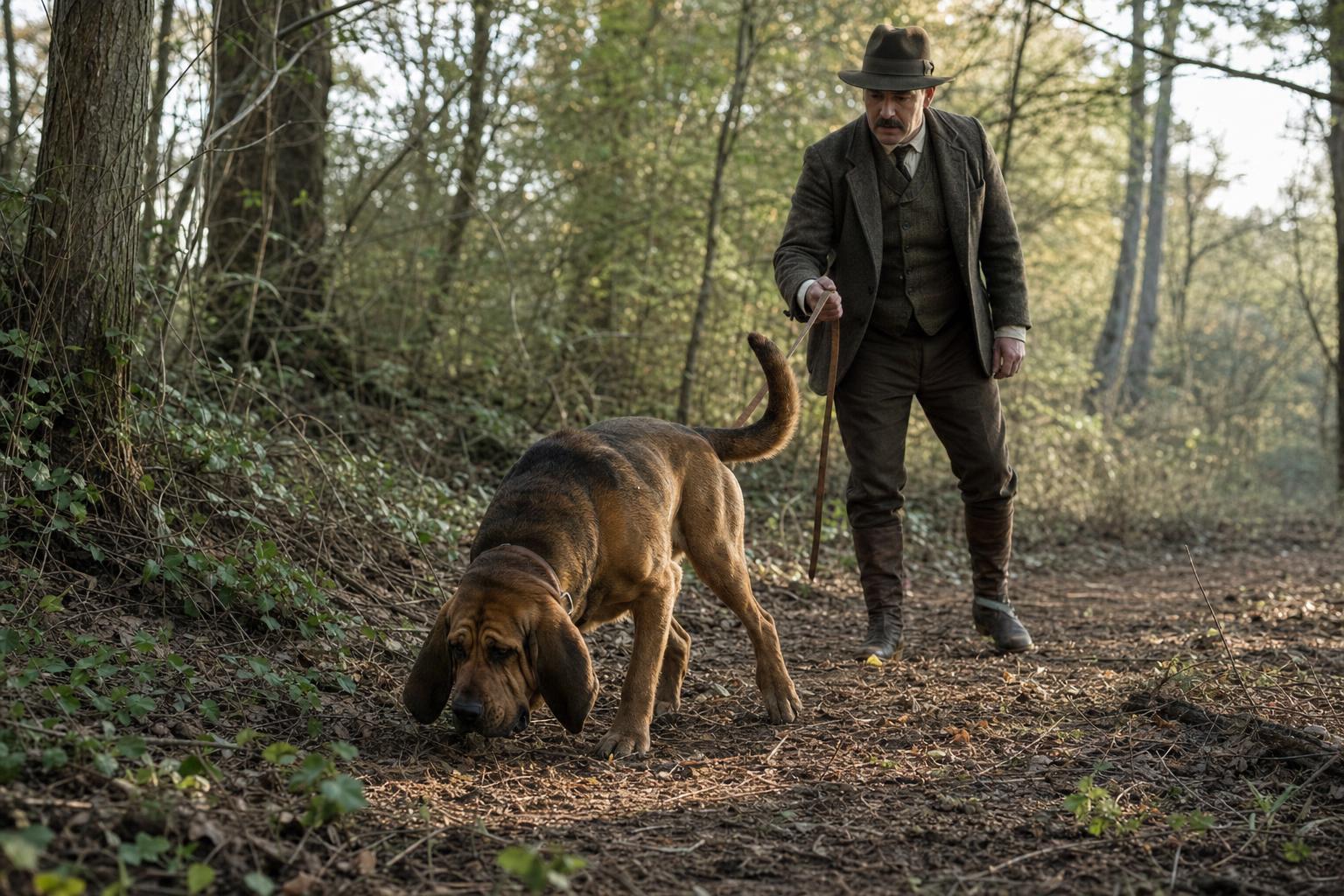
When most people think about early tracking dogs used by law enforcement, they think first of the bloodhound, and for good reason. The breed’s reputation for following human scent is old, deep, and well earned. Long before modern police departments adopted formal training programs, bloodhounds and bloodhound-type hounds were known for their ability to hold a trail that other dogs would lose.
The bloodhound was not valued because it was fast in a straight sprint. It was valued because it was deliberate. A good hound would lower its head, work through the ground scent, and stay honest when the trail turned thin. In practical terms, that meant an officer had a better chance of following a fugitive through pasture, over creek banks, along hedgerows, and even into settled areas where scent contamination could confuse lesser dogs.
In the late nineteenth century and into the early twentieth, bloodhounds gained wider use in prison tracking and rural manhunts. Some sheriffs and wardens kept them specifically for escaped prisoners. Others called in handlers from nearby kennels or neighboring jurisdictions when a trail mattered enough. In an era when the first hours after an escape meant everything, a bloodhound could buy time, direction, and confidence.
Why the Bloodhound Worked So Well
There is a reason old houndsmen trusted certain dogs over all others. Bloodhounds had the nose, of course, but they also had the temperament to stay with difficult work. Tracking is not the same as chasing. A chase is loud, hot, and often reckless. Real tracking demands patience, self-control, and enough instinct to work through uncertainty. Early handlers learned quickly that a dog useful to law enforcement had to be more than eager. It had to be steady.
The long ears, loose skin, and scenting ability of the bloodhound became part of the breed’s legend, but what really mattered in the field was consistency. A dog that could trail an escapee for miles, indicate a change in direction, and press on after a weather shift was worth more than a whole line of men guessing at sign.
European Roots of Police Dog Tracking
Although hounds were used in many places, organized police dog work found especially important footing in Europe. By the late 1800s, agencies in parts of Germany, Belgium, and other countries were taking a more systematic look at how dogs could assist law enforcement. This is where the conversation broadens beyond scent hounds alone.
Some of the earliest police programs recognized that a tracking dog also needed nerve, obedience, and controllability around crowds and urban settings. Hounds could track beautifully, but they were not always the best fit for every kind of police duty. As departments looked for dogs that could track, guard, patrol, and respond to a handler under pressure, breeds like the German Shepherd began to gain ground.
That shift did not erase the value of the bloodhound. Instead, it marked an important fork in law enforcement dog history. One path favored the specialist tracker, particularly for trailing fugitives over distance. The other favored the versatile police dog that could track and also serve broader operational needs. Both traditions shaped the K9 world we know today.
From Hounds to More Versatile Police Breeds
The move toward dogs such as the German Shepherd was practical. Cities were changing. Streets were busier. Officers needed dogs that could move from patrol work to suspect apprehension and still maintain enough nose for tracking. European trainers helped establish the idea that police dogs should be selected and trained with discipline, not just borrowed when convenient from hunters or prison kennels.
Still, those early versatile breeds owed a debt to the hounds that proved human scent trailing could be trusted in serious police work. Without the old tracking dogs showing what was possible, law enforcement might have taken much longer to develop formal K9 programs.
How Early Tracking Dogs Were Used in the Field
If you talk to enough old handlers, hunters, or rural deputies, you hear the same truth in different forms: a dog is only as useful as the handler’s understanding of conditions. Early tracking dogs were often started at the last known point, a jail break site, a fence crossing, a discarded coat, or the place where witnesses last saw a fugitive. From there, the dog read what no man could see.
Ground moisture mattered. Wind mattered. So did livestock, wagon traffic, town footfall, and whether the suspect was walking, running, injured, or trying to mislead the dog by doubling back. The best handlers learned to read the dog’s body language the way a woodsman reads weather coming over a ridge. A deep commitment on the line, a slight head lift, a check to one side of the road, all of it meant something.
These dogs were not machines, and early work was far from perfect. Heat could break a trail down. Hard streets could make scent difficult to hold. Crowded areas created confusion. But even then, a reliable tracking dog offered more than hope. It gave law enforcement a moving line of investigation when human eyes had nothing left to work with.
The American Experience With Early Tracking Dogs
In the United States, early tracking dogs appeared in a mix of prison operations, rural sheriff’s departments, and special cases that demanded trailing ability. Bloodhounds became particularly associated with southern prisons and manhunts, though their use spread beyond one region. In rough country, where a fugitive could disappear into river bottoms, timber, or cutover land, a trailing dog often made the difference between a short pursuit and a complete loss.
Some of that history carries hard edges, and it should. Dogs have always reflected the people and institutions using them. But if we focus strictly on working dog development, the role of tracking hounds in American law enforcement is undeniable. They established the practical value of canine scent work in real-world conditions, often under pressure and across long distances.
By the early twentieth century, as more departments looked to European police dog models, the American K9 picture began to widen. Yet even with the rise of shepherds and other patrol breeds, the specialist trailing hound never fully disappeared. There remained cases where nose outweighed speed, and calm persistence beat aggression every time.
What Modern Dog Owners Can Learn From These Early Police Dogs
For dog owners interested in working dogs, the biggest lesson from early law enforcement tracking dogs is that natural ability matters, but purpose-driven training matters just as much. A dog may have excellent scenting instinct, but without structure, patience, and clear communication from the handler, that talent is wasted.
The old handlers understood something many modern owners still need to hear: a working dog wants meaningful work. The breeds and lines used in early tracking were not content with idle living. They were at their best when given a task that matched their instincts. That remains true whether you are raising a bloodhound, a shepherd, a coonhound, or another dog with strong working drive.
There is also a lesson in honesty. Not every dog is suited for every job. Early law enforcement eventually moved toward multiple kinds of dogs because one type could not do it all. Some excelled at deep scent trailing. Others handled patrol stress better. The wisest trainers did not force a dog into the wrong role. They recognized what the dog was built to do and developed it from there.
The Legacy of Early Tracking Dogs in Law Enforcement
Today’s police K9 units benefit from better breeding records, stronger training systems, and more refined deployment methods than those early handlers could have imagined. But the foundation was laid by dogs that worked dirt roads, prison grounds, dark timber, and town edges with little fanfare and no technology to back them up. Those early tracking dogs proved that the canine nose was not a novelty. It was a serious law enforcement tool.
When you look at a modern trailing dog leaning into a harness, or a police handler trusting a dog to sort old scent from new contamination, you are seeing the continuation of hard-earned knowledge. The bloodhounds, hounds, and early police dogs that came before taught law enforcement what was possible. They also reminded us of something hunters have known forever: a good dog, doing the work it was bred and trained to do, can change the whole outcome of the day.
For anyone who cares about working dogs, that history is worth remembering. These were not just animals along for the ride. They were partners, specialists, and in many cases the best tracker on the ground. Law enforcement learned to trust them because they earned that trust one trail at a time.
Folks who live around working dogs know there is a world of difference between a pet that follows you around the yard and a dog that can hold a scent line through damp leaves, muddy roads, and the confusion of human traffic. The earliest law enforcement tracking dogs were prized not because they looked impressive, but because they could do a job a man simply could not. They found hidden suspects, trailed escapees, and gave officers a practical edge in an era when evidence was scarce and communication was slow.
The First Real Need for Police Tracking Dogs
As towns grew into cities and formal policing began to take shape in Europe and later in the United States, officers ran into a hard truth: criminals run, and many run well. Before vehicles, radios, and floodlights became common, a fleeing suspect who slipped into woodland or crossed rough country under darkness could vanish in minutes. Horses helped in open country, but horses could not tell one trail from another. A trained tracking dog could.
Early law enforcement agencies did not always have official K9 divisions the way we think of them today. More often, they borrowed from practices already known to hunters, gamekeepers, military units, and prison authorities. Men who had seen what a good hound could do on wounded game or a missing person understood the same nose could be put to use on human quarry. That transfer of field knowledge into police work is one of the most important chapters in working dog history.
Bloodhounds and the Rise of Human Scent Tracking
When most people think about early tracking dogs used by law enforcement, they think first of the bloodhound, and for good reason. The breed’s reputation for following human scent is old, deep, and well earned. Long before modern police departments adopted formal training programs, bloodhounds and bloodhound-type hounds were known for their ability to hold a trail that other dogs would lose.
The bloodhound was not valued because it was fast in a straight sprint. It was valued because it was deliberate. A good hound would lower its head, work through the ground scent, and stay honest when the trail turned thin. In practical terms, that meant an officer had a better chance of following a fugitive through pasture, over creek banks, along hedgerows, and even into settled areas where scent contamination could confuse lesser dogs.
In the late nineteenth century and into the early twentieth, bloodhounds gained wider use in prison tracking and rural manhunts. Some sheriffs and wardens kept them specifically for escaped prisoners. Others called in handlers from nearby kennels or neighboring jurisdictions when a trail mattered enough. In an era when the first hours after an escape meant everything, a bloodhound could buy time, direction, and confidence.
Why the Bloodhound Worked So Well
There is a reason old houndsmen trusted certain dogs over all others. Bloodhounds had the nose, of course, but they also had the temperament to stay with difficult work. Tracking is not the same as chasing. A chase is loud, hot, and often reckless. Real tracking demands patience, self-control, and enough instinct to work through uncertainty. Early handlers learned quickly that a dog useful to law enforcement had to be more than eager. It had to be steady.
The long ears, loose skin, and scenting ability of the bloodhound became part of the breed’s legend, but what really mattered in the field was consistency. A dog that could trail an escapee for miles, indicate a change in direction, and press on after a weather shift was worth more than a whole line of men guessing at sign.
European Roots of Police Dog Tracking
Although hounds were used in many places, organized police dog work found especially important footing in Europe. By the late 1800s, agencies in parts of Germany, Belgium, and other countries were taking a more systematic look at how dogs could assist law enforcement. This is where the conversation broadens beyond scent hounds alone.
Some of the earliest police programs recognized that a tracking dog also needed nerve, obedience, and controllability around crowds and urban settings. Hounds could track beautifully, but they were not always the best fit for every kind of police duty. As departments looked for dogs that could track, guard, patrol, and respond to a handler under pressure, breeds like the German Shepherd began to gain ground.
That shift did not erase the value of the bloodhound. Instead, it marked an important fork in law enforcement dog history. One path favored the specialist tracker, particularly for trailing fugitives over distance. The other favored the versatile police dog that could track and also serve broader operational needs. Both traditions shaped the K9 world we know today.
From Hounds to More Versatile Police Breeds
The move toward dogs such as the German Shepherd was practical. Cities were changing. Streets were busier. Officers needed dogs that could move from patrol work to suspect apprehension and still maintain enough nose for tracking. European trainers helped establish the idea that police dogs should be selected and trained with discipline, not just borrowed when convenient from hunters or prison kennels.
Still, those early versatile breeds owed a debt to the hounds that proved human scent trailing could be trusted in serious police work. Without the old tracking dogs showing what was possible, law enforcement might have taken much longer to develop formal K9 programs.
How Early Tracking Dogs Were Used in the Field
If you talk to enough old handlers, hunters, or rural deputies, you hear the same truth in different forms: a dog is only as useful as the handler’s understanding of conditions. Early tracking dogs were often started at the last known point, a jail break site, a fence crossing, a discarded coat, or the place where witnesses last saw a fugitive. From there, the dog read what no man could see.
Ground moisture mattered. Wind mattered. So did livestock, wagon traffic, town footfall, and whether the suspect was walking, running, injured, or trying to mislead the dog by doubling back. The best handlers learned to read the dog’s body language the way a woodsman reads weather coming over a ridge. A deep commitment on the line, a slight head lift, a check to one side of the road, all of it meant something.
These dogs were not machines, and early work was far from perfect. Heat could break a trail down. Hard streets could make scent difficult to hold. Crowded areas created confusion. But even then, a reliable tracking dog offered more than hope. It gave law enforcement a moving line of investigation when human eyes had nothing left to work with.
The American Experience With Early Tracking Dogs
In the United States, early tracking dogs appeared in a mix of prison operations, rural sheriff’s departments, and special cases that demanded trailing ability. Bloodhounds became particularly associated with southern prisons and manhunts, though their use spread beyond one region. In rough country, where a fugitive could disappear into river bottoms, timber, or cutover land, a trailing dog often made the difference between a short pursuit and a complete loss.
Some of that history carries hard edges, and it should. Dogs have always reflected the people and institutions using them. But if we focus strictly on working dog development, the role of tracking hounds in American law enforcement is undeniable. They established the practical value of canine scent work in real-world conditions, often under pressure and across long distances.
By the early twentieth century, as more departments looked to European police dog models, the American K9 picture began to widen. Yet even with the rise of shepherds and other patrol breeds, the specialist trailing hound never fully disappeared. There remained cases where nose outweighed speed, and calm persistence beat aggression every time.
What Modern Dog Owners Can Learn From These Early Police Dogs
For dog owners interested in working dogs, the biggest lesson from early law enforcement tracking dogs is that natural ability matters, but purpose-driven training matters just as much. A dog may have excellent scenting instinct, but without structure, patience, and clear communication from the handler, that talent is wasted.
The old handlers understood something many modern owners still need to hear: a working dog wants meaningful work. The breeds and lines used in early tracking were not content with idle living. They were at their best when given a task that matched their instincts. That remains true whether you are raising a bloodhound, a shepherd, a coonhound, or another dog with strong working drive.
There is also a lesson in honesty. Not every dog is suited for every job. Early law enforcement eventually moved toward multiple kinds of dogs because one type could not do it all. Some excelled at deep scent trailing. Others handled patrol stress better. The wisest trainers did not force a dog into the wrong role. They recognized what the dog was built to do and developed it from there.
The Legacy of Early Tracking Dogs in Law Enforcement
Today’s police K9 units benefit from better breeding records, stronger training systems, and more refined deployment methods than those early handlers could have imagined. But the foundation was laid by dogs that worked dirt roads, prison grounds, dark timber, and town edges with little fanfare and no technology to back them up. Those early tracking dogs proved that the canine nose was not a novelty. It was a serious law enforcement tool.
When you look at a modern trailing dog leaning into a harness, or a police handler trusting a dog to sort old scent from new contamination, you are seeing the continuation of hard-earned knowledge. The bloodhounds, hounds, and early police dogs that came before taught law enforcement what was possible. They also reminded us of something hunters have known forever: a good dog, doing the work it was bred and trained to do, can change the whole outcome of the day.
For anyone who cares about working dogs, that history is worth remembering. These were not just animals along for the ride. They were partners, specialists, and in many cases the best tracker on the ground. Law enforcement learned to trust them because they earned that trust one trail at a time.