Electronic Storage Detection Dogs in Law Enforcement
How These Working Dogs Find Hidden Digital Evidence
Jeff Davis | https://workingdogcentral.com
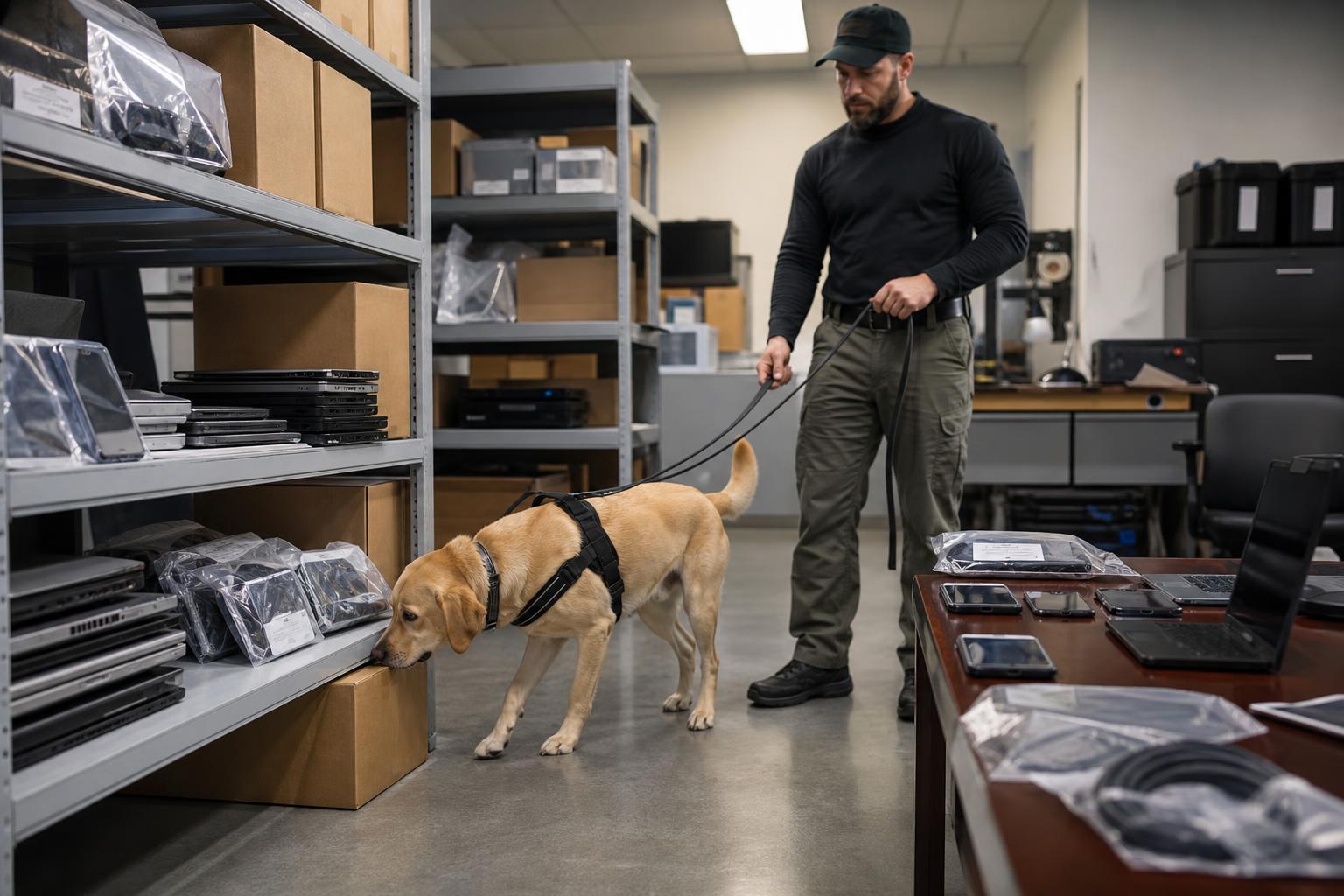
Most folks who know working dogs picture a narcotics dog on a vehicle stop or a tracking dog working a cold trail through wet grass at daylight. That is fair enough. Those jobs have a long history, and anyone who has spent time around driven dogs knows just how much can be accomplished by a good nose and a determined handler. But in today’s law enforcement world, one of the most fascinating specialties is the electronic storage detection dog. These dogs are trained to find hidden digital devices and storage media, and they do it with the same intensity you see in any serious detection dog worth feeding.
For dog owners interested in working dogs, this field is worth a close look. It combines old-school canine instinct with a very modern kind of evidence recovery. A suspect can hide a thumb drive inside a wall, tuck a cell phone in a child’s toy, slip a memory card under carpet tack strip, or bury a hard drive in a toolbox under a layer of greasy rags. Human searchers can miss those items even when they are being careful. A dog with the right training often does not.
What Electronic Storage Detection Dogs Actually Find
Electronic storage detection dogs, often called ESD dogs, are trained to alert on the scent associated with electronic devices. That can include cell phones, USB drives, SD cards, laptops, tablets, external hard drives, SIM cards, and other digital media. Some of these items are no bigger than a fingernail. That is where the dog shines. He is not reading labels or looking for obvious shapes. He is working odor.
In practical law enforcement terms, that matters a great deal. Investigations involving child exploitation, fraud, organized crime, prison contraband, and intelligence gathering often depend on locating digital evidence. A person under investigation may know that a hidden phone or memory card can mean the difference between a weak case and a strong one. So those devices get hidden in places a human would never think to check first, or in spaces so cluttered and cramped that a visual search becomes slow and uncertain.
I have seen enough good dogs work to know one truth that carries from field to city and from bird cover to evidence scenes: if a dog believes there is a reward at the end of the hunt, he will dig into a search with a kind of commitment that humbles people. That same desire is what makes ESD dogs so valuable.
The Target Odor Behind the Work
Many electronic storage detection dogs are trained on compounds associated with electronics, particularly chemicals found in the storage components of devices. The dog is not being taught to find one brand of phone or one style of flash drive. He is being conditioned to recognize the target odor profile connected to electronic storage. Because of that, he can locate a surprisingly wide range of concealed devices.
This is one of the points that often surprises the public. The dog is not somehow detecting electricity or a powered-on signal. He is using scent, plain and simple. The same nose that can sort out bird scent on a windy hillside can also isolate the odor coming off a tiny memory card hidden in a room full of competing smells.
Why Law Enforcement Uses ESD Dogs
The biggest advantage is speed paired with precision. Search warrants can involve homes, vehicles, offices, hotel rooms, storage units, and institutional settings where every minute matters. Digital evidence can be moved, damaged, or overlooked if a search drags on. An electronic storage detection dog helps teams cover ground more efficiently and with greater confidence.
There is also the issue of size. A micro SD card can hold a mountain of data, yet it is small enough to disappear in a seam, vent, drawer track, or picture frame. A skilled dog can lead searchers right to that area. In many cases, the dog narrows the search so investigators can focus labor where it counts instead of pulling apart every square inch blindly.
From a handler’s point of view, that kind of dog becomes a force multiplier. The dog is not replacing investigators. He is making them more effective. In the same way a seasoned retriever saves steps and recovers birds that would otherwise be lost, an ESD dog helps recover evidence that might remain hidden without him.
Real-World Search Environments
One day the dog may be working a tidy office with polished floors and clean desks. The next he may be sent through a hoarder house, a suspect vehicle, or a jail cell with heavy odor contamination and endless distractions. That requires steadiness, environmental confidence, and a strong hunt drive. Good dogs learn to search shelving, furniture, vents, luggage, appliances, children’s rooms, wall voids, and vehicle interiors without losing intensity.
It is not glamorous work in the usual sense. There are no dramatic apprehensions or long pursuits for the cameras. But it is exacting, useful, and often decisive.
The Dogs Best Suited for Electronic Storage Detection
Not every good dog belongs in this niche. The best candidates tend to be high-drive dogs that love the game, can work independently, and remain clear-headed under pressure. Labs, spaniels, and some sporting or dual-purpose breeds are commonly seen because they bring strong hunt instinct, manageable size, and the desire to search in close quarters. A dog that happily tears into a detailed search for a toy reward is often a strong prospect.
That reward system is important. These dogs are usually trained through positive reinforcement, building a powerful association between target odor and the prize they crave. For one dog it may be a rolled towel, for another a ball, and for another a favored tug. What matters is intensity. You want a dog that believes finding odor starts the best game in the world.
Temperament matters every bit as much as drive. The dog has to work around investigators, evidence technicians, and sometimes emotionally charged scenes. He must be controllable, social enough for the environment, and able to switch from kennel energy to focused work without falling apart mentally.
Training the Alert
A reliable final response is the backbone of detection work. In most cases, ESD dogs are trained to give a passive alert such as a sit, down, or focused stare at source. That prevents damage to evidence. You do not want a dog scratching through a laptop bag or pawing at a hidden flash drive inside a box of paperwork. Precision matters, and a calm trained alert gives the handler and investigators a clean read.
Training progresses from simple odor recognition to more complex hides, varied environments, inaccessible source, elevated hides, buried hides, and areas loaded with distractions. The dog learns that the odor pays whether it is hidden in plain view or tucked in a difficult location. A polished team can work methodically through a structure and keep the dog in the hunt without rushing him past problem areas.
Handler Skill Is Half the Equation
A fine dog can be dulled by poor handling, and a strong handler can bring out the best in a dog with honest talent. That has been true in every working dog discipline I have ever admired. With ESD dogs, handler observation is critical. Small changes in breathing, ear set, tail action, head snap, or search speed can tell the story before the dog settles into an alert. The handler has to know when the dog is in odor, when he is solving a problem, and when the team needs to reset and approach from another angle.
The best handlers respect the dog enough to trust what he is telling them. They also respect the mission enough not to imagine alerts that are not there. That balance comes from repetition, training records, maintenance work, and honest evaluation over time.
In law enforcement, documentation and reliability matter. Certification standards, ongoing training, and courtroom credibility all come into play. A dog may do brilliant work in the field, but the team must also be able to demonstrate sound training and dependable performance if the case is challenged later.
Common Misunderstandings About ESD Dogs
One misunderstanding is that these dogs only find large electronics. In truth, some of the most important finds are the smallest. A hidden SIM card or memory card can carry enough information to reshape an entire investigation. Another misconception is that the dog can simply walk into a room and instantly reveal every device. Like any serious detection task, it takes a structured search, good airflow understanding, proper scene management, and a dog trained to stay engaged.
There is also a tendency among people unfamiliar with working dogs to think this sort of work is almost mechanical. It is not. It is still dog work. The same variables that affect any scent problem show up here too: contamination, concealment, temperature, air movement, clutter, fatigue, and handler influence. What separates a good team is how consistently they work through those variables.
Why This Specialty Matters to Working Dog Owners
If you are a dog owner drawn to working dogs, electronic storage detection offers a powerful example of how versatile canine talent can be. It shows that a dog’s nose is not limited to the tasks most people grew up hearing about. It also shows how much value there is in channeling natural prey drive, hunt instinct, and trainability into useful service.
There is something deeply satisfying about seeing a dog do meaningful work, whether that is in upland cover, on a stock farm, in a search grid, or inside a search warrant scene. The setting changes, but the foundation stays familiar. Desire, clarity, repetition, reward, and trust between dog and handler. That formula has carried good dogs for generations.
Electronic storage detection dogs may not be the first image that comes to mind when people think about law enforcement K9s, but they have earned their place. They help uncover truth in cases where hidden data can hold the key. They save time, sharpen searches, and recover evidence too small or too well concealed for people to find quickly on their own. For anyone who appreciates the reach of a good working dog, that is a specialty worth respecting.
For dog owners interested in working dogs, this field is worth a close look. It combines old-school canine instinct with a very modern kind of evidence recovery. A suspect can hide a thumb drive inside a wall, tuck a cell phone in a child’s toy, slip a memory card under carpet tack strip, or bury a hard drive in a toolbox under a layer of greasy rags. Human searchers can miss those items even when they are being careful. A dog with the right training often does not.
What Electronic Storage Detection Dogs Actually Find
Electronic storage detection dogs, often called ESD dogs, are trained to alert on the scent associated with electronic devices. That can include cell phones, USB drives, SD cards, laptops, tablets, external hard drives, SIM cards, and other digital media. Some of these items are no bigger than a fingernail. That is where the dog shines. He is not reading labels or looking for obvious shapes. He is working odor.
In practical law enforcement terms, that matters a great deal. Investigations involving child exploitation, fraud, organized crime, prison contraband, and intelligence gathering often depend on locating digital evidence. A person under investigation may know that a hidden phone or memory card can mean the difference between a weak case and a strong one. So those devices get hidden in places a human would never think to check first, or in spaces so cluttered and cramped that a visual search becomes slow and uncertain.
I have seen enough good dogs work to know one truth that carries from field to city and from bird cover to evidence scenes: if a dog believes there is a reward at the end of the hunt, he will dig into a search with a kind of commitment that humbles people. That same desire is what makes ESD dogs so valuable.
The Target Odor Behind the Work
Many electronic storage detection dogs are trained on compounds associated with electronics, particularly chemicals found in the storage components of devices. The dog is not being taught to find one brand of phone or one style of flash drive. He is being conditioned to recognize the target odor profile connected to electronic storage. Because of that, he can locate a surprisingly wide range of concealed devices.
This is one of the points that often surprises the public. The dog is not somehow detecting electricity or a powered-on signal. He is using scent, plain and simple. The same nose that can sort out bird scent on a windy hillside can also isolate the odor coming off a tiny memory card hidden in a room full of competing smells.
Why Law Enforcement Uses ESD Dogs
The biggest advantage is speed paired with precision. Search warrants can involve homes, vehicles, offices, hotel rooms, storage units, and institutional settings where every minute matters. Digital evidence can be moved, damaged, or overlooked if a search drags on. An electronic storage detection dog helps teams cover ground more efficiently and with greater confidence.
There is also the issue of size. A micro SD card can hold a mountain of data, yet it is small enough to disappear in a seam, vent, drawer track, or picture frame. A skilled dog can lead searchers right to that area. In many cases, the dog narrows the search so investigators can focus labor where it counts instead of pulling apart every square inch blindly.
From a handler’s point of view, that kind of dog becomes a force multiplier. The dog is not replacing investigators. He is making them more effective. In the same way a seasoned retriever saves steps and recovers birds that would otherwise be lost, an ESD dog helps recover evidence that might remain hidden without him.
Real-World Search Environments
One day the dog may be working a tidy office with polished floors and clean desks. The next he may be sent through a hoarder house, a suspect vehicle, or a jail cell with heavy odor contamination and endless distractions. That requires steadiness, environmental confidence, and a strong hunt drive. Good dogs learn to search shelving, furniture, vents, luggage, appliances, children’s rooms, wall voids, and vehicle interiors without losing intensity.
It is not glamorous work in the usual sense. There are no dramatic apprehensions or long pursuits for the cameras. But it is exacting, useful, and often decisive.
The Dogs Best Suited for Electronic Storage Detection
Not every good dog belongs in this niche. The best candidates tend to be high-drive dogs that love the game, can work independently, and remain clear-headed under pressure. Labs, spaniels, and some sporting or dual-purpose breeds are commonly seen because they bring strong hunt instinct, manageable size, and the desire to search in close quarters. A dog that happily tears into a detailed search for a toy reward is often a strong prospect.
That reward system is important. These dogs are usually trained through positive reinforcement, building a powerful association between target odor and the prize they crave. For one dog it may be a rolled towel, for another a ball, and for another a favored tug. What matters is intensity. You want a dog that believes finding odor starts the best game in the world.
Temperament matters every bit as much as drive. The dog has to work around investigators, evidence technicians, and sometimes emotionally charged scenes. He must be controllable, social enough for the environment, and able to switch from kennel energy to focused work without falling apart mentally.
Training the Alert
A reliable final response is the backbone of detection work. In most cases, ESD dogs are trained to give a passive alert such as a sit, down, or focused stare at source. That prevents damage to evidence. You do not want a dog scratching through a laptop bag or pawing at a hidden flash drive inside a box of paperwork. Precision matters, and a calm trained alert gives the handler and investigators a clean read.
Training progresses from simple odor recognition to more complex hides, varied environments, inaccessible source, elevated hides, buried hides, and areas loaded with distractions. The dog learns that the odor pays whether it is hidden in plain view or tucked in a difficult location. A polished team can work methodically through a structure and keep the dog in the hunt without rushing him past problem areas.
Handler Skill Is Half the Equation
A fine dog can be dulled by poor handling, and a strong handler can bring out the best in a dog with honest talent. That has been true in every working dog discipline I have ever admired. With ESD dogs, handler observation is critical. Small changes in breathing, ear set, tail action, head snap, or search speed can tell the story before the dog settles into an alert. The handler has to know when the dog is in odor, when he is solving a problem, and when the team needs to reset and approach from another angle.
The best handlers respect the dog enough to trust what he is telling them. They also respect the mission enough not to imagine alerts that are not there. That balance comes from repetition, training records, maintenance work, and honest evaluation over time.
In law enforcement, documentation and reliability matter. Certification standards, ongoing training, and courtroom credibility all come into play. A dog may do brilliant work in the field, but the team must also be able to demonstrate sound training and dependable performance if the case is challenged later.
Common Misunderstandings About ESD Dogs
One misunderstanding is that these dogs only find large electronics. In truth, some of the most important finds are the smallest. A hidden SIM card or memory card can carry enough information to reshape an entire investigation. Another misconception is that the dog can simply walk into a room and instantly reveal every device. Like any serious detection task, it takes a structured search, good airflow understanding, proper scene management, and a dog trained to stay engaged.
There is also a tendency among people unfamiliar with working dogs to think this sort of work is almost mechanical. It is not. It is still dog work. The same variables that affect any scent problem show up here too: contamination, concealment, temperature, air movement, clutter, fatigue, and handler influence. What separates a good team is how consistently they work through those variables.
Why This Specialty Matters to Working Dog Owners
If you are a dog owner drawn to working dogs, electronic storage detection offers a powerful example of how versatile canine talent can be. It shows that a dog’s nose is not limited to the tasks most people grew up hearing about. It also shows how much value there is in channeling natural prey drive, hunt instinct, and trainability into useful service.
There is something deeply satisfying about seeing a dog do meaningful work, whether that is in upland cover, on a stock farm, in a search grid, or inside a search warrant scene. The setting changes, but the foundation stays familiar. Desire, clarity, repetition, reward, and trust between dog and handler. That formula has carried good dogs for generations.
Electronic storage detection dogs may not be the first image that comes to mind when people think about law enforcement K9s, but they have earned their place. They help uncover truth in cases where hidden data can hold the key. They save time, sharpen searches, and recover evidence too small or too well concealed for people to find quickly on their own. For anyone who appreciates the reach of a good working dog, that is a specialty worth respecting.