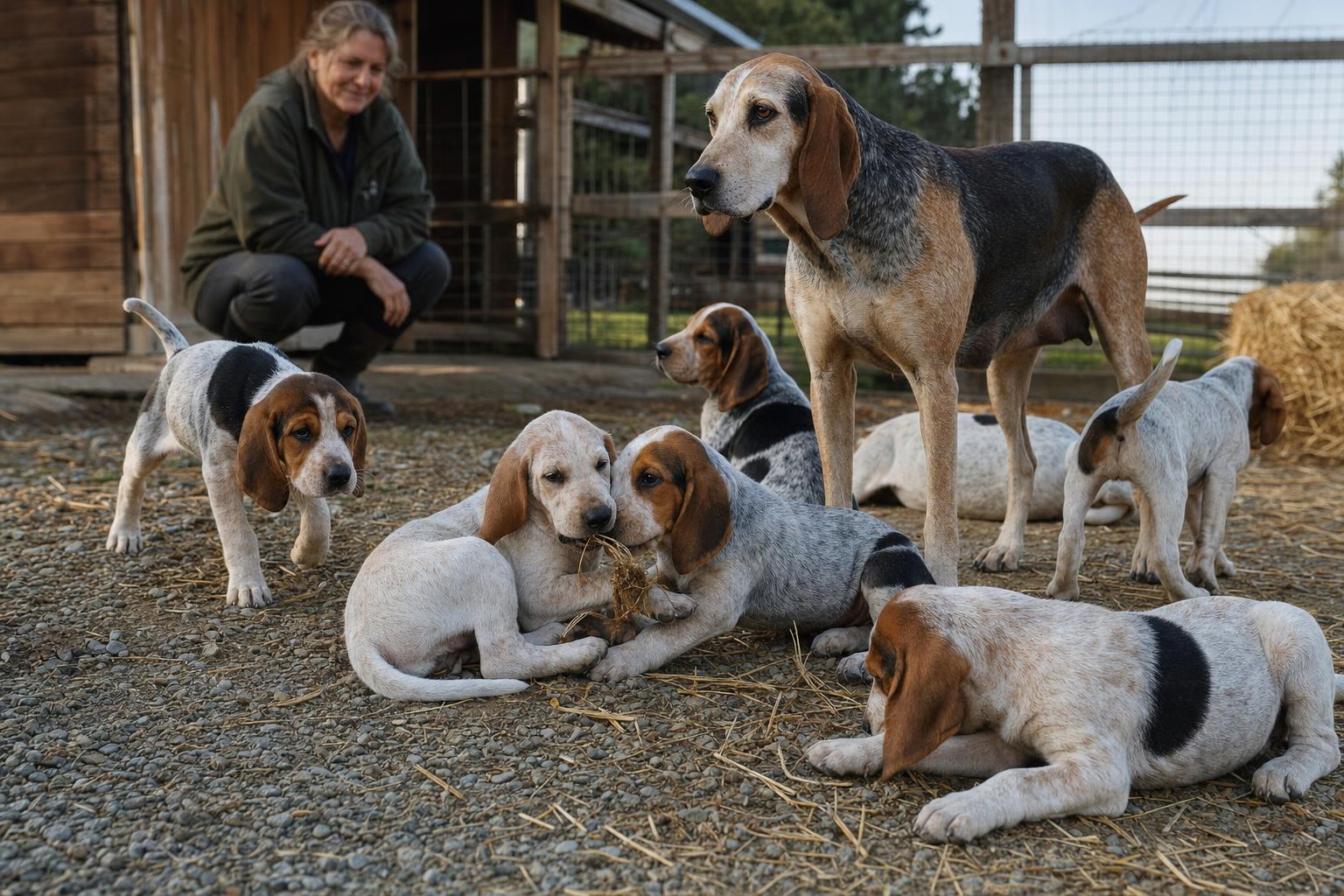
English Coonhound puppies attract buyers who want a hound with speed, stamina, a loud working voice, and a friendly nature at home. Also listed by the AKC as the American English Coonhound and by UKC as the English Coonhound, this breed was developed from foxhound-type dogs in the United States for trailing and treeing game, especially raccoons. A good puppy is not just a cute redtick or tricolor hound. It is the beginning of a long-term hunting, training, and family relationship.
Before responding to an English Coonhound puppies for sale listing, decide what you truly need. Some litters are bred for night hunting and tree power. Others may lean toward companionship, tracking games, or a more balanced home-and-field temperament. The selector facts describe this breed as athletic, independent, vocal, social, and strongly scent-driven. Those traits can be wonderful in the right home and frustrating in the wrong one. Use the guide below to evaluate breeders, documents, vaccinations, home preparation, and price expectations without relying on promises that cannot be verified.
Choosing a breeder
Choosing a breeder is the most important step when shopping for an English Coonhound puppy. Look for someone who understands the breed as a working scent hound, not simply as a colorful family dog. The breeder should be comfortable discussing the sire and dam, including how they hunt, how they behave in the kennel and house, how vocal they are, and what kind of owners usually succeed with their puppies.
Ask to see clear information on the parents and the litter. A practical breeder can explain why the pairing was made, what traits they hoped to preserve, and where the pups may fit best. For this breed, useful details include nose, track style, tree interest, stamina, confidence, sociability, and whether the family line tends to have an off-switch after exercise. Because English Coonhounds can be independent and prey-driven, honest temperament discussion matters as much as appearance.
- Ask whether the parents are hunted, shown, used in scent work, or kept primarily as companions.
- Ask how puppies are socialized with people, normal household noise, safe outdoor surfaces, crates, and car rides.
- Ask what the breeder has observed about each puppy’s confidence, curiosity, and noise level.
- Ask what support is available after the sale if training or adjustment questions come up.
Be cautious with listings that pressure you to send money immediately, avoid basic questions, use only stock photos, or promise that every puppy will become a finished hunting dog. No breeder can guarantee final working ability, adult size, perfect health, or exact temperament. A responsible seller can document what they have done and describe the strengths and limits of the family line.
AKC registration
AKC registration may be relevant for English Coonhound buyers because the AKC recognizes the breed as the American English Coonhound in the Hound Group. UKC also has a long history with the breed, having registered it under English Fox and Coonhound in the early 1900s. That said, registration is not the same as quality, health, training, or suitability. It is a record of ancestry through a registry, not a promise that the puppy will match your goals.
If a listing mentions AKC, UKC, or any other registry, ask to see the actual paperwork or the registration process in writing. Confirm the registered name used for the breed, the names or numbers of the sire and dam, and whether the puppy is being sold with full registration, limited registration, or no breeding rights. Some buyers need registration for events or breeding plans; others simply want a sound, well-raised hound. Either way, verify relevance instead of assuming every English Coonhound puppy for sale comes with the same registry options.
Vaccinations
Vaccinations should be discussed with the breeder and then continued with your veterinarian. Do not rely on vague claims such as “all shots done” without dates, product information, and a record signed or provided by the breeder or veterinary clinic. Puppies are usually in the middle of a vaccine series when they leave for new homes, so the next steps matter.
Ask what vaccines the puppy has received, when deworming was performed, whether a veterinary exam has been completed, and whether any health concerns were noted. Bring the record to your own veterinarian soon after pickup. Your vet can advise on the remaining vaccine schedule, parasite prevention, tick protection, and safe socialization. This is especially important for an active hound expected to spend time outdoors, in brush, around wildlife scent, or eventually in hunting environments.
- Get written vaccination and deworming dates.
- Schedule a new-owner veterinary exam promptly.
- Ask about flea, tick, and heartworm prevention for your region.
- Avoid high-risk public dog areas until your veterinarian says the puppy is adequately protected.
Bringing puppy home
Bringing an English Coonhound puppy home is easier when you plan for a nose-led, vocal, athletic youngster. This breed was built to cover ground and think independently on scent. Even a young puppy may follow smells with surprising determination, so secure fencing, a well-fitted collar or harness, and leash practice are not optional.
Prepare a crate or safe sleeping area, washable bedding, food and water bowls, puppy food information from the breeder, chew toys, a long line for supervised yard work, and cleaning supplies. Keep the first week calm and structured. Short potty trips, brief crate sessions, gentle handling, and positive name-and-recall games build trust. Avoid giving a young hound too much unsupervised freedom too soon, because scent, curiosity, and chewing can lead to trouble quickly.
Start training with rewards rather than pressure. English Coonhounds often respond best to short, upbeat sessions and high-value motivation. Teach the basics early: coming when called, walking on leash, settling in a crate, trading objects, and being quiet when asked. Do not expect a reliable off-leash dog simply because the puppy is affectionate. The breed’s history favors independent trailing, so recall should be built patiently on long lines and in safe fenced spaces.
Typical puppy prices
Typical puppy prices vary by region, pedigree, breeder reputation, hunting background, registration, veterinary care, and current demand. It would be misleading to name one exact price for every English Coonhound puppy. Instead, compare listings carefully and ask what is included. A higher price may reflect thoughtful breeding, early care, and breeder support, but price alone does not prove quality. A lower price may be fair for a local working litter, or it may signal missing documentation. Evaluate the whole picture.
When comparing costs, include more than the purchase price. Budget for a veterinary exam, remaining vaccinations, parasite prevention, quality food, a crate, secure containment, training equipment, identification, and possible travel. For a hunting home, future expenses may include tracking collars, training birds or legal game exposure where appropriate, fuel, event entries, and time in the field. For a family home, training classes and enrichment tools can be just as valuable.
- Ask for a written bill of sale or purchase agreement.
- Understand deposit terms before sending money.
- Confirm whether registration papers, microchip information, or health records are included.
- Be wary of sellers who will not discuss parent dogs, pickup details, or return policies.
Fit matters more than color
English Coonhounds can appear in redtick, bluetick, tricolor with ticking, and other hound patterns. Color is part of the breed’s appeal, but it should not drive the buying decision. A puppy’s family line, health documentation, socialization, and match to your lifestyle matter far more. If you live close to neighbors, talk honestly about the breed’s baying voice. If you want a hunting prospect, ask about proven working traits in relatives. If you want a companion, choose a breeder who values stable temperament and can describe how the puppies behave away from the litter.
Conclusion: buying an English Coonhound puppy wisely
The best English Coonhound puppies for sale listings give you enough information to make a careful decision. Look for honest breeder communication, verifiable registration when it matters, clear vaccination records, realistic price explanations, and a puppy plan that respects the breed’s scent drive, stamina, and voice. Choose the pup that fits your home, your activity level, and your goals, not just the one with the flashiest markings. A well-chosen English Coonhound can become a loyal companion, a capable tracking partner, and a classic hound presence in the field.
Explore English Coonhound on Working Dog Central
View the English Coonhound breed profile or browse English Coonhound listings.


