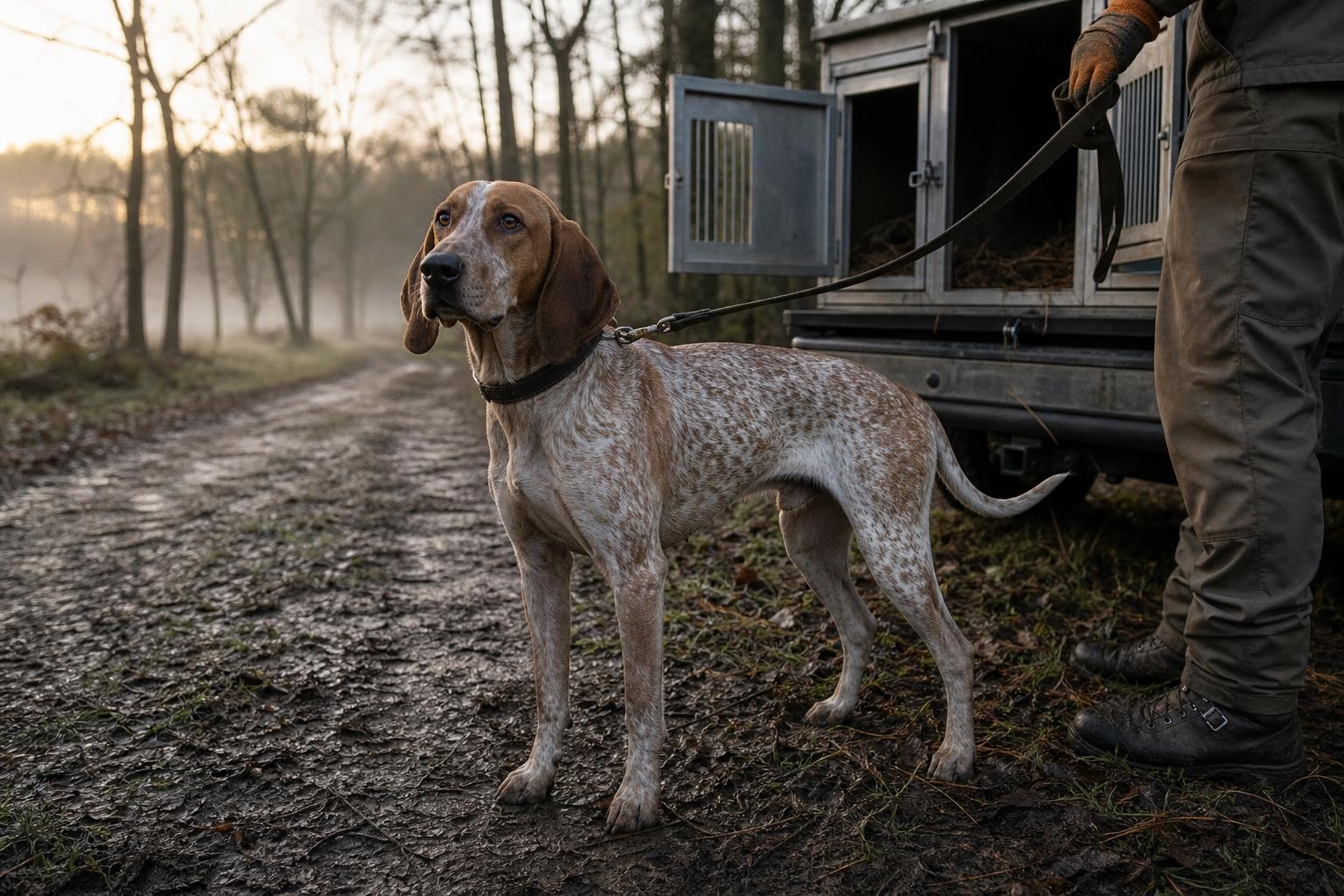
An English Coonhound started dog can be a smart choice for a hunter or active owner who wants to skip the earliest puppy stage and evaluate a young hound that has already had some field exposure. This breed was developed in the United States from foxhound-type ancestors for scent trailing, treeing, and long nights of work on raccoon and other game. A started dog should give you more information than a puppy can: how it uses its nose, how it handles pressure, how it sounds on track, and whether its temperament fits your home.
The phrase “started” is not a formal guarantee. One seller may use it for a young dog that has seen a few caged coons or scent drags; another may mean a hound that has been hunted at night, opened on track, and stayed treed with company. Before you buy, slow the conversation down and ask the seller to define exactly what the English Coonhound has done, how often, and under what conditions.
What qualifies as “started” in an English Coonhound
For this breed, a started dog is usually past basic puppy handling and has been introduced to the hunting routine in some meaningful way. That may include riding in the dog box, leading in and out of the woods, exposure to other hounds, scent work, tracking practice, and supervised hunts. The key is evidence, not vocabulary. Ask whether the dog has trailed real game, treed, opened honestly, stayed at the tree, or only shown interest in controlled setups.
- Age, maturity, and number of hunts or training sessions completed.
- Whether the dog hunts alone, with older dogs, or only in a pack.
- How the dog handles loading, leading, tying back, and being caught after a hunt.
- Whether the seller has video or will demonstrate the dog in conditions similar to yours.
A good started English Coonhound does not need to be finished. It should, however, show enough natural ability and handling foundation to justify the price over an unstarted prospect.
Birds introduced or breed-appropriate game exposure
English Coonhounds are scent hounds, not pointing or flushing bird dogs, so buyers should focus on breed-appropriate game exposure rather than bird work. For most buyers, that means raccoon scent, night hunting, treeing behavior, and possibly other legal game depending on local use. If a listing mentions birds, clarify whether the exposure is simply general steadiness around farm animals or a separate training goal. Do not assume bird introduction is relevant to this breed’s normal job.
Ask what the dog has actually encountered: drags, hides, released game where legal, wild tracks, or woods time without contact. A hound that can work an older track, use its voice appropriately, and show determination in rough terrain is demonstrating traits that match the English Coonhound’s history. Also ask whether the dog is trash-broke or has been corrected around off-game. A young started hound may still need significant guidance before it is reliable.
Gun introduction when relevant
Gunfire matters when the dog will be hunted around shots, but introduction should be gradual and fair. With an English Coonhound, gun sensitivity may not be tested the same way it would be for a retriever or upland dog. Ask if the dog has heard gunfire at a distance, near the tree, during training, or only casually around the kennel. If the seller says the dog is “gun broke,” ask what that means in plain terms.
- Was the first exposure paired with excitement, food, or successful game contact?
- Has the dog shown avoidance, cowering, bolting, or shutting down?
- Has gunfire been tested in the woods, not just near a truck or kennel?
If gun introduction has not been completed, that is not automatically a deal breaker, but it should affect your training plan and purchase expectations.
Obedience level in a started English Coonhound
Obedience in a started coonhound should be judged realistically. This is an independent scent hound bred to solve problems with its nose, often at distance from the handler. You should expect leash manners, loading, basic recall work, and enough handling to manage the dog safely. You should not expect robotic obedience that overrides a hot track without continued training.
Useful questions include whether the dog comes when called in a fenced area, handles on a long line, kennels on command, stands tied, tolerates handling of ears and feet, and settles after exercise. Because English Coonhounds are known for a loud baying voice, also ask how vocal the dog is in the kennel, at home, and when excited. Noise level is part of fit, especially for buyers with close neighbors.
Evaluating training before you buy
The best evaluation is a demonstration. Watch the English Coonhound leave the truck, move through cover, respond to the handler, and interact with other dogs. If a live hunt is not possible, request recent, unedited video and detailed notes. Pay attention to confidence, not just flash. A young hound that hunts hard but cannot be caught, fights at the tree, or panics under pressure may cost more in time than its started label saves.
- Match the dog’s experience to your terrain, game laws, and hunting style.
- Ask why the dog is being sold and what the seller considers its weaknesses.
- Review any registry papers, health records, and pedigree information without assuming titles or tests apply.
- Use a written bill of sale that states exactly what is and is not guaranteed.
Health, temperament, and home fit
Started dogs give buyers a chance to evaluate more than field promise. Look for an athletic, lean hound with sound movement, clear eyes, clean ears, and feet that have been cared for after work. English Coonhounds are generally durable working dogs, but active hounds still need conditioning, parasite prevention, and routine veterinary care. Ask for vaccination and veterinary records, and verify any health claims with documentation rather than relying on sales language.
Temperament matters just as much. A well-socialized English Coonhound is often friendly, loyal, and social with people, but prey drive and independent decision-making are normal. Meet the dog away from the excitement of the hunt if possible. See whether it can relax, accept handling, and recover from stimulation. For family homes, ask about children, other dogs, cats, livestock, fencing, and previous living conditions.
Conclusion: buying the right English Coonhound started dog
A started English Coonhound should shorten the road, not hide uncertainty. The right dog will show breed-appropriate scent drive, honest exposure to coonhound work, manageable handling, and a temperament you can live with every day. Define “started” in writing, verify the training you can, and choose the hound whose experience matches your goals. A careful purchase gives you a better chance of bringing home a capable hunting partner and a good companion.
Explore English Coonhound on Working Dog Central
View the English Coonhound breed profile or browse English Coonhound listings.


