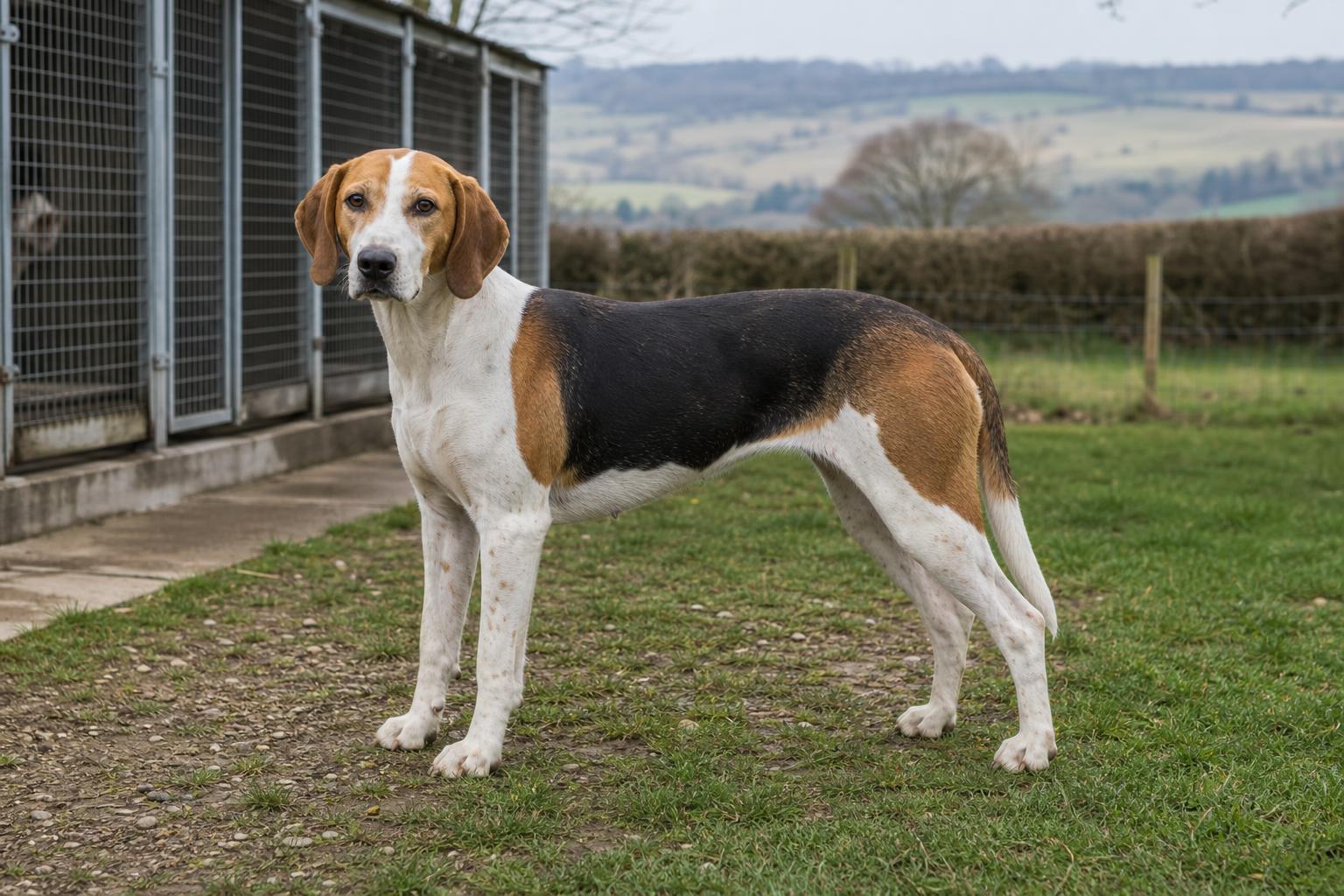
An English Foxhound proven female can be an appealing purchase for the right buyer: a mature hound with known temperament, adult structure, and at least some reproductive history to evaluate. For breeders, she may represent a chance to add established blood, pack sense, endurance, scenting ability, and maternal traits to a program. For experienced hound owners, she may also be a sound adult companion when her breeding career is finished or when her next placement is primarily about quality of life.
The key word is proven, but buyers should define it carefully. A female is not automatically valuable simply because she has had a litter. A fair evaluation looks at what she has produced, how she handled pregnancy and whelping, how she raised puppies, what her health and temperament show, and whether her pedigree and physical condition fit your goals. The English Foxhound is a large, athletic scenthound developed for stamina, pack work, and following scent over distance, so buyers should also consider whether her background reflects the kind of working ability and social stability the breed is known for.
Understanding the English Foxhound Female Before Purchase
The English Foxhound is traditionally a pack hound, friendly rather than sharp, built with a deep chest, long legs, and the endurance to cover ground steadily. Mature females should be evaluated as athletes, not just as breeding animals. Look at condition, feet, topline, movement, muscle, coat, and recovery after exertion. A female who is overweight, poorly conditioned, chronically lame, or mentally stressed may not be a good candidate for another breeding, even if her pedigree is attractive.
Temperament matters just as much. Many English Foxhounds are social with dogs and people, but they can be independent and scent-driven. A buyer should expect hound instincts: baying, strong interest in odor, and the need for secure fencing or supervised turnout. The best proven females are stable, manageable, and honest representatives of the breed. They should not be aggressive, excessively fearful, or unable to live with reasonable handling.
Reviewing the Production Record
A production record is the center of any proven-female evaluation. Ask for clear information about each prior litter, including the sire used, whelping date, litter size, number of puppies raised, puppy survival, and where those offspring are now. A seller who can describe the offspring as adults is giving you more useful information than one who only remembers puppy colors or deposits.
- How many litters has she had, and at what ages?
- Were any puppies kept back by knowledgeable breeders, hunters, packs, or working homes?
- Do offspring show the size, stamina, scenting style, voice, social nature, and durability expected in English Foxhounds?
- Were there repeated concerns such as poor growth, weak nerves, bad bites, structural faults, or health problems?
- Can the seller provide photos, owner references, or performance updates from previous pups?
Do not confuse quantity with quality. A female who produced one smaller but uniform, healthy, athletic litter may be more valuable than a female with several large litters and inconsistent results. If the English Foxhound female has produced working hounds, ask what kind of work those offspring actually do. For this breed, proof may come from hunting or pack performance, endurance, nose, biddability in a group, or long-term soundness rather than a single certificate.
Prior Litters and Maternal Ability
Maternal ability is one of the main reasons buyers seek a proven female. Ask how she behaved during whelping and nursing. Did she settle with the puppies, clean and stimulate them, maintain milk, and tolerate normal handling? Was she calm around people checking the litter, or was she stressed, defensive, or disengaged? Some management problems are environmental, but repeated poor mothering is important to know before purchase.
Request details on whelping support. Did she require a cesarean section, emergency veterinary care, supplemental feeding, or heavy intervention to keep puppies thriving? Veterinary assistance is not automatically a disqualification, but buyers should know the facts. A female with a history of difficult deliveries may not be suitable for another breeding, especially if age or condition now increases risk.
Age, Breeding History, and Ethical Limits
Age should be discussed plainly. A mature English Foxhound female may still be active and healthy, but breeding decisions should be made with veterinary guidance and the female's welfare first. Ask for her date of birth, number of heat cycles used for breeding, spacing between litters, and whether she has ever missed, reabsorbed, or had complications. A fair seller should not pressure a buyer to breed a female again without a realistic look at her age, condition, and previous reproductive history.
If the female is being sold as retired or near retirement, value her as an adult hound rather than as a guaranteed source of future puppies. If she is being sold as a breeding prospect, insist that the agreement reflect what is actually known, not what everyone hopes will happen. Fertility can change with age, stress, management, and health.
Health Clearances and Veterinary Records
Health transparency protects the female, the buyer, and future puppies. The English Foxhound is generally considered a robust athletic hound, but buyers should still ask for veterinary records, vaccination and parasite prevention history, dental notes, ear history, and any previous injuries. Because the breed has a deep chest, discuss bloat risk and any prior digestive emergencies with the seller and your veterinarian.
Health clearances vary by breed, breeder, registry, and working community. Do not assume that every English Foxhound will have the same testing profile you might expect in a different gundog or sporting breed. If a seller mentions OFA, DNA testing, cardiac checks, thyroid panels, or other screening, ask to see the actual records and verify names, dates, microchip or tattoo identification, and results. If testing is not common in the seller's circle, ask what objective health information is available and consult a veterinarian about what should be checked before purchase or breeding.
Temperament, Pack Sense, and Daily Management
A proven female should be evaluated in the real conditions where she will live. English Foxhounds often enjoy canine company and may be happiest with other compatible dogs. Observe how she moves around a kennel, pack, yard, or home. Does she share space sensibly? Does she recover quickly from new sights and sounds? Is she comfortable being handled by humans? Can she walk on lead, load into a vehicle, and settle after exercise?
For buyers hoping to keep her as a house companion, ask direct questions about crate manners, housetraining, noise, fence testing, prey drive around small animals, and time spent indoors. A hound raised primarily in a pack or kennel can transition well with patient management, but it is not fair to expect instant household polish. For buyers seeking a future brood female, stable temperament is still essential because pups learn from their dam and because mothering requires confidence.
Pedigree Strength and Working Proof
Pedigree analysis should be practical, not romantic. Names on paper matter only when they connect to traits you can evaluate: soundness, endurance, scenting ability, pack manners, voice, fertility, and temperament. Ask why the female was bred the way she was in the past and what the seller believes she consistently produces. If she comes from traditional hunting lines, request details about the pack or working context. If she has show or companion lines behind her, ask how those relatives have aged and whether they remain athletic and stable.
Verify reported working titles and test results with the issuing organisation. Confirm that the programme applies to the breed and ask what the result demonstrates about the individual dog.
Fertility Considerations and Breeding Plans
If you are buying the female for breeding, discuss fertility before price. Ask about previous conception methods, timing, progesterone testing if used, litter sizes, resorption or missed breedings, and whether she has ever required reproductive veterinary care. Do not claim or assume that live cover, artificial insemination, chilled semen, or frozen semen is appropriate for her without records and professional guidance. Those options depend on the female's history, the chosen stud, veterinary access, registry rules, and timing.
A responsible buyer should also think beyond the next litter. Do you have the space, time, money, whelping support, buyer screening process, and lifetime responsibility plan for pups? A proven female is not a shortcut around breeder ethics. She deserves a thoughtful home and any future litter should have a clear purpose.
Fair Purchase Evaluation and Contract Points
Fair value depends on the female's age, health, production record, pedigree, temperament, current condition, and what rights are included. Be cautious of any seller who prices her only on what a future litter might earn. Future puppies are never guaranteed. A fair agreement should describe whether she is sold open, bred, pregnant, retired, co-owned, or under breeding restrictions.
- Confirm identity with microchip, tattoo, registration paperwork, or veterinary records where available.
- Clarify whether registration papers, breeding rights, and prior litter records transfer with the dog.
- Put any pregnancy status, stud information, or reproductive claims in writing.
- Ask whether there are return terms if she does not fit your kennel, pack, or household.
- Have a veterinarian examine her promptly after purchase, especially before any breeding plan.
Red Flags When Buying an English Foxhound Proven Female
Walk away or slow down if the seller cannot explain her breeding history, refuses to share veterinary information, pressures you to breed immediately, or makes broad promises about future litter size, puppy prices, or guaranteed performance. Be equally careful if the female appears thin, exhausted, fearful, unsound, or repeatedly bred without recovery time. Good hounds deserve better than being treated as inventory.
Also be wary of vague claims such as "great bloodlines" without evidence, "throws champions" without records, or "healthy line" without practical documentation. The best sellers are usually willing to discuss both strengths and limitations. Honest information helps you make a better decision and protects the female's future.
Conclusion: Buy the Female, Not the Fantasy
An English Foxhound proven female can be a valuable addition when her record, health, temperament, and purpose align with your goals. The strongest purchase decisions are based on evidence: prior litters, maternal behavior, adult offspring, veterinary records, pedigree context, and honest assessment of her current condition. Whether she is meant to produce one carefully planned litter or enjoy a retired life as an active companion, put her welfare first. A good buyer looks beyond possibility and asks what is fair, realistic, and responsible for the hound in front of them.
Explore English Foxhound on Working Dog Central
View the English Foxhound breed profile or browse English Foxhound listings.


