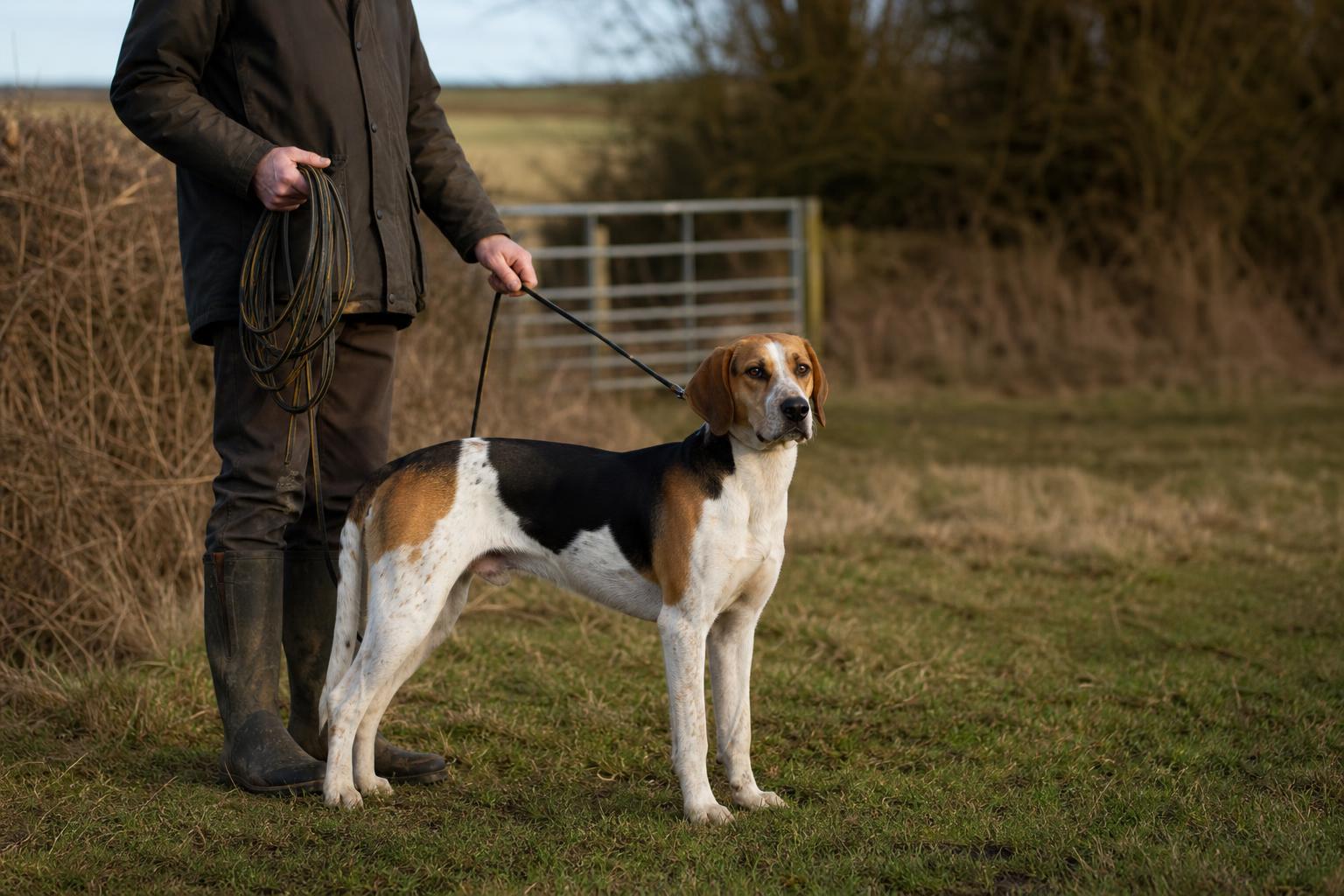
An English Foxhound started dog can be a smart choice for a buyer who wants more information than a puppy can provide, but who is not necessarily ready to pay for a fully finished hound. At this stage, you should be able to see the dog’s size, confidence, social nature, nose, stamina, and willingness to work. Because the English Foxhound was developed as a pack scenthound for long-distance fox hunting, the best started-dog evaluation focuses on real-world exposure, manners, conditioning, and honesty about what the dog has actually been asked to do.
This guide is written for hunters, hound enthusiasts, active families, and breeders comparing English Foxhound started dogs. Use it to ask better questions, spot meaningful training, and avoid confusing age or enthusiasm with true preparation.
What qualifies as “started” in an English Foxhound
A started English Foxhound is not a blank-slate puppy, but it is also not a finished, proven hunting dog. The term should mean the dog has had consistent handling, basic structure, and breed-appropriate exposure. For this breed, that often includes leash work, kennel manners, transport experience, pack socialization, scent exposure, field conditioning, and time in environments where the hound can learn to use its nose and body with purpose.
Ask the seller to define “started” in plain terms. A useful answer should include the dog’s age, daily routine, where it has been worked, what it has been exposed to, and what the handler still considers unfinished. A vague answer such as “he has been hunted some” is not enough. You want details: how often, with what dogs, in what terrain, under whose supervision, and with what results.
- Has the dog worked alone, in pairs, or only in a larger pack?
- Does it load, ride, kennel, and handle calmly?
- Has it shown interest in scent and pursuit appropriate to the breed?
- Is it physically conditioned for long work, or only casually exercised?
- What problems has the seller observed?
Birds introduced or breed-appropriate game exposure
English Foxhounds are scenthounds, not pointing dogs or flushing retrievers, so buyer expectations should match the breed. For this guide’s required game-exposure discussion, the key question is not whether the dog has been introduced to birds in a gun-dog sense. The better question is whether the hound has had breed-appropriate exposure to scent, cover, pack work, and legal quarry or training situations relevant to foxhound work.
If a seller mentions birds, clarify what that means. Some hounds may encounter birds, livestock, deer, rabbits, or other distractions during exercise, but that is not the same as bird-dog training. For an English Foxhound, practical started-dog exposure may include learning to move with other hounds, follow scent trails, respond to handlers in the field, tolerate horse or vehicle traffic where applicable, and remain steady enough to manage safely before and after work.
Buyers should also verify local hunting laws and ethical practices. Foxhounds have a deep history in mounted hunting and pack work, but regulations, land access, and accepted uses vary by region. Ask for honest descriptions rather than assumptions. A responsible seller will explain exactly what the dog has seen and will not exaggerate the hound into a different type of sporting dog.
Gun introduction when relevant
Gun introduction may or may not be relevant to a particular English Foxhound’s future job. Some buyers are looking for a traditional pack hound, some want a tracking companion, and others may live in an area where firearm noise is part of the hunting environment. Do not assume a started English Foxhound has been properly introduced to gunfire unless the seller can describe a gradual, controlled process.
Good gun introduction is not simply firing a gun near a young dog to “see what happens.” It should be paired with distance, confidence, positive association, and attention to the dog’s reaction. If the hound has been exposed to gunfire, ask what type of firearm, at what distance, in what setting, and how the dog responded. A dog that ignored distant shots while working confidently is different from a dog that froze, bolted, or was forced through fear.
If gunfire will matter in your plans, arrange a careful evaluation with an experienced handler. If it will not matter, do not overvalue it. For many English Foxhound buyers, scent drive, pack temperament, endurance, and manageable handling are more important than a checklist borrowed from retriever or pointing-dog programs.
Obedience level
Started English Foxhound obedience should be practical rather than flashy. This breed is friendly, social, intelligent, and famously driven by scent. A good started dog should understand basic handling and routines, but buyers should be realistic: recall and off-leash reliability can be difficult for scenthounds when a hot scent is present. Management, secure fencing, long lines, and good habits matter.
- Leash manners: The dog should be controllable without constant dragging or panic.
- Kennel behavior: It should enter, settle, and exit without chaos.
- Loading and travel: A started hound should be familiar with transport.
- Handling: The dog should tolerate ears, feet, collaring, and basic inspection.
- Social stability: Because English Foxhounds often thrive with canine company, watch how the dog behaves around other dogs.
Do not expect a started hound to perform like a polished obedience competitor. Instead, look for a dog that can be handled safely, learns routines, recovers from excitement, and shows enough cooperation to continue training. If the dog is strong, loud, or highly scent-focused, that may be normal breed expression, but it still needs to fit your home and hunting situation.
Evaluating training
The best way to evaluate an English Foxhound started dog is to watch the dog work and live, not just hear a sales pitch. Ask to see the dog taken from kennel to lead, loaded if relevant, moved around other dogs, and handled in a field or exercise area. If the seller says the dog has been started on scent work or pack hunting routines, request a realistic demonstration or references from people who have seen the dog in use.
Look for confidence, sound movement, interest in scent, willingness to go forward, and the ability to settle afterward. English Foxhounds are endurance athletes, so physical condition matters. A started dog should look fit, not soft or overworked. Check feet, nails, ears, coat, and general attitude. Pendant ears can trap moisture, and active hounds can pick up pad wear or small cuts, so practical care habits are part of the evaluation.
Ask direct questions about weaknesses. Has the dog chased off-game? Is it noisy when kenneled? Does it climb, dig, or test fences? Is it independent to the point of being hard to gather? Has it been around children, livestock, horses, or household life? Honest answers are not red flags by themselves. Evasion is.
Questions to ask before buying
- Why is this English Foxhound being sold as a started dog?
- What daily exercise and work has it been receiving?
- Has it lived primarily in a kennel, home, pack, or mixed environment?
- What health care records, vaccinations, parasite prevention, and veterinary history are available?
- Are there registration papers or pedigree records, and what organization issued them?
- Can the seller provide references from hunters, trainers, or previous buyers?
Health, paperwork, and buyer protection
Do not invent confidence where paperwork is missing. For English Foxhounds, ask for veterinary records, vaccination history, deworming or parasite prevention information, and any available pedigree or registration documents. If a seller discusses AKC registration, hunt-related records, or other organization paperwork, verify the relevance directly with the issuing body. Not every useful working hound will have the same paperwork, and not every papered dog is well started.
Because the breed is athletic and deep-chested, discuss conditioning, feeding routine, and bloat awareness with your veterinarian. Ask about long-term soundness in the line and any history of lameness, ear problems, or injuries. Avoid sellers who make sweeping medical guarantees or claim that a line has no health concerns without records to support that statement.
Matching an English Foxhound started dog to your home
An English Foxhound started dog fits best with a buyer who understands stamina, scent drive, social needs, and management. This is usually not the easiest choice for a small urban apartment or a household that wants a low-exercise companion. The breed tends to thrive with room to move, secure containment, regular outdoor work, and people who appreciate a hound’s voice and independence.
If you want a calm family companion, evaluate the individual dog carefully. Some English Foxhounds can be affectionate and easygoing when exercised well, but long hours alone and limited activity can lead to boredom, vocalizing, and self-directed adventures. If you want a working hound, make sure the dog’s start matches your actual game, terrain, pack setup, and handling style.
Buyer-focused conclusion
A started English Foxhound should give you useful information that a puppy cannot: temperament under pressure, physical development, scent interest, pack behavior, and early handling habits. The right dog is not simply the one with the boldest description. It is the one whose exposure, health records, training level, and personality match your plans. Ask for specifics, verify what matters, watch the dog work when possible, and choose the English Foxhound that fits your real life rather than an idealized sales story.
Explore English Foxhound on Working Dog Central
View the English Foxhound breed profile or browse English Foxhound listings.


