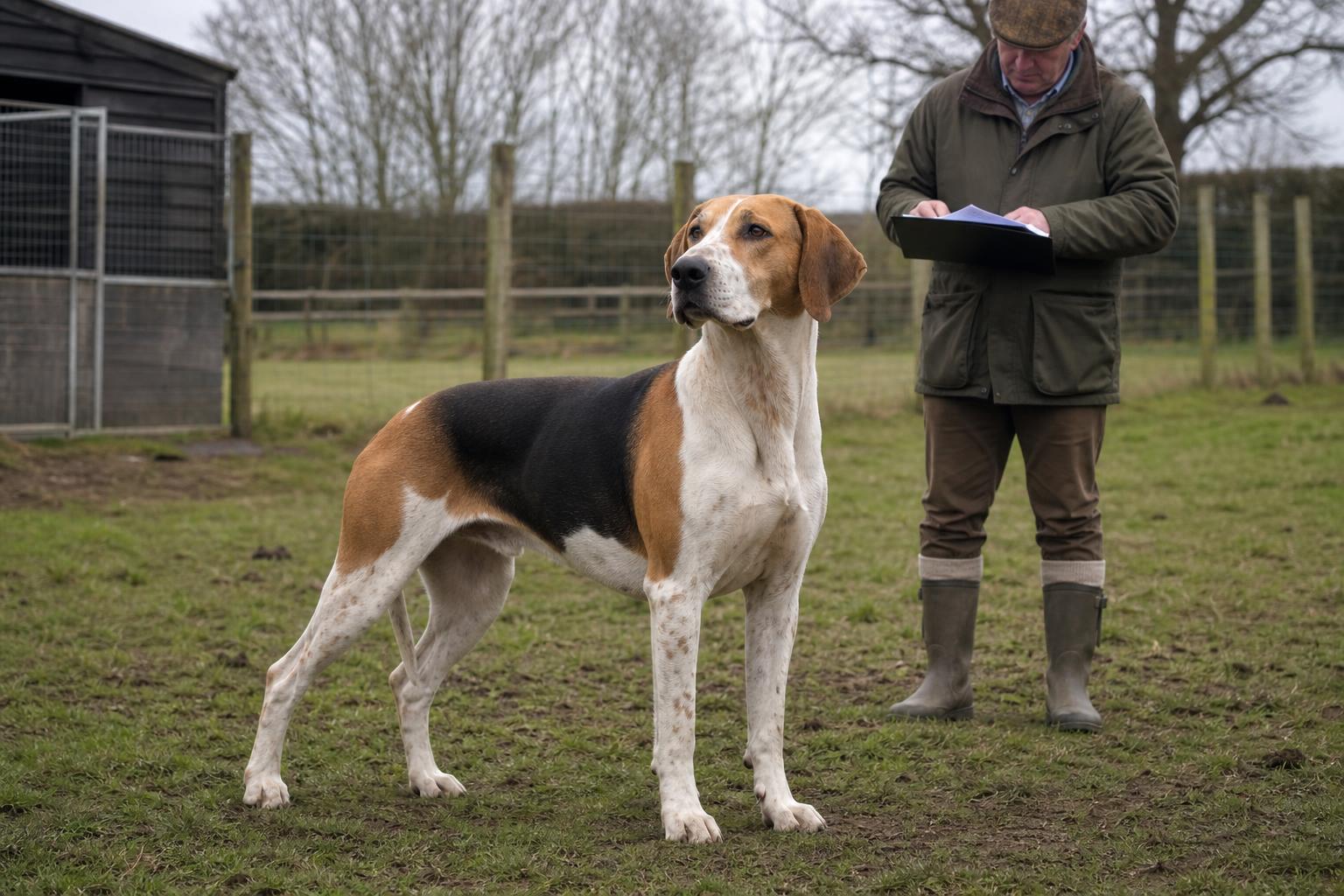
Choosing an English Foxhound stud dog is a breeding decision, not a classified-ad impulse. This breed was developed as a pack scenthound with stamina, speed, sound structure, and a friendly working temperament. A suitable stud should help preserve those traits: a clean-cut athletic build, efficient movement, a strong nose, social steadiness, and the physical ability to cover ground for long periods. Before you commit to any mating, compare the dog in front of you with your female, your goals, and the needs of future owners.
The English Foxhound is not a casual urban pet breed for most households. It typically needs significant exercise, space, secure management, and an owner who understands hound independence. That reality should shape stud selection. A handsome male with poor biddability, weak stamina, questionable soundness, or an overly sharp temperament can create litters that are harder to place responsibly. The best stud choice is usually the dog that complements the female and produces useful, healthy, stable hounds—not simply the nearest available male.
Health clearances
Health clearances are one of the first subjects to raise with any English Foxhound stud owner. The breed is generally described as robust, but buyers and breeders should still ask for documented screening that is relevant to the line, age, and intended use. Clearances do not guarantee a perfect litter, and they should never be presented as a substitute for veterinary advice, but they do show that a breeder is paying attention to risk rather than breeding on looks alone.
- Ask what health issues have appeared in the stud's relatives, not just whether the stud seems healthy today.
- Request copies or registry links for completed screenings when available.
- Discuss bloat awareness, joint soundness, ear health, dental condition, and long-term working durability.
- Confirm that the female's health information is being evaluated with the same seriousness.
Because breed practices vary by country, registry, and working community, do not assume that every clearance common in other gun dog or hound breeds automatically applies to the English Foxhound. A careful stud owner should be willing to explain what has been tested, why it matters, and what has not been tested.
OFA
OFA records can be useful when they exist, especially for evaluating hips, elbows, eyes, cardiac findings, or other screenings that may be relevant to a breeding program. For an English Foxhound stud dog, ask whether the dog has any OFA entries and whether relatives have publicly searchable results. If OFA data is limited, that is not automatically a disqualification, but it does mean you should look harder at veterinary records, age, athletic history, sound movement, and transparency in the pedigree.
Use OFA as a verification tool rather than a marketing slogan. The strongest conversations include actual registration names or numbers, dates of testing, results, and whether the female has comparable documentation. If a seller only says “health tested” without details, ask exactly which tests were performed and who recorded the results.
DNA testing
DNA testing can help confirm parentage and identify certain inherited risks when a validated test exists for the breed or line. It can also support pedigree accuracy in programs where multiple hounds are managed together. However, DNA panels are not magic. A clear panel does not prove the dog is structurally sound, mentally suitable, or free of every possible inherited condition.
For an English Foxhound breeding, ask whether the stud has DNA identification, parentage verification, or any breed-relevant genetic testing. If a broad all-breed panel was used, request the full report and ask a veterinarian or experienced breeder to interpret what is meaningful. Be cautious of claims that sound impressive but are not tied to a specific test, laboratory, or inheritance pattern.
Frozen semen
Frozen semen may be useful when the ideal stud is geographically distant, older, deceased, or unavailable for live breeding. It can preserve valuable bloodlines and reduce travel stress, but it also requires planning. Collection, evaluation, freezing, storage, shipment, timing, and insemination should be handled through qualified reproductive veterinarians or experienced professionals.
If considering frozen semen from an English Foxhound stud, verify semen quality reports, number of breeding units available, ownership rights, storage location, shipping responsibilities, and any limits on use. Also ask whether pregnancies or litters have resulted from that frozen semen before. Prior success is helpful information, though it still cannot guarantee results with a different female.
Live cover vs AI
Live cover and artificial insemination each have practical pros and cons. Live cover may be straightforward when both dogs are local, physically compatible, healthy, and safely managed. It can also be risky if dogs are inexperienced, poorly supervised, or mismatched in temperament. Artificial insemination may be preferred for distance, safety, timing, or semen type, but it adds veterinary cost and requires accurate cycle management.
With the English Foxhound, also think about management. These are strong, athletic hounds, and breeding arrangements should be calm, controlled, and humane. Ask who supervises, what happens if the mating does not occur, how progesterone timing is handled, and whether the stud owner accepts outside females only with veterinary clearance. Good breeders are practical and careful, not casual.
Stud contracts
A stud contract protects both parties and reduces misunderstandings. It should spell out the stud fee, what counts as a successful breeding, whether a return service is offered, what documentation is provided, and who is responsible for veterinary, travel, collection, shipping, or boarding expenses. Do not rely on a handshake for details that affect money, timing, and litter registration.
- Confirm the registered identity of the stud and female.
- Define payment timing and whether fees are refundable.
- State what happens if the female misses, absorbs, or has a very small litter.
- List required health tests, vaccinations, parasite control, and reproductive exams.
- Clarify litter registration paperwork, puppy placement expectations, and any restrictions on repeat use.
For an English Foxhound stud dog, the contract should also match the realities of the breed. If the resulting puppies are likely to need active, experienced homes, both parties should care about placement quality. A responsible stud owner may ask about your female, facilities, buyer screening, and long-term support for puppies.
Pedigree analysis
Pedigree analysis is more than counting famous names. Look for patterns in soundness, temperament, working ability, endurance, size, and longevity. English Foxhounds have a long history of organized breeding and pack work, so useful pedigree questions often involve consistency: Did relatives stay sound under work? Were they social with people and other dogs? Did they show the stamina and scenting style expected of the breed?
Compare the stud's strengths and weaknesses against the female's. If she is independent and vocal, doubling up on similar traits may create puppies that are difficult for average homes. If she lacks reach, substance, or confidence, look for a male that reliably improves those traits without introducing bigger problems. Avoid breeding two dogs simply because both are available or attractive.
Temperament and working fit in an English Foxhound stud
The breed standard and common breed descriptions emphasize a friendly, non-aggressive hound with strong pack instincts. That matters in a stud dog. A male used for breeding should be manageable, socially stable, and able to recover from normal stress. He does not need to behave like an obedience robot, but he should not be dangerously reactive, chronically fearful, or impossible to handle.
Because the English Foxhound was built for endurance scent work, evaluate whether the stud represents that purpose. Ask about exercise tolerance, field or pack experience where relevant, scent drive, and how he behaves around other dogs. Claims about hunt tests, trial records, or organized performance should be verified through the appropriate registry or club records; do not assume those systems apply equally to every hound community.
Questions to ask before booking a breeding
- What are the stud's strongest traits, and what would you improve?
- What health screenings, OFA records, DNA tests, or veterinary reports can I review?
- Has this stud produced litters before, and what are those puppies like as adults?
- What kind of females has he complemented best?
- Are there known issues in the pedigree such as poor soundness, unstable temperament, reproductive problems, or early death?
- What breeding method is available: live cover, fresh chilled semen, frozen semen, or AI support?
- What does the stud contract require from the female owner?
Buyer-focused conclusion
An English Foxhound stud dog should be selected with patience and evidence. The right male brings more than a pedigree page: he offers sound structure, steady temperament, useful endurance, honest health information, and a stud owner who communicates clearly. Verify every claim, match the dog to the female, and keep future puppies and owners at the center of the decision. That approach gives an English Foxhound litter the best chance to be healthy, purposeful, and responsibly placed.
Explore English Foxhound on Working Dog Central
View the English Foxhound breed profile or browse English Foxhound listings.


