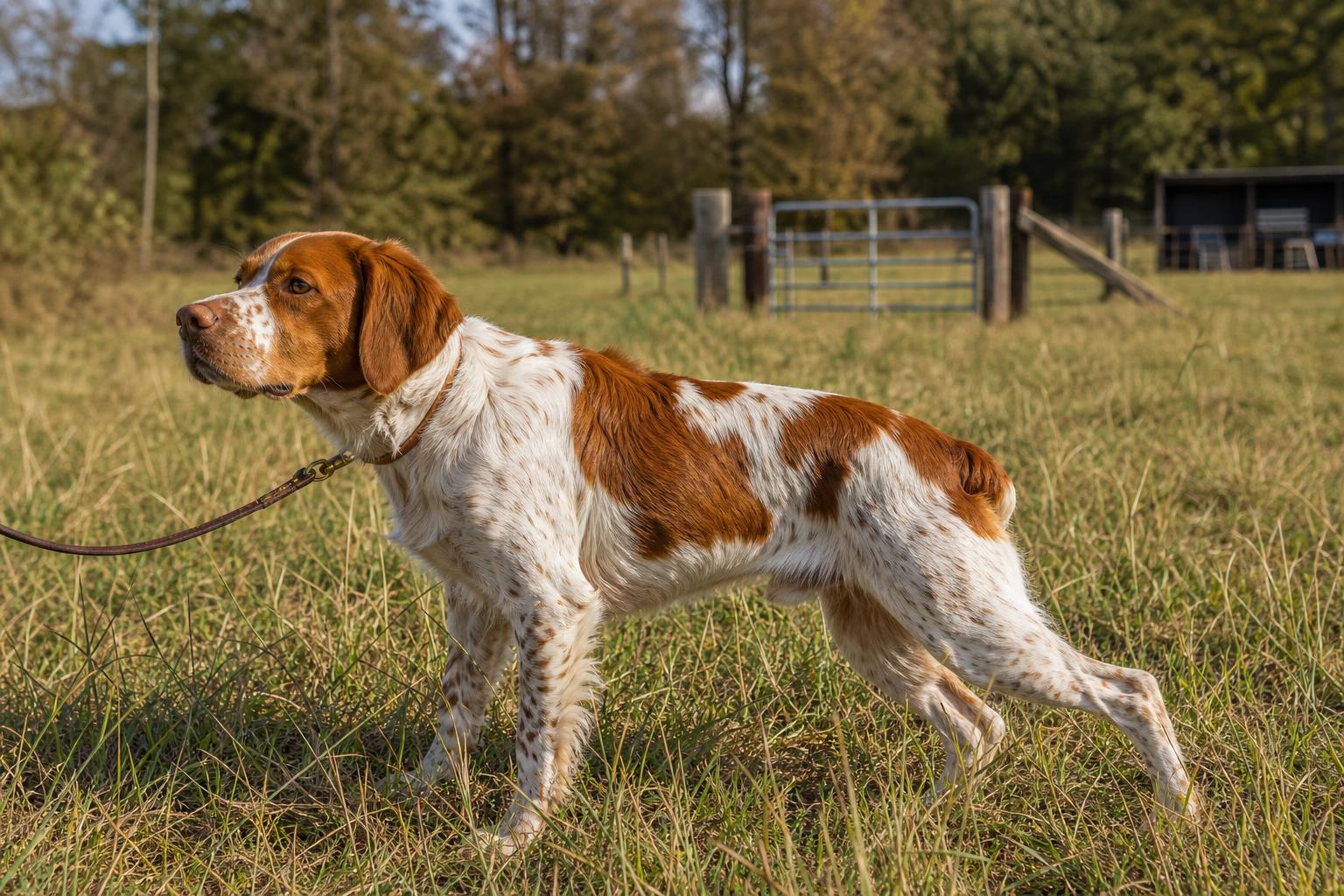
The Epagneul Breton, often known in English-speaking circles as the Brittany, is a compact French pointing dog valued for energy, trainability, nose, range, pointing instinct, and retrieving ability. A stud dog decision should protect those traits rather than chase a name on a pedigree. The right sire can strengthen a litter; the wrong match can make training, health, and temperament harder for every future owner.
This guide is written for breeders and serious buyers evaluating Epagneul Breton stud dogs for Working Dog Central listings, private referrals, or kennel conversations. Use it as a practical checklist, not as a substitute for veterinary, registry, or reproductive advice. Before you commit to a breeding, verify records directly with the dog owner, registry, veterinarian, and any testing organization involved.
Start With the Breed Purpose
The Epagneul Breton is described in breed references as the smallest of the pointing breeds: square, athletic, well-knit, and built for efficient work in cover. The breed should be lively and people-focused, but also mentally balanced and cooperative. In the field, a good Brittany-type dog is expected to use its nose, handle game intelligently, point naturally, and retrieve with enthusiasm.
When reviewing a stud, ask whether his strengths fit the dam and the intended homes for the puppies. A field-trial-focused sire may offer speed and intensity, while a closer-working gun dog may better suit foot hunters, families, and weekend upland homes. Neither style is automatically better. The question is whether the match is honest, useful, and consistent with the goals of the litter.
Health Clearances and Veterinary Records
Do not assume health clearances exist because a dog is advertised as a stud. Ask for copies of current and relevant documentation. For sporting breeds, hip health is commonly discussed, and many breeders use orthopedic screening to help reduce avoidable risk. Depending on the breeder’s program, other evaluations may also be appropriate. Your job is to verify what was actually completed, when it was completed, and whether the result belongs to the dog being offered.
- Confirm the dog’s registered name, registration number, microchip or tattoo when available, and date of birth.
- Ask which health screenings were performed and request original reports or database links.
- Discuss any injuries, allergies, seizures, reproductive problems, or recurring issues honestly.
- Ask about close relatives, not just the stud himself, because family patterns matter.
No test can guarantee perfect puppies. Responsible testing simply improves decision-making and gives buyers a clearer picture of risk.
OFA and Other Orthopedic Verification
OFA records may be relevant for an Epagneul Breton stud, especially when breeders are evaluating hips and other orthopedic concerns. However, a listing should not be treated as proof. Search the public database when possible, compare identifying details, and ask the stud owner to explain any preliminary versus final results. If the dog was evaluated through another recognized system, ask how that result should be interpreted and whether it is accepted by the registry or breed community involved.
Be cautious of vague phrases such as “vet checked,” “good hips,” or “parents tested” without documentation. Those statements may be well intentioned, but they are not the same as a recorded clearance. A trustworthy stud owner will usually welcome specific questions because careful buyers help protect the breed’s reputation.
DNA Testing: Useful, But Not Magic
DNA testing can help identify carrier status for certain inherited conditions, confirm parentage, or support registry requirements. It does not replace sound structure, stable temperament, field ability, or veterinary reproductive care. If DNA testing is mentioned, ask which laboratory was used, what panel or condition was tested, and how the result affects this specific pairing.
- Clear, carrier, and affected results have different breeding implications.
- A carrier result is not automatically a reason to reject a stud if the dam is appropriately tested and the match is planned responsibly.
- Parentage DNA is different from disease screening; know what the paperwork proves.
The best breeders can explain DNA results plainly and tell you how they use those results to avoid producing affected puppies.
Frozen Semen, Live Cover, and Artificial Insemination
Some stud dogs may be available by live cover, chilled semen, frozen semen, or artificial insemination, but availability should never be assumed. Reproductive options depend on the dog, the owner, the veterinarian, timing, collection quality, storage arrangements, shipping rules, and the dam’s fertility window. If frozen semen is advertised, verify ownership, storage location, number of units, motility information when available, and who is authorized to release it.
Live cover can be straightforward when both dogs are healthy, compatible, and nearby, but it still requires planning and supervision. Artificial insemination may offer flexibility, especially across distance, but it usually involves additional veterinary costs and timing responsibilities. The contract should state who pays for progesterone testing, collection, shipping, insemination, boarding, repeat services, and veterinary complications.
Stud Contracts and Breeding Terms
A handshake is not enough. A clear stud contract protects both parties and reduces emotional conflict later. Read the agreement before the dam is shipped, bred, or scheduled for veterinary work. If a term is not written down, assume it may be disputed.
- Stud fee amount or pick-of-litter terms, with payment timing.
- Definition of a litter, live puppy, repeat breeding, and failed breeding.
- Required health testing for the dam before service.
- Registration responsibilities and naming or kennel-prefix expectations.
- Limits on resale, export, or use of semen, if any.
- What happens if the stud becomes unavailable or semen quality is poor.
Good contracts are not hostile; they are professional. They show that the stud owner understands the value of the dog and the responsibility of producing puppies.
Pedigree Analysis for Epagneul Breton Breedings
A pedigree should be more than a list of famous dogs. Study what the dogs actually produced and whether their strengths match the dam. Look for patterns in working style, cooperation, size, coat, temperament, and health. Because the Epagneul Breton can include different national or performance influences, ask how the stud fits within the breeder’s goals: close-working hunting companion, versatile gun dog, field-trial prospect, or dual-purpose family dog.
Linebreeding, outcrossing, and imported bloodlines can all be useful when handled by knowledgeable breeders. They can also amplify problems when used casually. Ask why this particular sire is being considered for this particular dam. A thoughtful answer usually includes both virtues and tradeoffs.
Field Ability, Temperament, and Trainability
Verify reported working titles and test results with the issuing organisation. Confirm that the programme applies to the breed and ask what the result demonstrates about the individual dog.
Pay close attention to temperament. A useful stud should be stable, recover quickly from pressure, accept handling, and show the biddability expected of a cooperative pointing dog. Intensity is valuable only when it comes with a brain that can be trained.
Red Flags When Evaluating a Stud Listing
- The owner refuses to provide health documentation or registered identity details.
- The listing promises guaranteed health, guaranteed field titles, or guaranteed puppy prices.
- The dog is promoted only by color, rarity, or fashionable pedigree names.
- The contract is missing, vague, or changes after payment.
- The owner cannot explain semen terms, repeat-breeding policy, or veterinary responsibilities.
- The stud’s temperament cannot be observed or discussed honestly.
Buyer-Focused Conclusion
An Epagneul Breton stud dog should be evaluated as a whole dog: health, structure, pedigree, temperament, field ability, reproductive terms, and fit with the dam. The best breeding decisions are specific. They do not rely on buzzwords, assumptions, or pressure. Verify AKC or other registry status when it matters to your plans, confirm OFA or DNA records instead of accepting casual claims, and make sure frozen semen, live cover, or AI terms are written clearly before money changes hands.
For buyers watching future litters, a breeder who can explain why a sire was chosen is usually easier to trust than one who only advertises a famous name. Look for transparency, documentation, and dogs that match the active, intelligent, affectionate working character that makes the Epagneul Breton so rewarding in the field and at home.
Explore Epagneul Breton on Working Dog Central
View the Epagneul Breton breed profile or browse Epagneul Breton listings.


