The Famous War Dogs of History
Legendary Canine Heroes of the Battlefield
Jeff Davis | https://workingdogcentral.com
Spend enough time around working dogs and you start to realize something important: the instinct that drives a dog to protect, track, hunt, or guard isn’t something humans invented. It’s something we learned to work with.
That understanding is part of why dogs have played such a long role in human warfare. Long before radar, drones, or night-vision equipment existed, armies relied on animals with sharper senses and faster reactions than any human could match. Among those animals, dogs proved themselves again and again.
Across thousands of years of conflict, certain war dogs became legends—not just because they served, but because their actions saved lives and shaped history.
Ancient War Dogs: The First Canine Soldiers
The use of war dogs stretches back thousands of years. Ancient civilizations quickly recognized the advantages dogs offered on the battlefield.
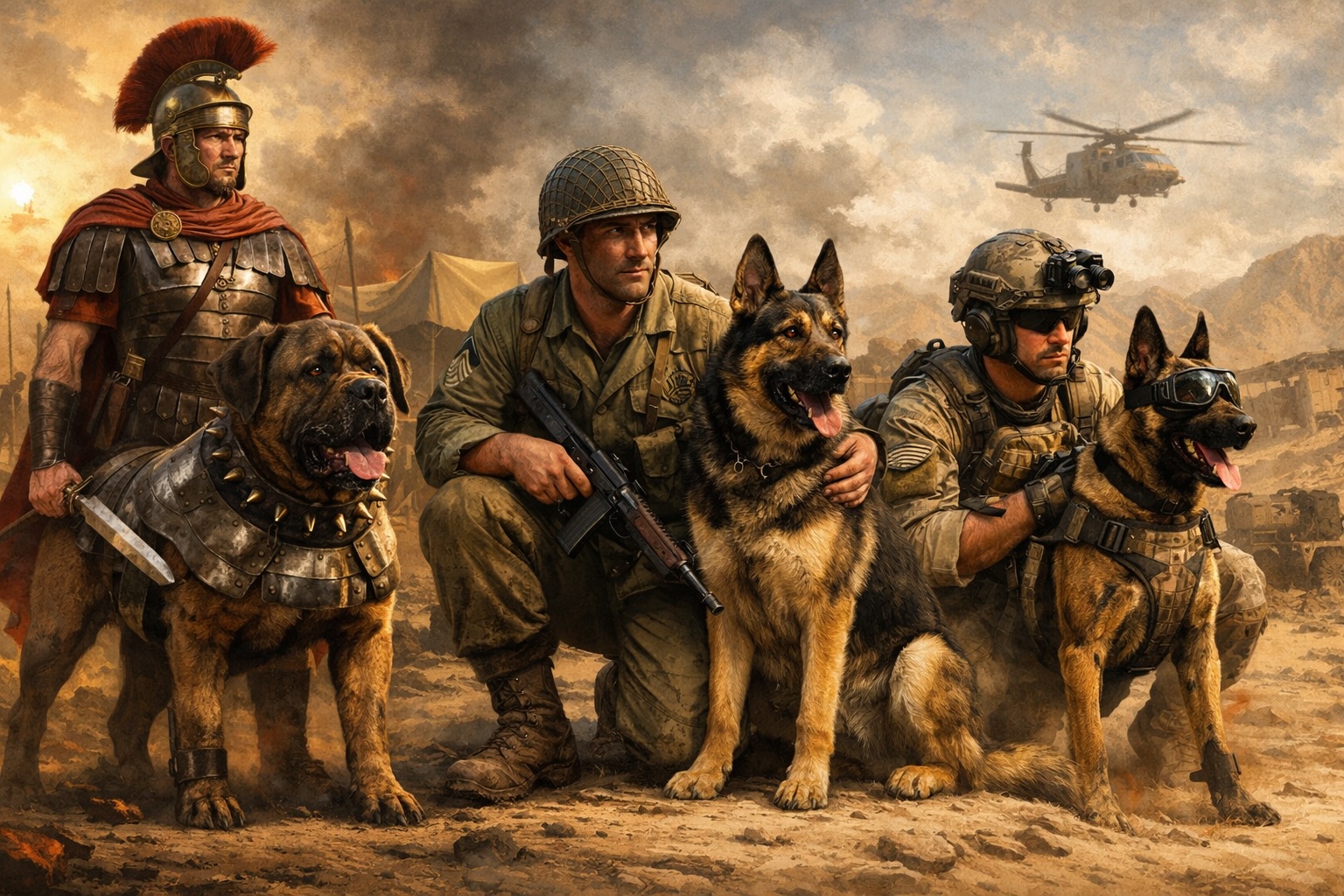
Large mastiff-type dogs were commonly used by armies such as the Assyrians, Persians, Greeks, and Romans. These dogs were bred for strength, aggression, and fearlessness. Historical records describe them wearing primitive armor, often fitted with spiked collars designed to protect their necks and intimidate enemy soldiers.
Roman armies in particular were known for using war dogs in battle formations. These animals were trained to charge enemy troops, disrupt lines, and create chaos before infantry advanced. Their size and ferocity alone could break morale among opposing forces unfamiliar with fighting trained animals.
Even then, the most valuable role for dogs often came away from direct combat. Guarding camps, warning soldiers of approaching enemies, and scouting unfamiliar terrain were jobs perfectly suited to a dog’s natural instincts.
Those early war dogs established a pattern that would continue for centuries. While weapons and tactics evolved, the fundamental roles of military dogs remained remarkably consistent.
Sergeant Stubby: America’s Most Decorated War Dog
One of the most famous war dogs in history came from an unlikely beginning.
Sergeant Stubby was a stray dog found by soldiers training for World War I in 1917. The small brindle-colored mixed breed quickly became the mascot of the 102nd Infantry Regiment. But Stubby was far more than a morale booster.
During his service in France, Stubby proved he had instincts every soldier wished they had. He learned to warn troops of incoming artillery shells and detect poison gas attacks before humans could smell them. His early warnings helped save countless soldiers during trench warfare.
Stubby also had a knack for locating wounded soldiers on the battlefield. After attacks, he would weave through the chaos and rubble, barking until medics arrived to help injured men.
Perhaps his most famous moment came when he helped capture a German spy. Stubby reportedly detected the unfamiliar scent of the intruder and held the man until soldiers arrived.
By the end of the war, Stubby had participated in 17 battles and was awarded numerous medals. He even received the honorary rank of sergeant, making him the most decorated war dog of World War I.
Chips: The Dog Who Captured a Machine Gun Nest
Another legendary war dog emerged during World War II.
Chips, a German Shepherd–Collie–Husky mix, was originally donated to the U.S. Army as part of the Dogs for Defense program. Like many military working dogs, Chips was trained for patrol and sentry duty.
During the Allied invasion of Sicily in 1943, Chips performed an act of bravery that quickly became the stuff of military legend.
As American troops approached an enemy machine gun nest, heavy fire pinned them down. Chips broke free from his handler and charged directly into the bunker. Moments later the firing stopped.
When soldiers reached the position, they found four stunned Italian soldiers surrendering. Chips had single-handedly forced them out of the bunker.
Despite being wounded during the assault, Chips continued serving throughout the campaign. His actions demonstrated the courage and drive that working dogs can display when placed in dangerous situations.
Smoky: The Tiny Dog Who Boosted Morale
Not all famous war dogs were large.
Smoky, a tiny Yorkshire Terrier, became one of the most beloved canine heroes of World War II. Discovered by an American soldier in a foxhole in New Guinea, Smoky quickly became a companion for troops stationed in the Pacific.
While her size made her unsuitable for combat roles, Smoky found ways to contribute.
One of her most important contributions came during a construction project on an airbase. Engineers needed to run a communication cable through a narrow pipe buried beneath a runway. Digging up the runway would have taken days and disrupted operations.
Smoky solved the problem by pulling the cable through the pipe herself.
Beyond that task, Smoky served an equally important role—boosting morale among soldiers stationed far from home. She performed tricks, accompanied soldiers on missions, and became a symbol of comfort during a brutal campaign.
Sometimes the impact of a war dog isn’t measured in battlefield victories but in the ability to lift spirits during dark moments.
Cairo: A Modern Military Working Dog
Fast-forward to the modern era and military working dogs remain essential members of elite units.
One of the most famous examples is Cairo, a Belgian Malinois that served with the U.S. Navy SEALs. Cairo gained worldwide attention during the 2011 mission that resulted in the death of terrorist leader Osama bin Laden.
During the operation, Cairo reportedly assisted in securing the compound perimeter and detecting potential threats such as hidden explosives or enemy fighters.
Dogs like Cairo represent the evolution of military working dogs. Today’s dogs undergo extensive training in tracking, explosive detection, and tactical operations. Equipped with specialized gear—including night-vision cameras and protective armor—these animals work seamlessly alongside modern soldiers.
Despite all the advanced technology surrounding them, the dog’s greatest asset remains the same as it was thousands of years ago: their senses.
A trained dog can detect scents and movements far beyond human capability.
Why Dogs Excel in Military Roles
Anyone who has spent time with working dogs—whether bird dogs, tracking hounds, or police K9s—understands something important about canine behavior.
Dogs want a job.
The same instincts that drive a retriever to chase down a crippled duck or push through thick cover in search of a pheasant are the instincts that make certain dogs excel in military service.
High drive, focus, loyalty, and courage are traits shared across many working breeds. German Shepherds, Belgian Malinois, Labrador Retrievers, and Dutch Shepherds are among the breeds most commonly used in modern military operations.
But the real secret isn’t just the breed. It’s the partnership between dog and handler.
Military working dogs form extremely strong bonds with their handlers. In many cases, handlers trust their dogs with their lives—and that trust is well placed.
The Legacy of War Dogs
Throughout history, war dogs have served in nearly every major conflict.
They have carried messages across battlefields, located wounded soldiers, detected explosives, guarded camps, and protected troops from ambush. In many cases they accomplished tasks no machine could replicate.
But perhaps the most powerful aspect of war dogs is the bond they share with humans.
In the chaos of war, a dog represents something simple and honest: loyalty.
That loyalty has saved countless lives over the centuries.
And even as warfare continues to evolve with new technology, one truth remains clear.
A well-trained working dog is still one of the most effective partners a soldier can have.
That understanding is part of why dogs have played such a long role in human warfare. Long before radar, drones, or night-vision equipment existed, armies relied on animals with sharper senses and faster reactions than any human could match. Among those animals, dogs proved themselves again and again.
Across thousands of years of conflict, certain war dogs became legends—not just because they served, but because their actions saved lives and shaped history.
Ancient War Dogs: The First Canine Soldiers
The use of war dogs stretches back thousands of years. Ancient civilizations quickly recognized the advantages dogs offered on the battlefield.
Large mastiff-type dogs were commonly used by armies such as the Assyrians, Persians, Greeks, and Romans. These dogs were bred for strength, aggression, and fearlessness. Historical records describe them wearing primitive armor, often fitted with spiked collars designed to protect their necks and intimidate enemy soldiers.
Roman armies in particular were known for using war dogs in battle formations. These animals were trained to charge enemy troops, disrupt lines, and create chaos before infantry advanced. Their size and ferocity alone could break morale among opposing forces unfamiliar with fighting trained animals.
Even then, the most valuable role for dogs often came away from direct combat. Guarding camps, warning soldiers of approaching enemies, and scouting unfamiliar terrain were jobs perfectly suited to a dog’s natural instincts.
Those early war dogs established a pattern that would continue for centuries. While weapons and tactics evolved, the fundamental roles of military dogs remained remarkably consistent.
Sergeant Stubby: America’s Most Decorated War Dog
One of the most famous war dogs in history came from an unlikely beginning.
Sergeant Stubby was a stray dog found by soldiers training for World War I in 1917. The small brindle-colored mixed breed quickly became the mascot of the 102nd Infantry Regiment. But Stubby was far more than a morale booster.
During his service in France, Stubby proved he had instincts every soldier wished they had. He learned to warn troops of incoming artillery shells and detect poison gas attacks before humans could smell them. His early warnings helped save countless soldiers during trench warfare.
Stubby also had a knack for locating wounded soldiers on the battlefield. After attacks, he would weave through the chaos and rubble, barking until medics arrived to help injured men.
Perhaps his most famous moment came when he helped capture a German spy. Stubby reportedly detected the unfamiliar scent of the intruder and held the man until soldiers arrived.
By the end of the war, Stubby had participated in 17 battles and was awarded numerous medals. He even received the honorary rank of sergeant, making him the most decorated war dog of World War I.
Chips: The Dog Who Captured a Machine Gun Nest
Another legendary war dog emerged during World War II.
Chips, a German Shepherd–Collie–Husky mix, was originally donated to the U.S. Army as part of the Dogs for Defense program. Like many military working dogs, Chips was trained for patrol and sentry duty.
During the Allied invasion of Sicily in 1943, Chips performed an act of bravery that quickly became the stuff of military legend.
As American troops approached an enemy machine gun nest, heavy fire pinned them down. Chips broke free from his handler and charged directly into the bunker. Moments later the firing stopped.
When soldiers reached the position, they found four stunned Italian soldiers surrendering. Chips had single-handedly forced them out of the bunker.
Despite being wounded during the assault, Chips continued serving throughout the campaign. His actions demonstrated the courage and drive that working dogs can display when placed in dangerous situations.
Smoky: The Tiny Dog Who Boosted Morale
Not all famous war dogs were large.
Smoky, a tiny Yorkshire Terrier, became one of the most beloved canine heroes of World War II. Discovered by an American soldier in a foxhole in New Guinea, Smoky quickly became a companion for troops stationed in the Pacific.
While her size made her unsuitable for combat roles, Smoky found ways to contribute.
One of her most important contributions came during a construction project on an airbase. Engineers needed to run a communication cable through a narrow pipe buried beneath a runway. Digging up the runway would have taken days and disrupted operations.
Smoky solved the problem by pulling the cable through the pipe herself.
Beyond that task, Smoky served an equally important role—boosting morale among soldiers stationed far from home. She performed tricks, accompanied soldiers on missions, and became a symbol of comfort during a brutal campaign.
Sometimes the impact of a war dog isn’t measured in battlefield victories but in the ability to lift spirits during dark moments.
Cairo: A Modern Military Working Dog
Fast-forward to the modern era and military working dogs remain essential members of elite units.
One of the most famous examples is Cairo, a Belgian Malinois that served with the U.S. Navy SEALs. Cairo gained worldwide attention during the 2011 mission that resulted in the death of terrorist leader Osama bin Laden.
During the operation, Cairo reportedly assisted in securing the compound perimeter and detecting potential threats such as hidden explosives or enemy fighters.
Dogs like Cairo represent the evolution of military working dogs. Today’s dogs undergo extensive training in tracking, explosive detection, and tactical operations. Equipped with specialized gear—including night-vision cameras and protective armor—these animals work seamlessly alongside modern soldiers.
Despite all the advanced technology surrounding them, the dog’s greatest asset remains the same as it was thousands of years ago: their senses.
A trained dog can detect scents and movements far beyond human capability.
Why Dogs Excel in Military Roles
Anyone who has spent time with working dogs—whether bird dogs, tracking hounds, or police K9s—understands something important about canine behavior.
Dogs want a job.
The same instincts that drive a retriever to chase down a crippled duck or push through thick cover in search of a pheasant are the instincts that make certain dogs excel in military service.
High drive, focus, loyalty, and courage are traits shared across many working breeds. German Shepherds, Belgian Malinois, Labrador Retrievers, and Dutch Shepherds are among the breeds most commonly used in modern military operations.
But the real secret isn’t just the breed. It’s the partnership between dog and handler.
Military working dogs form extremely strong bonds with their handlers. In many cases, handlers trust their dogs with their lives—and that trust is well placed.
The Legacy of War Dogs
Throughout history, war dogs have served in nearly every major conflict.
They have carried messages across battlefields, located wounded soldiers, detected explosives, guarded camps, and protected troops from ambush. In many cases they accomplished tasks no machine could replicate.
But perhaps the most powerful aspect of war dogs is the bond they share with humans.
In the chaos of war, a dog represents something simple and honest: loyalty.
That loyalty has saved countless lives over the centuries.
And even as warfare continues to evolve with new technology, one truth remains clear.
A well-trained working dog is still one of the most effective partners a soldier can have.